Okay,
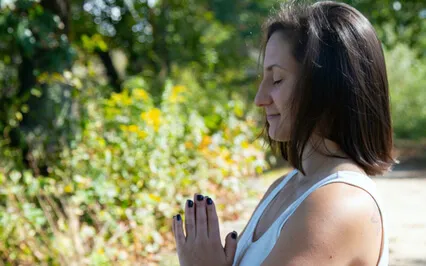
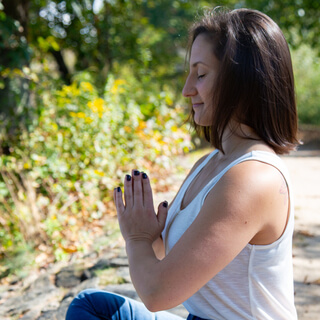
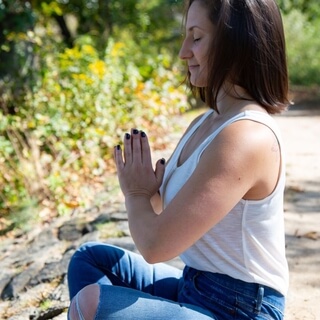
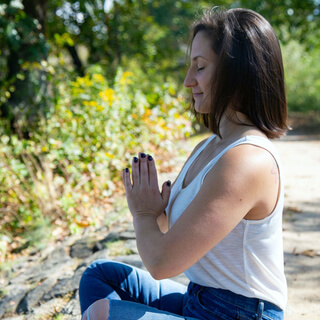
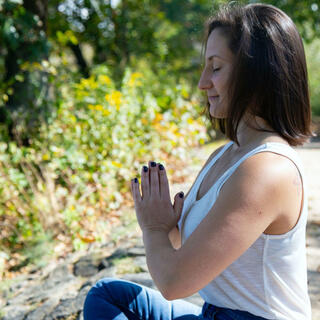
So taking your meditation posture,
You want to be upright and alert and aware,
But not rigid or stiff.
So,
See if you can sit upright,
But still drop and soften your shoulders,
Have a little bit of a natural curve in the spine.
You don't really wanna be too relaxed during the meditation.
It'll be harder for you to focus and concentrate.
And we'll start by connecting with our breath.
You don't have to breathe any particular way.
Just allow your body to breathe and pay attention.
The focus of our practice today is going to be noticing the judging mind.
And what I mean by that is noticing every time your mind likes something or it doesn't like something.
And the reason for this is because when we follow the bouncing ball of our judgments and perceptions and thoughts,
They turn into our actions,
They turn into our emotions,
And that turns into our whole life.
The way that we show up,
The way that we relate to other people,
The way that we treat ourselves and others.
So for right now,
I just want you to pay attention to your breathing,
Noticing the rhythm and the flow,
The gentle in and out of the breath.
And I'm gonna read a passage from The Untethered Soul that will help set the tone and the intention for our practice today.
So just practice your mindful listening for a moment and just receive the words that I'm about to read from this book.
Just stop for a moment and see what you have given your mind to do.
You said to your mind,
I want everyone to like me.
I don't want anyone to speak badly of me.
I want everything I say and do to be acceptable and pleasing to everyone.
I don't want anyone to hurt me.
I don't want anything to happen that I don't like.
And I want everything to happen that I do like.
Then you said,
Now,
Mind,
Figure out how to make every one of these things a reality,
Even if you have to think about it day and night.
And of course,
Your mind said,
I'm on the job.
I will work on it constantly.
The mind is constantly trying to give you advice about how to make it all okay.
That is why the mind is so active.
You gave it an impossible task to do.
So the remainder of our meditation is going to be watching the mind and noticing the judgments and doing our best to not get caught up in those likes and dislikes,
But to observe,
Let go,
And come back to the present moment.
We'll keep the breath as the anchor for our attention in this practice.
And every time the mind drifts off,
Take a second to notice where it went.
Notice if it's just chatting on about nonsense or if it's judging something.
And every time you notice a judging thought about a sound,
A feeling,
A body sensation,
Anything,
Notice that,
Let it go,
And come back to the breath.
Feeling the gentle rhythm and flow of the air passing in and out of the nostrils or the gentle rising and falling at the chest and the belly.
And then noticing when the mind doesn't like something.
It's too hot,
It's uncomfortable,
I'm impatient,
Is this over,
I don't like this meditation,
I don't like the topic this week.
Notice the judgments,
Let go,
Release,
Connect with the breath.
Not all judgments will be negative,
By the way.
You may notice positive ones too,
A sound that's pleasant,
A sensation that you like,
Some type of feeling that you wanna hold on to.
Notice,
Let go,
And come back to following your in-breath all the way through,
Follow the out-breath all the way through.
Notice the gaps and the spaces in between your breathing or whether or not the in-breath flows right into the out-breath.
And as always,
If it's helpful to stay anchored in the breath,
You can silently note to yourself,
Breathing in,
Breathing out.
Switch the focus of your attention to your body for a few moments and notice the types of judgments that arise as we start scanning through some different parts of the body.
So let's start with the top of the head,
Just noticing sensation and your reaction to it,
Your likes and your dislikes,
The back of the head,
The forehead,
The nose,
The cheeks,
The lips,
The mouth,
The tongue.
Just notice what you feel and whether or not the mind has some sort of commentary about it.
Noticing the neck,
Shoulders,
Arms,
Hands,
Fingers,
Ribs and ribcage,
Belly,
Pelvis,
Our upper back,
Middle back,
Lower back.
Noticing sensation and whether or not there are judgments present about those sensations,
Good or bad,
Negative or positive.
Coming back to the lower back,
Down into the sitting bones,
The hips,
The thighs,
The knees,
The lower legs,
Ankles,
Heels,
Top of the foot,
Bottoms of the feet,
Toes,
And just your general body as a whole.
Noticing any sensations that stand out to you.
Notice judgment,
Let go,
And come back to just feeling yourself sitting here,
Breathing and just being.
And you can keep your attention now on the breath and the body,
Maybe at the belly or the chest,
The nostrils,
Wherever you feel the breath the most vividly,
And watching your mind as it tells a story about what it likes or what it doesn't like.
Let go,
Come back to the breathing sensations.
Notice the mind,
Let it go,
Come back to the breathing sensations.
Notice where the mind is,
Let go,
Come back to the breathing sensations.
There's nothing to fix,
Nothing to do,
Just allowing yourself to remain in the domain of being.
Nothing in and of itself is inherently bad or good.
It's the story that we tell about it.
It's the judgments and the perceptions that we say and think about those things that generate a ton of suffering that lead us to try and control our experience.
But we can relax into the present moment.
We can allow things to be as they are.
And we don't have to be controlled and pushed around by our inner judgments.
We can observe,
We can pull back,
And we can respond to our challenges and our moment-to-moment experience with wisdom,
With patience,
With grace.
We can set the intention to carry on this mindful awareness of your judging mind through the rest of your day as this meditation comes to a close.
Give yourself a thank you for spending this time with yourself.
Take a nice deep breath,
And you can allow your eyes to open when you're ready.