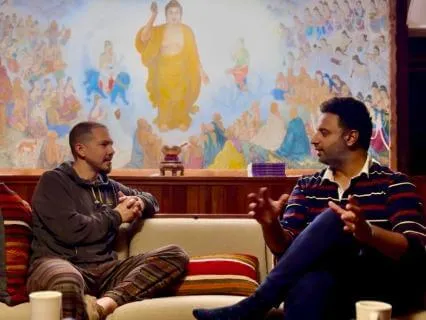
So just a little bit ago,
You and I did.
.
.
Meditation up in the Zen Do.
And we sat in silence.
For a while.
What was that like for you?
It was.
I would say one thing that was,
Which I,
Although like it's not necessarily about what you like,
But it.
What I liked was the darkness,
Doing it in total darkness.
And that has some.
That brings some depth.
As there is just no option but to go within.
In darkness.
And.
.
.
Sitting in silence in darkness.
Something that came up for me was like cleaning the mind.
That's what it felt like to me,
Just sit in silence and maybe the darkness added to it.
Or adds to it.
Like a cleaning,
Just a cleaning process that just sit there for long enough and it's like you're allowing the mind to clean itself.
If you just stay for long enough.
I don't know if that makes sense.
What that would mean necessarily,
Like the cleaning of the mind.
But that's what it feels like to me.
That just sit in silence for long enough you allow for a natural cleansing process to occur and then after the fact.
The mind.
Is cleaner,
Or it's less obstructed,
Less.
There's like less sticky residue on it.
So it's able to more.
Clearly take in information or.
Perceptions or surroundings and also express itself.
More clearly after the.
.
.
Cleansing process of silence.
Like a mind shower.
Yeah.
There's a line that's like that,
It says,
Zen is like soap.
You heard that one?
Zen is like soap.
First you wash with it and then you wash it off.
Which I like that too.
It's not something to keep on you or accumulate.
It's just a cleaning agent to clean the mind with,
But then you also rinse off the soap and you also just do it again and again.
It's not like you're doing it.
So you get to the point where you are clean because then inevitably you'll get dirty again or sweaty again,
But that's just the byproduct of living.
And then you,
Clean the mind again.
I also like that it's not a special thing necessarily.
Soap maybe is special,
But it's also just very.
.
.
Kind of mundane.
Just the hygiene process for the mind.
Washing it off would be like letting go of the practice itself.
Or would be letting go of Zen in some way.
Something like that.
Maybe just seeing it for what it is,
That it is a a discipline and just a way of being,
But something not to hold on to or cling to,
Attach to.
That also reminds me of what we were previously discussing about Nagarjuna sitting with his disciples and they were in meditation and they reached a point which Nagarjuna called the void and he kind of sensed like they were not talking so they could not say that they have reached the void because that could defeat the purpose but he kind of sensed that they have reached a point of getting into a state of void or zen and then he said that now void the void which was kind of seems to me like similar to letting go washing away of even like the idea of it in some way.
Yeah,
Like that was it.
That was the soap that had cleansed and now avoid that to avoid the void.
It makes me think of the flower sermon that is referenced in the artwork there.
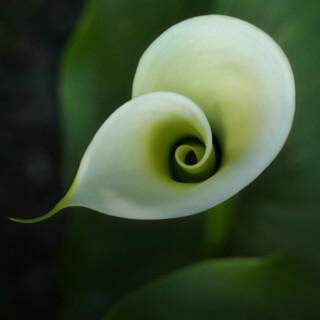
Of the Buddha holding up a flower,
That being his final sermon for his disciples and students.
And all he does is hold up a flower.
Familiar with this one?
Yes.
He holds the flower up and then the students are wondering what he's going to say and he just holds the flower up and that's it.
And one student,
Mahakashapa,
Just smiles and the Buddha notices this and sees that it's an acknowledgement of the message.
And goes over to Maha Kshapa and says something like,
All of it can be said I have said to you.
What cannot be said,
I have given to Maha Kshapa.
And that's like the handing over of the Dharma.
But the whole message just being held in a flower without any words.
That comes to mind as it relates to void the void or the cleansing process of silence,
Like this is the whole dharma,
The whole teaching,
The whole everything is contained in just holding a flower.
And I could see like,
In that state,
Mahakasyapa would have a clean mind in that sense.
So you're talking about cleansing the mind.
Because if someone is thinking or having thoughts in that moment,
As other people were in that situation when the Buddha was holding the flower,
They would be thinking about,
Okay,
What is he trying to say?
Maybe this is the meaning or trying to analyze it in some way.
But Mahakasyapa I would have like this clean mind to get that direct transmission in some way to really feel into that in some way.
And that would naturally bring up the smile versus like the thinking mind would not really smile in that moment.
It's like clouded by impurities.
Yeah,
Looking for something versus the clear,
Clean mind that just takes in the direct transmission.
Yeah,
I like that.
Interesting to think of what impurities are present.
In the mind at any given moment.
And maybe just to engage in the practice of purifying the mind,
Like the smile of Mahakasyapa just arises.
Naturally.
That might be what you're looking for.
With all the impurities,
So they're searching for some peace or solution or answer.
Understanding.
But maybe just to clean the mind or to allow the mind to become cleaned by silence,
Darkness.
Naturally,
There's a certain smile,
Which is maybe like the Buddha smile,
Just a very Not like a huge grin necessarily or.
.
.
I don't know,
I just I consider it like this totally uncontrived smile that just emerges and you don't even know that you're doing it until maybe someone tells you that you are just,
Or it's just a certain feeling that maybe arises out of that state of simply a pure and clean mind.
Yeah,
In that kind of also.
Makes me wonder of like the value of like letting go of cleaning the mind because there's almost like this idea that an unclean mind in some way is the right mind a popular idea in which like you know people who are trying to figure out with torts in that situation in this situation Maybe see value in that,
That,
You know,
That somehow the thoughts could figure it out,
But really like the.
The understanding of Mahakasyapa is kind of maybe different in that way that the thinking or thoughts cannot really figure this out in fact kind of letting go of that is kind of receiving the message.
It just makes me think of the.
The inevitable insufficiency of words ultimately.
Because you're going to run into.
Things that you don't mean,
Like clean,
Maybe it might imply a good or bad,
Like your mind must be clean or always,
It just might have some morality.
Connection to it or some evaluation.
The message of the flower sermon is nice because it's one without words.
Just here it is.
Maybe that's a good place to just.
Not say anything.