Oh boy,
Do I dig this music.
Welcome to Found Voices.
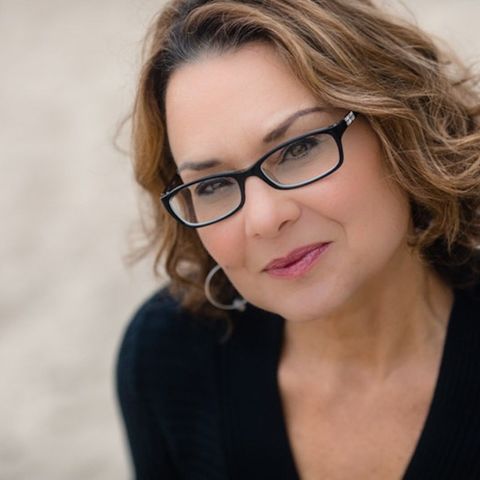
I'm Carolyn Ziehl.
This is a podcast about writing and voice and creativity and what I like to call creative mindfulness.
I am a writer,
But it took me a really long time to put that hat on and wear it with pride.
A really long time.
I don't think I even knew the hat existed until I found my voice.
And that's why this podcast is called Found Voices.
When you find your voice,
Your life changes.
And that process,
The beginning,
The middle,
And what comes after is really interesting to me.
We'll talk about all things writing,
All things voice,
All things creativity and creative mindfulness.
We'll talk about other things.
I don't know,
We might talk about dance and movement and cooking because you can find your voice in so many different ways.
So welcome to Found Voices.
Episode two,
Vulnerability.
I was listening to a meditation this morning on vulnerability and it got me to thinking that being vulnerable doesn't just make you a stronger human being.
It also makes you a stronger writer,
A stronger artist.
It makes you better at whatever your art form or expression is in the world.
And as a writer,
It makes you a better writer.
I believe that when you show up to the blank page with your vulnerable self,
You become stronger.
You show up more authentically.
You wind up putting more of your true self onto the page.
And when you do this,
Your writing will be more compelling.
It will be more relatable.
Your reader will say,
Oh yeah,
I know this part of myself.
When you show up with all your flaws and all your messiness and you put it into your work,
Your writing can make a difference in someone's life,
In the world,
And in your life,
And you become a better writer.
Merriam-Webster defines vulnerable as easily hurt or harmed,
Physically,
Mentally,
Or emotionally,
And open to attack,
Harm,
Or damage.
And of course,
When you put yourself out there as a writer,
You will get criticism.
And so you have to kind of build up your strength for that,
Don't you?
But I'll talk about that in another podcast sometime.
And by showing these parts of ourselves that we'd rather keep hidden,
We build up a resistance and we become stronger human beings and artists.
Here's what Brene Brown has to say around vulnerability.
Vulnerability is the core,
The center,
The heart of meaningful human experiences.
So when we choose to be vulnerable,
We are choosing to be strong.
It can feel counterintuitive,
This idea of being strong through vulnerability.
It's really not a sign of weakness,
But instead,
As Brene Brown writes in her book,
Dare to Lead,
It's having the courage to show up when you can't control the outcome.
Well,
That's basically the definition of writing anything and the creative process,
Which I always say is really,
Really messy.
You're just sometimes in the middle of it.
You don't know where you're going to go,
But you just keep moving.
You just keep moving,
Even though you ask yourselves all those questions.
Who's going to read this?
Who's going to look at this?
What's the point of this?
Where am I going with this?
You keep moving forward in this really vulnerable place and your work will be better for it.
And you know what?
So will you.
Because if you think about it,
If you show up to the page already knowing the outcome,
How will that affect your work?
Here's what Picasso said,
If you know exactly what you're going to do,
What is the good in doing it?
So what is the good in showing up and already knowing exactly how you're going to put your words on the page,
Knowing exactly how your characters are going to get from point A to point B,
Knowing exactly who your characters are,
Tracing it all out in your head without the element of surprise?
So yes,
Sometimes we show up to the page and we have an idea.
But if you think it needs to be a certain way,
Like anything in life,
If you think it's going to go a certain way and you try to force it to go in that certain way and you focus only on doing it that certain way,
Your writing,
Your work,
Your art won't be as compelling,
As rich,
As vulnerable and as strong as it could be.
So all that juice,
All that compelling messiness of good art,
That is invulnerability.
So being vulnerable,
Turning toward those uncomfortable emotions that make you feel and I'm holding up air quotes,
Weak,
Will actually strengthen your foundation,
Not just as a human being,
But as an artist,
A creative and a writer.
You'll take more risks as an artist.
So let's first talk about your voice.
This is found voices after all.
So in order to uncover your voice,
You have to go deep.
It's a process of messing up,
Trying and failing.
I believe in order to be a really,
Really good writer,
In order to be really,
Really good at your craft,
You have to be willing to fail.
You have to be willing to be a bad writer in order to be a great writer because there's something in the willingness to be bad,
To fail.
Number one,
There's a vulnerability there and it's a perspective as well.
It's an openness to trying new things,
To trying new ways of doing something that might not work.
And if we're willing to do that,
We're willing to discover something about ourselves as human beings and as artists and as writers.
And I think that's something that will show in our work as a writer,
In whatever we're writing,
And it will make it that much better and more compelling for the reader.
We have to be willing to make mistakes.
And I have made a lot of mistakes in my writing and my life.
How many times have you pressed send on an email when you meant to delete it instead?
You didn't mean for that to go to that person or you sent an email to one person and you meant it for another person or a text.
I was hurt.
Here's a good one.
So I was working,
This is in the floppy disk era,
If you're old enough to know what a floppy disk is.
And I was working at this very unique manufacturing company and they hired me to do marketing.
But my first job was to wipe his name and his company from any website,
Any directory on the internet.
So really I was the anti-marketing person.
Anyway,
I was unhappy in this job and I had a floppy disk that had my resume on it and I put it in the computer to update my resume and I gave the whole system a virus.
So that's a huge mistake.
I got fired that day.
So we all make mistakes and often it's the mistakes that lead us to something better.
The next day I decided to be a recruiter and it was my career from 1998 until just,
You know,
A couple of years ago when I started teaching writing and writing full time.
So mistakes lead us to a little bit of magic and they opened doors for us.
So back then when I was making all those mistakes,
I didn't know about Brene Brown.
To me vulnerability wasn't even a word in my vocabulary.
And so instead of embracing my mistakes,
Accepting the fact that I'm a human being and I make mistakes,
I shut down.
I tightened up.
I did everything I could in my power to never make another mistake.
And that tightness,
That closes me down.
That closes you down.
That tightness,
There's no room.
There's no space in that tightness to create,
To be creative.
If we're afraid to make mistakes,
Then we're just going to be afraid to make really good art too.
Really good writing as well.
And as an artist and a writer and a human being,
If you're willing to put yourself out there and make a mistake,
You will be vulnerable and you will be stronger.
And there is something transformational in your humanness and your art in the willingness to make a mistake.
And in the practice that I teach,
There is something called massaging the transformation line.
It's one of the first four concepts of level one of what I teach.
And what it does is it forces the writer to go deeper by answering these two really life-changing questions if you ask me,
What's the story of my life and what's the truth of who I am?
I use these two questions in my mentoring because they are so powerful.
Because when you ask those questions and answer them,
You can't help but transform your writing by taking it to a deeper place.
You wind up discovering vulnerable parts of yourself and you become a stronger artist,
A stronger human being and a stronger writer.
You're discovering something about yourself and you're sharing that discovery in your writing.
And yes,
There's more to it than just those two questions,
But that's the beginning of going deep.
And when you go deeper on the page,
When you go deeper in your life,
You're being vulnerable.
You're exposing yourself on the page.
You're becoming a better person for it and a better writer.
And it doesn't matter what you're writing.
Memoir,
Fiction,
Nonfiction,
Creative nonfiction,
Short story,
Flash fiction,
Poetry.
It doesn't matter because the point is you want to be vulnerable and real no matter what you're writing.
Because no matter what you're writing,
You want your writing to be good.
And it's this realness,
This authenticity,
It makes the writing compelling and it also leads to courage within the writer.
And courage makes you stronger.
So when you allow yourself to dig deep,
Get vulnerable,
Put it on the page,
It's authentic,
It's real,
It's your voice.
Find your voice,
Shift your life.
That's it.
It's simple.
Not,
But yes.
Find your voice,
Shift your life.
When you uncover that authentic and vulnerable place inside of you and put it onto the page,
You will be transformed.
And so will your writing and so will your writing process.
And so will your idea of what it means to be in the creative process.
And you might just make a difference in someone else's life.
When you put yourself on the page like this and someone reads it,
They really get it.
And oftentimes they might say something or email you or call you and say,
Thank you.
I know this place.
I needed to hear this.
I really get this.
Thank you for writing this.
Thank you for letting me know I am not the only one feeling this vulnerable and alone or whatever.
I am not alone in this.
Putting this podcast,
Episode two,
Episode one,
Out into the world is scary.
I mean,
Really,
It kind of freaks me out.
And the other day,
The same day I put episode one out into the world,
I was in writing class that day.
I don't know why or what compelled me or how it even came up.
But I shared that I had just finished the first episode of Found Voices.
And I felt myself wanting to crawl under a rock.
Why did I just tell them this?
Why can't I keep my mouth shut?
I was afraid of the judgment of my projected fear and judgment of their criticism of me,
As if,
Who is this woman to put out a podcast?
She's never done that before.
What does she know?
What does she have to say?
But you know what happened instead?
My amazing collective community of writers was beyond supportive.
I was shocked.
I mean,
I shouldn't be shocked because they're amazing and supportive people.
But they were just like,
Oh my God,
That's such a great idea.
I love the name,
Blah,
Blah,
Blah,
Blah,
Blah.
And you just don't know until you put it out into the world.
And we don't always get that kind of support.
There is no point in being afraid.
We have to keep moving forward with our creative process.
We have to just do what we're called to do.
You don't have to dive in naked,
Though,
Into those cold waters of vulnerability.
You take it step by step.
It's a practice.
When my students massage their transformation lines,
And when I did that exercise for the first time in 2008,
Boy,
Was it tiring,
Physically draining to go that deep.
It's hard work,
But I did it.
And they do it.
And when you dive deep into yourself and you pull up that stuff that sunk to the bottom,
Sorting through all the gunk and the muck.
Well,
Here's what I tell my students.
I say,
It's okay,
Because that's not who you are in this moment.
It's just a piece of you.
And it's not who you are all the time in your life.
You're just using that.
And you're putting it on the page because you want to commit to your craft,
Because you want to be the best writer you can be.
When I grew up,
My father was in the film industry and he made a movie with Charles Durning.
My father told me this story about Charles Durning.
I think he was at his father's funeral and he was feeling all this emotion.
And he thought to himself,
How am I going to use this in my acting?
That's what we do as writers.
How am I going to use this in my writing?
And that's not to say we don't feel all the feelings.
We don't feel all the feels.
Of course we do.
And it's not to say that what you're feeling isn't real.
And just because you're using it in your art doesn't mean you don't still grieve as deeply as you grieve.
Charles Durning was forever an artist.
And that's what we do as artists,
As creatives,
As writers.
And honestly,
I never really understood that story like I understand it now.
Because now I understand,
Number one,
Those feelings are normal.
We all have them.
And the more we avoid them,
The more they hurt.
The deeper the hurt,
The bigger they get.
But if I can turn toward them with curiosity,
Then those emotions aren't as scary or as big.
I can experience them.
And I can use them in my art.
It's like you can save them.
You store them in a container,
And you can pull them out when you want and when you need them for your writing.
So we don't judge.
Instead we turn toward ourselves.
Compassionate,
Kind,
And curious.
That willingness to fail.
That willingness to be vulnerable.
That willingness to make mistakes.
It's all good.
I'd like to leave you with this idea,
Something to contemplate.
And that is,
As a writer,
As an artist,
As a creative,
What if it is our responsibility to keep these emotions safe?
To dive into them?
To swim around in them?
To feel them?
And then to express them out into the world?
And then to express them in a way that is transformative,
Not just for the writer,
But for the reader.
Not just for the artist,
But for the person experiencing the art.
I believe it is our responsibility to share these darker,
Deeper sides of ourselves.
These more vulnerable parts of ourselves.
And it is in the sharing that we not only transform our writing and our lives,
But we make a difference in the world.
From her book,
Dare to Lead,
Brene Brown writes,
If we are brave enough,
Often enough,
We will fall.
Daring is not saying,
Quote,
I'm willing to risk failure.
Daring is saying,
I know I will eventually fail.
And I'm still all in.
I've never met a brave person who hasn't known disappointment,
Failure,
Even heartbreak.
So I invite you to be brave,
To dive into your vulnerability,
To express it out into the world.
Thanks for listening to episode two of Found Voices.
I hope you just keep on writing on.