Hi everyone,
Welcome to today's lesson on Right Livelihood.
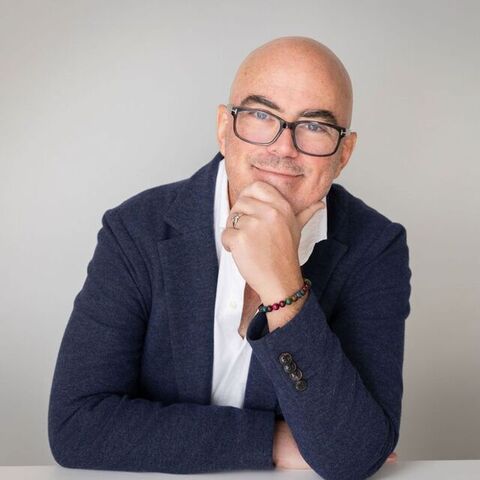
I'm your host,
Chris McDuffie.
I'm very excited to celebrate my 9th sober birthday with you this month.
I'd like to thank my sponsor,
Jerry,
My sponsees,
My two beautiful children,
My AA Home Group and Alcoholics Anonymous,
As well as each of you who have joined me here on Spiritual Sobriety.
Thank you all for being a huge part of my spiritual path.
Today's lesson will be on the Eightfold Path's Suggestion of Right Livelihood.
As we look at the Right Livelihood and the 12 Steps,
Consider how each of these two spiritual paths not only helps end suffering,
But allows joy and happiness to manifest from the end of suffering.
For today's discussion,
We will benefit from the teachings of Professor Krishnan Venkatesh,
Professor of Graduate Studies at St.
John's College in Santa Fe,
New Mexico,
And from Buddhist scholar and teacher Joseph Goldstein.
According to the Buddha,
He defined Right Livelihood this way,
Quote,
These five trades should not be taken up.
Trading in weapons,
Live beings,
Meat,
Intoxicants,
And poisons.
Professor Venkatesh's article entitled Why Right Livelihood Isn't Just About Your Day Job,
Published in Tricycle,
Writes,
Right Livelihood involves mindfulness of our place in the whole and thus becomes the foundation for intelligent social activism and ecological responsibility.
The Buddha's teachings of the Eightfold Path's Right Livelihood is clearly not just about outlining rules for proper employment and staying clear of careers that directly create suffering.
More importantly,
He suggests that we need to practice right view and right action even in our careers and jobs.
Joseph Goldstein shares what His Holiness the Dalai Lama calls the kind heart or the radiant heart bringing it to all that we do as recipes for right action and right livelihood.
For more on this,
I direct you to Joseph Goldstein's teachings on right action and right livelihood.
Professor Venkatesh's work reminds us to,
Quote,
Ensure that we do as little harm as possible to anyone or anything while we're earning our daily bread.
Remember today's opening quote from the Buddha regarding right livelihood.
I'll read it one more time.
These five trades should not be taken up,
Trading in weapons,
Live beings,
Meat,
Intoxicants,
And poisons.
Professor Venkatesh's article asks that we consider the suffering that we create for ourselves and others in all of our actions,
Even in our jobs and our careers.
He advises when we are not mindfully aware of activities that require dishonesty and injury then we will annul any spiritual progress we have made.
He adds it has become much harder to evaluate the consequences of our jobs.
We can do the research or we can shut our eyes.
In either case the result is that deep inside we find ourselves unsettled.
From a 12-step perspective,
Right livelihood seems to me to be the champion by the 12 and principles,
Quote,
We practice these principles in all our affairs.
Yes,
Even at work.
So do we speak of the 12-step principles only in our meetings or do we extend practicing these principles at home and at work?
And what about the actions that we as 12-steppers are suggested to practice daily in step 10,
Step 11,
And step 12?
Do we extend these practices to our commute,
Our jobs,
Our colleagues,
And whom we serve?
What does the chapter in the big book called To the Employers have to say about wise actions and wise livelihood?
Is an employer or a union really caring for an employee who suffers an addiction while at work by simply looking the other way?
What does to thine own self be true suggest for our actions in our home life and our careers?
Those of us who have a job or a career,
Who do the commute,
The travel,
The after work emails,
Do we allow this to take us mindlessly away from living a spiritual program?
Do we have work-life balance?
What effect does this imbalance,
If we have,
Have on our ability to serve others or help others or help myself?
My AA sponsor Jerry taught me,
Do not let the great things that you get from sobriety take you out of sobriety.
According to the Eightfold Path,
Right view,
Right action,
And right livelihood are very closely aligned.
So what do I do with my salary?
How do I choose to spend my income?
Do these choices create more or less suffering for myself,
The environment,
And others?
Please know that none of the Buddha's suggestions or the 12-step suggestions are meant to make one feel guilty or shameful about one's employment or lack of employment.
Rather,
They are pathways that can help us to cultivate joy and happiness and free ourselves and others from suffering.
So in Buddhism,
Like the 12-step actions,
The key is a balance or right effort or,
If you prefer,
Progress not perfection.
Professor Venkatesh speaks to the needs for balancing our efforts with work and career.
He writes,
The Buddha gives this advice to rich lay people.
A householder knowing his income and expenses leads a balanced life,
Neither extravagant nor miserly,
Knowing that thus his income will stand in excess of his expenses,
But not his expenses in excess of his income.
Just as the goldsmith or an apprentice of his knows on holding up a balance that by so much it has dipped down,
By so much it has tilted up,
Even so a householder knowing his income and expenses leads a balanced life,
Neither extravagant nor miserly,
Knowing that thus his income will stand in excess of his expenses and not his expenses in excess of his income.
I love how Professor Venkatesh concludes this article.
He writes,
From a broad perspective on livelihood,
We can see that the idea of a life in which income and expenditure are balanced encompasses the greater household of the socio-economic and ecological world in which we live.
Joseph Goldstein's talk on Right Action and Right Livelihood found on The Inside Hour celebrates the practice of bringing joy and happiness to our work and volunteering and our service work.
Here Joseph Goldstein references Thich Nhat Hanh's teachings that we all have a responsibility to react,
Protect,
And support one another,
As he calls it,
Keeping the Sangha beautiful through right action and right livelihood.
Joseph Goldstein reminds us not to keep our livelihood and our spiritual practices separate from each other.
His lecture also celebrates the Buddha's chief aim of the entirety of the Eightfold Path,
Quote,
To devote our actions to a life of serving others,
To be attentive to the needs of others,
And to be helpful.
And Joseph Goldstein closes with a final reminder.
It's not what we do,
But how we do it.
I hope you have enjoyed today's lesson on right livelihood.
As always,
I value your feedback and your thoughts on each discussion.
Please be sure to click Follow so that you can get an update of each new podcast.
I hope that you have a wonderful day,
And thanks for being a part of Spiritual Sobriety.