For this meditation,
Please come to your most comfortable seated position.
If Sadasana or Ardha Sadasana,
The Adepts pose,
Is part of your practice,
I would recommend this position.
The most accessible form of this pose for most Ardha Sadasana is performed by bringing your left heel in towards the body to make contact with the perineum and then bringing your right heel to rest in front of the left leg.
Sadasana is one of the most energetically powerful positions for meditation as it stimulates the mudhara and sva-risthana chakras and establishes a circuit for prana to flow through the body.
Take a moment here to settle into this position and feel free to pause the meditation and look up a more detailed explanation on Sadasana if you wish to try it for the first time.
Now bring the hands to rest,
Palms facing up on the knees if they aren't already,
To complete the circuit in your body to help circulate prana during this practice.
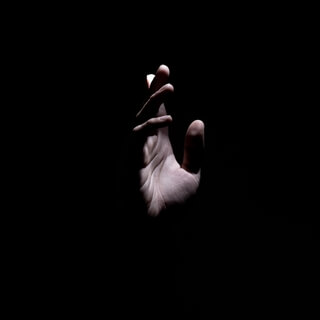
Next I invite you to move the hands into Chin Mudra by connecting your thumb and index fingers lightly,
The other fingers remain touching side by side but relaxed.
This mudra is known to increase concentration,
Energy and stamina for your meditation practice.
The index finger representing individual consciousness and the thumb representing universal consciousness and with this mudra we establish a connection between the two.
Now that we have curated our meditative position in such a way to connect us to our being and assist vital life energy,
Prana to circulate through the body,
We move our focus to the breath,
Our breath being the method during this meditation in which we move prana in and out of the body.
You can imagine each inhale as bringing life into yourself and each exhale as expelling that which is no longer needed.
It can also be seen as we inhale that which gives us life and we exhale that which gives life to other things.
Focus now on deep,
Slow and balance inhales and exhales in through the nose,
Filling all the way into the lower lows of the lungs.
Through a consistent practice,
This kind of breath becomes automatic,
Becomes your baseline from which you approach the rest of your pranayama.
Pranayama being the act of consciously controlling or extending the breath.
With each breath feel yourself renewed with this life giving energy,
Anchoring yourself to this present moment.
This moment and your breath being all that you need right now.
These two things being ever constant in our life.
The breath always supporting and sustaining us even though it is not often the object of our focus and the present moment being the only true moment we have.
The layer of our being in which prana circulates is known as the pranamaya kosha.
It moves through thousands of energetic channels known as nadis.
In your mind's eye,
Picture the healthy flow of prana you've begun to facilitate moving throughout this system,
Energizing their being and energizing their practice.
Prana flows in various directions throughout our experience.
These directions being known as the prana vayu,
Vayu meaning wind.
For the next little while we'll focus our attention on each of these prana vayus and how each of them can be felt throughout the body and the breath.
Beginning with apana vayu,
The descending wind,
Exhale completely and on your next inhale let the breath move in through the nose and with mental attention follow it down to the base of your spine.
On the exhale,
Feel as if your breath moves down and out through your sit bones,
Grounding you to the earth.
Repeat this for the next few moments on your own.
As you exhale,
Feel as if your breath moves down and out through your sit bones.
Moving on to Samana Vayu,
The equalizing wind.
Exhale completely and on your next inhale let the breath move in through the nose and fill the front,
Sides and back of the torso evenly.
While the front belly will expand somewhat,
Keeping it gently contained will allow the side waist and mid back to expand equally around the radius of the body's center.
On the exhale,
Move the breath evenly throughout the body,
Distributing the energy evenly.
Inhale again,
Letting the breath fill the cylinder of the torso as before.
Exhale,
Move the breath deeper inward,
Toward a small ball of fire or light within the center of the body that increases in intensity each round.
Repeat this for the next few moments on your own.
Repeat this for the next few moments.
Now the pranavayu,
The inward moving wind.
Exhale completely and on your next inhale allow breath to lightly flow through the nose and move to the center of the mind.
On the exhale see the breath turn into a white light,
Washing the mind free of clutter and noise.
Repeat this for the next few moments on your own.
Now the pranavayu,
The inward moving wind.
Next is udana vayu,
The ascending wind.
Exhale completely and on your next inhale imagine the breath moving up from the earth into the soles of the feet and climbing up the legs,
Through the spine and up the chest.
On the exhale invite the energy to continue moving upward and out through the crowd of your head.
Repeat this for the next few moments on your own.
Now the pranavayu,
The inward moving wind.
Exhale completely and on your next inhale.
Exhale completely and on your next inhale.
Finally,
There is vayana vayu,
The diffusive wind.
Exhale completely and on your next inhale let the breath draw from the nose to the heart and even move to the back of the heart into the deepest,
Darkest corners.
On the exhale imagine the breath moving out through the arms and legs and through the length of the torso.
Imagine the breath moving out through every pore in the body,
Expanding you beyond the boundary of your skin.
Repeat this for the next few moments on your own.
Exhale completely and on your next inhale.
Exhale completely and on your next inhale.
Exhale completely and on your next inhale.
Begin to return your breath to its natural rhythm,
Letting the effects of the practice assimilate into your being and hopefully bringing a greater understanding and appreciation for this vehicle that is the breath,
Moving prana in and out of the body.
Take a moment to thank yourself for taking this time to sit in meditation.
I thank you for allowing me to be your guide and for letting me share my practice with you.
Until next time and with love,
Namaste.