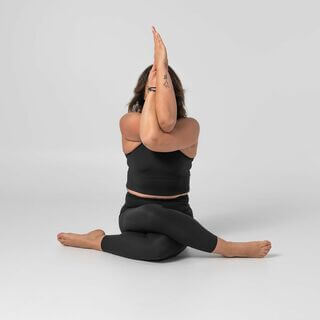
Hello and welcome.
I'm Bessie,
A mindfulness coach,
Yoga teacher and speaker.
Today I want to talk about something that many of us struggle with,
Mindfulness and acceptance when dealing with difficult people.
Coming across difficult people in our lives is inevitable,
It's unavoidable,
Whether it be our family,
Our friends,
Our co-workers,
Or even strangers.
And we cannot control what comes at us.
It's incredibly easy to stay kind and accepting when everything is going well.
But what happens when we face opposing opinions or hurtful situations?
This is where our true practice begins.
Let me start with a story.
There's an old tale about a monk known for his kindness and patience.
One day while traveling through a village,
He encountered a woman who began to insult him harshly,
Criticizing everything from his appearance to his way of life.
The monk listened quietly without responding.
After a while,
The woman grew tired and she walked away.
And a disciple who was with the monk asked,
Master,
How could you endure such harsh words without reacting?
The monk replied,
If someone offers you a gift and you refuse to accept it,
To whom does the gift belong?
The disciple answered,
To the one who offered it.
The monk smiled,
Exactly.
I did not accept her anger so it remains hers.
This story highlights the power of not internalizing negativity and maintaining inner peace despite external turmoil.
This is absolutely easier said than done.
I am incredibly reactive and that's probably one of the reasons I began my journey through mindfulness and yoga and it's helped me immensely.
But I still can't say I was reactive.
It's a practice for me.
It's ongoing.
I can still be quite reactive.
I have a daily practice of mindfulness and I often feel like I'm kicking goals in the compassion department.
When I'm surrounded by people with aligned values and opinions,
Staying kind and accepting comes naturally.
But when I encounter individuals whose opinions I don't agree with or those I find difficult to like,
My judgment and my criticism can quickly surface.
I don't think I'm alone here.
And it's important to acknowledge that the practice we do in good conditions prepares us,
Sure,
But the real work and lessons are learned in challenging conditions.
These difficult interactions are opportunities for growth.
I often say to my kids when they ask me if they're being good or if they're deserving of,
I don't know,
Ice cream after dinner,
And I always say to them,
I'm not impressed by you behaving well whenever you are comfortable and you get exactly what you want.
What I want to see is how you behave when I set boundaries or give consequences or just simply say no.
Navigating difficult situations can be incredibly challenging,
But they also offer us profound opportunities for personal growth.
This can relate to children all the way to adulthood.
Each time we face a difficult person or situation,
We're given a chance to reflect,
Learn,
And strengthen our mindfulness practice.
These encounters teach us more about our own tendencies and reactions than any calm,
Harmonious interaction ever could.
Before diving into this talk,
It's important to understand that the goal isn't to be kind and lovely to everyone.
This is a huge misconception when it comes to compassion.
Setting boundaries with people who hurt you or whose values vastly contract with yours is crucial for maintaining your mental and emotional well-being.
Now,
Let's explore the lessons we can learn from these challenging interactions.
When you notice yourself judging someone,
Take it as an opportunity to observe this tendency.
It's a sign that you might need more practice.
I think we can all relate to this next example during the COVID pandemic.
Many of us faced differing opinions on health guidelines.
It was easy to judge those who didn't share our views.
Recognizing this judgment is the first step towards understanding and compassion.
Difficult people often have their own struggles and pains,
And by recognizing this,
You can find compassion for their situation.
Now,
If it's a super difficult situation and someone has hurt you to the point where you could never,
Ever imagine forgiving them,
And then within five minutes,
Turning around and showing that compassion and showing that forgiveness,
Well,
That is some black belt compassion right there.
But that's not to say that you can't potentially get there over time.
This advanced practice can transform your perspective and deepen your empathy.
On a lesser scale,
Imagine being in a long checkout line,
And someone is rude to the cashier.
Instead of reacting negatively,
Consider what might be going on in their life to cause such behavior.
It doesn't make it okay,
But using compassion and empathy,
It just kind of brings us all a little closer together.
That patience,
That understanding,
That empathy,
That understanding,
And that patience,
It isn't just about waiting,
But maintaining a positive attitude while waiting.
Difficult people can be our greatest teachers in cultivating patience.
Think about how frustrating it can be,
And this is admittedly my biggest pet peeve,
Which is why I'm using it as an example.
When someone is walking slowly in front of you at the mall or in a shopping center,
Instead of getting annoyed,
Use this as a moment to practice patience and observe your thoughts.
Sometimes in these moments,
I find myself getting so frustrated,
And I just stop,
I take a breath,
And I take a moment to realize that I'm going to save about three to five seconds by walking around,
Probably waste more time getting frustrated.
In moments of conflict,
Take a step back and consider your options mindfully.
How can you respond in a way that aligns with your values?
Leaders,
You're the core of this positive change,
Setting the tone for perhaps your entire organization.
Maybe you are a leader because you are a parent,
You are setting the tone for the entire family,
Maybe you are a teacher.
We can all relate to being a leader in some way in our life.
So reflect on how your decisions impact not just the immediate situation,
But also the long-term relationship and environment.
Demonstrating mindful behavior can influence those around you.
By staying calm and composed,
You set a standard for others to follow,
Fostering a more mindful and respectful either workplace or home environment or classroom.
Regularly check in with yourself to ensure that you are not just a leader,
Regularly check in with yourself to ensure that your actions align with your values and that you're not being swayed by external pressures.
This self-awareness is crucial for personal growth and effective leadership.
Recognize when it's necessary to set boundaries with difficult people.
This one's really,
Really important because as I said before,
Compassion and empathy,
There's a huge misconception around that.
Mindfulness,
Also a huge misconception that mistakens acceptance and forgiveness for allowance.
Boundaries are essential for protecting your mental health and ensuring that you maintain your peace.
But this doesn't mean that you have to be unkind.
It means knowing when to distance yourself from negativity.
For instance,
If a colleague consistently brings negativity into your workspace,
It might be necessary to limit your interactions with them.
Recognize that others' actions and opinions are often reflections of their own inner struggles.
And by detaching yourself emotionally,
You can respond more compassionately.
I think in my day job,
I tell myself often,
Step out of the situation and don't take it personally.
We all communicate differently,
We all react differently,
We all respond differently to stress.
And in your workplace in particular,
There are a lot of opportunities to be very stressed because most workplaces are understaffed and overworked.
Dare I say that?
So how can we apply these lessons?
When faced with a difficult person,
Take a moment to pause and breathe.
And this simple act can prevent a knee-jerk reaction and allow you to respond mindfully.
Use difficult interactions as a mirror to reflect your own behaviors and attitudes.
What can you learn about yourself from this situation?
Recognize that others' actions and opinions are often reflections of their own inner struggles.
Again,
It's so easy to take things personally.
It is very likely not you.
It's really important to perhaps set a mantra,
Write it on a sticky note,
Leave it on your desk,
Leave it on your fridge,
Put it in the mirror in front of your bathroom when you're getting ready to remind yourself it's not personal.
And by detaching yourself emotionally,
You can respond more compassionately.
This practice is undeniably challenging.
If I'm speaking from personal experience,
I meditate daily.
I do yoga several times a week.
I practice self-care.
I get outside in nature.
I listen to myself,
My body.
I think,
Again,
I am kicking goals in this department.
And this practice of acceptance and compassion and empathy when it comes to difficult people and forgiveness is incredibly difficult.
The realization that I still have much work to do was a profound eye-opener for me.
And that's one of the main reasons I decided to do this talk.
It's so easy to think we are doing amazing until we turn inward and engage in self-study.
It can be so confronting,
But it's important to remember not to be too hard on yourself.
The path to mindfulness and acceptance is ongoing.
Keep looking for the lessons.
The universe will present you with them until you learn them.
And over time,
You'll find that what once seemed difficult may not be as challenging.
These tools,
They might seem soft or weak,
But in fact,
They're the hardest to cultivate.
People think of mindfulness and compassion and forgiveness and meditation.
All of it is pretty fluffy,
Especially in the corporate world.
But they are the hardest to cultivate.
They are the hardest to cultivate.
This is where the hard work lives.
In the workplace or at home,
Wherever you are a leader in your life,
In your community,
Must recognize this and allow it to filter down,
Leading to the success of the organization,
The home,
Or the workplace.
Thank you for joining me today.
I hope you embrace these practices and may you find greater peace and resilience in your interactions with others.
Remember the story of the monk.
By not accepting the gift of anger,
We maintain our own peace.
We protect our own peace and our own compassion,
Even in the most challenging situations.