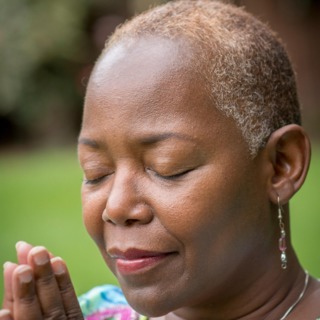
Greetings and welcome to the Why Struggle Podcast.
I'm your host,
Barbara J.
Faison,
And my intention with this podcast is to offer ideas,
Insights,
And inspirations so you can live life better.
Greetings and welcome to 2024 Week 50,
Memories and Mindfulness.
If you're new to the podcast,
Welcome,
And if you listen regularly,
Thank you.
This is an episode about how using your memories can be a mindfulness practice.
Over the past three weeks,
I have shared how to use three Ms.
Music,
Your Mouth,
Meditation,
And Mindfulness to stress less.
The fourth M is Memories.
It's time to learn more about how connecting with your memories can be helpful for managing your emotions and stress.
Enjoy this excerpt from Five Mindful Ways to Struggle Less and Enjoy Life More.
Memories are a great way to release struggle.
This is one of my favorite ways to struggle less and enjoy life more.
A few years ago,
When I was working in corporate America and got stuck in Boston for a few days due to bad weather,
I took the train to Connecticut to visit my niece who was working there.
When I returned home,
My husband,
T.
D.
,
Had planted rosebushes and other plants we talked about a few weeks earlier.
I had a whole flower garden to view,
And I take in as soon as I arrived at the house.
In addition to seeing him after being gone for several days,
Pulling up to our house and seeing the rosebushes and flowers brought me so much joy.
It's a favorite memory of mine.
It makes me smile whenever I think of it.
Remember that accident I had back when I talked about mindfulness and meditation?
After the accident,
My sister-in-law sent me flowers to brighten my day,
Another go-to memory that makes me smile.
She and my niece were in an accident a few weeks prior to mine.
She told me my brother handled everything and she was able to relax.
At the time,
I was single and I had to handle everything on my own.
She wanted to offer me something that would make me smile,
And it did.
This is what I call one of my GTMs,
Go-to memories.
Just as we discussed earlier,
I have go-to phrases that remind me to redirect my thoughts when they aren't serving me.
I also have go-to memories that I pull up when I need to shift how I feel and change the state in my body.
A state is simply how you feel.
Our feelings change from moment to moment.
In fact,
Check in with how you feel right now.
Name that feeling.
Right now,
I feel excited.
What about you?
Say that feeling out loud.
I will check in with you later to see how you're feeling in a few minutes.
So,
For example,
If I'm feeling sad and I don't want to feel sad,
I can bring up this memory of driving in and seeing the beautiful flowers that my husband planted.
And adding on to that memory,
The flowers have really grown,
And so have flowers.
I love the rose bushes,
And it still brings me joy every time I walk outside.
So,
Why is that?
Why do I feel how I feel when I think of these memories?
There's some research on that.
Nerd alert.
As part of the study,
Participants were asked to remember a recent positive memory of being with another person.
The research found that by savoring a positive memory,
There was a kind of re-experiencing of the event contained in the memory.
Senses were re-engaged and the emotions associated with the memory were re-experienced.
As well as this,
The meaning contained in the positive memory helped to push against any negative beliefs that tried to push their way through and cause trouble.
Feelings of warmth,
Social safety,
How connected you feel to others,
And calm were increased while negative feelings were decreased.
Research over the last decade has shown us that we have an enormous and ongoing capacity to change our brains.
Positive memories activate positive emotion.
The more you do this,
The more your brain will change to accommodate this.
It's called experience-dependent neuroplasticity.
I told you,
Nerd alert.
Over time,
It will become easier to access positive emotion by expanding positive memories and to nurture the positive experiences that come from that.
Let's check in now.
How do you feel right now in this moment?
Name that emotion or feeling.
I feel knowledgeable.
So,
Guess what time it is?
It's time to practice.
So,
Get settled in.
As research has shown,
When we have our memories in our mental rolodex,
Much like go-to phrases,
We are reinforcing positive emotions and feelings.
Try to think of thinking of your emotions as an online picture,
Where we can change the filter on the picture.
Engaging with your go-to memories,
GTMs,
Allow you to put a filter on your emotion when needed.
So,
When I come home,
I may not feel the way I want to.
When I drive up and see my rose bushes,
They can give me a new sense of feeling joyful.
Okay,
Are you settled in now?
So,
Let's start connecting to a go-to memory that you can add to your mental playlist.
Take a moment to get comfortable where you are.
Settle in with your body.
We'll meditate for about five minutes,
So be comfortable.
Allow your eyes to close or lower and just become aware of your breath.
Place your hands in your heart space.
Make a declaration out loud.
Repeat after me,
I open myself up to create a go-to memory that makes me feel joyful.
Continue breathing in and out and relaxing your body.
And begin bringing to mind something that makes you feel good,
Happy,
Or joyful.
Feel that feeling in your body.
Connect with the memory and notice how your body begins to change.
Are you engaging with your memory?
Who is there with you?
Begin to notice who's with you,
What they are doing,
And what you were doing.
Are you inside or outside?
Are you able to feel the wind or the sun or the cool,
Crisp air?
Continue breathing and noticing the details where you are.
Connect to all of your senses.
What do you see?
What do you hear?
Are you eating or drinking anything in this memory?
What do you smell?
Are you touching anything?
What feelings,
Emotions,
Or sensations are coming up?
You are doing great.
Fully engage with all of your senses in this memory so you can continue to lock it in your body.
Continue experiencing your memory in the silence and I'll return shortly.
Breathe and continue to recall the memory that makes you feel good,
Happy,
Or joyful.
Gently begin to bring your awareness back to your physical location.
Bring a smile to your face as you close your meditation.
Wonderful job.
Add a name to this go-to memory.
When you name it,
You can always return to it by name and engage with it the way you just did.
Gently rub your hands together and place your hands over your eyes.
Feel that energy going into your eyes and down into your body.
Relax your hands and open your eyes.
Name that feeling.
You now have a tool,
Go-to memory,
GTM,
That you can use to manage how you feel and shift when you don't like how you feel.
It is practice.
I suggest coming up with at least three memories that can shift you from one state to another.
As we begin to make the decision to struggle less with life,
We can check in with our feelings and our body and decide how we want to feel next.
I hope you're still feeling from that meditation.
End of excerpt.
I grew up listening to the Jackson 5 Christmas album.
Whenever I hear one of those songs from the album,
I will do a quick recording of the song and text or call my oldest friend,
Suzanne.
Sometimes she hears the song before I do,
So she will do the same.
It's a fun tradition we started a long time ago.
It's a great energy booster and a GTM.
What's a GTM you will use?
Leave an observation,
Comment,
Or reflection where you're listening to this podcast.