Hi,
I'm Lindsey Graham,
The host of Wondery Show American Scandal.
Our newest series looks at a fight between the FBI and Wall Street.
It's a story about hedge funds,
Insider trading,
And an investigation that led to criminal charges against dozens of people.
Listen now to American Scandal or listen early and ad free in the Wondery app.
I don't know about you,
But to me,
It feels like there's so much dividing us right now.
If you're like me,
And you're looking for real solutions that can unite us,
There's a weekly podcast tackling just that.
It's called Uncommon Ground with Van Jones.
Be sure to follow Uncommon Ground wherever you get your podcasts.
From ABC,
This is the 10% Happier podcast.
I'm Dan Harris.
Hey gang,
There's a meditation pitfall that's pretty easy to fall into it.
I've fallen into it many,
Many times.
It's the idea,
Which we might hold consciously or subconsciously,
That meditation is really a solo endeavor.
I'm doing this to reduce my stress or boost my focus or make myself 10% happier or whatever.
All of this is fine.
It's totally natural to go into meditation with selfish motivations.
And by selfish,
I don't mean that in the pejorative,
But to take care of yourself.
And it can actually be great.
But it can also be a pitfall in that,
In my experience,
Really,
The deeper you go into this thing,
The more you see that the self is less stable and more porous than you might have previously imagined.
And you also see that it's really impossible to be happy in a vacuum.
Your happiness depends on the well-being of the people around you.
I have ignored this or been ignorant of this to my detriment many,
Many times.
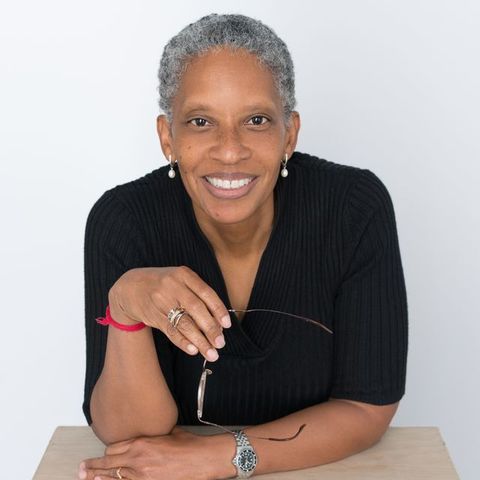
So today we're going to explore this notion of meditation as a team sport with Pamela Ayo-Yatunde.
She is the co-editor of Black and Buddhist,
Which just won the Nautilus Book Award.
She's got a law degree from Indiana University and a theology degree from Columbia Seminary.
She's also founded something called Buddhist Justice Reporter,
The George Floyd Trials,
Which you will hear her describe in this conversation.
I should say,
By the way,
That this is the first of two conversations we're posting this week to mark the one-year anniversary of the murder of George Floyd.
In this chat with Ayo,
Which is the name she prefers to be addressed by,
We cover a concept called shock protection,
Living nobly in a time of ignobility,
How we can all get comfortable with our own ugliness,
Our own racism,
How we can move towards civility.
We talk about various interpretations of the Buddhist concept of no self,
Including viewing no self as interdependence,
And how white people in particular can maintain their focus on issues of race,
Even when we have the privilege of looking away.
That's all coming up.
First,
I do want to get to one item of business.
I was reflecting recently on a conversation I had earlier this year with Lama Rod Owens,
A brilliant meditation teacher and the author of the book Love and Rage.
We were talking about the importance of establishing your practice during good times.
I just want to play you a quick clip of that.
I think this is a quote from Bruce Lee,
Where he says that in crisis,
We don't rise to our expectations,
But we fall to our training.
I don't think that's precisely the quote,
But that's the gist that in a crisis,
We are only embodying our training.
I think sometimes we sit and say,
Okay,
Well,
In a crisis,
I'm going to do X,
Y,
And Z.
I'm going to be really clear,
And I'm going to know exactly what to do.
But when a crisis happens,
Actually what happens is I just fall into my practice.
Whatever my practice was before the crisis,
That's where I'm at.
So if I don't have a practice,
And it's very difficult,
My teachers always said,
You know,
It's really important to practice during the good times.
Practice really hard during the good times,
During the times where it's not a crisis,
Where you're not overwhelmed.
Really take advantage of those times,
Because when something really happens,
Then sometimes we don't have the space to consciously say,
Okay,
I'm going to pay attention to my thoughts.
I'm going to create spaciousness and all of that.
Sometimes we just don't think about it.
I play you that clip because if you are starting to feel like you're getting your feet back under you,
Or even if you've had them back under you for a while,
Now may be a great time to start building the level of your practice so that it can catch you when inevitably you're buffeted by crises,
Both large and small.
I talk a lot on this podcast about our companion meditation app.
On that app,
You can find meditations and courses from the world's best teachers and most eminent scientists.
We also have short talks full of relatable wisdom on topics such as happiness and anxiety.
And we have one on one coaching from experienced meditators who can help you create a consistent practice and answer any thorny questions you might have.
We are offering 40% off the price of a year long subscription to the app until June 1.
We hope that this will give you a nudge,
Whatever nudge you might need to establish a practice that can help you hold yourself up through whatever life throws at you.
Of course,
Nothing is permanent,
As I like to joke.
So go get this deal before it ends on June 1 by going to 10% dot com slash may that's 10% dot com slash may.
Okay,
Let's dive in now with Pamela Ayo-Yatunde.
Pamela Ayo-Yatunde,
Welcome to the show.
Thank you,
Dan.
I know you like to go by Ayo,
So I'll just I'll use that henceforth.
So here we are a year out from the murder of George Floyd.
And I'm just curious whether you have a sense of whether in particular white people are still engaged in these issues.
Now I'm going to use the word we I'm referring to white people.
We all went out and bought all these books,
Looking to be better white people.
But we have the luxury of looking away when it's not crowding our news feeds,
When it's not dominating the headlines.
So I know you're not a mind reader,
But do you have a sense of whether the larger culture is still engaged in these issues one year hence?
Yeah,
I do have a sense.
If we think about the gathering of the Unite the Right in Charlottesville,
Virginia,
That old mentality of we're going to show up and oppress you and we're going to be out in the streets,
I believe was met with a resistance that they weren't expecting.
And that resistance was a coalition of people across a variety of our differences.
And then with the torture and murder of George Floyd,
A very similar response occurred throughout the world.
People were linking arms across differences.
And I don't think that was just in response to these gatherings and this heinous crime.
It's something that's been building for years.
And I think people are paying attention in ways that they weren't paying attention before.
A lot of us will go in and out of sleep,
Right?
In and out of wokeness,
If you will.
But this trial is not over.
In other words,
We've got three more police officers that are scheduled to go to trial for the murder of George Floyd.
And that again will take our attention.
And in between Chauvin's being found guilty and the trials coming up in August,
There have been other killings of unarmed Black people by police.
So this is not a phenomenon that's going away just because there was a trial.
It's different now.
We're paying attention.
And it's been captured on video in a variety of ways,
Seen by many people,
Young and old.
Video's gone viral throughout the world over and over again.
It's different this time.
And so I'm hopeful.
I do hear notes of optimism there.
Yeah.
That doesn't mean that everybody's going to be on the same page,
Right?
That doesn't mean we're going to be singing Kumbaya tomorrow morning.
But as I like to remind people when people say nothing has changed,
I would like to think that many things have changed.
I'm an African-descended person.
I've never been a slave,
Right?
My body has never been in shackles.
I didn't live through Jim Crow.
I grew up in the 60s and 70s.
That era had its own challenges.
This era has its challenges.
The next era will have its challenges.
And we are continually fighting for our humanity.
And that's not going to stop.
For people,
And I'll speak for myself here,
I've had moments of falling back asleep and then waking up.
It's not unlike meditation.
You fall asleep or you get lost in thought and then you wake back up and the waking back up can feel like you're being yelled at by yourself.
Like,
Where have you been?
Why have you been asleep?
You're sort of self-lacerating about having fallen asleep.
And I've noticed that every day when I meditate,
But I have noticed that a little bit around my bandwidth for issues related to violence and bias against minority communities.
I care about it a lot,
But at times I'm not awake to it.
Do you have any thoughts about how we can kind of sustain attention without going to sleep on things that matter to the people with whom we share this country and the planet?
I think what you're describing,
Dan,
Is normal.
In our practice,
At least from a Buddhist point of view,
This laceration that takes place in meditation,
We're supposed to pay attention to that too.
Where does that come from?
And where does that impulse come from?
And try to be gentle even with that,
But not let it become a hindrance to having a meditation practice.
If we can talk candidly,
Frankly,
When you talk about minority communities and how to,
What can I say,
Not be in the pattern of waking up,
Falling asleep,
Waking up,
Lacerating oneself,
And so on,
What if we were to consider that we're all part of the same community?
Maybe we live in different places,
But what if we considered that there's no such thing as a minority community?
There's no such thing as a majority community.
And the ultimate way of thinking that when we go somewhere for fun,
That we make an effort to be somewhere maybe where we don't live,
That we dwell with people we don't work with,
That we don't play with.
Because when we engage with people across a variety of spectrums,
When they are targeted,
When they are hurt,
We feel that.
We don't see them as that minority community over there or that majority community over there.
This is our community.
We are one people.
We are one species.
And sometimes it pains me when I hear the press talk about,
Oh,
The Asian community is up in arms about the killing of Asian women in Atlanta.
Well,
It's not only Asian people who are up in arms.
It's people who love people who are up in arms.
It's people who want safety.
It's people who want justice,
Right?
All of us.
But sometimes the way we express these things,
It's by siloing people and putting them into categories,
Leaving the rest of us out who are also feeling this pain and this hurt and concern.
I'm a Black person who cares about the well-being of Asian people,
White people,
Black people,
Hispanic people,
And so on,
Because we are all one community.
I care,
Too.
At least that's what I tell myself.
And yet,
I have the luxury not to have it fill the whole screen for me,
Not to take up all of the visual field,
Not to take up all of my mental bandwidth.
And I see that because every once in a while,
I'll be talking to somebody from a community of color.
I was on a conference call the other day and a colleague of mine who's Asian American.
We're all chatting amiably.
And then it was her turn to talk.
And she talked about how distraught she was about the ongoing violence against members of the AAPI community.
And I just realized it was like,
Again,
Waking up from meditation.
Oh,
Yeah,
Like,
I have the luxury not to be thinking about that right now.
And I appreciate what you said about having some normalizing,
Falling asleep and waking up and then bringing some mindfulness to the laceration that can come with waking up.
But I thought it might be useful just to articulate what I see in my own mind because I suspect that I'm not alone and that people may want to get a sense of how to deal with this.
You're right.
You're not alone.
I'm wondering,
Dan,
As I'm listening to you,
What if it wasn't really a luxury to be in ignorance about certain things?
What if we didn't consider that a luxury?
What if we didn't consider the fact that we have the power to tune out as a luxury?
Or maybe it's like a poisonous luxury.
It feels good on the surface,
But when it comes to the impact on the heart,
It actually hardens the heart.
It makes us blind.
And so from a Buddhist perspective,
It's not luxurious to be able to turn away from it.
Because of course,
When it comes back around,
Right,
Same thing,
Samsara,
Oh,
I've got to wake up again,
Laceration,
Rather than just saying,
This is how it is.
This is how it is.
This is how it is.
I'm part of it.
I'm in it.
I'm going to respond to it.
And I'm not going to pretend like it's not there.
I really love what you just said.
And it took me a long time to even get a toehold in understanding this concept that you just articulated there about hardening the heart.
And I think part of that is because I have some weird conditioning around language that involves the heart.
My skeptical brain just shuts down,
Fritzes out in the face of that.
But you can think about it,
And anybody who's ever lived in a city knows,
You might have noticed that you get pretty good,
If that's even the right word,
At ignoring homeless people.
In my experience,
If you pay attention to what it's like to make the effort to ignore the homeless people,
That feels worse than seeing the homeless people or carrying a bunch of ones in your pocket so that you can engage with and assist homeless people.
And it just seems like a rough analogy to what you just described.
It takes a lot of energy to go to sleep.
And I use the term luxury,
And you,
I think rightly honed in on that this is a painful addiction we have to falling asleep.
And we might think it serves us in some way,
And maybe it does in some way,
But it may be hurting us in pretty profound ways too.
Yeah,
Because I think it may be the case that many of us just aren't prepared to accept ourselves as we really are.
Some of us aspire to be loving and kind and generous,
And we will also walk right over someone who's flat on their back,
Drunk,
Homeless,
That we carry both of those things.
And then to be able to sit in meditation and be really honest about the fact that,
Yeah,
I passed up three people today and didn't know what to do.
I passed up three people today and didn't even make eye contact,
Didn't say a word,
Didn't offer anything.
I did that too while I'm sitting here in meditation trying to cultivate a compassionate heart.
Thich Nhat Hanh,
I believe the great Zen master said something to the effect of,
You know,
If you look long enough in meditation,
You will see Hitler.
And it's all in there.
As you've said in a way that I find it's such a valuable reminder,
The point is not to lacerate.
Point is to see it with some warmth and then to make better decisions rather than getting caught up in the selfish dialogue of what a bad person I am.
Dan,
You said something,
And I have read many of Thich Nhat Hanh's books.
And when I entered Buddhism,
Actually it was through the Community of Mindful Living,
Which is part of the Plum Village tradition founded by Thich Nhat Hanh.
And I've read his poem many times,
Please Call Me by My True Names,
Which is about us having the capacity for good and evil,
All of that.
But when you said what you said,
Which I had never heard before,
That if we sit long enough,
We'll see Hitler in my body,
My body just tightened up to a degree I hadn't felt in a while,
Like instantaneous.
And I wonder,
What does it take for us to be able to sit with something like that for just a couple of minutes?
And if we could sit with the fact that we have the capacity for that kind of evil,
How might that inspire us to refrain from and renounce evil?
How do you think it might?
What's the mechanism there?
Because this could be counterintuitive to people,
Especially people who are new to meditation or Buddhism or new to this podcast,
They might be listening to this and say,
Okay,
So if I get in touch in as warm a way as possible with my own ugliness,
My own capacity for,
As you say,
Evil,
What's the good in that?
Yeah,
It seems like there's got to be a counterbalance to it because we don't want to believe that's who we are at our core.
Even if we have the capacity to do harm,
Which we do,
We don't want that to become our personality.
So there needs to be the counterbalance to say,
I'm also able to do good in the world.
I'm also able to serve others.
So to be able to sit with the capacity,
To sit with the reality that we can harm others,
Hopefully will lead us to a place of humility,
Right?
So we're not ego clinging,
Ego tripping,
And so on.
And then we pay attention to that capacity,
That impulse when it arises.
Hopefully we're catching it.
Oh,
I want to tell them off.
Oh,
I want to smack them in the face.
Oh,
You know,
I want to do damage because I'm angry.
To be able to catch ourselves because we know we have the capacity to go there,
Breathe through it,
And turn away from it.
The denial of that capacity is probably what gets us actually in trouble.
And so the wisdom then,
You bring the wisdom in,
I am wise enough,
I've lived long enough to know that I have the capacity to do harm.
I've practiced a long time.
Hopefully I'm better at catching that impulse.
And I have taken vows to do no harm.
Hopefully the combination of all of those things will prevent me from acting on that most base instinct that we've seen in this country over the past five years.
It's been a real unleashing of that kind of aggression.
So clearly many of us have it.
I want to give you another quote and see what you make of it.
So you can riff on it and see if it lands for you.
But just came to my mind as I was listening to you talk.
I have an executive coach,
His name is Jerry Colonna.
He's also become a real friend.
And he kind of,
For the last couple of years,
Has been doing couples counseling between me and the CEO of 10% Happier,
Ben Rubin is also a very,
Very,
Very good friend.
And just helping us have a better relationship because our relationship is so important to the rest of the organization.
And Ben and I have had more than our share of conflict over the years.
And Jerry at one point said something to the effect of violence.
And by the way,
He didn't just mean,
You know,
Like grabbing a truncheon and slamming somebody upside the head with it.
Violence can be interpersonal,
It can be,
You know,
A snide comment,
It can be cutting somebody off.
But violence,
He said,
Is what we do when we don't know how to handle our own suffering.
Does that jibe with what you've been talking about over the last couple of minutes?
I would have to agree with that.
That ultimately,
Violence is what happens when we don't know how to deal with our own suffering.
We don't know how to hold it.
We don't know how to convert it into the path of wisdom.
We don't know how to use that energy for reconciliation.
We are reduced to the state of an infant.
We've lost all of our senses.
And so we just act out.
On the other hand,
You know,
We can't always prevent violent thoughts,
Right?
Sometimes things take us by surprise and we're struck by the hurt.
The hurt is what gets our minds going in terms of imagining how we might hurt someone.
So,
Okay,
I'm speaking from my own experience.
I've gone through these things,
Right?
I can think of a time where I was very young.
I was renting an apartment.
They told me I would have to leave because they were giving the apartment to their child who just got married.
They were going to do some refurbishing and they did it while I was still living there.
I couldn't sleep.
I couldn't study.
I couldn't do anything.
And I was just so angry that I thought about destroying the place.
You know,
I'll get back at them.
And sometimes that violence then is,
You know,
It's an expression of our powerlessness.
And I think that's something else we've seen in this country over the last several years is that people have,
And they've said it,
I feel powerless.
My power has been taken away from me.
I'm going to get together with another group of people who feel the same way and we're going to exert our power through violence.
So yeah,
I would have to agree with their coach.
In your own practice,
How do you work with when you see sort of violent or unconstructive aspects of the human repertoire arising in your own mind?
How do you work with that?
Yeah,
You know,
There's so many expressions of that.
So I'm a pastoral counselor.
And so some of my clients have done things that they regret.
And that counseling space,
My duty is to create a space for the non-judgmental unfolding of whatever is real for them,
Whatever they've experienced,
Whatever they've done,
And to create a space where they can gain greater insight into what led to those behaviors and help build up their capacity for making better choices.
That's in the counseling space.
Out in the world,
I've been everything.
I've been in awe,
Not in the positive way.
I've been in awe at how hurt people have felt.
I have been in awe at how easily we have been manipulated and bullied.
I have been sad.
I've been in despair.
And I've also been encouraged as well.
Like I talked about before,
The people coming together saying,
You know,
Enough is enough.
You've gone too far.
We're not going to be a country where people are tortured and murdered on the street by police officers.
We're just,
We're not going to stand for that.
And so the way I work with it is to accept it.
It took a while.
Even when I think about how this country has responded to the COVID-19 situation.
Initially,
It was we need to hunker down and take care of each other.
Then it was,
Oh,
This is having a negative impact on the economy.
Then it was,
And not necessarily in this order,
But oh,
It's really old people living in nursing homes who are dying to,
Oh,
No,
It's Black and Brown people with underlying conditions who are dying.
We're not going to wear a mask in the interest of liberty,
Just madness.
And so much has been revealed to me.
Much has been revealed to me these last five years,
Especially this last year and a half.
And the way I work with it,
I just continue to sit,
I continue to meditate,
And I'm committed to listening to the cries of the world.
This is Avalakiteshvara in the Zen tradition,
A deity,
An archetype that listens to the cries of the world.
And so even in my anger and despair,
I'm still committed to practicing compassion so that I can offer the best that I can offer,
Even in these crazy times.
Lastly,
I'll say,
Dan,
Also,
I've had to think,
I'm sure many of us have thought,
How am I going to die?
Am I going to die from COVID?
Am I going to die from violence?
There's so much of that going on right now.
And so to kind of get good at it,
I'm going to think,
How am I going to die right now?
And so to kind of get good with,
I could die from a variety of things.
The question is,
How am I going to live right now?
With these existential challenges,
How am I choosing to live right now?
Over the past year,
Are there times you've struggled to muster compassion where you've felt like some version of the younger you stuck in an apartment that people are renovating while they're living?
Yeah,
It's been challenging.
People talk about,
Especially in this country,
How divided we are.
I think we've been divided for a long time.
I think for me,
The difference now is how we have made enemies of one another without even knowing each other,
Based on a political opinion,
Based on an appearance,
Based on a mistake.
There's been a Sandra I think people come to me and they ask,
What is my purpose in life?
I don't know what my purpose in life is.
I will say,
I don't know about your particular purpose.
We can find out,
But I know one thing as a human being,
Since we know that we are capable of doing heinous acts,
Our purpose should be at least to promote civility,
That we are not gonna survive if we are not at least civil with one another.
Those are the things that have been on my mind these days.
Can you tell us about what Buddhist justice reporter is?
Mm-hmm,
Yeah.
So I lived in St.
Paul,
Minnesota,
When George Floyd was tortured and murdered.
And that was after it became apparent that COVID would have an impact in the United States.
We were already hunkered down for several months when he was tortured and murdered.
So before that happened,
I was already sitting with anger and confusion.
Like,
How are we gonna make our way through this when people don't even agree on what we need to do to keep each other safe and refuse to do the things that we know work?
How long is this going to last?
My way of life has been undermined.
I'm not happy about that.
I'm a social person,
Right?
So you take that away from me,
I'm not a happy person.
Sitting with this,
Trying to listen to the cries of the world,
And then George Floyd was tortured and murdered,
Not far from where I lived.
So I sat with that for a month and then said,
I'm gonna reach out to the Buddhist communities that I'm a part of,
In particular,
The people of color,
BIPOC communities,
And just find out how has this torturing and killing impacted you?
How have you been living the last half year?
And is there anything that we can do together to support one another and address what's taking place here?
So about 15 people responded to that open letter.
We met for about five months,
Arrived at this concept that we call Buddhist Justice Reporter,
The George Floyd Trials,
Because as Buddhist practitioners,
We said,
The least we can do is take advantage of this unique opportunity to observe a trial like this,
Open access to anyone,
And then comment on it with the hope that we can have a conversation,
At least within the Buddhist communities,
About criminal justice,
Which is not something that we talk about much because it's been understood by some Buddhist practitioners that we don't do justice.
Right,
That's political,
We don't do justice.
And that by bearing witness to the trial,
A trial that was likely to go in the other direction,
Because that's what history shows us,
Police officers tend to walk when they've killed an unarmed Black person,
That no matter which way the trial went,
By bearing witness to this trial,
People would know more about how the criminal justice system works as it relates to Black people.
And that's how this project,
Buddhist Justice Reporter,
Came to be.
When I began talking about it,
Triciple,
The Buddhist Review,
Offered their various platforms to us for publishing.
The Catali Foundation offered some funding for us to get started,
And Common Ground Meditation Center in Minneapolis supports us through fiscal sponsorship.
And so when those three things came together and came together very quickly,
It was like a validation,
Oh,
We should definitely do this,
We should go forward with this.
And the outpouring of support has really been overwhelming.
Can I go back to what you said about the notion that you pick up from your fellow Buddhists of we don't do justice,
We don't do politics.
Maybe that even scales all the way up to meditators generally,
Like I'm not in this thing for activism,
I'm in this thing for liberation on the deep end of the pool,
But maybe on the more shallow end of the pool,
Just for stress relief,
Boost my ability to focus,
Work on my emotional regulation.
But that doesn't have much to do with the news.
Why do you have the sense that people have this feeling,
And what's the counterargument?
Well,
The reason why I have the sense that this is the feeling is because I've heard it many times over,
Over the 20 years I've been practicing Buddhism.
One,
Two,
I've read a lot of suttas and sutras,
And I don't find a lot of support in the ancient text for focusing on justice issues.
And then three,
I don't see a lot of Buddhists,
I don't hear a lot of Buddhists,
And I don't read a lot from Buddhists about how to effectuate change in the criminal justice system,
Or justice systems as a whole.
There is Buddhist Peace Fellowship that started as a bearing witness for peacemaking purposes.
And now I think their mission is social transformation as well.
There hasn't been much in the way of a strong,
Persistent Buddhist presence as it relates to criminal justice.
So those are the reasons why I have this sense.
The counterargument to being interested in justice making from a Buddhist perspective would be that it's disturbing.
It disturbs my wellbeing,
My equilibrium,
My sense of equanimity.
I've also heard people say,
Well,
I don't wanna take sides,
That's not very Zen.
And I also don't wanna feel the suffering of being attached to an outcome.
I've heard that too.
So my argument to that is obviously you can do what you wanna do,
Meditate for whatever purposes you wanna meditate for.
But what you're saying to me is I can't count on you for support,
As an African-descended person,
I can't count on you for support or solidarity.
I wouldn't be able to come to you if my back was against the wall.
And what you're saying,
I think collectively to any targeted group of people,
In the United States is we are not interested in the existential threats to your life.
And if that's how you feel,
Okay,
You can be explicit about it.
We are not interested in showing up for you when you're being targeted.
I'm not that kind of Buddhist.
Mm-hmm.
Would it be safe to say that part of your rebuttal may also include the notion that like,
Look,
If you're interested in Buddhism,
Well,
The Buddha was pretty articulate from his first utterance post-enlightenment that he was interested in suffering.
And the violence and discrimination being carried out against,
To use your phrase,
Targeted communities,
What else is it other than suffering?
By the way,
On both sides,
The perpetrators and the victims.
So I don't know,
It kind of seems obvious to me that this would fall within the purview of your meditation practice.
But anyway,
Am I articulating something that you would argue?
Oh,
I have argued that,
And I support that view wholeheartedly,
Dan.
I was thinking about the person who is really selfish.
Yeah,
This meditation practice is for me and me only.
You know,
Okay,
All right.
But if a person has that view and they have also taken bodhisattva vows,
Then I would say,
Okay,
How do you square that?
How do you square that this meditation practice is just for you when you have taken vows to help end the suffering of all beings for all lifetimes?
I don't think you can hold both of those together.
Speaking as somebody with a pronounced tendency towards selfishness,
And for sure,
It was what motivated my initial forays into meditation.
You know,
Just,
I wanted to be less of a jerk to myself and others,
But mostly just to myself.
I get the argument that I'm doing this for me.
This is my calm time.
This is my,
You know,
Like I'm training the mind.
I'm in the mind.
But it really goes right back to what you said before about heart hardening and how,
Yes,
I get that that can be seductive because I've done plenty of it myself,
But it actually sucks for you,
The person with the hard heart.
It causes pain to live in a world where there's injustice and to force yourself to ignore it.
Yeah,
And I don't think that they can hold up for very long either,
Right?
I mean,
We can ignore things for a moment,
But the reality is there.
It just keeps coming back.
I don't know what efforts one has to make to avoid the realities that are all around us.
I would imagine that would take a lot of energy to do that.
But you reminded me,
Dan,
In the Insight tradition,
So I'm familiar with just a few traditions,
But in the Insight tradition,
It is a practice to do what we call dedicating the merit,
And that's also in Sot to the wellbeing of all sentient beings,
Right?
The point is not become a narcissist because you've experienced all these things,
But to let the benefit of those things be a benefit to those around you and beyond.
And if there's hesitation to contemplate how you might serve others,
Then you might wanna go deeper into why am I doing what I'm doing?
I wanna say something out loud that I've kind of been thinking about a lot and see if this is something you've noticed too.
It just goes back to,
Again,
Your phrase about hardening the heart,
That narcissism or ignoring other people's suffering,
Just focusing on your own stuff,
Again,
I get why that is a pronounced human tendency.
I've seen it at work in a huge way in my own mind.
But if you truly want to be happy,
I mean,
The Dalai Lama talks about this too,
If you wanna be selfish,
Do it right.
Wise selfishness,
And this is his term,
Not mine,
I might use the phrase good greed,
Takes into account the other people on the bus,
The other people on the planet,
The people around you.
We are a social species.
This is deep within our DNA.
I mean,
We didn't take,
I'm sure I stole this from somebody,
But we didn't take over the planet because we were the strongest animal,
But we took over the planet because we were able to,
And by the way,
We haven't done a good job once we took the planet over,
But we were able to get into this position of the apex predator because we could work together to take down the mastodon.
So it's like,
We need each other.
This is not some just empty bromide.
We actually do need each other.
If anything,
This spike in anxiety and depression during the pandemic should prove that.
So if you wanna do happiness correctly,
The right understanding of it would be to see it as a team sport.
I agree.
Don't you think it's strange,
Dan?
Several years ago when watching the news,
If there was a natural disaster,
We would see neighbors getting in their pickup trucks,
Getting in their boats to help someone in distress,
Down the road,
Bringing water,
And so on.
And that would revive our faith in humanity,
Right?
That when we are all struggling like that,
We will find a way to help each other.
Fast forward to recent times,
We're in a pandemic.
It is understood that we all have to play a certain part in order for all of us to be as well as we can be.
And we have a large part of the nation saying,
I'm not gonna do that.
Not only am I not going to do that,
I'm going to arm myself so that you can't stop me from doing it.
This is a problem.
So many of us know that we need each other,
But refuse on some political grounds to ignore that fact and work against that fact.
If we keep working against that fact,
We will hasten our demise more quickly.
It's guaranteed.
Well said.
I wanna take a quick break and then when I come back,
I wanna ask you about a few phrases I've heard from you.
One is shock protection.
I wanna talk about what you mean by that.
And then also the notion of living nobly in a time of ignobility.
So we'll be right back with that.
All right,
We're back now with Pamela Ayo-Yatunde.
Ayo,
What do you mean by shock protection?
Well,
I've been reflecting a lot these last few years on what it means to be black in the United States,
To be African descended.
And many of us grow up living in a place where we're not able to get to the point where many of us grow up learning to kind of keep our emotions in check,
Our expectations in check,
To be suspicious of good white people,
To work extra hard and bite our lips so that we can move up the corporate ladder,
You know,
All these things.
So that when the reality of racism smacks us in the face,
We're not taken by surprise.
And that's part of what I mean when I say shock protection.
It's sort of like when you talk about equanimity,
Holding both the positive and the negative,
The good and the bad,
But it's not like equanimity as in peacefulness.
There's a seed of neurosis that's part of it,
Right?
And so thinking about the George Floyd situation and the Derek Chauvin,
The nation and many parts of the world were on edge.
Some of us wanted to see that he was found guilty and had plans about what we were going to do if he wasn't found guilty.
Some of us were planning for destruction if he wasn't found guilty and so holding our breath.
And so when I think about shock protection,
I just think about trying to hold it all,
Not being swayed one way or the other,
Preparing for major disappointment,
But not being thrown off your center completely.
And then when I was writing about shock protection as it related to whether Derek Chauvin would be found guilty of murdering George Floyd,
I thought,
Well,
How many times have we been through this?
How many times have we put our hopes into a just outcome?
How many times have there been riots?
How many times have we been through this cycle of samsara?
So while protecting myself from being shocked,
I was also thinking about Buddhist practice.
And according to the story,
Buddhism really may come out of a sense of,
Let's not be shocked by reality.
The Buddha was,
According to various stories,
Was prepared to take over his father's kingdom or his wealth and that his father protected him and that he was.
And then after Siddhartha became older,
A teenager or a young adult,
He found out how life really is,
Was shocked,
So shocked that he couldn't go back home.
He fled into the forest for six years,
Tried everything possible to avoid being human,
Realized that that was not possible,
And then proclaimed the middle way.
And so that's what I'm talking about when I say shock protection.
Unfortunately,
The downside of shock protection is that sometimes it minimizes our experiences of joy,
Just utter joy,
Free joy,
Unfettered joy,
Because we're prepared for this next shoe to drop.
So have you personally struggled with maybe difficulty accessing joy because you're on alert for the next shock?
Sometimes,
Almost definitely sometimes,
Not all the times.
I enjoy life,
I live life pretty freely,
But also when matters of justice arise,
Especially matters of justice as it relates to unarmed Black people,
I don't feel joy.
As a matter of fact,
I didn't feel joy over the outcome.
I mean,
It's just tragic all around,
It's tragic.
And I know that the outcome doesn't really change how it is that we live with one another.
It hasn't changed yet.
There's another trial coming up.
I'm not gonna feel joy about that outcome,
But sometimes I do have joy in life when I'm not thinking about those things,
Which is most of the time I'm not thinking about it.
Like right now,
I'm talking to you.
I'm meeting you for the first time.
This is the first time we're having a conversation with one another about things that matter to us.
I feel joy about this moment and grateful.
Right back at you.
Thank you.
Living nobly in the midst of ignobility,
I believe you ran a retreat recently where that was the title.
I'm probably mangling the title,
But it was something along those lines.
And I just saw those words and I thought,
Ah,
Let me ask Ayo about that.
So can you say more about it?
Yeah,
So this was a retreat hosted by the Barry Center for Buddhist Studies.
It was online for about a week,
Called Remarkable Relational Resilience.
Living nobly in the midst of ignobility.
And the inspiration for the title came from a study that I did when I was doing my doctoral work in pastoral counseling,
Where I interviewed African-descended Buddhist practitioners in the Insight tradition,
Who are same-gender loving women who grew up in church.
And what I learned from their experiences and their practices is that regular mindfulness practice,
Regular meditation practices,
Regular meditation retreats,
Loving kindness meditation on a regular basis,
Understanding the concept of no-self as interdependence and serving in leadership or having some kind of role in sangha,
All promotes their ability to be in healthy relationships across our differences.
Even when these women live with a variety of challenges to their humanity,
Based on racism,
Sexism,
Homophobia,
Sometimes Christian supremacy and so on.
And so I thought,
Well,
This is pretty incredible because what we say about Buddhism is we typically don't say it promotes good relationships,
Right?
It makes us more resilient in our relationships.
Usually we talk about it supports being in solitude and so on.
And so to be relationally resilient in the midst of that,
To be relationally resilient in the midst of a culture that is turning against positive and nurturing relationships is what that retreat was about.
Again,
For folks who might be tempted to think that meditation is a solo endeavor,
On the simplest possible level,
How can we understand that in fact it's a team sport?
Well,
I think the question is what do you do after you come out of meditation?
Who are you with?
Why are you with them?
These practices also come with teachings on ethics,
Philosophy,
Psychology,
For some people artistic expression,
For some people religion.
And so I guess if you were to abstract just the meditation practices out of the context of all those other things,
You can make the argument that it's a solo endeavor,
Right?
And just leave me alone.
This is just for me.
But I think if you're really dedicated to meditation,
That's not likely to be the case.
Because you're going to become maybe expert at regulating how you are with others and people who appear a certain way might trigger you.
They might say or do something that might trigger you,
Whereas before you would be reactive to that.
You're very likely to be less reactive.
Being less reactive means that the person you're with is likely to be less reactive,
Right?
So you don't have the feedback going back and forth like that.
There's a chance that your meditation practice will enhance your relationships because people aren't reacting to you because you're not reacting to them.
And how much space does that create for all kinds of intimacy,
If you will,
If that's taking place.
So yes,
I guess on one level you can claim that your meditation practice is for you alone,
But then see what is the reality?
What is the impact of that on your relationships?
And I think you'll find that actually there is a connection between what you do by yourself and how it impacts others.
Yeah,
And it's not like the mind you take into meditation is completely quarantined from the mind that's with you as you move through the world.
If you've been walking around being a jerk to people,
That is going to kick up a lot of dust in your mind.
And so you sit down and you're going to be dealing with that.
So that's why the Buddhists talk about,
This is a classic Buddhist phrase,
The bliss of blamelessness,
One of the big reasons to be ethical,
It just goes back to this wise selfishness idea that I like from the Dalai Lama being ethical.
It will redound to your benefit on the level of your mind,
Which by the way,
Is the filter through which you experience everything.
Well,
I guess you could call that a wise selfishness.
I would,
And if that's the only way to get people to act right,
I'm with it,
Okay?
Go ahead,
Because you want to have a good meditation experience,
Treat other people with kindness,
Okay?
But if I could motivate someone to look at it differently,
And that is most of your time is going to be spent in relationship,
Not in meditation,
But in relationship.
So since most of your time is going to be spent in relationship,
Why not let that be the motivation for your meditation?
Yes,
And in defense of the Dalai Lama,
That's what I think he would say.
It's not about making your meditation sessions better,
It's about making your mind all the time more peaceful.
And so this improved ability to be in relationship with other people and the world around us,
That is the nobility that the title of the retreat was pointing to,
Do I have that right?
That's right,
And also the differentiation.
So one of the things that I have found very beneficial about Buddhist practice meditation and so on is that it supports a differentiation from people who are engaged in drama,
You know,
The drama people,
Kings,
Queens.
It differentiates the practitioner from people who are so engaged with having their desires met that they can't stop themselves,
Right?
So that's what I mean by the ignobility.
It's just not thinking about how what you do or don't do what you say,
Don't say,
How that impacts those around you.
You don't have a commitment towards the wellbeing of others.
You're just satisfying yourself.
Sitting,
Contemplating your vows,
Contemplating ethical principles and so on,
Renouncing violence are ways that we are gonna go forward in this project we call civility.
And that's the nobility as I see it.
Of course,
I know it's got different roots,
Right?
That nobility does not come from the family you were born into.
Nobility doesn't come from the caste you were born into.
It comes from how you choose to live.
I'm glad you brought that up because a while ago,
I made a note to myself that you said something about,
And I could have heard you incorrectly.
So if I did,
I apologize,
But something about the fact that you had spent no small amount of time looking at the suttas or sutras or sort of the words of the Buddha as they were recorded,
As it turns out many years after he died,
But they were kept alive through oral tradition and then written down hundreds of years later.
And they're now referred to as the suttas or sutras.
And I think you had said something to the fact that there isn't a lot in there about social justice.
And yet I think,
And you inarguably know way more than I do about the Buddhist scriptures,
But I thought the Buddha was known for having said just what you said,
Which is that the caste system,
Which really was in place in India in those days,
That true nobility did not come from your birth.
It came from the quality of your mind,
The training of your mind,
The quality of your actions as a consequence of the training of your mind.
Is that not a form of social justice?
Ah,
So,
Okay.
Dan,
I don't know what I said exactly,
But I'll tell you what was in my mind.
It was in my mind to say that the suttas and the sutras don't say much in the way about criminal justice systems.
And certainly has nothing to say about the criminal justice systems in the United States because these are ancient teachings from India,
Right?
So it has nothing to do with our present day situation as it relates to criminal justice.
In terms of social transformation,
Absolutely.
Absolutely.
Okay,
I could be completely wrong about this,
But this is what I've come to understand about the teachings of no self.
The teachings of no self,
I think,
In my humble view,
Are really about telling the Brahmin caste that there is no divine self that is embodied because you were born in a particular caste.
Show me,
Show me where that is.
It doesn't exist,
There is no self.
There is no divine embodied self by virtue of the family or caste you were born in.
So imagine that you believe that and then you hear it and then you begin to build a community that refutes that and that community is growing and the community is growing and now it's seen as a threat.
It's interesting that Buddhism has probably found one of the most difficult places for it to flourish in the place it was founded,
Right?
Because it was a threat.
So yes,
Social transformation.
And then the Dalit communities in India,
AM and Badgar,
That his Buddhist movement was also a threat,
Right?
Because the so-called untouchables begin to live into their humanity fully,
Now you're talking about turning things upside down and who in power is gonna stand for that?
I think Buddhism has that potential in the United States,
Right,
To humanize people,
Re-humanize people,
To live into their nobility,
To me,
Means living into their full humanity.
And when you begin to do that and you do it in a noble way,
Who in power is going to stand for that,
Right?
But this is what we're doing on the path to civility.
We're gonna rub up against one another.
We're gonna have conflict and we're gonna keep it moving,
Hopefully in the right direction.
If people listening want to be on the path to civility,
What are the basic first steps that you would recommend?
Mm-hmm,
Here's,
Oh,
This is so basic.
I was thinking about this yesterday,
Dan.
This is so basic.
I don't know how old you are,
But I'll tell you how old I am,
Almost 60.
I'm almost 50.
Okay.
We might have a little generational difference,
Let's see.
When you were growing up,
Were you told to greet people by saying hello?
How are you?
Something like that?
Yes,
Of course.
Mm-hmm,
Why of course?
Because of civility.
It's civility.
It's promoting civil relationships that we greet each one with kind words,
That we recognize one another.
So I guess maybe even now today on a most basic level,
We need to recognize each other as human beings who flourish in the context of kindness.
Our human flourishing depends on kindness.
If I start from the position of you are my enemy until you prove otherwise,
That's a lot of work.
So just on a basic level,
Recognizing each other as human beings who need kindness to flourish.
And of course,
And that involves having a commitment to the flourishing of others.
I think it builds faith in each other.
I think it builds faith in one another if we can at least recognize each other and wish each other kindness.
So just to get into the habit of when you meet somebody for the first time or when you're seeing somebody for the first time that day,
To just have a few kind words to say.
Yes,
What about,
I don't know if you grew up with this one,
But I'm pleased to meet you.
Were you ever taught that to tell someone that you were pleased to meet them?
I honestly don't know that I've used those exact words.
I think I might've said,
It's really nice to meet you.
Yeah,
Sure.
So what if we were to really pause before using words like that and just feel it and really look at each other like I'm looking at you right now,
And just say,
I am really pleased to meet you.
I am really pleased to meet you and just pause and look at that person and let them look at you.
As scary as that can be sometimes like,
Oh,
What are they gonna see when they see me?
But just to allow that and then keep it moving,
To be really pleased.
Because you know,
You may never see that person again.
You know that person is a unique individual.
When they go,
They'll be gone.
There'll never be another Dan Harris.
There'll never be another Pamela Ayala Yatunde.
We are unique.
And it's really a miracle that we're even here.
It's appealingly radical what you're recommending,
Which is to infuse these rote phrases if we're even somewhat civil,
Utter on the regular,
You know,
Nice to meet you,
Et cetera,
Et cetera,
To infuse that with actual sentiment.
Yeah,
And feel it.
And actually feel it.
I remember again,
Back when I was young,
I went to Zimbabwe and I was told that in Zimbabwe,
The way you greet someone is when they ask you how you are,
You respond by saying,
I am well,
If you are well.
I was like,
What?
Huh?
I mean,
It took a while,
But then when I began to feel it,
I thought,
Yes,
That's what I want.
I want to be connected like that.
That last thing you said there about I'm well,
If you are well,
It kind of brings up in my mind something you've referenced that I've been meaning to ask you about,
Which is the idea of no self,
Which is of course the toughest Buddhist concepts for a lot of us.
Really in your mind,
No self has to do with interdependence.
Can you unpack that notion,
Please?
Yeah.
Well,
We were talking about Thich Nhat Hanh before,
And a lot of his teachings have to do with interdependence,
Interpenetration,
Interbeing,
That we enter are,
All things penetrate one another,
And so on coming out of the Abhatamsaka Sutra,
Which I highly recommend people reading if they want to know the source of Thich Nhat Hanh's wisdom,
A lot of it is in the Abhatamsaka Sutra and Lotus Sutras.
So the research that I did,
And these women were,
Their bodies largely are situated in the insight tradition,
But when we talked about no self,
They talked about interdependence.
And so it reminded me of some work that was done by one of my former professors,
Dr.
Carolyn McCreary,
Who found that interdependence,
The notion of interdependence is a norm in the African-American community that's been transmitted down over the generations,
That even if we're not Buddhist practitioners,
There's a sense that from an African consciousness that we are connected to one another and to all things.
And so also this happens to be the case in many indigenous traditions,
This concept of belief in interdependence.
So I don't know,
Maybe for Thich Nhat Hanh,
Maybe in part it comes from Vietnam.
For these women,
One could say it's transmitted down from an African consciousness,
But that's how they interpret no self.
I see no self more as no nobly born divine substance that's only in one cast.
Others see no self as something else,
As emptiness,
Emptiness or wisdom.
It's confusing,
Right?
So there are a lot of interpretations for no self.
I think the most important thing as it relates to having a remarkable relational resilience is that even with various layers of oppression and discrimination,
That these women through their Buddhist practices still feel connected with life and have good relationships with people across differences.
I'm just trying to think about how we could put this concept to use in our own lives,
The idea that if you close your eyes and look for you,
Look for Ayo,
Look for Dan,
You're not gonna find some core nugget of you-ness in there.
So that's sort of one rough amateurish way to describe the idea of no self.
So what then are we left with?
Well,
The argument that the women you studied in your doctoral work are arguing that what we're left with is that this not self can be found in relationship to other not selves,
To other people.
What are the practical ramifications of this notion?
Yeah,
I can imagine the practical ramifications are many.
Everything from adoption,
Adopting a child,
Maybe even adopting a non-human species into your family,
Caring for them as if you gave birth to them or brought them into the world,
Caring for your neighbor.
I mean,
Not just caring about your neighbor,
But really caring for your neighbor when they are in need.
You put something that you wanna do for yourself aside in order to care for them.
I think about no self also as selflessness,
Not as in I don't exist,
But as in I'm not that focused on getting my needs met all of the time.
If you combine the practices in the,
What we call the Brahma Viharas,
Loving kindness,
Compassion,
Equanimity,
And sympathetic joy,
You mix all that together,
You mix it up for over a period of time,
I think what you'll find is that you're thinking about the wellbeing of others around you and paying attention to how might I be of service when someone is in need.
It's really an orientation away from consistent,
Constant self-gratification towards how can I promote wellbeing and happiness for those around me and beyond.
I sort of resonate with a couple of things you just said,
One in terms of adopting non-humans.
Right around that time,
A cat emerged from the corner of this little closet where I'm doing this interview and yes,
She must have known you were talking about her.
The other thing you said is about the Brahma Viharas,
These practices of trying to cultivate friendliness for yourself and others,
Compassion for yourself and others,
Mudita,
The ability to sort of revel in other people's good fortune,
And equanimity,
The ability to kind of just be with all of it.
Somewhat calmly.
I kind of think of myself as in some ways,
Like the,
Is such a quintessential Western man in that I was raised in a culture of individualism,
Horatio Alger,
Pull yourself up by your bootstraps.
And the more I look at my own mind,
The more I really see that kind of,
I've referred to it as selfishness,
Whatever you want to call it.
And having done a couple of years now of really trying to turn my practice toward Brahma Viharas,
Which I struggled with at first,
Because it can come off to somebody with my conditioning as a little sappy,
But having turned the focus on my meditation,
I do see that it does do what you just described,
Which I wouldn't have believed when somebody told me,
But I do see it in my mind.
It just makes me more likely to be like,
Oh yeah,
You need that?
Oh yeah,
I'll do it.
Okay,
No big deal.
It doesn't have to be accompanied by string music.
It's kind of,
It's pretty basic.
It's kind of,
It's pretty basic.
That's good.
Right,
It usually is not accompanied by strings or brass or anything like that.
It's really sweet.
It's just simple.
It's like,
You don't think about it.
You just know.
And because it helps for better,
For worse,
Helps us be more vulnerable,
Recognize our vulnerability,
And we're more empathetic.
Because we resonate with people,
Because we're not so engaged in the work of ego building.
We're just resting.
And this work,
Do you believe this work inexorably would have ramifications toward social justice?
I think my answer to that is no.
Hmm.
And the reason why I say that is because there are many of us practicing,
Many of us,
Countless.
And I just don't see the social transformation work taking place.
Now that doesn't mean it's not taking place.
As many people tell me,
And I agree,
You don't have to be out in the streets to demonstrate that you are engaged in social transformation work.
But it would be nice to know what is happening.
How are the practices informing this work?
Why,
During these last five years,
Why did we get to the place that we're at right now with nearly 600,
000 Americans dead from COVID?
Maybe some scientists say 400,
000 of those deaths preventable.
Why do we have tens of millions of people in this country who've been infected,
Maybe even more,
And many of those people will live with chronic illnesses the rest of their lives?
Where's the outcry?
I just don't know.
I'm hopeful,
And that hope comes out in the Buddhist justice reporter work,
Because I do believe,
Just like you,
De'ah,
The Brahma Vihara practices practice over the last few years and the Brahma Vihara practices practice over time is some really,
Really good stuff that can be directed towards our homes,
Our neighborhoods,
Our communities,
Our country,
To help us get back on the right footing towards civility.
This is a very dangerous time in the United States.
It's very dangerous.
I don't think we've seen danger like this.
No,
You haven't,
Because you're younger than I am.
I haven't seen it,
And people older than myself haven't seen it when people are breaching the Capitol like they did on January 6th when we have a former president who still hasn't conceded the election and people are still trying to fight that fight.
And so we know in the next couple of years,
If not before,
We're gonna be on the teeter-totter of values again.
Yeah,
And it's gonna be harsh.
And we just have to be ready.
Shock protection.
Shock protection.
If people wanna learn more about your work,
Both with Buddhist Justice Reporter,
The George Floyd trials,
And the various books that you've edited and contributed to,
How can we do so?
Can I just kinda nudge you to just plug all of your work,
Please?
Okay,
So if people wanna know more about Buddhist Justice Reporter,
They can visit our website,
Www.
Buddhistjustice.
Com.
If people want to know more about my books,
They can go to the big bookstores online or independent bookstores and just type in my name.
My pastoral counseling practice is through Center of the Heart.
And I can be found at centeroftheheart at www.
Centeroftheheart.
Org.
Ayo,
Thank you very much.
Really appreciate it.
Thank you,
Dan.
I appreciate you.
And I think because of people like you and the work that you're doing,
It helps me feel very hopeful.
I appreciate that,
Thank you.
Well,
I send that sentiment right back at you over the ones and zeros of the internet.
Thanks again to Ayo,
Really enjoyed talking to her and stay tuned for part two of our series that we're running this week,
Marking the anniversary of the murder of George Floyd,
Episode number two coming up on Wednesday.
This show is made by Samuel Johns,
DJ Kashmir,
Kim Bikama,
Maria Wartel and Jen Plant with audio engineering by Ultraviolet Audio.
As always,
A hearty salute to my ABC News comrades,
Ryan Kessler and Josh Cohen.
We'll see you again on Wednesday.