Hello and welcome to Vibrant Lives podcast five minute food facts series where I bring you short podcast episodes about nutrition related topics.
I'm Amanda Hayes your host.
I'm a lawyer to nutritionist with a passion for explaining how what we eat impacts our health.
In my five minute food facts series I pick a popular nutrient or food and explain to you what it does in our body,
Why we need it,
How much we should consume,
Any risks associated with it and other useful information.
So please note that any information or advice provided in Vibrant Lives podcast is not intended to be used to treat any injuries,
Disease or medical conditions and it's never a substitute for advice from your own health professionals.
Today I'll be discussing cholesterol.
This is the final of my four part series about dietary fats.
The first episode was an overview of dietary fat where I describe to you what fat is,
The different types of dietary fats and a brief overview of digestion.
In the second episode I unpacked unsaturated fats including essential fatty acids.
The third was about saturated fats and today as I said I'll be looking at cholesterol.
Just to note there is abundant research about cholesterol.
A lot of it is nuanced and complex so this will necessarily be an overview to help you understand what cholesterol is because it can be confusing,
What cholesterol does in our bodies and some general health recommendations around cholesterol.
As I'm sure you recall from episode one there are three classes of lipids or fats.
Triglycerides,
That's fats and oils accounting for 95% of the dietary fats we eat and that's what the other episodes were talking about.
Phospholipids and Sterols.
Cholesterol belongs to the sterile class of lipids.
Sterols can be found in plant and animal food but it is only animal foods like meat,
Fish,
Poultry and dairy products that contain significant amounts of cholesterol.
I think one thing that is really important to understand is the distinction between dietary cholesterol and blood cholesterol and that's where a lot of confusion lies I believe.
So the chemical structure is the same for both.
Blood cholesterol is made inside the body and referred to as endogenous cholesterol and cholesterol from outside the body,
That is in food,
Is called exogenous cholesterol.
So let's start with exogenous or dietary cholesterol.
A bit like saturated fat,
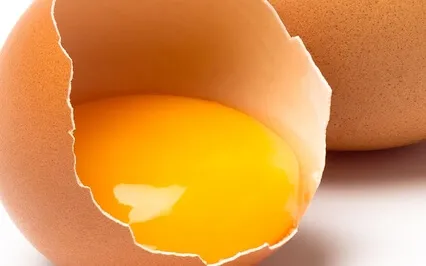
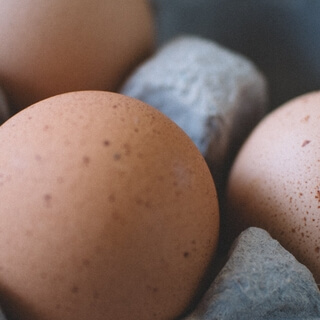
Dietary cholesterol has had a bad reputation and I think the story of the unassuming egg is a very good one to illustrate this.
Did you know that in Australia about 15 million eggs are eaten every day?
I was amazed by that and I must say my son is a significant contributor to that statistic.
So eggs are nutrient dense,
They contain protein,
Vitamins and minerals and of course fats.
They contain a combination of monounsaturated,
Polyunsaturated and saturated fat,
Almost all of which is in the yolk.
In about the 1970s it was realised that eggs also contain cholesterol.
A medium sized egg contains about 177 milligrams of cholesterol and to put that in context if you're looking at 100 grams of eggs that would contain 412 milligrams,
100 grams of chicken breast would contain 66 milligrams and plant foods like lentils,
Cauliflowers or peanuts contain none.
So at that time research was confirming the association between high blood cholesterol levels and increased risk of cardiovascular disease.
So the link was drawn.
Eggs equal cholesterol,
Cholesterol equals heart attack,
Therefore eggs equal heart attack.
We now know that the relationship is more complex than that and in particular eating cholesterol does not cause high blood cholesterol.
It is in fact trans fats and saturated fats that impact your blood cholesterol levels.
Eggs only have a moderate level of saturated fat and no trans fat and therefore have a minimal impact on blood cholesterol levels.
Sometimes old myths have a tendency to stick around and maybe that explains the otherwise inexplicable trend of egg white omelettes.
Yuck,
The white contains no cholesterol.
So eat eggs if you like them and enjoy the whole package,
The yolk and the white.
Eggs pack a punch nutritionally so I will do a separate five minute food fact episode all about eggs including looking at free range versus caged eggs and what that all really means.
So you may be wondering why do we need cholesterol?
What does it even do for us?
Well it plays a really important structural role in our cell membranes.
It helps maintain healthy nerve cells and is a precursor of bile acids,
Steroid hormones and vitamin D.
Bile acids are synthesized in the liver from cholesterol.
They facilitate the digestion and absorption of lipids amongst other things.
Chloride hormones are a group of hormones derived from cholesterol such as cortisol,
Testosterone and estrogens.
The body produces vitamin D from cholesterol in our skin cells in response to sun exposure.
And vitamin D is essential to good health with roles to play in maintaining healthy bones and teeth,
Supporting the immune and cardiovascular systems and more.
So you can see why cholesterol is really important to our health.
So how does cholesterol end up in our blood?
When we eat and digest fat,
The digested fats need to be transported through our bloodstream.
The problem is that our blood is watery and fat and water don't mix.
So in order to get digested fat into our bloodstream to deliver it to the cells in the body where it's needed,
The body makes transport vehicles called lipoproteins.
These ingenious molecules typically contain triglycerides or fat and cholesterol in their interiors,
And they're covered by a layer of water-soluble phospholipids and proteins.
And this allows the molecules to travel through the blood.
So there are four main types of lipoproteins,
And these vary in their composition.
Some contain more fat and cholesterol and others more protein.
And the relative proportion of those affect their density and size.
I'll just talk about three of them.
Very low density lipoproteins,
VLDLs,
Are made in the liver from where they're sent around the body.
And as the VLDL travels around,
Cells remove triglycerides or fats from them,
So they shrink and they become more dense as the proportion of protein and cholesterol increases relative to the triglycerides.
So eventually they become low density lipoproteins,
Otherwise known as LDLC or bad cholesterol.
LDLC is referred to as bad because it can collect in the walls of your blood vessels and arteries and build up to form plaques.
This can cause atherosclerosis.
More on that in a minute.
High levels of LDLC increase the risk of atherosclerosis,
And hence it is denoted as bad.
The liver,
A very busy organ,
Also makes high density lipoproteins,
HDLC.
High density because they mainly consist of proteins.
And these little molecules carry cholesterol back from the cells to the liver where it is recycled or disposed of.
So it's known as good because it removes and flushes excess cholesterol from the body.
High levels of LDLC are associated with a lower risk of cardiovascular disease.
When the plaque build up that I referred to before happens in the arteries of your heart,
It can contribute to coronary artery disease.
And that's because the arteries become hardened and narrowed.
So this slows down or blocks the blood flow to your heart since blood carries oxygen to your heart.
This in turn means that your heart may not be able to get enough oxygen.
And this can cause chest pain,
Known as angina,
Or if the blood flow is completely blocked,
It causes a heart attack.
So what can your blood cholesterol levels tell you?
When looking at your blood cholesterol levels it is important to look at your blood lipid profile.
And this includes total cholesterol,
LDL cholesterol,
HDL cholesterol and triglycerides.
Total cholesterol alone may not be very helpful as the ratio of good to bad cholesterol is informative.
So rather than reeling off numbers here,
Go and talk to your doctor about a blood test to check your cholesterol levels.
This is important as you may actually have high bad cholesterol and unbeknown to you,
Your arteries could be becoming damaged before any symptoms show up to alert you.
In other words it can be asymptomatic.
It's also important to note that for some people cholesterol levels can be affected by their genes.
For example a particular inherited gene mutation means that LDLC is not well absorbed into cells and remains circulating in the blood,
Giving rise to hypercholesterolemia or high blood cholesterol.
So what to do?
As I mentioned in relation to eggs,
Dietary cholesterol has only a very small influence on LDL cholesterol concentrations.
Prostate and trans fats influence our cholesterol levels much more.
Unsaturated fats like olive oil and omega 3 polyunsaturated fatty acids help balance our blood cholesterol by reducing LDLC and increasing HDLC production.
So if you've been told you need to reduce your cholesterol levels then the usual sensible nutrition advice applies such as reduce or eliminate sugary,
Salty,
Highly processed foods.
Include unsaturated fats in your diet like olive oil,
Fish,
Nuts and seeds.
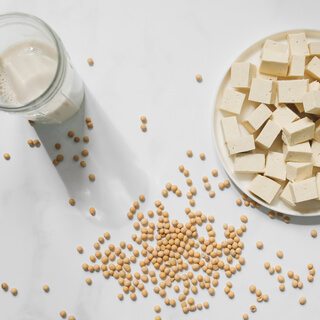
Eat food rich in dietary fibre and include healthy sources of protein such as eggs,
Grass fed beef or tofu if you're a vegetarian and even if you're not because tofu is yummy.
So that's a wrap for today.
Thank you for listening today and I do hope that you found something in that episode interesting.
Eat well,
Move well,
Think well.