Hello and welcome to Vibrant Live's podcast five minute food facts series.
I'm your host Amanda Hayes.
I'm a lawyer turned nutrition scientist.
My five minute food facts series are short podcast episodes about nutrition related topics where I'll talk about why we need a certain food or nutrient,
How much to consume,
If there are any risks associated with it and other useful information to help you make healthy food choices.
As you know the health and nutrition space can be a confusing one and identifying trustworthy sources of information is not always straightforward.
So that's where I come in.
My aim is to help you do that by presenting you with reliable information in a concise and easy to understand way.
The content of my five minute food facts series is for information purposes only.
It's quite general and so it's not intended to replace the advice of your health professional.
And today I'm going to be talking about and comparing dairy milk with plant based milk alternatives.
There has been an explosion in the market of dairy milk alternatives and they can be made from plants like nuts,
Seeds and grains.
For example,
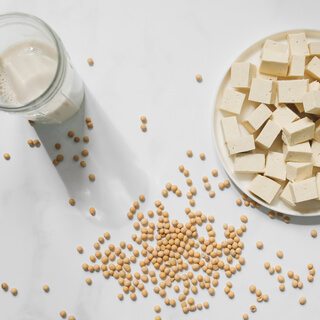
Soy,
Oat,
Almond,
Coconut,
Hemp and rice milk just to name a handful.
For vegans and people with lactose intolerance or a dairy allergy,
This is certainly a really welcome development.
I don't think there is a lot of magic in selecting which milk you prefer and if you're like me,
You might use different milks for different things like dairy milk in baking or oat milk in your latte.
What I do think is useful is understanding the nutrient profile of dairy and plant milks as they vary widely and this might help guide your selection.
For example,
If you're looking for some protein after a workout,
Dairy or soy milks remain your best option,
But rice milk will get you nowhere in the protein stakes.
By way of background,
The plant based milk market is worth several hundreds of millions in Australia.
In the five years to 2020,
Soy milk decreased in market share from 68.
5 to 47.
6,
Whereas almond milk increased from 17.
1 to 44.
2.
And more recently,
The popularity of oat milk has skyrocketed and some predict that it will soon become the most popular dairy milk alternative.
So why have plant milks increased in popularity?
There are actually many reasons for this.
For one,
Better processing methods has meant that they taste good and they perform more like milk.
For many years,
Plant based milks had a tendency to separate when they were heated,
So they weren't very nice when they were used in lattes,
For example.
When I was at school,
A friend's father owned a health food company and during the summer holidays we would spend weeks down in his warehouse weighing out soy milk powder and packaging it up.
And back then,
That was the only way you could buy soy milk and it was seen as a bit of a fringe product.
Other reasons for the increase in popularity of plant based milk include that some people are motivated by animal welfare and sustainability and some like me prefer the taste of plant based milks.
So how are these plant based milks made?
So commonly the seed,
Bean,
Legume or grain being used to make the milk is soaked in water for several hours.
It's then blended into a puree and filtered to separate the plant matter from the liquid milk.
The milk is then boiled to sterilise it and then flavouring or fortification like calcium may be added.
Let's get down to how to choose your milk.
I've compared full fat cow's milk,
Skim cow's milk and almond,
Oat,
Soy and rice milk because they seem to be the most popular ones.
So I won't read out a string of numbers because we all know that that would be really boring.
I'll create a table and put it in my next newsletter.
So what I'll do here is let you know the major features of various popular milks which may of course vary between brands.
But here's the big picture.
If you want protein,
Skim cow's milk and soy milk have the most followed closely by full fat cow's milk.
Oat has a little bit of protein and almond and rice have practically none.
In terms of kilojoules or energy,
Full fat cow's milk,
Rice,
Oat and soy are roughly similar,
Followed by skim milk and almond milk has the least calories or energy.
If you're interested in the carbohydrate content,
Rice and oat milk have the most,
Cow and soy milk the next and almond milk has none.
In terms of calcium and vitamin D,
Cow's milk contains these and some other important nutrients and plant based milks have negligible amounts unless of course they have been fortified with them.
Post workout if you want some energy,
Protein and carbohydrate,
Cow's milk and soy milk are definitely your best bets.
Oat milk is another decent option.
It's lower in protein than the other two but it is higher in carbohydrate.
If you're into low carbohydrate then almond milk is definitely your friend.
Personally I couldn't see all that much that was appealing about rice milk except of course if you have allergies to any of the others or if you just simply like the taste of it.
So the ones I've just referred to are the basic no frills version of each plant milk with no additives or fortifications.
So some brands as I've mentioned might add calcium or vitamin D and if you don't consume any dairy I do recommend choosing one of those.
Some plant milk versions have flavourings or stabilisers added.
When flavourings are added the sugar content usually shoots up so this is something to be aware of.
Another factor that may play into your decision is the environmental sustainability of the product.
In terms of carbon dioxide emissions and water consumption cow's milk is by far the worst offender followed by almond and rice milks.
Oat and soy milks are actually the most sustainable and again I'll include some useful information about this aspect in my next newsletter.
What's in a name?
There has been some pushback by dairy industry advocates on labelling plant based milk alternatives as milk as they say it could be confusing to the consumer.
I'm not so sure about that.
In my opinion I think it's pretty obvious and if someone did make the mistake of buying say soy milk instead of cow's milk it's probably a mistake that they'd only make once.
And last year the EU rejected a proposed ban on dairy terminology and imagery being used to describe plant based milk and cheese alternatives.
To wrap up,
The other rather obvious point to make and this is why I don't get too excited about milk choices is that whatever kind of milk you drink it's only one aspect and probably a relatively small one at that of your overall diet.
So provided that you make healthy choices most of the time and include plenty of unprocessed food you're likely getting all the nutrients you need.
So choose the milk you like the taste of and feel comfortable with.
There you go that's my two cents worth on cow's milk versus plant based milk.
Hmm now it's time for me to go and get my oat milk latte.
Thank you for tuning in today.
Eat well.
Move well.
Think well.
Live vibrantly.