Hello and welcome to Amanda's Wellbeing Podcast.
This is my five minute food fact series.
I'm Amanda Hayes,
Your host,
A nutritionist with a passion for well-being.
I decided to do this series because there is so much conflicting information available about food and various diets.
Some of it is credible and some of it is not.
It can be time-consuming,
Not to mention confusing,
To try and sift through the noise and get to the heart of the matter.
In this series,
I will do all of that for you and present factual,
Reliable information in a concise and easy to understand way.
The content of my five minute food fact series is for information purposes only and it is not intended to replace the advice of your health professional.
The content of my five minute food fact series is for information purposes only and it is not intended to replace the advice of your health professional.
Today I am going to discuss alcohol.
I'll confine my discussion to the facts of alcohol consumption.
I won't delve into the social repercussions,
The religious or moral issues,
Underage drinking,
Binge drinking or alcohol addiction as not only are these matters outside my area of knowledge but they're also very complex and it would make for a very long podcast.
As I aged I've noticed that I'm becoming markedly less tolerant of alcohol with the passing years.
If I have more than two glasses of wine it interferes with my sleep.
Also my children are of an age,
They're teenagers,
Where alcohol starts to feature at some parties even though it shouldn't so it is in my best interest to know as much about the health impacts of alcohol as I can.
So just briefly the history of alcohol.
Alcohol was first developed thousands of years ago.
I believe the oldest evidence of alcohol consumption was discovered in 2018 at a burial site in Israel where 13,
000 year old beer residue was found.
The earliest firm evidence of wine production is from 5400 BC in Iran so suffice to say alcohol has been around for a very long time.
So what is alcohol?
So alcohol is both a food because it provides calories and a drug.
It is classified as a depressant drug as it slows messages traveling between the brain and the body.
From a chemical point of view alcohol is known as ethanol which is C2H5OH.
It is produced by the fermentation of glucose by certain enzymes contained in yeast.
The fermentation process converts glucose to ethanol and carbon dioxide.
After fermentation alcohol can be concentrated by distillation and I believe this is how spirits are made.
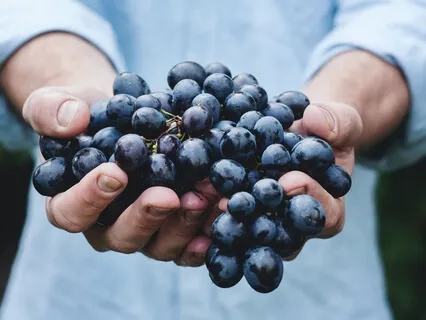
So for example wine is made from grapes and grapes contain a lot of sugar in other words glucose.
Beer is made from molting the starch in barley to break that down to glucose.
And in terms of calories or kilo joules each gram of alcohol or ethanol has 29 kilo joules.
However when we drink alcohol we don't drink straight ethanol so alcoholic beverages have varying numbers of kilo joules.
For example a 30 milliliter shot of whiskey has 295 kilo joules and a 150 milliliter glass of white wine which is actually quite small has 468 kilo joules.
So the next thing I want to talk about is what alcohol does in the body.
So alcohol is easily absorbed by the body in fact it's one of the few substances that is absorbed from the stomach as well as the small intestine into the bloodstream.
A very simplified version of alcohol metabolism goes like this.
Alcohol is carried by the veins to the liver.
Once in the liver it is broken down or metabolized via an enzyme called alcohol dehydrogenase and this converts the ethanol to acetaldehyde.
Acetaldehyde is a highly reactive and toxic substance that can contribute to tissue damage.
Some individuals have more alcohol dehydrogenase than others and this step in the liver is known as the rate limiting step in alcohol metabolism.
So that means that alcohol can only be metabolized as fast as your body can convert the ethanol to acetaldehyde.
In other words you can't speed this process up.
The next step is the conversion of the acetaldehyde to acetate by another enzyme and then eventually to carbon dioxide.
So on average people can metabolize about 5 to 10 grams of ethanol per hour that's equivalent to a half to one standard drink but that does vary considerably between people depending on size,
Gender and other factors.
For example women tend to have smaller livers than men so they metabolize alcohol more slowly.
I just referred to a standard drink.
A standard drink contains 10 grams of alcohol so many drinks have more than one standard drink in them.
So you can check this by looking at the label on the wine or beer or whatever it is that you are drinking.
An example is a small 100 millilitre glass of red wine 13% alcohol by volume is one standard drink and that really is quite small.
Another example is a 375 millilitre can of mid-strength beer 3.
5% alcohol by volume is also one standard drink.
So next I want to talk about what alcohol does in our body.
So alcohol affects a number of neurochemical processes and other body systems.
Some short-term effects are it slows reflexes and causes loss of coordination,
It lowers inhibitions,
It alters behavior by increasing risky or violent behavior and obviously of course it can cause vomiting if you drink too much.
And then once you've had the alcohol sometimes if you've had too much you unluckily suffer from a hangover.
So a hangover is mainly caused by dehydration.
The symptoms include headache,
Nausea and tiredness just to name a few and the reason this happens is that ethanol is a diuretic so that makes you urinate more so you can become dehydrated.
And some of the physiological reasons for this are for example alcohol causes the bloodless blood vessels to dilate and that can cause headaches.
It also can cause electrolyte imbalance and that can also contribute to headaches,
To irritability and to weakness.
Unfortunately there is no cure for a hangover you just have to let it run its course so sweating it out,
Cold showers or a big fry-up actually do not remove the alcohol from your system any faster.
I think that one of the most important things to consider is the long-term effect of alcohol consumption.
So the World Health Organization states that alcohol contributes to more than 200 types of diseases.
I've just mentioned a few of the most common diseases.
Liver disease is one this progresses from a fatty liver to alcoholic hepatitis and then to alcoholic psoriasis and that's where the healthy liver tissue is replaced by scar tissue.
So this clearly impairs the liver's functioning and the liver is important because amongst its numerous functions it helps filter toxins from our body and it makes hormones and proteins.
Long-term alcohol consumption is also associated with heart disease.
It can cause an increase in blood pressure and a weakening of the heart muscle which impairs the heart's ability to pump blood around the body and high blood pressure as you may well know is a risk factor for heart attack and for stroke.
Certain types of cancer are associated with long-term alcohol consumption.
The Cancer Council's position statement on alcohol is pretty blunt.
It opens with alcohol use is a cause of cancer.
It goes on to say there is strong evidence that alcohol use increases the risk of cancers of the mouth,
Pharynx,
Larynx,
Esophagus,
Stomach,
Bowel,
Liver and breast.
So it is abundantly clear from all the evidence available that alcohol is associated with disease and then you might think what about those reports we've all heard that a couple of glasses of wine a day are protective against heart disease or that wine particularly red wine is full of antioxidants like resveratrol.
The picture here is grim too.
The Lancet's recent report on the global burden of disease has this to say,
The estimated protective effects from ischemic heart disease and diabetes in women are offset by monotonic associations with cancer.
So in other words the potential damage outweighs any potential protective effect.
I must admit I wasn't actually aware of that until I started researching this episode.
So I guess the thing is where does that actually leave us?
So according to the Australian Government Department of Health they say alcohol is never completely safe however they do recognise that many adults choose to consume alcohol so then they go on and say if you're a healthy adult on any one day you should not drink more than two standard drinks this will reduce your risk of alcohol related disease or injury over your lifetime and they also say on a single occasion you should not drink more than four standard drinks over several hours this will reduce your risk of injury and death on that occasion.
The Department of Health also states that not drinking is the safest option for people under 18 years of age and they say it's especially important for children under 15 they are at the greatest risk of harm from drinking their brain heart and liver aren't fully developed so they can't process alcohol as quickly as adults.
Given that the risks are real and known no health body can recommend consuming alcohol however the reality is that many adults do choose to consume alcohol I'm one of those even though they may be aware of the risks.
A popular reason I suspect is that it's a social activity and it's very often associated with a good time.
A recent study has confirmed that moderate alcohol consumed in a social setting can stimulate social bonding and enhance positive emotions.
So I guess that's some kind of good news but you do have to note there that they say moderate and and that really is not very much that would be two standard drinks so two quite small glasses of wine.
So at the end of the day if you do decide to drink here are some of the tips that I think can help you minimize any damage so pace yourself drink one or less drink per hour and try and limit that to two drinks overall on any one day.
Drink water in between alcoholic drinks and use sensible sized wine glasses not great fish bowls even though they look very pretty studies confirm that the bigger the glass the more you consume and also drink alcohol with food because this helps to slow down its absorption into your bloodstream.
So there we go that's alcohol and that's that's a small aspect of alcohol consumption as I mentioned in the beginning there are so many other issues associated with it but I really just wanted to look at what it does in your body and the health impacts.
Thank you for tuning in eat well move well think well.
You