Hello and welcome to Amanda's Wellbeing Podcast five minute Food Facts series.
I am Amanda Hayes,
Your host,
A lawyer turned nutritionist with a passion for wellbeing.
Please note that any information or advice provided in Amanda's Wellbeing Podcast is not intended to be used to treat,
Cure or prevent disease or medical conditions and is not a substitute for advice from your own health professionals.
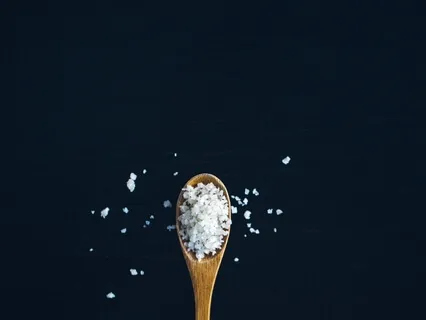
Today I am going to talk about salt and your health.
Historically salt has been a valuable commodity used as a preservative and seasoning for millennia.
Roman soldiers received a solarium,
Which is the modern precursor of the celery,
To buy salt.
So what is salt?
When we refer to salt,
We usually refer to sodium chloride.
Sodium is a mineral and electrolyte responsible for many health effects.
So in this podcast when I refer to salt,
What I really mean is sodium.
We often hear in the popular media about the fact that we eat too much salt,
But I think it's really important to understand what salt actually does in the body and why we need it at all.
So first of all,
As I mentioned,
It's an electrolyte and that is a charged iron that helps maintain fluid balance in between cells of the body.
Sodium is mainly found in the body in fluids around cells in the extracellular fluid and in blood.
It is necessary in the body for the transmission of nerve impulses and the contraction of muscles.
So we do actually,
As you can see,
Need sodium.
When it comes to balancing the amount of sodium in the body,
The kidneys are the star performers.
Through a complex process of hormonal signalling and biological activity,
Healthy kidneys filter blood and excrete sodium and other waste products and excess fluid,
Mainly via the urine.
They also reabsorb sodium to keep the concentration within a desired range.
Among other things,
The kidneys also balance the body's fluids and release hormones that regulate blood pressure.
If we need salt for the important roles it plays in our body,
Where then do we obtain salt in our diet?
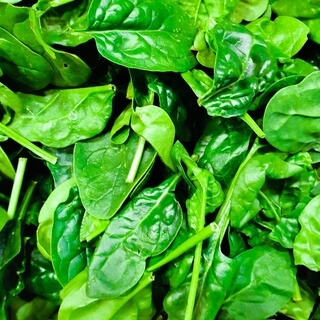
So natural foods like fruit and vegetables are low in sodium,
Processed foods contain far more.
Contrary to popular belief,
Discretionary salt intake,
That is sprinkling it on your food,
Is much lower than the amount people obtain from eating manufactured food.
So from a practical point of view,
Whilst removing the salt shaker from your dining table is a good start,
Decreasing your consumption of processed foods,
Even sweet ones,
Will have a greater impact on reducing salt intake.
So most people think of salt as a problem in relation to its excess.
However too little salt or salt depletion can also be a problem,
Although this is actually a rare one,
And I won't focus on that here.
Let's look at and understand why excess salt is a problem.
So although the kidneys excrete excess sodium,
If you regularly consume too much,
And most Australians do,
More on that in a minute,
The kidneys raise blood pressure because they can excrete more sodium at a higher blood pressure.
So the kidneys increase blood pressure to get rid of more sodium,
But the increase in blood pressure has a detrimental effect on your health.
Before I explain why,
Just a very quick note on blood pressure.
Blood pressure measurement is expressed by two numbers.
The top number is the systolic pressure,
Which is the peak pressure your heart generates when pumping blood out through your arteries,
And the bottom number is the diastolic pressure,
Which is the amount of pressure in your arteries when your heart is at rest between beats.
And the pressure is measured in millimetres of mercury.
So according to the Heart Foundation of Australia,
Optimal blood pressure is 120 over 80 millimetres of mercury.
And then as it increases to normal,
High normal,
And then high blood pressure,
Known as hypertension,
Is a systolic blood pressure greater or equal to 140 millimetres of mercury,
Or diastolic blood pressure greater or equal to 90 millimetres of mercury.
When you have high blood pressure,
This puts strain on the body's blood vessels,
Which can cause damage to them.
So hypertension is a major risk factor for heart disease and stroke.
Coronary heart disease caused by hypertension is the biggest cause of death in Australia,
Accounting for 13% of all deaths for males and 11% for women.
So our bodies need sodium to function optimally,
But not too much.
So therefore,
What is the recommended amount?
Most Australians consume about 10 grams of salt per day.
According to the National Health and Medical Research Council,
The suggested dietary target for adults is five grams per day.
And as you can see,
We consume about double that.
It's also worth noting that one gram of salt or sodium chloride is equal to 390 milligrams of sodium.
So in other words,
Five grams of salt per day is about 2,
000 milligrams of sodium.
So if we're looking out for foods that are low in salt,
What does this mean?
So the Food Standards Code defines low salt foods as having no more than 120 milligrams of sodium per 100 grams of food.
For an example of what this means in day-to-day food,
Bread has 500 to 600 milligrams of sodium per 100 grams.
And as you can imagine,
Vegemite is off the charts,
Yet you never eat very much of it.
Breakfast cereals and cheese are also prime offenders with 480 and 685 milligrams per 100 grams respectively.
If you look at the food labels in Manufactured Food,
The column that says per 100 grams,
It's actually a real challenge to find low sodium foods.
If you want to decrease your sodium or salt intake,
How do you do that?
So really,
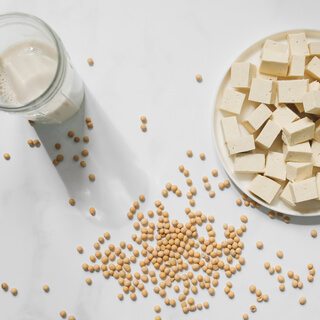
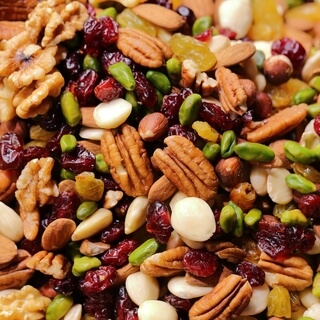
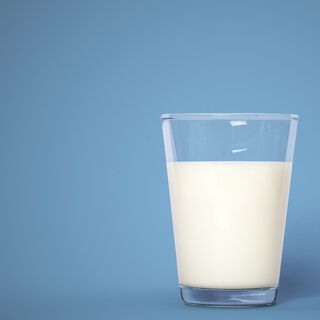
The best way is to follow an eating pattern that emphasizes fruits,
Vegetable,
Low-fat dairy,
Whole grains,
Nuts,
Legumes,
And limits processed meat and added sugars.
There is a diet formulated specifically to help reduce blood pressure,
And that's known as the DASH diet and refers to the dietary approaches to stop hypertension.
The DASH diet was originally developed to treat hypertension without medication.
And in trial situations,
It has been really successful in achieving that,
Together with reducing other cardiometabolic risk factors,
Such as a reduction in the incidence of cardiovascular disease,
Reduction in the incidence of stroke and diabetes.
Generally,
Dietary patterns in the Western world do not currently meet the DASH dietary pattern,
So it's a really good way of eating for health generally and particularly for reducing hypertension.
So if that is something you're interested in doing,
I suggest that you Google the DASH diet and lots of information is available.
And I'd just like to round out with some very important information.
What do you call it when salt says hello to pepper?
Season's greetings.
On that note,
Thank you so much for listening today,
And I do hope that some of the information was useful.
Eat well,
Move well,
Think well.