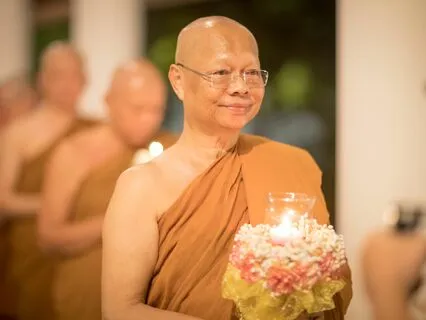
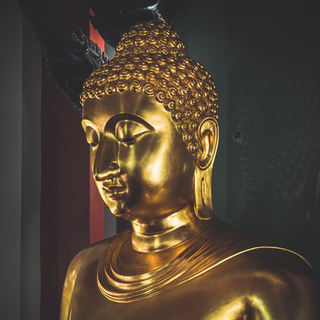
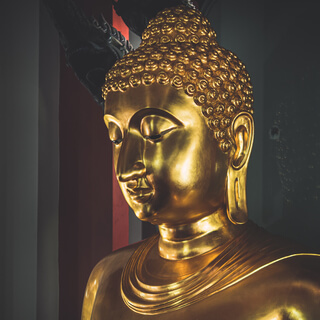
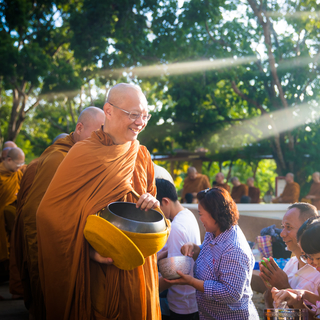
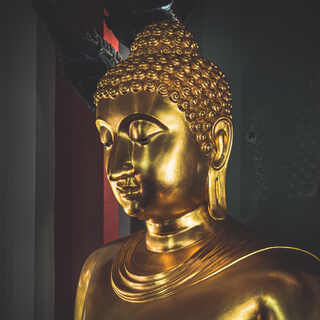
On the 24th February 2024 is the commemoration of Magha Puja.
And we know that the Sammasambuddha,
The perfectly self-awakened Buddha,
Gave the awada,
The teaching,
On padimokkha,
Which is release,
Liberation.
The teaching was given nine months after the Buddha had attained enlightenment.
It was given to the sangha of 1,
250 monks who came to meet without any prior notice,
And consisted purely of arahants that the Buddha had ordained himself.
The Buddha gave this teaching once through the whole of the Buddha's dispensation.
The awada padimokkha is an important fundamental of Buddhism.
The awada padimokkha is the teachings of the path to the liberation of suffering.
It contains very important principles.
The wise will summarize that it contains three principles,
Has four ideals,
And has six practices.
In the awada padimokkha,
What are the three principles?
What does it consist of?
We can see that all things need to have firm principles,
Rules,
And practices.
In studying and doing business and work,
It requires having important principles,
And especially of the mind.
The principles need to be clearly stated and firmly established.
The Sama Sambuddha would give 84,
000 supreme dharma teachings of the Buddha's dispensation.
And their summary is contained in the awada padimokkha.
It teaches Buddhist followers to give up the doing of anything that is bhāpo.
Bhāpo means heat.
Doing it and it is hot.
It is bad karma.
It is acting following the authority of the mind states of greed,
Hatred,
And delusion,
Which is in everyone.
And it is us being propelled on by avicca,
Ignorance,
That gives rise to action,
And it brings up inner turmoil.
So the Buddha taught us to keep sila,
Moral conduct.
We need to have wisdom and mindfulness to take care of our actions and to take care of our speech.
We maintain our mind to be in a good state.
In order for us to have sila,
We need to have wise shame and a fear of the consequences of wrongdoing that will arise.
But if people don't have a wise shame and fear of consequences of wrongdoing,
Then there has to be laws that will make us respect and abide by them.
Then we know that if we do wrong by way of actions and speech,
This will lead to bad results to us and our family,
Or even to the nation.
And there are punishments given.
So we need to have mindfulness,
Mindfulness and wisdom.
We need to be led by wisdom,
Being with us through all our postures.
When we have proliferation and thoughts come up,
We have to be careful if those thoughts are correct or mistaken,
Whether they harm ourselves or harm others.
If it does cause harm,
Then don't speak it.
Don't act on it.
Don't do wrong by sila and dhamma.
Then at the minimum,
Our actions and speech are not breaking sila.
But by way of the mind,
Of mental actions,
There are some thoughts that are not in a normal state.
But never mind.
We just try to train with it,
Through using sila to keep control over our actions and speech first.
We train in being able to maintain our mind,
For it to be in a normal state and not polluted.
The Buddha taught about merit and goodness,
Which we need to do fully,
In its completeness.
This requires wisdom.
We train the mind to have completeness in kusala.
Kusala is skillfulness,
Goodness.
We have intelligence in building goodness.
In doing dhana,
Generosity,
Keeping sila,
And doing all types of merit,
Like helping society,
Giving our anumodhana,
Rejoicing with others,
Spreading metta,
Goodwill for all beings in the world to be happy,
And so on.
So this is about merit.
And merit leads to goodness.
But even though we have done goodness in terms of making merit,
The mind is not still and peaceful.
It still sways and gets disturbed.
The mind is not in a normal state.
So the Buddha taught us to practice kamatthana.
This is setting up a place of work,
Which is having mindfulness to know the in-breath and know the out-breath.
With the in-breath,
We think buddha.
With the out-breath,
Think do.
Or contemplate that the in-breath is empty,
And the out-breath is empty.
These are all methods we can use.
Or we can recollect the virtues of the Buddha,
The virtues of the Dhamma,
The virtues of the Sangha.
One great teacher used the meditation repetition bhuttam saranam gacchami,
Tammam saranam gacchami,
Sankham saranam gacchami.
And when the mind is peaceful and still,
Then it is not restless.
It is not fault-finding.
There is no ill-will,
No delighting in going to all the mental objects that bring up sensual delight.
It is not sleepy and drowsy,
And not doubting.
Then the mind is peaceful,
Cool,
At ease,
And bright.
And if we have experienced this peace just one time,
Then we will know that this is the path of practice to get the mind to be peaceful.
Because we need to pass all the doubts.
We want to be peaceful,
And we want it quickly.
But is it possible?
If we are born being a little child,
And we can crawl and are starting to walk,
Then we see people walk and run.
We also want to walk and run.
But is it possible?
If we are a child in primary school,
And in just one year we want to graduate from university,
Is that possible?
Or we see those with money and wealth,
But we are still lazy and not yet working,
Then it's not possible to be like them.
We need to train,
And it takes time and development.
When we see the drawbacks of sense objects,
Or the restlessness of the mind,
Then we know that we need to make the mind peaceful to be able to have wisdom,
In order to give up the sense of self,
Of I.
But the heart is hot.
The heart wants it quickly.
It wants it quick.
It doesn't want anything slowly.
Especially these days,
Society only wants to get things quickly.
Getting to places quickly,
Using communications,
Using fast vehicles.
They want it all quickly.
But Dhamma practice is not like that.
That can be gotten quickly like that.
Though it can be quick,
If we possess the ultimate level of wisdom.
The Sammasambuddha taught us to let go of all things.
All Dhamma's phenomena should not be attached and clung onto.
This is the quickest way.
But can we do this?
This is the quickest way.
Knowing that all phenomena,
All things,
Whether physical phenomena or mental phenomena,
They should not be attached and clung onto.
But we can't do it yet.
We can do it only a little.
So we need to train,
Like a baby needs to learn to walk,
To sit up,
To learn to stand.
And gradually it's able to do it.
For students,
They slowly learn and accumulate knowledge bit by bit.
And gaining knowledge,
Then they can graduate from a bachelor's,
Master's or doctorate.
For those with money and wealth from the past generations of our parents and grandparents,
They have had the spiritual qualities needed to have accumulated it.
They needed to have kanti,
Forbearance,
Have effort and diligence,
And been thrifty,
Until they could accumulate wealth.
So if we want to have inner peace and brightness,
Which will be the path for us to gain understanding and wisdom,
Then we need to train our mind to be peaceful.
Standing,
Walking,
Sitting,
Lying down,
We have mindfulness supervising over all of our postures.
And we are practicing this by having a meditation object.
And secondly is to use contemplation.
To get to peace,
It can go through two ways.
We contemplate,
Then get into peace.
Or,
We are repeating a meditation word,
And there is no need to be interested in anything else.
Just repeat the meditation word only.
We are certain that if our mind is with the meditation word a lot,
The mind is not restless,
Then one day it must become peaceful.
The thinking will be able to stop.
But the practitioners of these two methods should not dispute with one another.
I have samadhi and my mind is not restless.
You contemplate like that,
But only have a little bit of peace.
They are both methods for peace to arise.
And then it comes to the point that we have to cut off the gelases,
The mental defilements.
We have to cut off the wrong views,
That is,
The sense of self,
That is the fundamental defilement.
It makes us have attachment and clinging.
So we need to have the wisdom to see in regards to suffering.
That all the suffering that arises comes from the cause of tanha,
Craving,
And upadana,
Clinging.
We need to be able to let go of craving and clinging.
To do this,
We need to walk the path of sila,
Samadhi,
And bhajna,
Morality,
Concentration,
And wisdom.
So the Buddha gave the principles,
Which are the principles of sila,
Samadhi,
Bhajna.
If we walk following sila,
Samadhi,
Bhajna,
Then they will be the principles that will overcome the delusion in our hearts.
There is knowing and brightness arising,
And the mind is radiant.
It can let go of all the phenomena that shouldn't be attached to.
And all of sila,
Samadhi,
Bhajna will come together as one.
Because true sila can't arise if we don't give our forgiveness.
And if we have no wisdom,
Then we won't be able to give forgiveness.
So then true insight can't arise.
True sila can't arise.
So we can't be without one aspect or the other.
They are all related to each other.
They need to rely on each other.
Sila blocks out the pollution on our actions and speech.
It is on the coarse aspect.
Samadhi filters the defilements.
This is of the middle aspect,
Of the mind which is still thinking,
Proliferating,
And scattered.
And for the wisdom that will completely cut off the refined defilements,
It needs to be supported by sila and supported by samadhi.
And all these levels have mindfulness to supervise over everything.
So develop and promote mindfulness a lot.
This is an important principle.
The noble sangha of the Buddha,
Of 1,
250 monks,
All of them had entered into these principles.
Or we say they had all succeeded in the principles that the Buddha taught.
Succeeded in becoming arahants.
They had perfect sila,
Complete and perfect samadhi,
And had the wisdom that destroys all the mental defilements.
There were no more inner pollutants.
We will see that if we can get rid of the defilements a little,
Then happiness arises,
Which we call nibbana.
Nibbana was a common word,
Meaning coolness.
If we have defilements,
Then we have heat.
If it is nibbana,
Then it is coolness.
When we try to build goodness,
Having generosity,
Sila,
And meditation,
Then coolness arises a little.
When we have samadhi,
Then more coolness arises.
But we need to practice till we get it.
Because the mind is doubting and restless.
Even when practicing,
It doubts and is restless about the method which will be the quickest.
The great teachers taught in an easy way,
Which is to have mindfulness,
To maintain one's actions and speech to be within sila,
To make samadhi be firmly concentrated,
And investigate into physical and mental phenomena that it should not be attached and clung to.
Then wisdom arises.
Here the 1,
250 venerable arahants had attained to this.
They had found it.
So the Buddha laid down these teachings of the important principles of the Buddha's dispensation.
Here,
All of the sangha,
Bhikkhunis,
All dhamma practitioners,
All the laypeople,
We follow these principles.
And we can do it.
Having mindfulness,
We can do it.
We recollect the samma sambuddha.
We recollect the dhamma teachings of the Buddha.
We recollect the 1,
250 arahants.
These days to have just one or two arahants arise is very hard.
The founder of the Thai forest tradition,
Venerable Ajahn Mun and his disciples,
Was a few hundred or so monks.
There was Venerable Ajahn Sao,
Venerable Ajahn Thongrat,
Venerable Ajahn Ginari,
And many other arahants until Venerable Ajahn Chah.
So we can reflect on how amazing 1,
250 arahant monks are.
It was by the barami of the Buddha,
From the dhamma that he taught,
Which brought rise to the venerable noble sangha that has continued on the span of the Buddha's dispensation till this present day.
So we have given our homage,
We have made merit and goodness,
And we have built up goodness till the present day,
So we do have a lot of merit.
So having merit,
Then,
Make goodness arise,
And have the peaceful mind arise.
Learn to bring up wisdom.
This is then the offering of our practice to the Buddha,
Dhamma and sangha.
May you all have prosperity and happiness.
May you grow in the dhamma.