Good morning.
Good evening.
Good afternoon.
Wherever you may be,
Whatever you may be doing.
Hello?
And welcome and thank you for spending your morning,
Your evening with me and us here today.
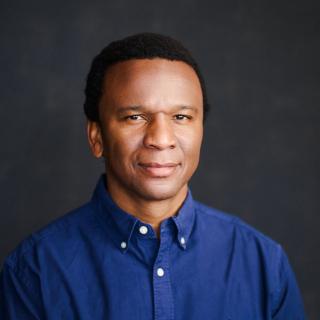
My name is Thiridumundavarara.
And I'm going to teach you here on inside timer.
And I really try and help people reconnect with That authentic self.
And I guess kind of capture it.
Saying,
Becoming your own best friend.
And I'll put the card up.
You know,
Everything that I talk about today and in other times kind of really brings us back to this point about self.
And let's continue,
Let's begin.
Let's start with the word that Most people know,
Most people use.
And that is triggered.
It seems that maybe I'm just dialed into it.
It seems like you hear it quite a lot these days.
People say all the time,
I got triggered,
She got triggered,
He triggered me,
My mother triggered me,
My girlfriend,
My boyfriend,
My husband,
My wife triggered me,
My colleague at work triggered me,
That situation triggered me.
But here's what I want you to notice about that phrase.
When we say,
I got triggered.
Got triggered.
We're describing ourselves as the entire reaction.
We become.
The trigger.
You become the feeling.
I become the behavior.
And that's.
.
.
The first challenge because the moment you believe that you Me,
We,
You are the reaction.
You're stuck.
And you're stuck inside it.
There's no space,
There's no choice,
There's just reaction,
Scramble,
And you shame,
And then shame follows.
If you're attached to that,
If you believe that it's you.
Throw an offer.
You us today.
And this is the foundation of everything that I teach.
It's one small but profound shift.
I got triggered.
And I think some of you know exactly what I'm about to say next.
It's a part of me that got triggered.
Those are very different sentences.
One closes the door.
The other opens it.
Because the moment you can say a part of me.
You've allowed and created space.
You step back even slightly.
Step back from the reaction and in that space you're no longer the storm.
You're the witness to the storm.
That witnessing presence calm,
Steady.
Observing.
That's what we call self.
And itself with a capital S,
And that's what.
That's where we're going today.
So why does this happen?
Why do we react?
Sometimes intensely,
Sometimes aggressively.
I've done and said things that I'm not proud of.
In that space.
Maybe you have too.
You've reacted disproportionately.
Things that on the surface seam.
Small.
But here is the honest answer.
Your reaction is almost never about the present moment.
Let me just say that again.
Cause I think I need to hear that right now.
Your reaction.
Is almost never about.
Present moment.
Your reaction is about what the present moment reminds you of.
And right now,
Just saying that.
Sentence.
Your reaction is almost never about the present moment.
It takes me back to the power of now.
And how Eckhart Tolle talks about there's no pain in the present moment.
You know,
We talk about this being a journey.
I've heard that phrase so many times.
I've used it,
I've said it on here in a meditation.
But right now,
In this present moment,
It has landed in a very different way.
Why?
I don't know why,
It just simply has.
I understand the level of granularity too.
And the reaction that we said is.
.
.
About what is happening in that present moment,
What it reminds you of.
Your nervous system,
Your body doesn't just live in the now,
It carries history.
It stores experiences and when something in the present moment resembles something from the past,
Even slightly,
Subtly,
A part of you that navigated that original experience comes forward.
Doesn't ask your permission.
It doesn't wait for you to be ready.
It just steps forward and says,
I know this.
I know how to handle this.
I know where we're going.
I'm going to take over.
And boy does it take over.
And think about it this way,
When you were young,
And I mean young.
Early.
Really.
You are learning how the world worked.
You were learning what was safe.
And what wasn't.
What do you love?
And what did.
What helped you belong and what threatened?
The very essence of you.
What threatened that belonging?
And your body that brilliant,
Intelligent.
Encoded those lessons,
It hardwired them.
Not as thoughts,
Not as memories.
But as something much deeper.
Not quite DNA.
Some people call it the pain body.
I call it emotional muscle memory.
What is muscle memory?
You know,
You go to the gym and you can.
.
.
Do X number of sit-ups and then you stop going to the gym.
And when you restart.
It is just a little bit easier to get back to that number again because your muscle has memory of how to do it.
And that kind of emotional muscle memory,
It's a set of automatic responses that would keep you safe.
In situations that resembled those early ones.
That's what's happening.
If you learn that speaking up led to criticism.
Is a path that learned to stay quiet.
If you learn that performing led to love,
A part of you learned to perform.
If you learn that needs were inconvenient,
A part of you learned not to have them.
And if you learn that conflict was dangerous,
A part of you learned to keep the peace.
At all cost.
And these aren't weaknesses.
These are survival strategies.
And they worked,
And they continued to work.
They got you through,
They got you here.
And the only problem is this.
Those parts don't know you're an adult now.
They're still running that old program.
Still protecting you from threats that may no longer exist,
Still reacting to the present as if it were the past.
I mean something in your life touches that old learning.
Tone and look.
An unread or unresponded message.
Silence.
That part doesn't wait.
Doesn't ask for permission.
Each step.
Forward straight away and it blends with you so completely and so fully that you don't experience it as a part of me is reacting.
Experience.
It is I am reacting.
You get caught up in it,
You lose yourself in it.
And that's what we call being blended with a part.
And that blending.
That's the reaction,
That's where everyone's trying to manage or suppress or get over,
But managing and suppressing doesn't heal.
Just delays.
Until the next time something small happens and everything falls apart again.
Dedicated to doing the work.
That resonated so strongly with me today.
And that's what we're talking about.
Being dedicated to doing the work.
So.
Here's the question that most people never ask.
We normally ask,
Why am I so reactive?
Why am I like this?
The question that people don't ask and the question that I'd like you to start asking yourself is.
.
.
Which part of me is reacting.
And what is it still trying to protect me from?
Please write it down.
Put in your phone.
Make a mental note.
The next time that happens,
If you take nothing from these words today,
Just take that question,
Please.
Ask yourself.
When you snap at your partner.
When you roll your eyes at your parents.
I knew.
Delay opening an email from a colleague.
Ask yourself,
Which part of me is reacting?
And what is it still trying to protect me from?
Because that question,
The layers within it,
Changes everything.
Because it shifts you from judgment.
.
.
To curiosity.
And if you can… into wonder.
And you might ask,
What's the difference between curiosity and wonder?
Someone explained it to a group as awe.
The difference between curiosity and wonder is all.
Just another level of granularity when there's wonder involved.
That question shifts us from shame to understanding,
From what's wrong with me what part of me is here and what does it need.
And getting curious about a part,
When you can approach it with openness instead of resistance,
Something remarkable happens.
The part doesn't have to fight so hard.
It feels something it may never have felt before.
That's being heard.
That someone is paying attention.
That doesn't have to keep screaming to get your attention.
Because parts don't.
.
.
Cause problems.
Because they're bad.
Particles problems,
Quote unquote,
Because they've never felt safe enough to relax.
There's a trust that needs to form to build.
With self.
And they can't relax until self is present.
Until there's a steady,
Compassionate,
Grounded presence inside you that can hold those parts.
Acknowledge them and say,
I see you.
You've got this now.
You can rest.
And that's the shift.
I keep talking about,
That's the shift.
We go through on the 12 days of that course.
It's what I'm continuing to work toward,
Not eliminating the reaction.
We'll never.
Trust me,
We will never eliminate the reaction.
If there's a second thing you want to take from this,
It's this.
And we will never become untriggerable.
It just doesn't happen.
It's impossible.
But building a relationship with the parts that react.
So they don't have to take over so completely anymore.
That's what we're doing.
We're building that relationship with those parts.
Let's take this home.
And let's get practical.
Because… I know that's what.
.
.
Some of you.
Came here for.
Not just for understanding,
But for something you can actually use and take away.
Other than doing the course.
So when you feel yourself getting triggered,
When you notice that shift tightening,
That familiar feeling,
Here are the four things you can do.
I don't want you to think of them as steps to follow.
Perfectly but as options.
A sequence that with practice becomes almost instinctive.
And the first one is to locate it in your body.
Before you say,
Before you think.
Where is this feeling?
Is it in your chest,
In your stomach,
In your throat,
Your shoulders,
Your hips?
And this sounds simple,
And it is,
But it's powerful.
Because the moment you locate it in your body,
You've already started to separate from it.
You are no longer drowning in the feeling,
You're observing it.
You're saying,
There it is.
It's in my stomach.
It's in my gut.
Here.
And that's the beginning of the unblending.
And then secondly,
Name it.
Silently to yourself,
Say a part of me is triggered right now.
Apart.
And feel that difference.
Feel how that one sentence closes you in.
And the other opens a door.
And then third.
Don't react from inside.
If you can.
If.
You're able to.
Pause.
Even if it's for 30 seconds.
Even just a single breath.
Go for a walk.
Stand up from your desk and.
.
.
Walk around the office.
Give yourself a gap between the trigger and the response,
And I know it's hard.
Because often,
Sometimes we don't even know that we have been triggered.
It's just part of a conversation and that conversation turns into an argument.
What I'm asking is for you not to avoid the feeling,
Just to stop reacting from inside the part.
Before self,
Capital S.
As a chance to come forward.
And lastly,
Ask it one question.
And that's not right then.
Maybe in an hour.
Next day.
It might be later on that week.
I mean,
I had that situation this week.
Really good friend of mine.
One of my closest.
Something triggered me.
In our economy.
Conversation.
And it took me three,
Four days of just sitting with it.
And doing what I do is I'll go for a walk and.
.
.
Voice note on and talk to myself.
And talk it out.
End.
In doing so,
I started to understand and realize what it was.
And I asked myself that question.
What are you afraid would happen if you didn't step in?
I'll step out then.
What are you afraid would happen if you didn't step in?
And with time,
That question changes to not being those exact words because my exact words really are how I click into that.
Automatic discussion what that part is.
How do I feel right now?
Discuss.
Because the answer that comes is the map.
It points directly at what this part has been carrying for you.
And that's where the real works.
And the healing begins.
If you have your journal,
If you have your pen.
Write this down.
You are not your reaction.
You have a part that reacts.
So that small distinction,
Small as it sounds,
Is the beginning of the transformation.
Because you cannot change something you're inside of.
The moment you can see it,
Name it,
Locate it.
You're no longer trapped in it.
If you're standing beside it.
And from there you have choice.
Not a perfect choice,
Not instant calm,
But choice.
And choice even one breath of it.
Is everything.
But let's just prepare ourselves for a short break.
Closing practice.
What are you afraid would happen if you didn't step in?
So the four points,
First is.
.
.
Located in your body.
Name it.
Don't react from inside it.
Take a break.
Take a pause.
And then ask it that question.
What are you afraid would happen if you didn't step in?
Right.
I hope you got that show.
Ah,
Good.
For a brief moment,
Place your pen and paper down.
Find yourself in a comfortable position.
I'm going to ask you just straight away to close your eyes.
Take a deep breath in through your nose and exhale slowly through your mouth.
One more inhale.
And allow your shoulders to drop on that exhale.
Bring to mind a recent moment.
When you reacted.
He reacted in a way that surprised you.
Don't go to the worst one.
Just the recent one.
Something from the last few days.
Something that hit harder than it should have.
Don't analyze it,
Don't judge it,
Just let the feelings surface in your body.
Where is it?
Place it in your chest.
Throat,
Your stomach,
Wherever it is.
Place your hand there.
And feel the warmth of your own hand connecting with that place.
This is a part of you.
Not all of you apart.
The part that was trying to protect you.
Part that has been carrying something for a long time.
And now from the calm place inside you,
From self Say these words to it.
With an open heart.
Silently,
Gently.
Like you're speaking to someone you care.
So deeply about.
I see you.
Allow that to land.
I hear you.
I understand you're trying to protect me.
I'm here with you now.
Just breathe now.
Breathe here for a moment.
Notice.
Notice anything that shifts.
Softening.
Slight loosening.
Perhaps nothing shifts.
And that's okay.
You just did something that most people never do.
Turned toward a part of yourself with curiosity.
And not judgement.
You acknowledged it.
Rather than fighting.
And that is the work.
Being here today says you're already doing it.
Let's take one final breath in and hold it at the top.
It's health Gently open your eyes.
Bring yourself back.
And that Thank you so much for joining.
Thank you for your time.
Thank you for sticking around.
If today resonated as something in what we talked about felt familiar or open something you've been carrying for a while.
I want you to know there's a place that you can go deeper.
Talk more about it and that's the course that I've put up there.
It's called what to do when you get triggered.
And each day we meet a different part,
We sit with it,
We listen to it and we let self step forward and lead.
It's gentle,
It's guided and it builds day by day.
And anyways,
Whether you do the course or not.
Want you to carry today with you.
Tell you that you are not your reaction.
You have a part that reacts.
And that's.
.
.
Is the shift.
That's the beginning.
Thank you everybody.
All the best.
Thank you so much for your time.