Hi,
I'm Mark,
And today I want to talk about a Japanese idea that quietly undoes something most of us have been taught our whole lives.
The idea that things need to be perfect,
Complete,
Or new to be worth loving.
It's called wabi-sabi.
It doesn't translate neatly into English,
Which is part of the point.
Wabi originally meant something like the quiet melancholy of simplicity or being alone with very little.
Sabi meant the beauty that comes with age.
So like the way wood changes over decades of use.
Now together,
They've come to describe something like this,
Finding beauty in the imperfect,
The impermanent,
And the incomplete.
And here's where it becomes visible,
Quite literally.
There's a practice in Japan called kintsugi,
Where a broken bowl isn't thrown away and it isn't hidden.
It's repaired with gold.
So the cracks are disguised,
They're highlighted.
The bowl becomes more valuable,
Not less,
Because of what it survived.
The break is part of the object's history now,
And that history is treated as worth seeing,
Not covering up.
Now I think about that a lot because most of us do the complete opposite with ourselves.
We treat our own cracks like something to hide.
A failed relationship,
A career that didn't go the way we planned,
A body that doesn't look like it did 10 years ago,
A face that started to show its age.
We spend enormous energy trying to smooth all of that over to look finished,
To look like nothing ever went wrong.
Wabi Sabi asks a different question.
What if the crack is not the flaw in the story?
What if it's the story?
There's a second layer to this,
And it's about time,
Not just imperfection.
Wabi Sabi holds impermanence at its centre.
Nothing in nature is finished.
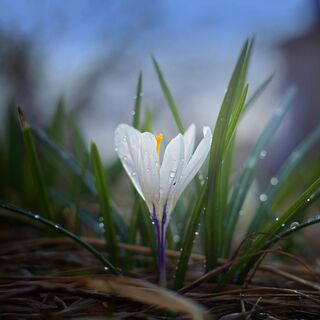
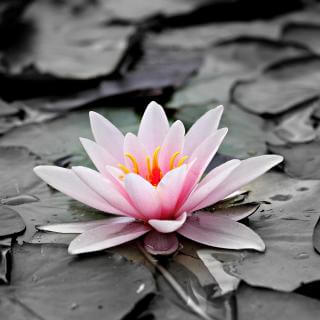
A flower isn't more beautiful the day before it opens or the day after it wilts.
Its whole life,
Bud to bloom to decay,
Is considered beautiful,
Precisely because none of it lasts.
Traditional Japanese aesthetics often celebrate cherry blossoms,
Not despite the fact that they fall within days,
But because of it.
Their brevity is the beauty,
Not a flaw in it.
Compare that to how most of us relate to our own lives.
We wait for the finished version,
The finished body,
The finished career,
The finished relationship,
The finished version of ourselves.
Can we quietly withhold our own appreciation until we get there?
Wabi Sabi suggests that version never arrives for anyone and that withholding appreciation until it does is a way of missing your entire life while it's actually happening.
There's also something in this about ordinary,
Humble things.
Traditional Japanese tea ceremonies were built around simple,
Handmade,
Often asymmetrical bowls and cups,
Rather than symmetrical,
Expensive,
Flawless ones.
The slightly uneven cup,
Made by an actual human hand,
Was considered more beautiful than the perfect one made by a machine,
Precisely because you could see a person within it.
So here's something to try right now.
Look around wherever you are and find the object that isn't perfect.
A worn mug,
A scratched table.
A plant that's a bit lopsided.
Look at it properly for a moment.
Not something waiting to be replaced.
But something with a history.
Now do the same thing with yourself.
Think of one thing about your life or your body or your story that you've been quietly treating as a flaw to hide.
What would it mean to see that thing the way you just looked at that object,
Not despite its imperfection,
But because of it?
That's the whole practice.
Not lowering your standards.
Changing what you consider beautiful in the first place.
Thank you for spending this time with me.
With love and I hope to see you again soon.