Hello and welcome.
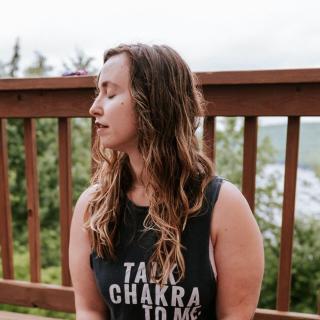
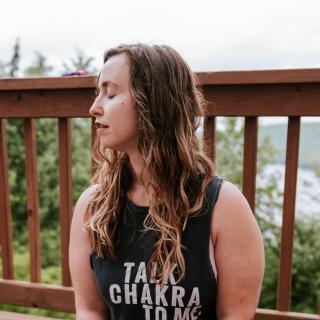
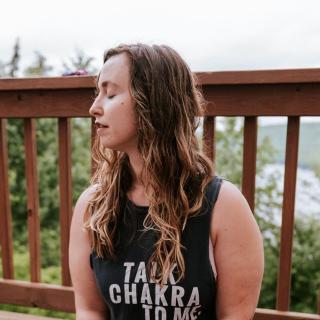
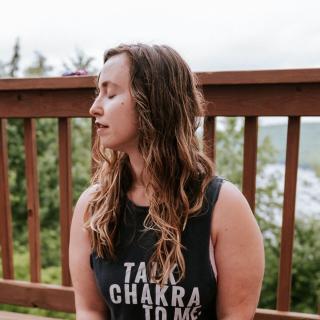
My name is Alicia.
Today I'd like to offer you some breath practices for anxiety.
These can be used anytime and they work especially well for managing stress.
Or anxiety.
Breath is one of the most powerful tools we have available to us at all times.
Your lungs are always with you.
For each of these breath practices,
I'd encourage you to breathe in through the nose and out through the nose or mouth.
Please adapt as needed.
I'll explain each breath and then you'll have the opportunity to practice a few rounds before moving on to the next breath.
These breaths can be done in any position.
I would recommend.
Practicing seated.
Or lying down.
These could also be done standing.
However,
Standing will put more stress on the nervous system.
And generally,
When we're talking about reducing stress and anxiety,
We want to calm down the nervous system.
So let's begin.
Diaphragmatic breathing,
The three-part breath.
This breath begins in the belly,
Then expands to the lungs,
And then the chest.
It can be useful to put your hands.
On each body part to encourage that felt sense of expansion.
On the inhale.
Let's begin with the hands on the belly.
With an exhale,
Releasing any stale air in your lungs.
And how belly Inhale lungs.
With hands on the sides of the lungs.
Inhale,
Chest,
Hands over the chest.
And exhale,
Chest,
Lungs,
Belly.
If it felt useful to move the hands as you inhaled,
You may do so again.
And HowlBally.
Lungs,
Chest,
Exhale chest,
Lungs,
Belly.
Pause.
See if you can smooth it out a little this time.
Inhaling belly,
Lungs,
Chest,
Exhaling chest,
Lungs,
Belly.
Two more rounds on your own.
One more for good luck.
And sense and notice.
Beautiful.
Straw breathing.
This breath practice begins with a simple inhale through the nose.
And then purse your lips as if you're breathing out of a straw,
Exhaling through pursed lips,
Allowing the exhale to be as long as possible.
You can use an actual straw if you have one handy.
So go ahead and take three rounds on your own.
Relaxing the shoulders.
Soften the face.
And sense and notice.
Great work.
Paced breathing.
This breath involves keeping a steady rhythm or counting the length of your inhale and the length of your exhale.
Aiming to make the exhale just a little longer than the inhale.
For their first round,
Begin with an inhale for five seconds and an exhale for seven seconds.
And then you can adjust from there.
Inhaling through the nose.
Five,
Four,
Three,
Two,
One,
And exhaling.
One,
Two,
Three,
Four,
Five,
Six,
Seven.
And breathe.
Some folks like a shorter pace,
Such as a three or four second inhale and a five or six second exhale.
Some enjoy a longer pace.
With a six or seven second inhale and an exhale that's even longer.
I invite you to make this your own.
For the next.
Three rounds of breath.
And sense and notice.
And breathe.
Thank you so much for practicing with me.
I appreciate your presence.