Welcome,
Allow yourselves to settle and arrive we will begin in one moment.
Welcome,
Allow yourselves to settle and arrive we will begin in one moment.
Delighted to have you.
Okay.
Welcome to all those joining us on zoom and live on Facebook on our YouTube page on LinkedIn and Twitter wherever you may be coming in.
Thank you for your patience I was not able to be with you last Sunday due to illness,
There is a little flu bug going around,
And I happen to have it.
But I am delightful to be here you are here with awakening Torah moose our mindfulness.
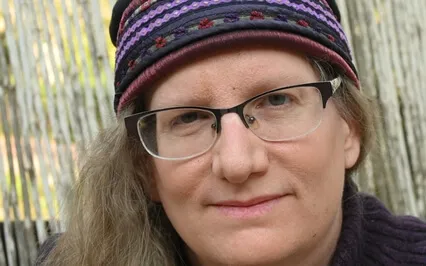
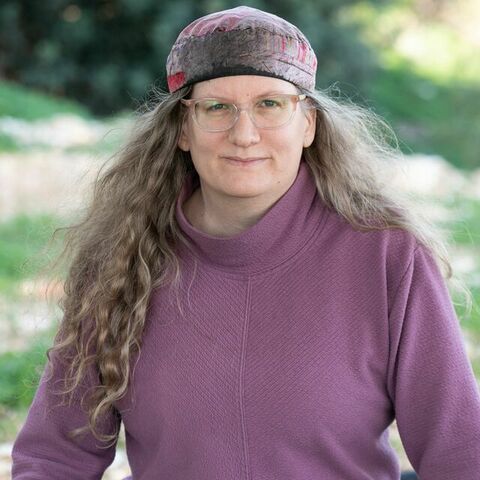
I am Rabbi hasia Oriole Steinbauer,
The founder and director of how much on the could do show the Institute for holiness to heal up more sorry.
And we meet every Sunday at 3pm Eastern Standard Time to offer this insight and practice into looking at the weekly tour portion from the lens of moose our mindfulness,
And to engage in meditation practice together of mindfulness meditation.
So,
We always look at the partial that we just passed gives us the opportunity to study the partial from the previous week.
So we delved into Shmini,
And we were able to study it with our communities and look at it and we're ready to enter this space together to be able to do that.
And before we jump into the partial of Shmini.
We always begin with our cover now our intention for today's practice.
So I'm going to begin to share screen with you.
So you have before you if you are on video.
We have the several cover note here we always engage in the first and the third together the intentions for those of you listening on audio,
You will be able to hear.
So we say together the first one before doing acts of caring for the self,
We say,
This is something that I am doing to strengthen my own soul,
In order to be a benefit to others in the future.
And then we share in the third one before doing acts to strengthen my relationship with the divine your relationship with the divine this is something I'm doing to strengthen my relationship with the Creator,
So I can be a better conduit of God's good to others when they need me.
So we enter today's practice with those intentions.
May it be so we may we merit greatness so that we can bring greater wisdom and less suffering to the world.
So we're grateful to have all of you.
And we will begin.
So,
We are in the parashat of Shmini which we just read,
As I said,
The previous Shabbat yesterday if you were able to engage in it.
And I'm just going to give a short summary of what this looks like for those of you who are just coming to it now.
So,
We basically have entered a day eight,
That's why it's called Shmini,
The eighth day.
Aharon the high priest and his sons,
The Kohenim have been secluded inside the Mishkan for seven days to basically train and prepare for their roles.
And this is going to be an inauguration of welcoming them into the community to basically giving also authority that the Divine has chosen them for this role.
So this is the eighth day,
They have come out,
And they are actually beginning to perform beginning to do what they have to do and so you witness Aharon the Kohen Gadol the high priest coming and giving one of the offerings.
And it's accepted,
It's not only accepted what is called Kavod Hashem this this a glory of God comes in kind of this blazing fire that it almost seems as if when it comes out.
There's no containing it it's once it's been released it's like an energy of force that has to move.
And so,
Just briefly if you look at Vayikra Leviticus chapter nine,
Pasuch 24,
We have here,
V'titze ish milif nei Hashem,
Fire came forth from God,
V'tochal ahiz mizbaal hi mizbeach et haolah,
And consume the sacrifice.
Okay,
Ve et hacha v'lim,
Then the fat parts that are on the altar and kol haan ya,
They all the nation saw,
Right?
And ve yar v'onu ve yip lu al ha'panehem,
They saw they sang out,
And they bowed down.
But then what happens?
We want to give that context but then something tragic happens.
And we're no stranger in this practice to tragedy and suffering,
If we've been looking and studying the Torah closely.
So Aharon's two sons,
Nadav and Avihu,
However you want to interpret their behavior,
Take pans with fire,
Assuming coal,
And they offer their own incense.
It's known as alien or strange fire,
They go with their pans and offer to.
Who knows if this is this gets interpreted in many different ways in Arabicic tradition,
That they were full of love and excitement and they wanted to give some see it as a that the they weren't they weren't following directions that actually says they offer strange fire that wasn't commanded,
Lo siva,
But they go,
I want you to understand the context they go and they offer this and they're consumed by the fire.
All right.
So,
This is actually a quite shocking painful moment.
And on one hand,
This shouldn't come as too much of a surprise but it does to Arabicic ancestors.
There's almost a,
And I can understand there's a reaction right we want to look at our own reaction to this text.
But if you look back at the golden calf.
When Moshe comes down and decides that those who he even says if you're wished Hashem come to the side those who are not with Hashem,
Not with God.
They end up being murdered by their own brothers and siblings,
And their fathers 3000 3000 of the our own people correct.
So,
Also then you have Nadav and Avihu doing something.
Who,
If you think back to the people who engaged in the golden calf we could interpret and I interpret this earlier for you that they too had pure intentions,
They were attempting to draw near to Moshe and God,
Maybe even have a replacement replacement Moshe.
And so,
That drawing near was that pure intention but it wasn't what God commanded it wasn't what God wanted it wasn't one Moshe wanted,
And we talked about when we want to offer something to someone,
We try to find out in our practice what it is that they need and want,
And we learn this from that model.
And so also then you have Nadav and Avihu giving what they want.
Not what God wants not what God commanded.
The tradition even talks about how they didn't even check in with Moshe or Aharon either so this is awful also what Moshe did not want.
So again,
Here's this this impulse.
This tension that even the verb that to use again is like to come to draw near to draw close,
They draw close with strange fire.
That's what they drew near.
It's this in pure intention and we all have that we all have that desire.
We are learning through the divine and through the Torah,
That it's contained it's contained with commandments of how we are to move forward how we are to behave.
If we look back at our ancestors.
We recall that we had that vigilante justice of only those who knew a fear of God,
There wasn't a rule of law before,
Even before slavery.
And then through slavery there was still that vigilante justice and finally when Hashem freeze the people takes them out there starts to be this establishment of a rule of law.
And so we're witnessing.
Basically this kind of emerging relationship where the people are trying to learn and figure out what's right,
And they will make mistakes along the way,
And God coming trying to offer a structure,
But one that the people will go back and forth from they'll either get it right or there will not be right right there'll be off the path,
There will be sin.
So let's look a little bit more closely at this.
All right.
So,
They offer this fire.
And there's much to be said that all son and their father.
Once they are burned to consumed her own false silent.
And our tradition has much to say about this and we could interpret his silence many ways also.
I basically want to say that we have Moshe coming and saying something to his,
To his brother,
Often interpreted as not the right thing to say at the right time but we would term wise speech is saying something at the time where the person can listen and actually hear it.
Okay,
So we have this silence that happens and then we have this unwise speech almost unbalanced anger of Moshe coming and in.
We're going to hold both of these okay the instead of inquiring into his brother's pain,
Instead of comforting him.
There's this almost re establishment of the rule of law.
And,
Um,
And then later when Moshe decides to inquire.
Surely inquire is the term used,
He decides to inquire why haven't they consumed the hotat this in offering the goat,
That was there they were supposed to come the rule was the commandment was that they as the priest,
We're supposed to consume that offering and Moshe comes again.
With judgment.
With what comes across as unbalanced anger.
And he approaches the two other sons of our own through this,
This discussion.
And he is angry at them and maybe that angry anger and judgment might be coming from fear.
If we want to give Moshe the benefit of the doubt maybe he was fearful that they were also going to be punished or consumed.
And so,
A,
You have this,
This high emotions going on,
And it coming out in either silence or inappropriate speech.
Okay,
So Aharon is finally speaks in response to this to Moshe coming inquiring why,
Why haven't you.
In the,
The same offering you're supposed to eat it.
And Aharon suddenly speaks,
And he basically does,
If you look very closely at it has his own interpretation of how he was supposed to behave and act in that moment.
And he didn't think it was appropriate that he should eat it at that moment it gets interpreted differently depending on the,
The tradition.
But let's just say it was an acute situation in which he interprets how to behave and that it's,
It's not following the law that he's not going to consume that meat.
And in response to this it's actually Moshe who then becomes silent,
And then through that silence.
You read it is interpreted because of the language use that he concedes that he agrees with his brother.
Okay,
So I'm giving you that that background and context but it's really quite amazing what's going on and it'll help us frame,
How we want to be with our own practice of when we practice silence,
How it's used how it's interpreted,
How we also will want to strive for wise speech,
And either when we need to say to people one to comfort them and they need to,
And also to to say things when they can actually hear it and will be of benefit.
So,
We have a rabbi,
Jonathan cross come to us from the moose our tour commentary,
Where he introduces that one of the ways to interpret our own silence which is actually less positive,
Is that his silence comes from possibility that he is out of fear that he doesn't want to say the wrong thing that he maybe is also fearful of being punished by the Almighty.
Now,
Let's go back.
We always need to see things in context and also remember what has happened.
Let's go back to the golden calf incident.
And if you recall Moshe comes down livid very angry and says to his brother.
What did the people do to you that caused you to do this.
And if you recall his response,
He actually speaks he doesn't stay silent.
He says I threw it into the fire and this thing came out.
So,
God bless him but I take that answer is not necessarily honest or a not necessarily taking responsibility for how he did it participates or not,
Even if it was out of fear is so all sudden you have him now being silent.
And I want to posit that you could actually see a her own growing in his practice of one he's drawing close to God,
And he's also coming more in alignment with courage with responsibility.
And so the silence is actually a step up from how he spoke during the golden calf incident for how he behaved there.
So it's,
He's not passing off the buck he's not passing off responsibility is not making up some excuse or some other way of claiming that,
You know,
It just kind of happens,
Spontaneously instead he is silent,
And through that silence,
It's maybe the best that he can do right now in the sense,
And it's a step up from either fabricating or having some other response.
So I want to posit that that we finally see a growth and a change in his behavior.
Okay.
And I just want you remember Moshe is this man who had a heavy tongue.
He claimed he had a heavy tongue and he couldn't speak,
And that he needed his brother,
Right,
He needed.
He didn't actually ask for his brother but finally after arguing with God back and forth I can't go to Egypt I can't be the one to save the people.
Finally,
You know,
Through back and forth.
Hashem says to him here comes your brother.
He will support you he will speak for you and suddenly Moshe gets enough of the strength and courage and responsibility to return with his brother to Egypt to do the assigned tasks.
And that's a very beautiful relationship.
And you'll notice that they actually strengthen one another.
They work off of one another.
So if you pay very closely in this parasha.
What happens when Moshe comes to him about the sin offering he actually comes to the sons first he doesn't even confront our own.
But when our own speaks.
It's our own speaking and it's our own teaching his brother through that speech that wise speech that there's another way to interpret this law and this is how it's going to be practiced right now in this acute situation of morning,
That we're not going to eat it,
That he doesn't believe that this is what God wants and Moshe concedes.
So here's that relationship again where Aharon is helping stretch Moshe helping calm down his anger,
His judgment,
And to see things a different way.
And that's how they've been working together since even before they head in on their trip to Egypt so there's something quite beautiful there,
Something that we want to hold even for our own practice that we need that community we need those people that strengthen us that calm us down that help us see things from another perspective,
One that might be actually more compassionate in the moment,
Not so rigid and fixed and what we think the law is and what we should do.
So,
There is that beauty there.
And I think I want to conclude with this thing that is our own using this wise speech,
And it leads to as I said this silence is back and forth first it starts with our own silence and Moshe unfortunately not using such wise speech judgment.
And then it being transferred and changed again.
Later on in the partial when he approaches him about the sin offering it's suddenly Aharon that's using this wise speech,
And it's Moshe who silence.
So,
I will conclude with some lovely texts from Nahama Leboe,
It's one of our wonderful Torah teachers in the new studies on Vayikra and Leviticus and page 137,
Where she says that,
That she feels that the whole encounter between Moshe and Aharon requires closer study.
And then,
You know,
Why was Moshe angry at Aharon's sons at such a tragic moment.
And how did Aharon's reply pacify Moshe,
And if Aharon acted correctly,
Then why did Moshe come with this judgment and,
You know,
Telling them that they're doing wrong.
And if Aharon's actually doing wrong,
Then why did Moshe concur and actually why in some sense,
Isn't God punishing them for not following the strict letter of the law.
And so you're finally seeing you're seeing something quite beautiful happen here,
You're seeing the leadership in relationship with God in an acute moment,
Doing an interpretation that is a life affirming for Aharon and his sons,
And for that,
That specific moment in that specific place.
And so,
What else does she say if there's anything else I want to share with you.
Yes,
So that's what I want to start off in the Torah study with you,
With one final conclusion is that I just,
As I reminded you at the beginning,
That we want to keep in mind this trajectory that we started in Bereshit and then in Shemot,
And now we're coming to a whole new way of being in the vayikra and Leviticus,
Where we call this trajectory that,
You know,
When people used to say like when Avraham and even the midwives in Egypt said,
There's no fear of God here that that concept of having a moral compass of understanding what's right and wrong and living by that,
And that gets molded into finally a people and a rule of law with God's commandments and we see God now with the Mishkan as it's been built with the people to be this communal center in a sense that everyone participated in that the creating of this structure is a containment,
Right,
And it's a practicing in a way that God wants,
And it shows mindfulness.
It has an extreme attention to detail.
And that detail must be followed.
And when it's not,
There are obviously consequences.
But as you see with Aharon and Moshe,
There's this kind of little pettak,
There's this opening with our leadership here,
Where there's an interpretation,
A change a little bit in the sense that who's going to follow the law and Aharon is saying this is not appropriate right now in this acute intense moment of mourning.
And it leaves lots of,
It leaves my heart open,
And it leaves us to,
As we all should look forward to our next weeks together as we meet on each Sunday,
What is going to happen next?
And that's going to happen with this growing relationship,
With this deep intimacy between Aharon and Moshe,
And what can we learn from them learning wise speech,
Wise discernment,
How they're going to behave,
Trying to live in alignment with what God expects from them.
So we're going to move into our practice today.
So I encourage you to go ahead and come to an upright seated position if you choose to sit.
Can I ask a question before we move into the meditation?
Can you hold your question to the end?
Sure.
Yes.
Thank you,
Mark.
Thank you so much.
Great.
So,
If you have any chronic pain or deep discomfort today,
Especially in your low back,
Then please stand,
Make sure that you have maybe a chair next to you to hold yourself firmly,
So that you don't lose your balance.
You might lie down also,
But I encourage you to keep your eyes open so you remain awake and alert.
For those of us who are going to sit,
Unless you're on a Zafu,
On a seated meditation cushion,
I ask that you plant your feet firmly into the ground so that the earth is holding you,
Which is very important.
And I want you to sit upright,
Created in the image of God,
Which we all are.
So in a dignified position,
Not West Point stiff,
As our teacher Jon Kabat-Zinn says,
But in a way that you feel dignity and honor,
Kovod.
And allow your hands to rest in your lap or some people like to hold them on their heart,
Whatever you need right now in this moment.
And if you feel safe and comfortable,
Go ahead and shut your eyes.
Otherwise,
Lower your gaze to about four feet in front of you.
And we will begin with three deep cleansing breaths.
Notice as you inhale,
Which is a gift from God,
That it fills your whole lungs.
And as you exhale,
Your shoulders begin to lower.
You begin to settle and arrive.
No need to control your breath anymore.
You can allow it to move at its own gentle rate.
And we will begin with a short body scan to assess where we are right here and right now to come to the present moment.
As we say,
There's no other place really to be.
This is where we will encounter community and the divine taking refuge together,
Fulfilling our intentions.
Notice your head and your forehead,
Your cheekbones,
Even your tongue and your jaw,
The back of your head down your neck,
To your shoulders,
Down your arms.
You can even move your fingers,
Down your upper back and your chest at the same time,
Feeling that breath expand.
Noticing what is alive and real for you right now with curiosity,
With the beginner's mind.
Are there any sensations that are particularly strong in the body calling for your loving attention?
As we move down to the lower back,
To the abdomen,
Into the sit bones,
Into the thighs,
The knees and the calves,
Down to your feet,
Feeling the arches of the feet,
Moving your toes.
Notice if your thoughts are pulling you to planning for something in the future or thinking about something in the past.
Gently honor them,
Pull your attention back to my voice as your anchor to your breath.
For some of us,
It might be strong emotions.
I know for some students,
It's very hard in this week's Parsha that just passed in Shimini.
We encounter death of our ancestors and it carries with it sadness.
As you can witness through our rabbinic sources,
Even struggle of difficulty of finding why and what can we learn from this.
So if you carry those strong emotions in you right now,
Just honor it.
No need to push them away.
We don't need to practice aversion.
No need to attach to a certain emotion either.
Just noticing what is coming up for you right here,
Right now.
Coming with loving attention,
Compassion.
So first,
We notice if we have any desire for things to be different than what they are.
For feeling anything unpleasant or maybe pleasant and attaching ourselves.
For some of you,
It will feel neutral.
But we always seek to learn from our ancestors even when we feel they're not acting in alignment with our Torah values,
With our Musa mindfulness values.
So I may want Moshe to have come with kindness,
With compassion.
And we can learn from him in our own life experience that when we want to draw near to someone,
When something tragic has happened to them or something that causes harm or suffering,
That we pause.
We use that same attention to detail that we find is expected of the kohanim and the Mishkan.
That we approach not with judgment.
That we approach with what they need if we know.
Hashem God has always given us that moral compass,
That fear of God as our ancestors used to call it earlier,
And Bereshit and Shemot.
And that is a gift.
That is a gift to tap into so that when we approach others,
We can try to approach with humility of not taking up the improper amount of space to try to assess what would be wise speech in this moment.
How can I help alleviate their harm their suffering.
That's what ever arises from my words.
Recognize and allow begin to investigate the felt sense in the body.
Where do you feel this learning today in your body.
Where do you feel our ancestors behavior,
Your reaction or response.
What do you feel like it will be helpful to use the naming technique of gently labeling whatever is here for us right here right now.
Like yes,
I can be with this.
I can also ask God to carry this for me.
As we turn to our ancestor,
Our own with a deep bow inside of all him and his ancestors of what they must have gone through.
Their first day of service.
Shmini and everything that he went through earlier and the golden calf and witnessing his own brethren be murdered and having to recover and build the Mishkan from that to seek to show our repentance.
So much that they've been through.
We can honor that in our practice.
We will move into some time in silence.
And I will ring the bells when it is time to come out.
Allowing nurturing,
Forgiveness.
Stay here.
.
.
.
.
.
.
.
.
.
.
.
.
.
.
.
.
.
.
.
.
.
.
.
.
.
.
.
.
.
.