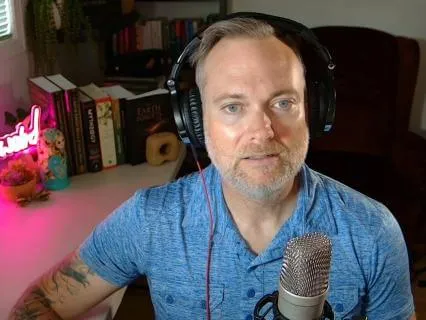
Hey everybody,
Jason here.
Welcome back.
So,
So far we've mostly been using just the breath.
So in this lesson,
We're going to express our attention through the body itself.
And this here is called a body scan.
Some may be familiar with it,
But a body scan helps you become aware of physical sensations without immediately trying to change them.
I mean,
It's also useful because most of us live almost entirely in our heads.
We think about the body,
We judge the body,
And we worry about the body,
But we don't always actually feel it,
Right?
So what I want you to do is begin by sitting comfortably,
Okay?
You can also do this practice lying down,
But there's a good chance you might actually fall asleep.
This isn't disaster,
But if your goal is meditation,
Sitting may help you remain alert just a little bit.
So once you've done that,
Take a few natural breaths,
Right?
Feel the body being supported by the chair or simply the floor.
And then bring your attention to the top of your head.
Now you don't really need to to simply imagine anything at all.
Just notice whatever sensation is present there.
I mean,
Maybe you feel warmth,
Maybe you feel pressure,
Maybe tingling,
Maybe you feel a little bit obnoxious right now.
Or maybe you feel nothing at all,
But nothing is still something that you can notice.
And then.
.
.
Slowly move your attention to the forehead.
And notice whether you're holding any tension there at all.
Now,
Many people they tighten their forehead without even realizing it,
Me included.
So see whether it can soften just slightly.
And then move to the eyes.
So let the muscles around the eyes relax,
Right?
Now,
You don't need to squeeze your eyes shut,
Just let them rest.
And then bring awareness to the jaw.
Notice whether your teeth are pressing together.
And let there be a little space between the upper and lower teeth.
And then allow the tongue to rest.
And then move down into your neck and shoulders.
This is where a lot of people carry their day,
Right?
Whether that be work stress,
Family stress,
Things that were never said,
Or even things that still need to be done.
Now,
You don't have to analyze any of it right now at all.
Just feel the shoulders.
Just feel them.
And if they release naturally,
Let them release.
And if they remain tense,
We'll allow that too.
And then move your attention into your arms.
And you feel your upper arms,
Your elbows,
Your forearms the wrists,
The hands,
And then notice each finger.
You may even feel a warm pulse,
Coolness,
Or even a slight vibration.
And then bring your attention to the chest.
And feel the movement of breathing.
Notice any tightness or openness.
And then move the stomach.
Now,
A lot of us hold tension here.
You know,
See whether you're pulling the stomach inward.
And then allow it to be natural.
And then feel your lower back.
The hips,
The weight of the body.
And then move slowly through the thighs,
The knees,
The lower legs.
Your ankles and then all the way down to your feet.
And then feel the contact between the feet.
And the floor.
And then once you reach the feet when your awareness and feel the entire body sitting here,
Right?
Widen that awareness,
Widen it right out and feel the entire body sitting here.
You know,
Not a picture of the body.
The actual field of sensation.
Right?
You may notice that the body is not as solid as it appears.
It's pressure,
Warmth,
Movement,
Pulsing,
Tension,
And vibration constantly changing all the time.
And if you experience any discomfort during the body scan,
See whether you can become,
I guess,
Curious about it,
Right?
Instead of immediately thinking,
You know,
Oh,
My back hurts.
Explore the sensation,
Right?
Is it sharp?
Is it dull?
Is it warm?
Is it tight?
Does it remain in one place?
Does it move?
Does it pulse?
It doesn't really mean you're ignoring an injury.
If you need to adjust your position,
Well,
Simply adjust it.
But move consciously.
Notice the intention to move.
Feel the movement actually happening.
And then simply settle again.
The body scan itself,
It teaches us that sensations actually do change.
You know,
An itch appears,
It becomes intense,
It may disappear,
And then tension shifts.
You know,
Heat becomes coolness.
The body is constantly moving through the experience.
And this can be especially helpful when anxiety is present.
I mean,
Anxiety often pulls us into stories about what might happen.
And the body scan brings attention back to what is actually happening right now.
Feet on the floor,
Hands are resting,
The breath is moving.
The shoulders,
Yeah,
They're tight.
And my heart is beating.
Real experience instead of an imagined catastrophe,
Right?
So I mean,
For this lesson,
Practice a slow,
Slow body scan for,
I guess,
Five to 10 minutes.
Move from head to feet and don't rush it at all.
Don't worry.
Don't really worry about feeling every body part perfectly.
You're simply rebuilding contact with the body you have probably been carrying around all frigging day without noticing.
So give it a shot.
Thanks for listening.
Namaste.