In the beginning of years,
When the world was new and all,
And the animals were just beginning to work for man,
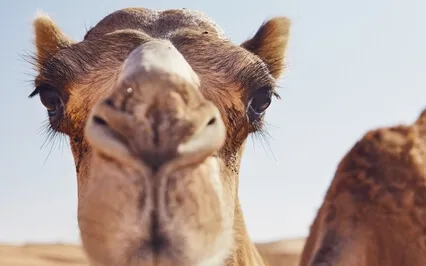
There was a camel,
And he lived in the middle of a howling desert,
Because he did not want to work,
And besides,
He was a howler himself.
So he ate sticks and thorns and tamarisk and milkweed and prickles,
Most excruciatingly idle,
And when anybody spoke to him,
He said,
Hmph!
Just,
Hmph!
And no more.
Presently the horse came to him on Monday morning with a saddle on his back and a bit in his mouth,
And said,
Camel,
Oh,
Camel,
Come out and trot like the rest of us.
Hmph!
Said the camel,
And the horse went away and told the man.
Presently the dog came to him with a stick in his mouth and said,
Camel,
Oh,
Camel,
Come and fetch and carry like the rest of us.
Hmph!
Said the camel,
And the dog went away and told the man.
Presently the ox came to him with the yoke on his neck and said,
Camel,
Oh,
Camel,
Come and plow like the rest of us.
Hmph!
Said the camel,
And the ox went away and told the man.
At the end of the day,
The man called the horse and the dog and the ox together and said,
303,
I'm very sorry for you,
But that Hmph!
Thing in the desert can't work,
Or he would have been here by now,
So I'm going to leave him alone and you must work double time to make up for it.
That made the three very angry,
Very,
Very angry.
The camel came chewing on milkweed,
Most excruciatingly idle,
And laughed at them.
Then he said,
Hmph!
And went away again.
Presently there came along the Dijin,
In charge of all the desert,
Rolling in a cloud of dust,
And he stopped,
To palaver and powwow with the three.
The Dijin of all deserts,
Said the horse,
Is it right for any one to be idle with the world so new and all?
Well,
Certainly not,
Said the Dijin.
Well said the horse,
There's a thing in the middle of your howling desert,
With a long neck and long legs,
And he hasn't done a stroke of work since Monday morning,
And he won't trot.
Hmph!
Said the Dijin,
Whistling.
That's my camel,
For all the gold in Arabia.
What does he say about it?
He says,
Huh?
Said the dog,
And he won't fetch and carry.
Does he say anything?
Only Huh!
And he won't plow,
Said the ox.
Very good,
Said the Dijin.
Well,
Hump him if you will kindly wait a minute.
The Dijin rolled himself up in his dust cloak,
And took a bearing across the desert,
And found the camel most excruciatingly idle,
Looking at his own reflection in a pool of water.
My long and bubbling friend,
Said the Dijin,
What's this I hear of you doing no work,
With the world so new and all?
Huh!
Said the camel.
The Dijin sat down,
With his chin in his hand,
And began to think of great magic,
While the camel looked at his own reflection in the pool of water.
You've given the three extra work ever since Monday morning,
All on account of your excruciatingly idle,
Said the Dijin,
And he went on thinking about magic,
With his chin in his hand.
Huh!
Said the camel.
I shouldn't say that again if I were you,
Said the Dijin.
You might say it once too often.
And the camel said,
Huh!
He said it again,
But no sooner had he said it than he saw his back,
And he was so proud,
Puffing up and puffing up into the great big lollipop-p-humpf.
Do you see that?
Said the Dijin.
That's your very own hump,
And you've brought upon your very own self by not working.
Today is Thursday,
And you've done no work since Monday,
When the work began.
Now you're going to work.
Well how can I?
Said the camel,
With this humpf on my back.
That's made a purpose,
Said the Dijin,
All because you missed those three days.
You'll be able to work from now for three days without eating,
Because you can live on your humpf.
And don't you ever say I never did anything for you.
Come out of the desert and go to the three,
And behave.
Humpf yourself.
And the camel humped himself,
Humped all in all and went away to join the three.
And from that day to this,
The camel always wears a humpf.
But he has never yet caught up with the three days that he missed at the beginning of the world,
And he has never yet learned how to behave.