Union,
Not perfection,
Not growth.
Our temptation is to make everything into a self-help growth,
Healing.
I'm all for healing and growth,
Obviously.
But I think to have a pure understanding of contemplation,
You must be seeking it for union.
Now you probably want me to say union with God,
And that for me is just saying union with everything.
Hello and thanks for tuning in.
Welcome to the very first inaugural Contemplate This podcast.
To give credit where credit is due,
This podcast was inspired by Michael Gervais' podcast,
Finding Mastery.
The idea here with Contemplate This is to interview people who are leaders in contemplation or contemplative practice,
To learn about their personal history and background,
How they became interested in contemplative practices,
What their practice and teaching looks like on a daily practical level,
And most importantly to explore how their contemplative practice has transformed themselves and the world around them.
I'm particularly interested in exploring the link between contemplation and action,
Or between the interior healing that occurs in contemplative silence and the work of building relationships of trust for the healing of others and for the world.
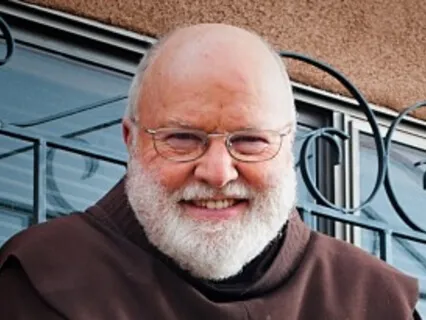
Our first interview is with Father Richard Rohr,
A Catholic priest and member of the Franciscans,
The religious order established by Saint Francis of Assisi in the 13th century.
Father Richard is the founder of the Center for Action and Contemplation in Albuquerque,
New Mexico,
And a leading teacher in the Center's Living School,
A program that has introduced and trained hundreds of contemplative activists,
Empowering them to bring contemplation into their work to create a more just and peaceful world.
He's also the author of numerous books and recorded teachings.
In fact,
My first encounter with Father Richard occurred when I was a young man in high school where I discovered a recorded audio tape that my father had purchased of one of Father Richard's talks,
And I listened to it on one of those old Walkman cassette players.
In this interview,
We discuss Father Richard's early life,
Including a religious experience that he had that shaped his worldview and led to him eventually joining the Franciscans as a young man.
We spent some time exploring the effect of Vatican II on his early formation in the Franciscans and his studies for priesthood.
For those of you listening who might not be familiar with the terminology,
Vatican II was a gathering of all the Catholic bishops of the world between 1962 and 1965.
The result of that gathering changed the way that Catholics do theology,
The way we read and pray with Scripture,
Our entire lives of prayer,
And the way that we engage in the modern world.
We also make some references to a gathering that occurred in August of 2017 at St.
Benedict's Trappist Monastery in Snowmass,
Colorado,
Where 30 leaders of contemplative Christianity gathered to discuss the future of the contemplative tradition in the world today.
You can read more about this gathering as well as many other topics of interest related to contemplation on my website and blog at thomasjbushlak.
Com.
No spaces,
That's thomasjbushlak.
Com.
And you can also check out my online course,
Everyday Mysticism and Introduction to Contemplative Christianity at contemplative-u.
Com.
That's the word contemplative-u.
Com.
With that introduction in place,
Let's get started with our first Contemplate This interview with Father Richard Rohr.
Well thank you Father Richard,
It's good to be here with you.
And so I kind of want to start,
Some of the people that listen to this might be familiar with some of your work,
Some of them might not be through writings or workshops or recordings.
I kind of want to go back to the beginning to start and ask you to tell us about yourself,
Where you come from,
Kind of early early family life,
Stuff that I don't even know.
Well I'm impressed that you care about such things.
Oh yeah well it's important for getting near your story.
Yeah well I was born close to where you live in Kansas and grew up with conservative German Catholic farm family.
I joined the Franciscans when I was very young.
That was before Vatican II,
I'm almost 75 now.
So I would not have guessed that you had joined pre-Vatican.
So how old were you when you joined?
I went to minor seminary in those days.
You know I think they tried to get you away from girls early.
So we had minor seminaries in those days and at that time it worked.
I don't think that would ever work today,
Nor would it be healthy.
But I have to say the Franciscans gave me a wonderful education,
A wonderful formation.
So it's worked,
It's been a life where I've received ten times more than I ever expected.
Now when you say you entered minor sem,
Would that have been like high school age?
Yes okay.
Now we still went home in the summers and Christmas you know.
But yeah I did a high school seminary.
Okay.
You're almost unknown today thank God.
Yeah yeah well my father tried the minor sem as well briefly.
It didn't last very long.
Well that's where you got your grounding.
See?
Yeah.
So you came from,
I forget how you put it,
Conservative German.
Conservative farm people.
Now I didn't grow up on the farm.
They had moved into the city during the dust storms and so forth.
So I grew up in Topeka and most of my family still lives there.
Okay and so was the religion,
Spiritual practice a regular part of your family growing up?
You know I'd have to say so.
By today's standards we would call it very conservative.
But you're too young to remember it wasn't what we call conservative today.
Everybody would thought that way.
Right right.
It was just a homogeneous,
Conformist culture where in general you tended to be rather happy.
It was a rather happy world.
Now I hope this doesn't sound arrogant.
By today's standards it was very naive.
It was very uninformed.
It was very unaware there even were other religions or other people than white people.
Yeah yeah.
It was a white Catholic ghetto and you know as long as you're all in the ghetto together it's actually rather pleasant.
So a lot of benefits of a tight-knit community and around the Catholic identity but maybe not a whole lot of exposure.
Not a whole lot at all.
Yeah.
I mean a total Catholic school system all the way through so you never had to even meet a Protestant.
Much less a black person or a Jew or a Hindu you know.
Sure.
Because it was closed off.
Okay.
If you want to call that working.
But yeah.
So to the extent that you can recall what what do you think went into that discernment process such as it was at such a young age that drew you to the Franciscans?
You know I have no doubt and you'll understand this Tom.
I had what we would now call God experiences.
Not no apparitions or anything but just where the veil parted and I knew life was good.
I was good and it was all connected.
And I had that already around kindergarten age.
I had it several times in my teenage years.
So when a Franciscan came to our parish in Topeka in the eighth grade and gave a parish mission as they used to call it in those years where they preached the whole week.
He came in our classroom in a lovely brown Franciscan robe.
I had just recently read Felix Timmerman's The Perfect Joy of St.
Francis.
Now that's an out-of-date book by today's standards but it's really quite poetic and beautiful.
They always say anybody who reads it would want to be a Franciscan.
Sure enough I wrote off to the address he gave me in Cincinnati,
Ohio little thinking it would change my whole life.
So I joined the community in Cincinnati.
In Cincinnati okay yeah and we'll come back to that.
I want to go back to your comment about those early experiences of God that it was interesting that you had you from a very early age had a sense of the goodness of life and even that you were good.
Now I know a lot of Christians and I would probably include myself here have really struggled to fully understand myself as good or oneself as good.
And from what I talked to other people who grew up before the Second Vatican Council that that was maybe even more difficult.
So what do you attribute that?
I mean that seems really fortunate that you really felt that not just intellectually but knew it at a deeper level from such a young age.
You know I have to be honest and you alluded to it the pre-vatican to Catholic Church there's no other word except legalistic.
I mean it was entirely legalistic,
Ritualistic,
Formalistic,
Because it was all we'd all agreed to the same myth it worked.
But I think your parenting and your worldview even outclasses that.
When I went to the seminary and of course I accepted everything they taught me unquestioningly.
There was still a deeper intuition.
I hope this doesn't sound arrogant but I could tell with some of the priests who taught me we're not healthy men.
I could tell that some of them were not happy men.
You know I didn't know how to describe why they didn't seem very healthy in their legalism,
Their ritualism,
But I already knew before Vatican to intuitively,
Only intuitively,
So many of the things they emphasized did not really seem that important to me.
And it wasn't I didn't rebel or anything but you will understand this.
Once you've had an experience of the absolute everything else is relativized including church,
Priesthood,
Commandments,
And I don't mean relativized in a cheap way.
I mean relativized inappropriately.
These are all fingers pointing to the moon and they're not the moon.
Now people who've never seen the moon or experienced the moon,
If we can call it that,
They latch on to those legalisms with great fierceness.
And I can remember even then,
This is the final years before Vatican to the late 50s early 60s,
I graduated from high school in 61,
Entered the novitiate that year.
So I always feel I grew up at a perfect time.
Pre-Vatican II,
During Vatican II,
I was in college and was ordained after studying the theology of Vatican II in 1970.
Wow.
So it was somewhat of a natural organic what I call order,
Disorder,
Reorder.
And when you can move from order,
What's good about order,
When you can encounter disorder and find why it's necessary and it is really disorder,
Then you can move into reorder.
Yeah.
And I say by the grace of God.
That was my life.
Huh.
So you moved to Cincinnati for pre-sem and that was with the Franciscans already.
That's right.
Okay.
And do they still have a formation house there studies?
Oh sure,
Sure.
Cincinnati province.
Okay.
I belong in the Mexico province for 30 years now.
Okay.
Form in the Cincinnati province and for that I'm very grateful.
Yeah.
During Vatican II,
Cincinnati province sent away to Europe its best and its brightest to study philosophy and theology and they came back and taught us.
Wow.
So I was taught,
You know,
Developmental historical theology.
Yeah.
Not just inclusions but the process itself.
How did we come to say what we said at the Council of Trinity kind of thing?
And that I never realized what an immense freedom that would be to theologize for myself.
Yeah.
So you might have had professors who were at Vatican II I would imagine or at least.
We were in Rome during the council.
Yeah.
Wow.
Yeah.
So what was that process like in say minor sem and then into college and then formal seminary?
What was,
I guess,
Partly what I want to get at in this interview is practices that form a kind of contemplative outlook and so what,
How were you being formed in the Franciscan theology but also like what was the day to day practice like and then what what stuck with you that has informed your practice?
Well let's go back to the high school itself.
Yeah.
Every month we would have,
And this term is still used,
What we call a day of recollection.
Mm-hmm.
That day of recollection.
Yeah.
It was basically an entire day of silence in which you'd attend morning mass and some friar would give you a bit of a sermon and send you into the day.
You could read,
You could sleep,
You could write in your journal but I think that gave me my first taste of the fruitfulness and the possibility of life beyond talking and gregarious interacting.
Would you say you're an extrovert?
Oh I am.
I would have thought so from meeting you recently but yeah.
I'm an ENFP.
Okay.
It wasn't where we would naturally go but I can remember those days in fact.
It was on one of those Saturday day of recollections that I went into the library and took out Thomas Merton's Sign of Jonah which had just been written.
It was only a couple maybe three years old something like that and I knew there was someone who who was worthy of being a spiritual teacher.
Let me just put it that way.
Yeah.
That what this was good and I went back in and the only other one we had was Waters of Silo which is more about the Cistercians.
Okay.
He remained a hero of mine and until I saw him for a moment on the day of my graduation in high school.
So you met,
Did you get a chance to meet him?
Well you know,
My family lived in Kansas.
They came to Cincinnati for my graduation.
We usually come home through St.
Louis where you live but this year I said let's take the southern route through Louisville instead of in Annapolis and there's a monk down there that I'd like to meet.
The moment was highly auspicious.
Me,
My brother and sister and my parents stepped out of our little car in front of the guest house there at Gethsemane in Kentucky and you're gonna think I'm making this up.
The door opens June 2nd 1961 and there he is Thomas Merton in his robes but it's gonna get better.
You know who's standing with him?
Mother Teresa.
What?
Yes,
Yes,
Yes.
I'm not lying.
They walk in front of me,
The two greatest Catholics of the 20th century perhaps and I just told my parents back and I say that's them.
And we didn't talk,
I wouldn't dare speak.
He ushers Mother Teresa and her nun companion to a car and they were driven off and he walks back in front of us.
I was too gaga to speak.
But he sort of nods to us and we,
Good afternoon father,
Whatever we said.
Yeah.
I could always say I saw Thomas but he went right back in the guest house and I never got to talk to him.
I already knew about him because I had read several of the books by 1951.
So those days of recollection were powerful.
What was the daily prayer like?
Well,
They would be very formal in terms of you know mass every day.
We'd have a evening prayer.
I guess midday prayer too.
But all the prayers were read,
Formulas,
You know.
Right.
We had prayer books.
We hadn't even rediscovered the Divine Office.
But now when I went to novitiate then we started chanting each day the full Divine Office in Latin.
It was still the Latin Church.
Yeah.
And I would say it was in the middle of that year,
1961-62,
Where I had my greatest spiritual experience.
I was kneeling in the choir in the middle of the day.
I'd gone in on my own and I've always said I felt chains fly in all directions.
Just you know what I was reading was a little book.
It's still in print,
Hard to get,
Called A Retreat with Saint Therese.
It was by some French priest leading us to the spirituality of the little flower,
Therese of Lusue.
And somehow her little way that you come to God not by doing it right.
And I was so trying to do it right.
Yeah.
And my close master even heard me say this on a tape.
And he said,
He said,
You were perfect.
I did everything perfect.
But it wasn't making me love God,
It was making me love Richard.
Yeah.
And so my own perfection.
And so this chains flying in all direction was my most profound experience of unconditional grace.
Grace would not be grace if it was earned.
And I could stop earning.
I could stop proving myself by my perfectionism.
And I must have driven my classmates crazy.
You know I was a little goody two shoes and bow and every genuflection and every perfectly.
Right.
It wasn't love of God.
It was trying to be love of God.
Just as Paul says,
I was a perfect Pharisee.
I was a perfect Pharisee too.
But thank God I was liberated from that early.
And then the next year we started studying philosophy.
And the Vatican Council began the next year in 1963.
So all of it just built,
Built,
Built.
What was real and what was not real.
Yeah.
Let me summarize it with that.
What's real and what's not real.
What's the true self and what's the false self.
What's,
What's eternal and what's temporal.
And that just underlied everything.
And free.
I didn't need to disobey things or overreact against things.
I think the first time I,
I formally spoke out was to defend my bachelor's thesis in 1965.
And my bachelor's thesis was trying to make the case that Francis was trying to reform monasticism.
Yeah.
And we had been made into monks.
Francis didn't want us to be be monks.
The mendicant orders,
And I know the Carmelites and Dominicans would agree with me on this.
Yeah.
Because the monastic structure had been so in control for so many hundreds of years.
The Roman church tried to put all of us back in that mode of monastics.
Now in favor of that,
That very novice where I had the spiritual experience,
We started each day in the choir on our knees in silence for 20 minutes.
Now that sounds fairly monastic,
Fairly struck.
Yeah.
And I say for a 19 year old boy filled with hormones and excitement and you know,
Not a much impulse control yet.
Really good.
You understand?
The discipline was good,
You're saying.
Oh absolutely.
I had palsus on my knees at the end of the novice.
Yeah.
Yeah,
That was pre-Vatican too.
It was better if it was ascetic.
Yeah.
So we pray better on your knees.
But that discipline of knowing I had to be there 20 minutes in silence was my first deep experience of contemplation.
Wow.
Without it being called that.
Yeah,
You didn't necessarily have the name for it,
But yeah.
We called it mental prayer,
Quiet prayer,
Inner prayer.
We didn't use the word contemplation because that was the contemplative orders.
Yeah.
We were supposed to be active and contemplative.
Yes,
Of course.
So that's a thread that's maybe worth pulling on a little bit is the external structures of a discipline in a contemplative practice that you're reflecting on how pre-Vatican too that could be artificial and imposed and overly rigid and yet at the same time,
It sort of teaches,
It physically disciplines the body as a way of also kind of disciplining the mind.
And as you're now,
I'm jumping ahead a bit and I do want to come back to the rest of your seminary studies,
But since then you've taught people about contemplative prayer outside of both the monastery and even outside of vowed religious life like the Franciscan.
So how do you think we convey the importance of discipline to people who,
You know,
Aren't gonna have it imposed,
Right,
But want to kind of wade into the contemplative experience?
Is there a way that you approach that as a teacher?
You know,
I think what it comes down to in this noisy culture is acclimating them to some degree of silence,
Some degree.
I don't want to make a god out of it,
But if you can't be alone with yourself,
You're simply not gonna go very deep in your own experience.
Yeah.
And maybe some discipline of journaling that often helps active people to focus and to live in the moment.
And I think I capture something that's essential about self-knowledge on this journey as well.
You got it.
Yeah.
And so,
You know,
For years I gave these male initiation rights out here in New Mexico.
Now it's been handed over to another group,
But what I saw historic cultures recognize is the young man needed something to focus him.
It was almost always done in nature.
In extended periods of silence.
Without realizing it,
They were teaching him the contemplative mind.
And I would call my pre-Vatican two Catholicism,
Even my novitiate in 1961-62,
A kind of initiation right.
Yeah.
It wasn't the real thing yet.
It was all the window dressing.
But I can see now that it gave me a great leap forward because I had that window dressing,
Some impulse control,
Some comfort with the silence,
And even an increasing comfort with solitude.
Even though I'm an extrovert.
Yeah.
Yeah.
Yeah.
So how do you think that you came to sort of embrace that solitude and silence?
Can you remember a transition in there or a time where that started to feel a little bit more comfortable?
Because I know that's a challenge at first.
Like we recently did the introduction to Centering Prayer workshop at our parish.
And now we're doing,
We had fantastic turnout.
And then we were doing some of the follow-up sessions.
And that's,
I think what a lot of people are struggling with is how to do it right,
In quotation marks,
Right?
Because there is none.
How to settle down,
What to do with all that extra energy and thought.
So.
Well,
You know,
Of course,
It's 10 times harder now because of the ubiquity of social media.
And,
You know,
And frankly,
I'm not sure.
I mean,
I'm in such admiration of people like you.
You're married and you're a father too,
Aren't you?
Yep.
See,
I had a culture created for me.
It was easy for me to close the door,
To make a day of recollection or even an eight day retreat.
And I think that's the genius of religious life.
Yeah.
Made it easier.
And when we do that,
Don't become contemplatives.
I don't think we have any excuse.
We have life and children and job.
But our life was structurally set up to force us to go deep.
Now,
When we fill it up with noise and distraction,
I'm living here in a little hermitage behind the Franciscan house,
Which is a little ways across on the other side of the church in the parking lot.
But,
You know,
Even the Franciscans don't let us live alone like this until the second half of life.
That's the historic tradition.
Yeah.
You have to first of all,
Pay your dues to friendship,
To community,
To family,
To marriage,
To children.
And once you know you can love in those practical ways,
Then you could be released to live in a hermitage.
But then you're ready for much more extended solitude.
Sure.
To answer your question,
Tom,
I think it happened for me cumulatively.
Yeah.
When I was in Cincinnati as a young priest,
Of course,
It was only a two-hour drive from Bardstown.
I took my yearly retreat down to Gethsemane.
And then finally in 85,
The abbot asked me to give the retreat to the monks.
And that's when I told them the story about seeing Merton.
And most of them said only he got to see Mother Teresa.
The rest of us didn't get to see her.
They got locked in the cloister.
They didn't like him very much because he always got these favorites.
Yeah.
Favoritisms,
I should say.
At any rate,
I think my yearly retreat,
Little did I think,
Gethsemane would play such a huge part of my life.
Just geographically it did.
Then when I was able to give them the retreat,
Then the next year the abbot offered me Merton's hermitage.
That was 1985 for a full 40 days.
Wow.
That's the longest.
Yeah.
I did eight-day quiet retreats,
Not the Ignatian style.
That was never our approach,
Not that there's anything wrong with it.
Right.
The Franciscan approach was more nature-based.
It wasn't as structured as the Jesuit approach.
At any rate,
I finally did a full 40 days in 1985 in Merton's hermitage.
And after that,
I still have right here at my feet,
In fact,
The journal I kept those 40 days.
And it was after that that I accepted the conscious,
Deliberate vocation of teaching contemplative prayer.
This is the most important thing.
Yeah.
Of all the other things,
Because I've sort of been jack of all trades and master of none.
And I even told that to Henry now and I said,
I don't think I'm supposed to teach anything but contemplation.
No,
I haven't held to that.
In fact,
He very much affirmed me on it.
Yeah.
He said,
That's the only thing worth teaching.
Sure.
So take us back then.
So you were finishing seminary right as the reforms of Vatican II were being put in place.
And so that would have been late 60s,
Early 70s.
Well,
Council was 63 to 65.
Right.
Right.
So I was in philosophy then.
Okay.
And that was helpful.
Then I began theology with this whole new set of Franciscans who came back from Europe.
Okay.
During Vatican II in Rome,
They taught me for four years.
Yeah.
Magnificent.
I just couldn't wait to go to the classroom each day.
Really.
Well,
It's interesting that you talked about your undergraduate,
I think it was your undergraduate thesis about going back to the original ideal of Francis and that was the whole ideal of religious life that came out of Vatican II was to go back to the roots of each founding tradition and renew that.
So then you were studying,
So is there anything from,
I want to fill in the gap between that late 60s.
No,
That's fine.
Up until the decision in the Hermitage of the 20th century,
The decision in the Hermitage.
So there's roughly 20 years in there.
Well,
See,
Oh gosh,
Now I got to bring in my charismatic experience.
Okay.
See,
I didn't know this.
Yeah.
But it fits.
In fact,
That's when I first taught in St.
Louis.
I taught at some huge charismatic conference in St.
Louis.
In 1971,
A year after I was ordained,
They had put me in charge of the retreats for the Archdiocese of Cincinnati.
We had many Catholic high schools there and one of the requirements for graduation was you had to make a retreat.
Of course,
Seniors aren't too much excited about a spiritual retreat,
But senior boys.
So the very first boys retreat I ever gave,
December 6th to 8th,
1971.
I'm preaching to all these jocks who didn't want to be on this retreat.
They're sitting on the floor of this chapel.
I'm standing there talking to them.
I did not consider myself a charismatic,
But toward the end of my sermon on the Prodigal Son,
These boys began to weep and put their arms around one another.
And within a few moments,
I'm hearing what we would call polyphonic singing in the tongue.
Wow.
That happened to me.
It happened right in front of me.
It never happened on any retreat in the subsequent 45 years.
But the very first retreat,
It was like my own Pentecost.
I was in the Pentecost.
I stepped to the side a little embarrassed.
I didn't know what to do with these jocks who suddenly are hugging one another.
Usually,
Boys are afraid to touch one another.
Yeah.
And then this sound,
Which moved into a natural polyphony.
Wow.
And after a few minutes,
I say nervously,
I don't know how many minutes,
I say,
Boys,
I'm going to go over to the hall and I'm going to put pizzas in the oven.
When you finish here,
When the spirit is done with you,
I'll be back.
If you think I'm the one that's supposed to understand this,
I didn't know what to do with it.
And they never ate those pizzas.
They never came over to the hall.
I come back after half an hour.
I opened the back doors.
And now these boys have moved around the high altar of St.
Anthony's Church.
They have hands raised.
You know,
To make a long story short,
From that day for the next 10 years,
My life was defined.
Because the next week they brought their girlfriends.
The prayer meetings got bigger and bigger and bigger.
I find myself in this role of being considered a spiritual guru.
I didn't think I was.
Because I knew I didn't make that happen.
Yeah.
I didn't understand what was happening.
I witnessed it.
I was present to it.
And I was very quickly made into the leader of it.
It became the New Jerusalem community in Cincinnati.
We moved down to a working class neighborhood and rebuilt these old homes,
Which became my early linkage with social justice and so forth,
Which made us somewhat anathema.
I was going to say,
I don't tend to associate the charismatic renewal with strong social justice commitments.
Well,
That's what made me a black sheep there.
Yeah.
Because very quickly,
You know,
This was in 1973 to 76,
A progressive liberationist movement.
By 77,
78,
79,
It had already become,
Forgive me,
Reactionary.
Traditional.
They didn't want women in leadership.
We already had women in leadership in our households.
And of course,
I was being sent to give retreats in Latin America and Africa.
So how can you not be concerned for justice issues?
Yeah.
This is a very quick answer to what kept me in a way on the sidelines of the contemplative.
I became associated with the charismatic.
Now stay with me one more minute.
Yeah.
Ironically,
The stream fed back in because by the late seventies and early eighties,
And even now,
If you would ask a lot of people who are strongest in the,
The contemplative outreach world community for Christian meditation,
Any of the major groups,
They will in a moment of honesty,
Tell you,
You know,
I was a charismatic back in 1970,
But it was too noisy.
It was too emotional.
And yet it was a mini Pentecost.
Yeah.
Just to validate,
Validate the possibility of inner spiritual experience.
Yeah.
That's what the charismatic thing does.
Yeah.
It validates the reality and the possibility of inner experience and tells you to not be too afraid of emotions either,
Which the old Catholic church very often was.
Yeah.
And even,
Even most post Vatican II Catholics,
They wouldn't think of raising their hands in church or being too emotional about Jesus.
I think most of the Pentecostals and evangelicals put us to shame there.
Yeah.
So,
But that's a quick answer to your question.
Almost all of the seventies in the early eighties,
I got drawn into the worldwide charismatic movement and then began to be critical of that.
I don't mean critical in a negative way,
I hope,
Because of its lack of social justice concern and because of its over-reliance upon emotional experience.
And that's why so many of us who were charismatics began to hanker for contemplation.
We wanted this same God-munitive experience,
But we realized through the charismatic movement,
It was far too tied to emotionality.
Now,
Can you articulate what,
I mean,
I have my own thoughts on this,
But can you articulate what the,
When it becomes problematic?
Because,
Right,
Contemplation is kind of integrative of reason and emotion.
So would you say that the,
Your experience with the charismatic renewal and movement was sort of anti-intellectual?
Did it move in that direction or exclusively emotional?
Was that the problem?
Trying to get at the difference between the contemplative experience and the charismatic.
Well,
See,
The very,
What you called rightly,
The lack of critical thinking,
Is what allowed them not to see the poverty and the suffering right on their own doorstep.
Okay.
Critical thinking makes you critical of culture,
Too.
I mean,
Critical in a good way.
Right.
And what I saw was pretty much buying the whole American success agenda.
Okay.
Very quickly it became the prosperity gospel.
And these were the very same people who wanted to regenerate every Friday night.
The speaking in tongues high they had last Friday night.
Okay.
And when you see it's the very things Teresa of Avila and John of the Cross warned us against,
The seeking of emotional consolation,
Ignatius Loyola warned us against it,
Too.
And this re-attracted me to my own Catholic tradition,
That we had all these warnings against unhealthy emotion,
While fully recognizing we were also afraid of emotion.
Yeah.
So I guess I spent the last 20,
30 years trying to find the balance,
And it was teaching of contemplation that freed people to have the best of both worlds.
To still honor the inner life,
The emotional life,
But to not tie it to consolation and group ecstasy.
Yeah.
There's just too much danger in that,
It seems to me.
Yeah,
So it can be kind of what I'm hearing you say is that that can become a means of trying to control one's experience of God,
Or demand a kind of similar experience to an emotional high that you've had before.
Or even trumping up an experience that group think can engender.
And you see that it's the group holding you up.
There isn't much depth in the individual.
Yeah.
They needed the group for their emotionality.
And I wouldn't see any disciplined inner life,
Any disciplined prayer life,
Just I have to have the prayer meeting,
I have to have the ecstatic music.
And then,
To be honest,
No offense,
But I began to see this in a lot of evangelical Christians.
Exactly what I've seen in Catholic Charismatic Movement.
An over reliance upon worship as theater,
Worship as a rock band.
Well,
It's interesting that this,
Whatever we want to call this contemplative renewal that's happening right now in the Christian tradition,
Seems to be pretty ecumenical.
Certainly there are broadly monastic Catholic roots,
But I think there's a lot of,
Even at our snow mass gathering,
There were more Protestants than Catholics present,
Despite the fact that the founders were three fourths Catholic,
The four of you.
So it's interesting that that's something that people are going back to.
So how did you kind of find your way back into that contemplative stream?
You know,
Again,
That kind of led to that moment of clarity in the hermitage in Gethsemane.
Were there threads that were pulling you back into the contemplative experience throughout that?
Yes.
So apart from my own inner life that kept tugging me toward depth,
Toward integrity,
Toward some kind of inner honesty,
I have to say I went back to the tradition.
I did a lot of study between 85 and 2005,
Just on the Desert Fathers,
The Eastern Fathers,
The Franciscan early mystics.
I became fascinated with the mystics.
That's what we're teaching now in the Living School here in New Mexico,
That my God,
We had all this,
Along with the warnings against its problems.
And yet none of this is taught in a normal seminary.
None of this is taught even in most religious orders.
And what I discovered when I gave that retreat at Gethsemane in 1985,
Most of it wasn't even taught in contemplative orders.
Contemplatives no longer have the contemplative tradition.
Yeah.
So why do you think that is?
I mean,
I've noticed that too.
And sometimes when I do workshops,
I'll say,
You know,
This is the great secret of the Christian tradition.
And do you think it's misunderstood?
Is it feared?
What do you think is,
Why do you think that's not taught in seminaries?
And why is it not known as a part of the tradition?
To the majority of people,
Even who know the tradition well.
Let me start with a little historical piece.
But it was already dying in the 14th century.
You had the cloud of unknowing.
There was,
In some monasteries,
Trying to maintain the ancient contemplative traditions.
But part of the reason the Reformation was necessary 500 years ago this month,
Is that the Catholic Church was losing touch with its own contemplative roots.
Now,
The first historical reason for that was the great system in 1054.
When we split from the Eastern Church,
The much stronger contemplative teaching,
We got to be honest about this,
Was in the Eastern Fathers,
Eastern Church,
Not the Western Church.
We were always more pragmatic,
More dynamic,
More mission-oriented,
Graphs but not depth.
If I may say it rather simply.
Yeah.
So you have the last two great supernovas,
And of all places,
Spanish Catholicism,
And the Cross and Tris of Avila.
But I've had many of my Carmelite friends say to me directly,
No offense,
We didn't even know what they were talking about.
Good Carmelites who really wouldn't read John of the Cross or Tris of Avila.
Well,
In Tris's Vita,
In her fourth chapter,
She says she had given up on mental prayer,
As they called it.
And then,
Of all people,
She discovered a Franciscan,
Francisco de Osuna.
In his classic book,
You can still get it,
Called The Third Spiritual Alphabet.
He said he taught her method of contemplation that she could understand.
It saved her life.
I realized I had been taught Francisco de Osuna in 1961.
He's a lesser-known figure.
But he would represent the older tradition.
And Tris credits him with her conversion.
Because that was one of the studies I did for almost 20 years,
Reading everything I could,
How we had it,
How we lost it.
Let me add one more piece.
Right before Tris and John of the Cross,
Of course,
Is Martin Luther's necessary reformation.
I'm not putting it down,
But I also got to be honest,
And my Protestant friends agree with me,
Even Lutheran theologians agree with me,
That the reformation was set in dualistic antagonistic terms.
And it set us on a course of 500 years of wordiness and arguing about words.
Hyper-rationalism.
Yes,
And it aligned with the invention of the printing press.
The same decade of Martin Luther,
Those good Germans also gave us the printing press.
So why wouldn't we fall in love with the printed word,
You see?
And then on the heels of that 17th and 18th century,
We move into what we strangely call the Enlightenment,
The rational thinking you just alluded to.
And we are feeling so stupid,
Christians are,
So outside of the conversation of civilization.
We want to be intelligent.
We do one of two things.
Either become very rational ourselves,
Which is an awful lot of seminaries,
Even the religious orders,
Or we completely go into a sentimental,
Devotional,
I was in a church recently in California.
If I would have counted all of the devotional prayers and statues,
I mean,
It had to be 55 different.
There's no focus to the whole church.
You just pick your saint,
Pick your devotion,
And walk around the church.
This is what took the place of contemplation.
They were seeking,
I'm not saying they don't love God.
They're seeking in-depth God experience,
But it's usually through sentimentality,
If I can use that word.
And as you and I both know,
Sentimentality doesn't last.
It's very superficial emotion.
So by the time we get to the 19th century,
The Protestants decide that the Bible is inerrant.
They got along before without it being inerrant.
We just got along infallible.
We got along 1900 years with the Pope not being infallible.
You see what's happened by the 19th century.
We are both longing to be considered authoritative in society,
Appeal to two different sources of authority.
The Protestants make the Bible their rational absolute,
Even though it isn't rational.
We make the Pope and the hierarchy into our rational absolute.
My major point is none of that is contemplative.
In fact,
It's the opposite.
Well,
So your major point here opens up one of the things that I really wanted to try to highlight,
Which is,
Or to ask you about.
And you touched on it in terms of here's the history,
And here's how it informs this sense that Christians want to speak to the culture.
And we often feel like we don't have a way that's respected,
That comes genuinely out of our faith experience.
So I'm curious to hear you speak about how can the contemplative tradition of Christianity speak to people individually,
But also to the kind of broader cultural currents and present a different understanding of what it means to be Christian in this crazy world of ours today?
Well,
Here's the approach we've taken here in our living school.
We think the first important thing we teach to the new students,
Our methodology,
If you can call it that,
Is to teach them a contemplative epistemology.
Now,
You know epistemology is your science of knowing.
How do you know what you think you know?
And I had to spend a whole year on that.
The first year of philosophy was almost entirely epistemology.
Yeah.
A series of knowledge.
Well,
This helps a lot of people to trust us.
When I tell them,
I'm not here to tell you what to see,
But I'd like to tell you a different way to tell you how to see.
And once they hear that,
Some of their defensiveness breaks away.
Yeah.
I'm not going to give them dogmas and doctrines and absolutes and moralisms,
But let me tell you a different way of seeing.
And once you talk about an open field seeing that is not argumentative and dualistic,
I'll tell you,
The last 15 years,
I've been able to hold most crowds with me.
They see the commonsense of it.
The truth of it.
But this is not ideology from above.
It's phenomenology from below,
If I can call it that.
Yeah.
And very few people,
Even people who would call themselves very conservative,
Don't fight me because they know I'm not throwing out their dogmas and their doctrines.
Right.
And the more intellectual,
Educated people feel respected.
So if we can approach it,
Not that that's full blown contemplation by any means.
But you got to start somewhere.
You got to start somewhere.
Offering people a way of knowing and a way of knowing that is not dualistic.
You don't have to agree with me on this.
Not everybody does.
But I use the word contemplation,
The word mystical seeing and non-dual interchangeably.
I use them as if they work.
Okay.
And until you tell people that most of the ways we are taught to think,
In any university I know of,
Jesuit included,
They give you a PhD in dualistic thinking.
And that's what makes you think you're smart.
We can probably say that about the Western mind and education as a whole,
Not just in the Catholic world,
Right?
No,
We reflected Western civilization.
And for all of the genius,
And believe me,
The Jesuits have been the group that has most supported me my whole life after the Franciscans themselves.
Yeah.
But you know,
Ignatius,
He at least got us back to meditation,
Our mindfulness.
But I don't think Ignatius,
I know Jesuits are going to hate me for saying this,
But I don't think he knew about the more ancient contemplative tradition.
Yeah.
Where you do not need to know,
You do not need to think.
Thank God for Ignatius,
Because that's the only place we could have heard him in the 16th century.
So he led us as far as I think we were going.
But unfortunately,
It stymied a lot of people at calling good thinking spirituality.
Right.
Good thinking.
As we both know,
In fact,
Contemplation is going beyond thinking.
Yeah,
I mean,
The way I like to think about it and throw this at you and see how you respond is that good thinking is a necessary component of spiritual experience.
So it's not that you're throwing that out in favor of that emotional experience,
But it only gets you part of the way.
Perfect.
The way I see it is first you have to succeed at dualistic thinking,
Clear headed,
Common sense.
Dialectic.
If it's not adequate,
You will hit a ceiling and above the ceiling are the big issues of love,
Death,
Suffering,
God,
Eternity,
And I now add sexuality that cannot be processed with the dualistic mind.
And that's where we lose most of our people.
Love,
Death,
Suffering,
They feel we're not their master teachers anymore.
Yeah.
You just bring them laws.
Yeah.
So you've touched on this epistemology or a way of knowing that we need that's not dualistic and that gets us into the importance of a practice.
That's a way of knowing that is rooted in a particular way to go all the way back to kneeling in the chapel,
Right?
A discipline that brings us into an experience so that our critical part of our being can be in touch with our physical body and our emotions and are in the full range of our experience.
So I guess I have two questions on this one.
I would love to know more about what your personal kind of contemplative practice is like.
And then let's maybe start with that one and then how you teach that with people who come in at the Living School.
Okay,
Let me start with this.
That I teach the students and I believe in my own life too,
That the two normal ways people come to unitive consciousness are through great love and great suffering.
And those have been available since the Stone Age,
Every son of God and daughter of the Lord that's ever been created.
What practice is about is deepening,
Integrating and maintaining what you momentarily learn and experienced in great love and great suffering.
The honeymoon can never be maintained.
What you're like inside of grief,
The wisdom you live inside of during the tragic periods of life cannot be maintained.
So can I interject here?
So there's something about kind of a peak emotional experience that opens the doorway that life will throw at us at some point,
Usually right most when we don't want it.
And or not expecting it perhaps.
And then the practice becomes a way to,
I want to choose my language carefully here because it's not to contain it,
It's not to control it,
But to,
What's the word I'm gonna live out of that or stay in touch with what we touch in love and suffering?
I use the words validate,
Integrate.
It makes the experience your experience.
Okay,
Yeah.
And it's not just a passing emotion,
It's bringing depth to emotion.
Yeah.
And bringing actually a kind of non-knowing which is knowing and none of us can explain that why it is true.
But it is true.
Yeah.
So I think it's important we say that Tom,
Because otherwise,
We're going to end up being thought of as teachers of esoteric technique.
Right,
Exactly.
God could not be dependent upon an esoteric technique.
The people who have tasted the joy of deep love,
Who have tasted the suffering of deep grief,
They've been led to a new space.
And what practice does in all of its many different forms is teach you how to abide there,
How to taste it,
How to trust it.
Yeah.
How to knock on the hard bottom of it and know this is the real.
So I think it's really important we say that.
You know,
I've been reading lately people like Barbara Holmes,
The black contemplative teacher.
I'm reading that book right now myself.
Yeah,
I almost referenced it earlier when you were talking about,
You know,
Communal ecstatic experiences as a potential doorway into the contemplative.
Yeah.
Because she's coming out from a whole different angle.
From that black church and Africana experience.
Yeah.
When I would see the young people praying in tongues together.
Yes,
Maybe it was sometimes something they became codependent on,
But some of them did by ecstatic group experience have the beginnings of an in depth experience to.
Yeah.
And they go to the side of the group and want to do a private retreat.
Those were the people who had the best of both worlds.
Those from the charismatic into the contemplative.
So I've often called praying in tongues,
You know,
Even Paul says it's the least of the gifts,
But it's still a gift.
Yeah.
I call it many contemplation,
Many mysticism.
And I think that's what Barbara Holmes is saying in her writings.
Yeah.
The black people who had to sit in their enslavement and in their suffering and would come to the church to raise their hands to Jesus and dance together.
How dare we say that was not contemplative.
Right.
Exactly.
Yeah.
And I think she's right on in that.
Yeah.
And we were doing are sometimes no offense are sometimes overly monasticized version that both you and I have been taught and part of the world.
Yeah.
You have to broaden it beyond its overly monastic explanation.
And if I can add to that,
It's overly Buddhist explanation.
Yeah.
I never heard Jesus emphasize posture once.
And when we see the teachers that spend half their life on getting the posture right.
I just can't trust that.
Yeah.
As essential.
I'm not saying it's wrong.
Right.
It's not essential.
Can be another one of those doorways.
But yeah.
So the daily the regular commitment and the discipline of a practice then what I hear you saying is that it helps the person to interiorize the experience and integrate it.
Yeah.
I mean that in that sitting and hopefully your soul and your heart and your body would work together and you'd see why your racist response yesterday was not from Jesus.
Yeah.
Yeah.
Yeah.
So I want to we were talking about some great epistemology and lofty stuff and I love this stuff.
But on a day to day level if somebody said you know followed you around in your hermitage what would they what would they see you doing as a practice.
Oh yeah.
You asked that.
Yeah.
I wake up here usually around 530.
I have a little fireplace over here with an icon of rubles.
Trinitarian icon.
I light a candle in front of that.
I have straight in front of me a little table with a lamp behind it.
I turn on the lamp.
Frankly I go over here to my left to make myself a cup of coffee.
Yes.
Coffee is essential for contemplation for me.
For me too.
Yeah.
Yeah.
I mean I'm just not on all cylinders.
Yeah.
So I make the coffee sit down here at the table and they usually remain there.
Now I have to let the dog out.
I have a dog sometime during that period.
But I usually sit there for up to 40 minutes.
I got to be honest.
It isn't always a straight set.
It's it's sometimes there's just no inner freedom and I need to stir the pot with opening a scripture or the spiritual book that I'm reading.
Sure.
I have a stack of them here.
And I just look at which title intrigues me.
I have my journal lying here too.
Sometimes just writing about the present moment,
What I'm fearing,
What I'm feeling,
What I'm foreseeing.
And I stay there.
So it's a combination of about 40 minutes of sitting,
Reading,
Writing.
Okay.
Then I go over to the center where we we have a communal set at 830.
Okay.
And we all sit together for 20 minutes.
Then we read the gospel of the day.
We all go to our work.
Okay.
So I hear you say you have some rituals around it.
You have a you have a space set aside.
I think sometimes we forget how important that is.
It doesn't have to be anything elaborate.
But no,
No way from the phone,
Even even the ritual of making coffee of a space and then setting aside a certain amount of time kind of the same time every day resonates with my own experience.
And then it sounds like you're you're not you're not rigid to a particular practice that has to happen.
You kind of attune to how you're feeling and where the spirit's leading that that could involve reading could involve writing journaling.
It could involve sitting in silence.
Now,
Yeah,
I would say my structure has become less and less structured.
The older I've gotten.
Yeah,
I'm very glad.
My first 20 even 20 years were highly structured in the friary in the seminary.
But,
You know,
I still try to turn on the TV here only when necessary.
I do have a TV.
So no one can play.
And we know you're on a computer right now.
So you're not right now.
When I'm in the car,
I try not to turn on the radio except when needed.
So I I have a little garden right outside the window here.
I I do try to preserve as many hours of quiet as possible throughout the whole day.
And then my mind just that I naturally goes toward union toward forgiveness and freedom.
So I can see now I hope this doesn't sound pious or unreal.
Because it is like all that's saying two of his letters that you can pray all this.
Yeah.
Whatever you do in conscious loving union is prayer.
Well,
That was the goal of the Desert Father's whole discipline from the beginning was to pray without ceasing.
Yeah.
Yeah.
Yeah.
And I think it's possible.
It doesn't because we confuse prayer with verbal prayer and we Catholics with recited prayers and read.
Yes.
So last the priest says,
Let us pray.
And a little altar boy comes in front of me and holds up a book.
Yeah.
It's like we're modeling for the people that we have to read prayers.
Yeah.
In fact,
Formally,
We priests aren't even allowed to spontaneously pray at mass.
So we have to follow the official prayers.
Right.
I don't follow that rule.
And it's been very helpful to people to see that you can pray spontaneously from your heart.
But we've taught them how to read prayers,
How to recite prayers,
How to memorize prayers.
And that has maybe that's a good start.
Yeah.
That is not a good ending.
Well,
It's interesting because a pretty significant experience for me was being introduced to the method of centering prayer in college.
So that was younger than probably most people.
Oh,
Yeah.
And I,
You know,
The use of the sacred word and the 20 minute sit that that was my external discipline early on.
And I had heard I don't know if it was I read it from Thomas Keating or I heard somebody else say it that that this idea that the word itself can kind of fade in and out or drop out of awareness and that you can move into that contemplative space without the rituals and the props after.
But that takes a lot of practice.
And the first time I experienced that was at Snowmass.
When I got when I got to our retreat in August,
My sacred word disappeared completely.
And it was it was just a it was a new and it because I had kind of heard people talk about that before as part of,
You know,
Potential experience.
I wasn't alarmed.
It didn't seem necessarily inherently good or bad.
It's just that I was able to sit and begin my practice without it.
Maybe another way of saying it.
It was there.
But it was so subtle that I didn't need the even the recitation in my head.
But that was after like 20 years.
That makes total sense.
Yeah.
Yeah.
So you're maybe you experience something different in your corner of your hermitage where you're doing your your practice.
Yeah,
Very much so.
Now,
If I'm in free space,
Unless someone has just done something to really irritate me,
I have to say where my mind and heart goes is toward a gracious love.
Yeah.
An open space,
A free floating joy.
Can you describe what that feels like?
Like physically?
You know,
With me,
Because,
You know,
I'm a one on the anagram.
Yeah.
So we're very focused people and I'm always being righteous about what I've got to do next and on time and like a little Boy Scout.
Yeah,
Me too.
Well,
That's what falls away.
This boy.
Good Boy Scout energy,
Which which overly moves me into the future,
Over and moves me to the next task,
The next obligation,
The next duty.
I'm very dutiful.
Yeah,
As all ones are.
And it's our gift,
But it's our curse.
We take our dutifulness far too seriously and it gives us a seriousness that is often unwarranted,
It seems to me.
Yeah.
So that's that's a space of freedom.
It's striking that what you said earlier about one of your earliest experiences of a kind of contemplative breaking in was a sense of chains falling away.
Yeah.
Yes.
Yeah.
I was so chained up myself by my need to do it right.
Yeah.
Whatever,
However I defined right,
Which is precisely the blocking of an experience of unconditional love.
It's like,
No,
I can't believe I could be lovable even when I do it wrong.
And that's what Therese had taught me in this retreat.
I was reading that week.
Would you so would you agree with the statement that those chains and what falls away when you're able to drop into your practice from regular habit is that false self or the ego that stands between you and God?
That's as good a way to say it as any.
I know everybody will hear that differently.
Yeah,
Some people,
I mean,
Some people have different language.
Or you and I probably understanding it largely the same way.
Yeah,
That's what falls away is the the idolatrous judgments of the false self and criteria of the false self and formulations of the false self.
And they're so deep.
Yeah.
I mean,
I guess I'm twice as old as you.
I don't know what you are.
You are.
Yeah,
Almost.
Not quite twice.
But just know that it's it just gets more and more subtle the older you get the disguises of the ego.
Yeah.
Another way to still be in control is right or to still think well of yourself.
You know,
Yeah,
Yeah,
It's so devious.
It's it's but the difference is I don't hate myself for it as I did when I was your age.
Now I just sort of smile at it.
I mean,
That's sincerely like,
OK,
Richard,
Where's your old game?
But the reason I can do that is because I see it so quickly as a game.
Well,
That doesn't mean I didn't play the game for a nanosecond or maybe more than that.
But I do see that it's a game and a self-serving game.
These little attempts to validate myself,
To legitimate myself,
Even in my own eyes.
Yeah.
Yeah.
So the part of the freedom that you found is not so much that that roots attachment to wanting to cultivate a certain kind of controlled self.
That doesn't go away.
But the freedom that comes is that you recognize quickly,
More quickly when you're doing it.
You're able to laugh at yourself and not take yourself so seriously.
And then maybe that's the that's maybe the most interesting part of the contemplative journey.
And then right then then what?
Yeah.
Well,
See,
When you can laugh at it and see it,
You've significantly loosened your grasp on it.
Your capacity for identification with this as some highly earnest,
Wonderful action.
Yeah.
You can't believe that anymore.
You know that you ever do anything 100 percent for love of God.
Now,
That doesn't make you terrible if you don't.
This makes you a human.
Yeah.
And when I was a boy or a young friar,
I think I needed to think I'm doing this completely for Jesus.
We ones are overly earnest people.
Yeah.
We're and it's what people love us for.
But it's also what tires other people out.
Yeah.
Excessive earnestness.
Yeah.
And not everybody who listens to this might know the Enneagram.
But but for those of us who are burdened with that personality type,
I always have to remind myself that the healthy movement of the one is is towards the playfulness and the joy and doing just for the sake of doing it.
Your children are going to save you.
Oh,
Man.
Yeah.
Yeah.
Yeah.
One ones need to be daddies.
I think that you play the serious game.
And I'm sure your wife is a good truth speaker in that regard.
Oh,
Yeah.
She doesn't want you to be serious and earnest all the time either.
Yeah,
It has it has its place,
Like you said.
But sometimes we all need a break.
There you go.
Yeah.
Oh,
Man.
This is good.
I there's a couple more things that I really would hope to get to.
I don't know if you have anywhere you need to be.
But,
Okay.
So I wanted to give you a chance to say a little bit about the Center for Action and Contemplation and the Living School and how that emerged and and what what's the work that you're doing and through that.
Well,
It's funny you'd ask this Thursday,
October 12th is our 30th birthday.
Okay.
So we have a big reception on Thursday,
Inviting back all the directors and board members and volunteers and staff from 30 years.
The minister general of the Franciscans and his general counselor,
Even dropping in on Wednesday,
The day before.
So we're very much celebrating that we've been able to last 30 years.
Yeah.
It's gone through many iterations,
Many dead ends that weren't as helpful as others.
But I founded the center 30 years ago because I met so many social activists who were just as I said,
Too earnest.
They wore you out with their zeal and their righteousness,
Even though they were right about the right things.
The very issue politically,
Socially that I care about myself.
But I think because I developed that mistrust of unhealthy,
Righteous energy,
Which is the sin of the one.
Yeah.
I saw it readily in others and boy,
30 years into it,
Tom,
I realized it was a good call because we for many years we had an internship program.
And I've seen come through this place and now the living school,
Which I'll talk about in a moment.
So many people who care about social change,
Who care about the poor,
Care about health care and the third world,
As we used to call it.
But again,
So many of them burn out with the excess of earnestness.
And it's not because they don't mean well,
But the head and the heart and the body and the soul have not learned to operate as one.
And when Jesus said to love the Lord your God with your own mind,
Your own body,
Your own strength,
Your own soul.
I think that was his way of giving us integral theory.
We've got to get these to work together.
Yeah.
And that's been pretty much the task of the school.
As I said,
The first 20 years,
It was the internship program where we take people down to the border.
I'm just three hours from the border in Mexico.
And we look back at the United States and talk about it from that angle.
And it was often a life changing experience.
Now,
Five years ago,
We started the Living School.
We just accepted our fifth cohort of two.
I didn't realize it had only been five years.
I thought it was longer than that.
Only five years.
We can only just our capacity allows us to keep touch with 200 students.
But again,
This year we turned away 400.
Wow.
It's a good problem to have,
I guess.
It's a terrible problem to have because as you would well know,
No one takes a rejection letter well.
Yeah.
We're getting rejection letters I'm sure very much deserve to be here.
Sure.
It doesn't tell you the evenness among people for depth and for putting together action and contemplation.
Yeah.
Well,
We call it the Living School of Action and Contemplation.
Now it's a two year program mostly online.
We have three symposia,
The beginning,
Middle and end here in New Mexico where they have to attend on site.
We have a good scholarship program by the grace of many loving supporters.
So it isn't dependent on people,
You know,
Always being well healed.
Yeah.
We want to invite millennials and people who are doing the work.
Yeah.
We've been able to do that to a good degree.
Then I have them all on a,
Do you see my dog here?
Yeah.
Yeah.
Jumped up.
Carmella.
Hi,
Carmella.
She's cute.
I have them for a five day intensive where they come on site and that's where I pretty much teach them the methodology.
Okay.
Well,
Yeah,
I didn't realize that the Living School was only was only five years old,
Five years old.
So are you are you seeing more interest among the younger generation recently in this?
You know,
I'm told and I bet you'd agree with this that you tend to draw the same kind of people who staff your institution.
In the last few years,
Thanks to our wonderful executive director,
We have a high percentage of millennials now on the staff.
Okay.
Almost 40 people on the staff.
Wow.
Almost overnight.
We have so many young people now coming to our conference.
Yeah.
Now part of that is because we could give a scholarship to those who deserve it.
But I would say just in the last three years,
We've seen a great increase in millennials,
Especially.
Yeah.
We always had a good portion of males as opposed to most spiritual programs because of these initiation rights I gave for years to men.
Oh,
Sure.
Yeah.
And I had all these books out on male spirituality.
So we were lucky that we had a fairly equal number of male and female compared to most church groups.
Yeah.
Yeah.
Yeah.
Yeah.
That's because that's an I know that's another question that we were asking at Snowmass and that we're constantly asking about.
How are you?
How can young people be introduced to this and brought in and and given both kind of the historical and theological background,
But also just the practical day to day practice and discipline to to carry this forward.
So I'm glad to hear that that's happening.
Yeah,
We're very blessed.
We're really I mean,
Some of the people on the staff and board now worked in the Obama White House,
Made films in Hollywood.
And we're just gathering the most creative,
Creative people.
Yeah.
You young millennials,
You're different than my generation.
Yeah.
I'm not a millennial.
I'm right on the verge.
I'm a late,
I'm almost a millennial.
Yeah.
I you know,
My generation,
We sought our validation by getting ordained or going to a university.
I'm not against either of them.
Yeah.
This so many of our staff now,
They got their validation by starting a project in Africa.
Yeah.
Or yeah.
And and running it for six years.
You know,
I least five of them,
It seems,
Have worked in D.
C.
With the government,
You know,
Here,
Maybe not in high level jobs,
But working for political social change.
Yeah.
And so the resumes we're getting now,
Some of them are very well educated,
Too.
Sure.
But it's a different seeking of validation than we did.
Yeah.
Just because I mean,
We saw too many ordained people who were not spiritual teachers.
Yeah.
We used to be honest.
And we saw too many people with Ph.
D.
S,
Even in theology,
Who are not spiritual teachers.
Yeah.
And so it's the whole rediscovery of praxis.
And that's Franciscan orthopraxy.
You know,
It's not a matter of what you say.
It's how you live in your life.
Yeah,
It's it strikes me that that millennials are really hungry for experience and that that's a real touch point with the contemplative tradition.
It is rooted in that direct experience.
But then it's a way to live,
Channel that maybe into a way of being in a way of living.
Yeah.
We are teaching doesn't feel ideological to them.
Yeah.
Maybe they fear it.
That's a big turn off.
Yeah.
But once they see you keep talking,
Hey,
This is no ideology from above.
Right.
It's just in practice.
Do it.
And then tell me if it's true or false.
Yeah.
Yeah.
Yeah.
No,
I mean,
I know from speaking with you and from our other,
You know,
Engagement in Colorado,
But that the contemplative tradition is open to faith traditions in terms of the living school itself.
People who are coming and applying,
Are they what kind of traditions are they coming from?
You know,
I think we're still 50 percent Catholic,
Just because I'm known in the Catholic world and it's easier for them to trust me,
I guess.
Yeah.
A little bit conservative Catholic because I'm Catholic.
They'll share the benefit of the doubt.
But then without any doubt,
The second biggest group is young millennials and especially young millennial males.
One of my publishers said that's my single biggest demographic is young evangelical males.
Interesting.
I think because I use scripture a lot.
Yeah.
Their evangelical part trusts me because of my many books on male spirituality.
They were led to trust me.
Huh?
That's the second biggest group.
And then we still would have a lot of women in their 50s and 60s who are always spiritual seekers.
Yeah.
And we thank them for that.
But we really have to be careful.
Women in their 50s and 60s don't control the demographics of the school.
Yeah.
And I know most spiritual programs have to say this because once you reach a tipping point,
Young men stop coming.
Now,
Maybe that's the young man's fault.
We've got to let church be defined by something other than women in their 50s and 60s.
Yeah.
Yeah.
Nothing against.
Yeah.
Yeah.
All right.
Well,
So these are a couple like quick questions that I want you to respond to.
So how would you define contemplation?
You know,
I still have never improved on that old definition by William McNamara,
A long loving look at the real,
Real with a big R.
I still I stopped using it for a while and then I went back to it.
It's just so good.
The long loving the look and the real all four words are just so good.
So,
Yeah,
I still do because it isn't saying thinking and long thinking about the real.
Yeah.
Yeah.
To see.
Yeah.
Look,
I did that hermitage with Merton's place in 1985.
I took a quote from of all people,
The German philosopher Wittgenstein said,
Don't think,
Just look.
That's good.
Good.
So the fill in the blank here.
The purpose of contemplation is all about Union,
Not perfection,
Not growth.
Our temptation is to make everything into a self help growth healing.
I'm all for healing.
Yeah.
Obviously.
But I think to have a pure understanding of contemplation,
You must be seeking it for Union.
Now,
Probably want me to say Union with God.
And that for me is just saying Union with everything.
Yeah.
You sort of have to build up to Union with everything.
You have to start with Union with what's right in front of you.
Union with yourself.
Union with what's bothering you today.
So as you can move the circles of Union out,
You're ready for Union with God.
I know I do admit that God,
As God did in my life,
Sometimes shows himself,
As the saints put it,
Early on.
So you have a moment of experience of Union with God,
But you really don't know what that means.
Yeah.
That becomes like a touchstone to go back to and unpack for the rest of your life.
There you go.
Yeah.
You don't know what that implies.
And so to say I love God too glibly is usually not true.
Because unless you've tested it,
Do you love your enemies?
Do you love gay people?
Do you love black people?
OK,
As soon as you passed all those tests,
Maybe I can believe that you love God.
Yeah.
As we all know,
We have too many people who say they love God.
And our politics and our economics show us that that doesn't have a lot of truth to it.
Yeah,
They need to read First Letter of John,
Right?
You maybe answered this next rapid fire question already in that answer,
But is there a word or a phrase that cuts to the heart of your contemplative experience?
Gosh,
What would it be?
You know,
The only words that are coming right now are trust and confidence.
You know,
Most of my days are not filled with consolation.
Most of my days are very ordinary.
I don't feel God's presence.
I don't feel like I'm a very special or good person.
Of course,
That's what us ones want.
Right.
Yeah.
Like a good boy.
And I don't feel that feel that anymore.
I would say feeling is is rarer and rarer the older I get.
Wow.
Most days are just an act of trust that what I once saw in the light is true.
And what that light is holding me now,
But even saying that doesn't give me consolation.
It's really a trusty.
And so it sounds to me and the way you're describing that is that it requires a consistent returning to some kind of act of will or commitment to to believe.
Yeah.
Yeah.
Will is probably a good word.
It's a you know,
How they say,
Not like you're not cramming your will in there.
It's just more remembering,
Trying to remember that the veil you've had those moments where the veil gets thin.
But we don't always feel that.
I think that's important for people to know who might maybe see you as a spiritual guru.
You know that.
Yeah.
Yeah.
And I'm sure if you ever made marriage encounter with your wife,
How they make so much of love is a decision.
Yeah.
You need to I'm not feeling ecstatic love for my partner,
But decided to love her and I'm going to live it.
Yeah.
And to look for the best in each other.
Yeah.
Yeah.
Okay.
And it's the same way with God.
I don't feel God's love toward me or especially feel desirous of loving that bothersome person setting across from me.
But I still make a decision and let my flow flow in that direction.
Yeah.
Okay.
I got two more.
So what's your hope for the next generation of contemplatives?
Your questions are so good.
As I use the word tipping point before,
There's been crossing of some line of these people,
Especially in their 30s.
Where they're not throwing out as much as my generation did.
There's a kind of good conservatism.
I think I even in you,
The same thing.
We were so oppressed by the old church that we probably overreacted against it.
I see in many of the students,
Like even their willingness,
Many of them are much smarter than I am.
And they sit at my feet for five days,
Copying everything I'm saying down because they're willing to be mentored,
Eager to be fathered and mothered by elders.
There's among many of them a desire for eldering.
I'm hearing it in you right now.
Yeah.
It's really beautiful.
It's really beautiful.
So my desire is that they're going to be able to make a leap forward because they're not reacting as much.
Now,
I know they're afraid of commitment.
I know they're afraid of any belonging to anything.
So that might be their downside.
Or their challenge to figure out how to integrate that communally.
Communally.
There is an individualism,
Since I've spoken so glowingly of them.
There's an individualism and to be perfectly honest,
In many there's an arrogance because they're so dang smart.
Yeah.
They know it and they know it.
And they just can get access to everything by going on Google.
But that's why I praise their willingness to be elder.
Those who are humble enough to be eldered,
I think are going to produce,
They're going to be a different kind of human being when they're my age.
I don't know what it is.
Yeah.
But I hope they can trust it.
Interesting.
They're going to come to God in a different way than I came to God.
Okay.
Their own pitfalls,
Their own temptations.
But I hope they can trust that it's still a way to God.
Yeah.
And not be afraid of that or ashamed of that.
Yeah.
Okay.
Last one.
Similarly,
But different focus.
What's your hope for the future of the church or the Christian tradition?
Well,
Whatever future there is,
It's got to be ecumenical.
This idea of us operating in separate silos while disavowing and dismissing the other silos,
If I can call them that,
This isn't going to get us anywhere.
Not only does it have to be ecumenical,
And I'm not saying that means you abandon your mother tradition.
I think you got to be rooted and grounded in one place.
And I joined the Dalai Lama and Mother Teresa.
You got to go deep in one place.
Yeah.
But when you go to the lower stream,
There's just no doubt.
I mean,
It was only three years ago,
I finally read the Bhagavad Gita.
And I said,
My God,
This is older than the Hebrew scriptures,
And he was already teaching action and contemplation.
Yeah.
Why didn't someone tell me that?
We found a school for action and contemplation,
And I don't read one of the oldest classic texts on it,
Because I'm assuming that Hinduism,
Or it wasn't even called that then,
Had anything to say to us.
Yeah.
So that's not only ecumenical,
But interspiritual across traditions as well.
And that's something we haven't touched on,
But I think is an important piece of.
.
.
It really is.
Carmella,
No.
Someone's coming to the door,
So we're coming at a.
.
.
Good.
Well,
We can wrap it up soon,
But yeah.
Carmella.
Carmella.
Okay,
Now she's talking.
I've only had her 10 days.
I got her at the shelter.
Oh,
Wow.
I'm a little teenager,
So I'm still training her.
She's become a guardian of this little hermitage.
She's.
.
.
Anybody come toward it.
Oh,
That's how our dog is too,
Yeah.
Yeah,
Of course.
So I think what I heard you capturing there,
Though,
Is that it's possible to go deep,
As you put it,
In your home tradition,
And simultaneously open to others and other traditions.
I think that's a real paradoxical challenge for people,
But I think it's key.
The paradox.
Yeah.
Yeah.
In fact,
And you know what I'm going to say,
I am convinced,
Tom,
That the deeper you go in one place,
You do reach the Rio Abajo,
As the Spanish would say,
The deepest stream.
And there is where you don't have the problems with the.
.
.
Because you realize intuitively so many of us are saying the same thing.
If you'd said that at the upper stream,
It would have been a superficial truism.
Yeah.
A glib,
Oh,
Everything is beautiful,
We're all the same.
Now I can honor the differences and honestly see that the differences are not about the essentials,
They're about the non-essentials.
Yeah.
But if you don't know the essentials,
How can you figure that out?
You put too much weight in the non-essentials.
Yeah.
The bowing and the gesturing and the genuflecting and the vestments and all the things that are just window dressing.
Wow.
Well,
This has been fantastic.
Thank you.
I really enjoyed it.
And I appreciate you taking the time.
Well,
I really enjoyed it.
You ask excellent questions.
I can tell you understand the terrain.
Yeah,
Thanks.
You're a fellow one.
Yeah,
We speak more than one common language and bear more than one common burden,
I guess.
Yeah.
Delight,
Your wife and your children are very lucky.
God bless you.
Yeah,
And I'm very lucky for them and very grateful for your time.
God bless you.
Hope we meet again,
Tom.
Yeah,
Same here.
Thank you.
Thanks.
Take care.
Bye.