Good evening.
My name is Tom Walters and I am going to read to you one of my mom's favorite books,
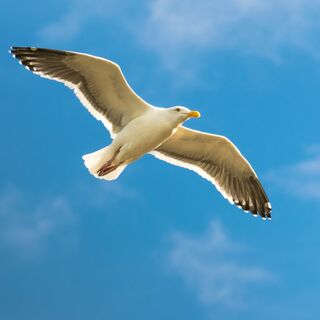
Jonathan Livingston Seagull.
We'll start tonight with part one.
It was morning and the new Sun sparkled gold across the ripples of a gentle sea.
A mile from shore a fishing boat chummed the water and the word for breakfast flock flashed through the air till a crowd of a thousand seagulls came to dodge and fight for bits of food.
It was another busy day beginning but way off alone out by himself beyond Bowton shore,
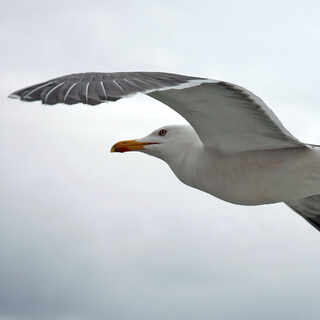
Jonathan Livingston Seagull was practicing.
A hundred feet in the sky he lowered his webbed feet,
Lifted his beak and strained to hold a painful hard twisting curve through his wings.
The curve meant that he would fly slowly and now he slowed until the wind was a whisper in his face until the ocean stood still beneath him.
He narrowed his gaze in fierce concentration,
Held his breath and forced one single more inch of curve.
Then his feathers ruffled,
He stalled and fell.
Seagulls as you know never falter,
Never stall.
To stall in the air is for them disgrace and dishonor but Jonathan Livingston Seagull,
Unashamed,
Stretching his wings again in that trembling hard curve,
Slowing,
Slowing and stalling once more,
Was no ordinary bird.
Most gulls don't bother to learn more than the simplest facts of flight,
How to get from shore to food and back again.
For most gulls it's not flying that matters but eating.
For this gull though it was not eating that mattered but flight.
More than anything else,
Jonathan Livingston Seagull loved to fly.
This kind of thinking he found is not the way to make oneself popular with other birds.
Even his parents were dismayed as Jonathan spent whole days alone making hundreds of low-level glides,
Experimenting.
He didn't know why for instance but when he flew at altitudes less than half his wingspan above the water he could stay in the air longer with less effort.
His glides ended not with the usual feet down splash into the sea but with a long flat wake as he touched the surface with his feet tightly streamlined against his body.
When he began sliding into feet-up landings on the beach then pacing the length of his slide in the sand his parents were very much dismayed indeed.
Why John,
Why?
His mother asked.
Why is it so hard to be like the rest of the flock John?
Why can't you leave low flying to the pelicans?
The albatross?
Why don't you eat?
John you're bone and feathers.
I don't mind being bone and feathers mom.
I just want to know what I can do in the air and what I can't.
That's all.
I just want to know.
See here Jonathan said his father,
Not unkindly,
Winter isn't far away.
Boats will be few and the surface fish will be swimming deep.
If you must study then study food and how to get it.
This flying business is all very well but you can't eat a glide you know.
Don't you forget that the reason you fly is to eat.
Jonathan nodded obediently.
For the next few days he tried to behave like the other gulls.
He really tried screeching and fighting with the flock around the piers and fishing boats.
Diving on scraps of fish and bread but he couldn't make it work.
It's all so pointless he thought.
Deliberately dropping a hard-won anchovy to a hungry old gull chasing him.
I could be spending all this time learning to fly.
There's so much to learn.
It wasn't long before Jonathan gull was off by himself again.
Far out at sea.
Hungry.
Happy.
Learning.
The subject was speed and in a week's practice he learned more about speed than the fastest gull alive.
From a thousand feet flapping his wings as hard as he could he pushed over into a blazing steep dive towards the waves and learned why seagulls don't make blazing steep power dives.
In just six seconds he was moving 70 miles per hour.
The speed at which one's wings go on stable on the upstroke.
Time after time it happened.
Careful as he was working at the very peak of his ability he lost control at high speed.
Climb to a thousand feet.
Full power straight ahead first then push over flapping to a vertical dive.
Then every time his left wing stalled on an upstroke he'd roll violently left stall his right wing recovering and flick like fire into a wild tumbling spin to the right.
He couldn't be careful enough on that upstroke.
Ten times he tried and all ten times as he passed through 70 miles per hour he burst into a churning mass of feathers out of control crashing down into the water.
The key he thought at last dripping wet must be to hold the wings still at high speeds.
To flap up to 50 and then hold the wings still.
From 2,
000 feet he tried again rolling into his dive beak straight down wings full out and stable from the moment he passed 50 miles per hour.
It took tremendous strength but it worked.
In 10 seconds he had blurred through 90 miles per hour.
Jonathan had set a world speed record for seagulls but victory was short-lived.
The instant he began pulling out the instant he changed the angle of his wings he snapped into that same terrible uncontrolled disaster and at 90 miles per hour it hit him like dynamite.
Jonathan Livingston exploded in midair and smashed down into a brick hard sea.
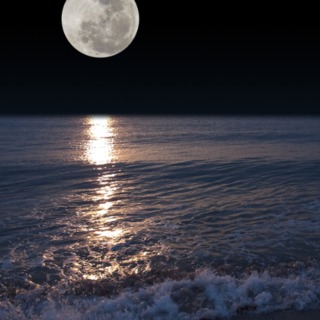
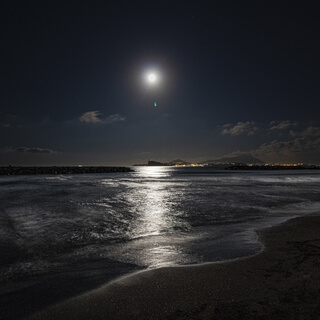
When he came to it was well after dark and he floated in moonlight on the surface of the ocean.
His wings were ragged bars of lead but the weight of his failure was even heavier on his back.
He wished feebly that the weight could be just enough to drag him gently to the bottom and end it all.
As he sank lower in the water a strange hollow voice sounded within him.
I am a seagull.
I am limited by nature.
If I were meant to learn so much about flying I'd have charts for brains.
If I were meant to fly at speed I'd have a falcon's short wings and live on mice instead of fish.
My father was right.
I must forget this foolishness.
I must fly home to the flock and be content as I am as a poor limited seagull.
The voice faded and Jonathan agreed.
The place for a seagull at night is on shore and from this moment forth he vowed he would be a normal gull.
It would make everyone happier.
He pushed wearily away from the dark water and flew towards the land grateful for what he had learned about work-saving low-altitude flying.
But no he thought.
I'm done with the way I was.
I am done with everything I learned.
I am a seagull like every other seagull and I will fly like one.
So he climbed painfully to a hundred feet and flapped his wings harder pressing for shore.
He felt better for his decision to be just another one of the flock.
There would be no ties now to the force that had driven him to learn.
There would be no more challenge and no more failure and it was pretty just to stop thinking and fly through the dark towards the lights above the beach.
Dark the hollow voice cracked an alarm.
Seagulls never fly in the dark.
Jonathan was not alert to listen.
It's pretty he thought.
The moon and the lights twinkling on the water throwing out little beacon trails throughout the night and all so peaceful and still.
Get down.
Seagulls never fly in the dark.
If you were meant to fly in the dark you'd have the eyes of an owl.
You'd have charts for brains.
You'd have a falcon's short wings.
There in the night a hundred feet in the air Jonathan Livingston Seagull blinked.
His pain,
His resolutions vanished.
Short wings.
A falcon's short wings.
That's the answer.
What a fool I've been.
All I need is a tiny little wing.
All I need is to fold most of my wings and fly on just the tips alone.
Short wings.
He climbed 2,
000 feet above the Black Sea and without a moment for thought of failure and death he brought his four wings tightly into his body.
Left only the narrow swept daggers of his wingtips extended into the wind and fell into a vertical dive.
The wind was a monster roar at his head.
70 miles per hour.
90.
100.
120 and faster still.
The wing strain now at 140 miles per hour wasn't nearly as hard as it had been at 70 and with the faintest twist of his wingtips he eased out of the dive and shot above the waves a gray cannonball under the moon.
He closed his eyes to slits against the wind and rejoiced.
140 miles per hour and under control.
If I dive from 5,
000 feet instead of 2,
000 I wonder how fast.
His vows of a moment before were forgotten.
Swept away in the great swift wind.
Yet he felt guiltless breaking the promises he had made himself.
Such promises are only for the gulls that accept the ordinary.
One who has touched excellence in his learning has no need of that kind of promise.
By sunup Jonathan Gull was practicing again.
From 5,
000 feet the fishing boats were specks in the flat blue water.
Breakfast block was a faint cloud of dust motes circling.
He was alive.
Trembling ever so slightly with delight.
Proud that his fear was under control.
Then without ceremony he hugged in his four wings extended his short angled wingtips and plunged directly towards the sea.
By the time he passed 4,
000 feet he had reached terminal velocity.
The wind was a solid beating wall of sound against which he could move no faster.
He was flying now straight down at 214 miles per hour.
He swallowed knowing that if his wings unfolded at that speed he'd be blown into a million tiny shreds of seagull.
But the speed was power and the speed was joy and the speed was pure beauty.
He began his pullout at a thousand feet.
Wingtips thudding and blurring in that gigantic wind.
The boat and the crowd of gulls tilting and growing meteor fast directly in his path.
He couldn't stop.
He didn't know yet even how to turn at that speed.
Collision would be instant death and so he shut his eyes.
It happened that morning then just after sunrise that Jonathan Livingston Seagull fired directly through the center of a breakfast flock ticking off 212 miles per hour.
Eyes closed in a great roaring shriek of wind and feathers.
The gull of fortune smiled upon him this once and no one was killed.
By the time he had pulled his beak straight up into the sky he was still scorching along at 160 miles per hour.
When he had slowed to 20 and stretched his wings again at last the boat was a crumb on the sea 4,
000 feet below.
His thought was triumph.
Terminal velocity.
A seagull at 214 miles per hour.
It was a breakthrough.
The greatest single moment in the history of the flock and in that moment a new age opened for Jonathan Gull.
Flying out to his lonely practice area,
Folding his wings for a dive from 8,
000 feet,
He set himself at once to discover how to turn.
A single wingtip feather he found moved a fraction of an inch gives a smooth sweeping curve at tremendous speed.
Before he learned this however he found that moving more than one feather at that speed will spin you like a rifle ball and Jonathan had flown the first aerobatics of any seagull on earth.
He spared no time that day for talk with other gulls but flew on past sunset.
He discovered the loop,
The slow roll,
The point roll,
The inverted spin,
The gullbunt,
The pinwheel.
When Jonathan Seagull joined the flock on the beach it was full night.
He was dizzy and terribly tired.
Yet in delight he flew a loop to landing with a snap roll just before touchdown.
When they hear of it he thought of the breakthrough they'll be wild with joy.
How much more there is now to living.
Instead of our drab slogging forth and back to the fishing boats there's a reason to life.
We can lift ourselves out of ignorance.
We can find ourselves as creatures of excellence and intelligence and skill.
We can learn to fly.
The years ahead hummed and glowed with promise.
The gulls were flocked into the council gathering when he landed and apparently had been so flocked for some time.
They were in fact waiting.
Jonathan Livingston Seagull stand to center.
The elders words sounded in a voice of high ceremony.
Stand to center meant only great shame or great honor.
Stand to center for honor was the way the gulls foremost leaders were marked.
Of course he thought the breakfast flock this morning they saw the breakthrough but I want no honors.
I have no wish to be a leader.
I want only to share what I found to show those horizons out ahead for us all.
He stepped forward.
Jonathan Livingston Seagull said the elder stand to center for shame in the sight of your fellow gulls.
It felt like being hit with a board.
His knees went weak.
His feathers sagged.
There was a roaring in his ears.
Center for shame?
Impossible.
The breakthrough.
They can't understand.
They're wrong.
They're wrong.
For his reckless irresponsibility the solemn voice intoned,
Violating the dignity and tradition of the gull family.
To be centered for shame meant that he would be cast out of gull society,
Banished to a solitary life on the far cliffs.
One day Jonathan Livingston Seagull,
You shall learn that irresponsibility does not pay.
Life is the unknown and the unknowable except that we are put into this world to eat to stay alive as long as we possibly can.
A seagull never speaks back to the council flock but it was Jonathan's voice raised.
Irresponsibility?
My brothers,
He cried.
Who is more responsible than a gull who finds and follows a meaning?
A higher purpose for life?
For a thousand years we have scrabbled after fish heads but now we have a reason to live,
To learn,
To discover,
To be free.
Give me one chance.
Let me show you what I found.
The flock might as well have been stone.
The brotherhood is broken,
The gulls intoned together and with one accord they solemnly close their ears and turn their backs upon him.
Jonathan Seagull spent the rest of his days alone but he flew out way beyond the far cliffs.
His one sorrow was not solitude.
It was that other gulls refused to believe the glory of flight that awaited them.
They refused to open their eyes and see.
He learned more each day.
He learned that a streamlined high-speed dive could bring him to find the rare and tasty fish that schooled ten feet below the surface of the ocean.
He no longer needed fishing boats and stale bread for survival.
He learned to sleep in the air setting a course at night across the offshore wind covering a hundred miles from sunset to sunrise.
With the same inner control he flew through heavy sea fogs and climbed above them into dazzling clear skies in the very times when every other gull stood on the ground knowing nothing but mist and rain.
He learned to ride the high winds far inland to dine there on delicate insects.
What he had once hoped for the flock he now gained for himself alone.
He learned to fly and was not sorry for the price that he had paid.
Jonathan Siegel discovered that boredom and fear and anger are the reasons that a gull's life is so short and with these gone from his thought he lived a long fine life indeed.
They came in the evening then and found Jonathan gliding peaceful and alone through his beloved sky.
The two gulls that appeared at his wings were pure as starlight and the glow from them was gentle and friendly in the high night air.
But most lovely of all was the skill with which they flew.
Their wingtips moving a precise and constant inch from his own.
Without a word Jonathan put them to his test.
A test that no gull had ever passed.
He twisted his wings slowed to a single mile per hour above stall.
The two radiant birds slowed with him smoothly locked into position.
They knew about slow flying.
He folded his wings rolled and dropped into a dive to 190 miles per hour.
They dropped with him streaking down in flawless formation.
At last he turned that speed straight up into a long vertical slow roll.
They rolled with him smiling.
He recovered to level flight and was quiet for a time before he spoke.
Very well he said.
Who are you?
We're from your flock Jonathan.
We are your brothers.
The words were strong and calm.
We've come to take you higher.
To take you home.
Home.
I have none.
Flock.
I have none.
I am an outcast and we fly now at the peak of the great mountain wind.
Beyond a few hundred feet I can lift this old body no higher.
But you can Jonathan for you have learned.
One school is finished and the time has come for another to begin.
As it had shined across him for all his life so understanding lighted the moment for Jonathan Segal.
They were right.
He could fly higher and it was time to go home.
He gave one last look across the sky.
Across that magnificent silver land where he had learned so much.
I'm ready he said at last and Jonathan Livingston Segal rose with the two star bright gulls to disappear into a perfect dark sky.