Good evening,
My friends,
And thank you for joining me here.
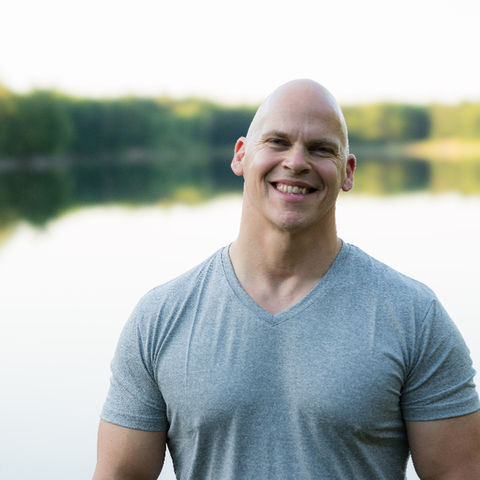
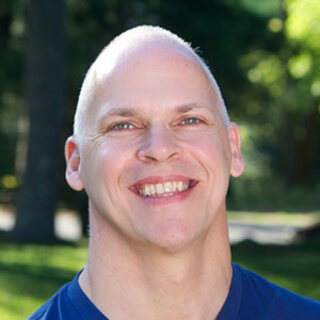
I am Tom Walters,
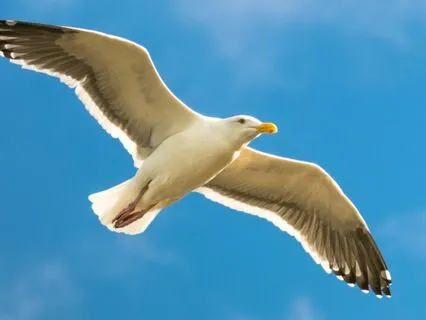
And I am going to be reading the third and last part of Jonathan Livingston Seagull.
Get yourself nice and comfortable in your bed,
And we will begin.
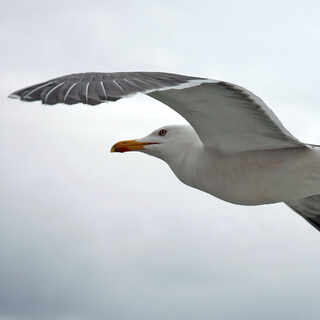
Jonathan circled slowly over the far cliffs,
Watching.
This rough young Fletcher gull was very nearly a perfect flight student.
He was strong and light and quick in the air.
But far and away more important,
He had a blazing drive to learn to fly.
Here he came this minute,
A blurred gray shape roaring out of a dive,
Flashing 150 miles per hour past his instructor.
He pulled abruptly into another try at a 16-point vertical slow roll,
Calling the points out loud.
Eight.
Nine.
Ten.
See,
Jonathan?
I'm running out of airspeed.
Eleven.
I want good,
Sharp stops like yours.
Twelve.
But,
Blasted,
I just can't make it.
Thirteen.
These last three points,
Without fourteen.
Ah!
Fletcher's whip stall at the top was all the worse for his rage and fury.
He was ready to go.
He was ready to go.
He was ready to go.
He was ready to go.
He was ready to go.
He was ready to go.
He was ready to go.
He was ready to go.
He was ready to go.
He was ready to go.
He was ready to go.
He was ready to go.
He was ready to go.
He was ready to go.
He was ready to go.
He was ready to go.
He was ready to go.
He was ready to go.
He was ready to go.
He was ready to go.
He was ready to go.
He was ready to go.
He was ready to go.
He was ready to go.
He was ready to go.
He was ready to go.
He was ready to go.
He was ready to go.
He was ready to go.
He was ready to go.
He was ready to go.
He was ready to go.
He was ready to go.
He was ready to go.
He was ready to go.
He was ready to go.
He was ready to go.
He was ready to go.
He was ready to go.
He was ready to go.
He was ready to go.
He was ready to go.
He was ready to go.
He was ready to go.
He was ready to go.
He was ready to go.
He was ready to go.
He was ready to go.
He was ready to go.
He was ready to go.
He was ready to go.
He was ready to go.
He was ready to go.
He was ready to go.
He was ready to go.
He was ready to go.
He was ready to go.
He was ready to go.
He was ready to go.
He was ready to go.
He was ready to go.
He was ready to go.
He was ready to go.
He was ready to go.
He was ready to go.
He was ready to go.
He was ready to go.
He was ready to go.
He was ready to go.
He was ready to go.
He was ready to go.
He was ready to go.
He was ready to go.
He was ready to go.
He was ready to go.
He was ready to go.
He was ready to go.
He was ready to go.
He was ready to go.
He was ready to go.
He was ready to go.
He was ready to go.
He was ready to go.
He was ready to go.
He was ready to go.
He was ready to go.
He was ready to go.
He was ready to go.
He was ready to go.
He was ready to go.
He was ready to go.
He was ready to go.
He was ready to go.
He was ready to go.
He was ready to go.
Everything that limits us we have to put aside.
That's why all this high-speed practice and low-speed and aerobatics,
And his students would be asleep,
Exhausted from the days flying.
They liked the practice because it was fast and exciting,
And it fed a hunger for learning that grew with every lesson.
But not one of them,
Not even Fletcher Lynd Gull,
Had come to believe that the flight of ideas could possibly be as real as the flight of wind and feather.
Your whole body,
From wingtip to wingtip,
Jonathan would say other times,
Is nothing more than your thought itself,
In a form you can see.
Break the chains of your thought,
And you break the chains of your body,
Too.
But no matter how he said it,
It sounded like pleasant fiction,
And they needed more to sleep.
It was only a month later that Jonathan said the time had come to return to the flock.
We're not ready,
Said Henry Calvin Gull.
We're not welcome.
We're outcast.
We can't force ourselves to go where we're not welcome.
Can we?
We're free to go wherever we wish,
And to be what we are,
Jonathan answered.
And he lifted from the sand and turned east,
Toward the home grounds of the flock.
There was brief anguish among his students,
For it is the law of the flock that an outcast never returns,
And the law had not been broken once in 10,
000 years.
The law said stay.
Jonathan said go.
And by now he was a mile across the water.
If they waited much longer,
He would reach a hostile flock alone.
Well,
We don't have to obey the law if we're not part of the flock,
Do we?
Fletcher said,
Rather self-consciously.
Besides,
If there's a fight,
We'll be a lot more help there than here.
And so they flew in from the west that morning,
Eight of them in a double-diamond formation,
Wingtips almost overlapping.
They came across the flock's council beach at 135 miles per hour,
Jonathan in the lead,
Fletcher smoothly at his right wing,
Henry Calvin struggling gamely at his left.
Then the whole formation rolled slowly to the right,
As one bird,
Level,
To inverted,
To level,
The wind whipping over them all.
The squawks and grockles of everyday life in the flock were cut off as though the formation were in a giant knife,
And 8,
000 gullies watched without a single blink.
One by one,
Each of the eight birds pulled sharply upward into a full loop and flew all the way around to a dead slow stand-up landing on the sand.
Then,
As though this sort of thing happened every day,
Jonathan Segal began his critique of the flight.
To begin with,
He said,
With a wry smile,
You were all a bit late on the last join-up.
It went like lightning through the flock.
Those birds are outcast,
And they have returned,
And that,
That can't happen.
Fletcher's predictions of the battle melted into the flock's confusion.
Well,
Okay,
They may be outcasts,
Said some of the younger gulls,
But where on earth did they learn to fly like that?
It took almost an hour for the word of the elder to pass through the flock.
Ignore them.
The gull who speaks to an outcast is himself outcast.
The gull who looks upon an outcast breaks the law of the flock.
Gray-feathered backs were turned upon Jonathan from that moment onward,
But he didn't appear to notice.
He held his practice sessions directly over the council beach,
And for the first time began pressing his students to the limit of their ability.
Martin Gull,
He shouted across the sky,
You say you know low-speed flying.
You know nothing till you prove it.
Fly.
So quiet little Martin William Seagull,
Startled to be caught under his instructor's fire,
Surprised himself and became a wizard of low speeds.
In the lightest breeze,
He could curve his feathers to lift himself without a single flap of his wing from sand to cloud and down again.
Likewise,
Charles Rowland Gull flew the great mountain wind to 24,
000 feet and came down blue from the cold thin air,
Amazed and happy and determined to go still higher tomorrow.
Fletcher Seagull,
Who loved aerobatics like nobody else,
Conquered his 16-point vertical slow roll and the next day topped it off with a triple cartwheel,
His feathers flashing white sunlight to a beach from which more than one furtive eye watched.
Every hour Jonathan was there at the sight of each of his students,
Demonstrating,
Suggesting,
Pressuring,
Guiding.
He flew with them through the night and cloud and storm,
For the sport of it,
While the flock huddled miserably on the ground.
When the flying was done,
The students relaxed on the sand,
And in time they listened more closely to Jonathan.
He had some crazy ideas that they couldn't understand,
But then he had some good ones that they could.
Gradually,
In the night,
Another circle formed around the circle of students.
A circle of curious gulls,
Listening in the darkness for hours on end,
Not wishing to see or be seen of one another,
Fading away before daybreak.
It was a month after the return that the first gull of the flock crossed the line and asked to learn how to fly.
In his asking,
Terence Lowell Gull became a condemned bird,
Labeled outcast,
And the eighth of Jonathan's students.
The next night from the flock came Kirk Maynard Gull,
Wobbling across the sand,
Dragging his left wing to collapse at Jonathan's feet.
Help me,
Help me,
He said very quietly,
Speaking in the way that the dying speak.
I want to fly more than anything else in the world.
Come along then,
Said Jonathan.
Climb with me,
Away from the ground,
And we'll begin.
You don't understand.
My wing.
I can't move my wing.
Maynard Gull,
You have the freedom to be yourself,
Your true self,
Here and now,
And nothing can stand in your way.
It is the law of the great gull,
The law that is.
Are you saying that I can fly?
I say you are free.
As simply and as quickly as that,
Kirk Maynard Gull spread his wings,
Effortlessly,
And lifted into the dark night air.
The flock was roused from sleep by his cry,
As loud as he could scream it,
From 500 feet up.
I can fly.
Listen,
I can fly.
By sunrise,
There was nearly a thousand birds standing outside the circle of students,
Looking curiously at Maynard.
They didn't care whether they were seen or not,
And they listened,
Trying to understand Jonathan Segal.
He spoke of very simple things,
That it is right for a gull to fly,
That freedom is the very nature of his being,
That whatever stands against that freedom must be set aside,
Be it ritual or superstition or limitation in any form.
Set aside,
Came a voice from the multitude.
Even it be the law of the flock?
The only true law is that which leads to freedom,
Jonathan said.
There is no other.
How do you expect us to fly as you fly,
Came another voice.
You are special and gifted and divine,
Above other birds.
Look at Fletcher,
Lowell,
Charles Rowland.
Are they also special and gifted and divine?
No more than you are.
No more than I am.
The only difference,
The very only one,
Is that they have begun to understand what they really are,
And have begun to practice it.
His students,
Save Fletcher,
Shifted uneasily.
They hadn't realized that this is what they were doing.
The crowd grew larger every day,
Coming to question,
To idolize,
To scorn.
They are saying in the flock that if you are not the son of the great gull himself,
Fletcher told Jonathan one morning after advanced speed practice,
Then you are a thousand years ahead of your time.
Jonathan sighed.
The price of being misunderstood,
He thought.
They call you devil,
Or they call you God.
What do you think,
Fletcher?
Are we ahead of our time?
A long silence.
Well,
This kind of flying has always been here to be learned by anybody who wanted to discover it.
That's got nothing to do with time.
We're ahead of fashion,
Maybe.
Ahead of the way that most gulls fly.
That's something,
Said Jonathan,
Rolling to glide inverted for a while.
That's not half as bad as being ahead of our time.
It happened just a week later.
Fletcher was demonstrating the elements of high-speed flying to a class of new students.
He had just pulled out of his dive from 7,
000 feet,
Long gray streak,
Firing a few inches above the beach,
When a young bird on its first flight glided directly into his path,
Calling for its mother.
With a tenth of a second to avoid the youngster,
Fletcher Lynn Siegel snapped hard to the left at something over 200 miles per hour into a cliff of solid granite.
It was,
For him,
As though the rock were a giant hard door into another world,
A burst of fear and shock and black as he hit.
And then he was adrift in a strange,
Strange sky.
Forgetting.
Remembering.
Forgetting.
Afraid.
And sad.
And sorry.
Terribly sorry.
The voice came to him as it had in the first day that he had met Jonathan Livingston Siegel.
The trick,
Fletcher,
Is that we are trying to overcome our limitations in order,
Patiently.
We don't tackle flying through rock until a little later in the program.
Jonathan,
Also known as the Son of the Great Gull,
His instructor said dryly,
What are you doing here?
The cliff.
Haven't I.
.
.
Didn't I.
.
.
Die?
Oh,
Fletch,
Come on.
Think.
If you're talking to me now,
Then obviously you didn't die,
Did you?
What you did manage to do was to change your level of consciousness,
Rather abruptly.
It's your choice now.
You can stay here and learn on this level,
Which is quite a bit higher than the one you left,
By the way.
Or you can go back and keep working with the flock.
The elders were hoping for some kind of disaster.
But they're startled that you obliged them so well.
I want to go back to the flock,
Of course.
Very well,
Fletcher.
Remember what we were saying about one's body being nothing more than thought itself?
Fletcher shook his head and stretched his wings and opened his eyes at the base of the cliff,
In the center of the whole flock assembled.
There was a great clamor of squawks and screams from the crowd when he first moved.
He lives.
He that was dead lives.
Touched him with the wingtip.
Brought him to life,
The son of the great gull.
No.
He's a devil.
Devil.
Come to break the flock.
There were four thousand gulls in the crowd,
Frightened at what had happened.
And the cried devil went through them like the wind of an ocean storm.
Eyes glazed,
Beaks sharp.
They closed in to destroy.
Would you feel better if we left,
Fletcher?
Asked Jonathan.
I certainly wouldn't object too much if we did.
Instantly they stood together,
A half a mile away,
And the flashing beaks of the mob closed on empty air.
Why is it,
Jonathan puzzled,
That the hardest thing in the world is to convince a bird that he is free,
And that he can prove it for himself if he'd just spent a little time practicing?
Why should that be so hard?
Fletcher still blinked from the change of scene.
What did you just do?
How did we get here?
You did say that you wanted to be out of the mob,
Didn't you?
Yes,
But how did you.
.
.
Like everything else,
Fletcher,
Practice.
By morning,
The flock had forgotten its insanity.
But Fletcher had not.
Jonathan,
Remember what you said a long time ago,
About loving the flock enough to return to it and help it learn?
Yes.
I don't understand how you managed to love a mob of birds that has just tried to kill you.
Oh,
Fletch,
You don't love that.
You don't love hatred and evil,
Of course.
You have to practice and see the real goal,
The good in every one of them,
And to help them see it in themselves.
That's what I mean by love.
It's fun when you get the knack of it.
I remember a fierce young bird,
For instance.
Fletcher Lynn Siegel,
His name.
Just been made outcast,
Ready to fight the flock to the death,
Getting a start on building his own bitter hell out on the far cliffs.
And here he is today,
Building his own heaven instead,
And leading the whole flock in that direction.
Fletcher turned to his instructor,
And there was a moment of fright in his eyes.
Me?
Leading?
What do you mean,
Me leading?
You're the instructor here.
You couldn't leave.
Couldn't I?
Don't you think that there might be other flocks,
Other Fletchers that need an instructor more than this one,
That's on his way towards the light?
Me,
John?
I'm just a plain seagull,
And you're the only son of the great gull,
I suppose?
Jonathan sighed and looked out to sea.
You don't need me any longer.
You need to keep finding yourself,
A little more each day,
That real,
Unlimited Fletcher Siegel.
He's your instructor.
You need to understand him,
And to practice him.
A moment later,
Jonathan's body wavered in the air,
Shimmering,
And began to go transparent.
Don't let them spread silly rumors about me,
Or make me a god,
Okay,
Fletch?
I'm a seagull.
I like to fly.
Maybe.
.
.
Jonathan!
Poor Fletch.
Don't believe what your eyes are telling you.
All they show is limitation.
Look with your understanding.
Find out what you already know,
And you'll see the way to fly.
The shimmering stopped.
Jonathan Siegel had vanished into empty air.
After a time,
Fletcher Gull dragged himself into the sky and faced a brand new group of students,
Eager for their first lesson.
To begin with,
He said heavily,
You've got to understand that a seagull is an unlimited idea of freedom,
An image of the great gull,
And your whole body,
From wingtip to wingtip,
Is nothing more than your thought itself.
The young gulls looked at him quizzically.
Come on,
They thought.
This doesn't sound like a rule for a loop.
Fletcher sighed and started over.
Hmm.
Ah.
Very well,
He said,
And he eyed them critically.
Let's begin with level flight.
And saying that,
He understood all at once that his friend had quite honestly been no more divine than Fletcher himself.
No limits,
Jonathan,
He thought.
Well,
Then,
The time's not distant when I'm going to peer out of thin air on your beach and show you a thing or two about flying.
And though he tried to look properly severe for his students,
Fletcher Seagull suddenly saw them all as they really were,
Just for a moment.
And he more than liked,
He loved what he saw.
No limits,
Jonathan,
He thought.
And he smiled.
His race to learn had begun.
I cannot believe that I have waited so long to read this book.
I remember my mom talking about this book when I was in junior high,
I think it was.
It came out in 1970.
And my mom,
As wise as she was,
I asked her what the book was about.
She said,
You'll have to read it for yourself.
I remember picking it up and reading like a page.
And it didn't hit me then.
I just remember Jonathan Livingston Seagull being an outcast,
That's all I knew.
And it didn't really grab me,
So I didn't read it.
And my mom didn't badger me to read it.
She knew I would read it when the time was right.
I'm not sure she knew that that would be four decades later.
But you know what?
Knowing my mom,
She probably did.
I was all excited to talk about the things that resonated with me in this book.
But I had to tell you,
Believe it or not,
Even me,
I'm speechless,
But I'll try.
I have no trouble saying that there were so many times in reading this book that I had to stop because I was just tearing up because it was just so beautiful.
I love the arc of Jonathan from outcast to teacher.
And the other theme about believing in yourself so fully that it doesn't matter if an entire society says that you're wrong.
And even more so,
That very society,
The flock that cast him out,
That called him a devil,
Him and Fletcher.
He still looked for the light.
He still saw the light in everyone.
And he taught Fletcher how to do that as well.
I could definitely go on,
But to be honest with you,
I want to kind of digest it.
I just finished the book just now.
There is one thing I'd say,
Though.
When I started thinking about reading this book on Zen Commuter,
Thinking to myself,
Well,
It's not really meditation-based,
It's not Buddhist-based,
But the more I thought about it,
There are definitely some similarities between Buddhism and this book.
Think about perfection.
Jonathan talked about perfection.
More so,
The Great Gull talking about perfection.
And I would liken it to enlightenment.
The Great Gull saying that perfection was when you stop believing in your limitations and understand what you're truly made of,
Who you truly are,
What you truly are.
And one of the most resonant parts of this book was the understanding that our thoughts are what hold us back.
That our thoughts create our limitations.
And that if we can free ourselves from thought,
Then we'd have the whole world at our fingertips.
Clearly,
This book moved me.
And it's funny,
It was written in 1970.
And for the first couple of years,
I don't think it did that well.
But then in 1972,
It sold over a million copies.
You know,
Thinking now,
One of the reasons it moved me so much,
Too,
Was it's kind of a link between me and my mom.
Upon finishing it,
I have a feeling that my mom felt the exact same way.
That it resonated with her as well.
But I tell you what,
I'm going to let you head on out thinking about the things that Richard Bach and I talked about,
Him mostly,
In his amazing book,
Jonathan Livingston Segal.
But know that I'll be back here tomorrow with another episode of Zen Commuter in the morning and another episode of Comron 5 in the evening.
But for right now,
This is Tom Walters for Zen Commuter,
Signing off,
Saying make the rest of your day absolutely spectacular.
And I will see you on the road.