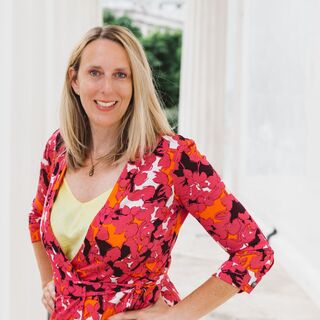
Welcome to Female Frequency Podcast.
Hi everyone,
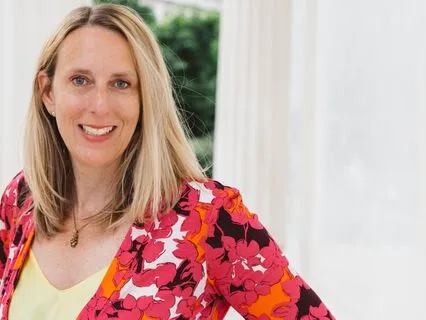
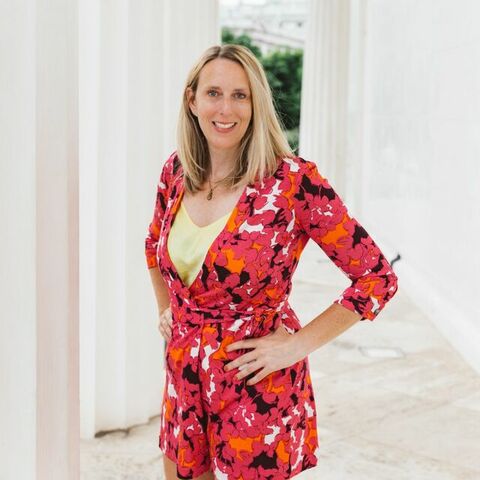
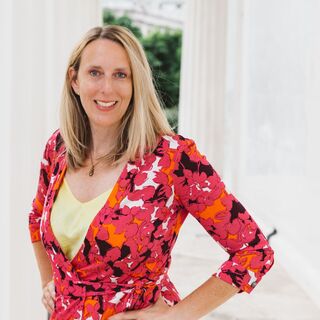
I'm Jodi Nelson,
Curator,
Artist,
Mentor,
Divine channel,
And host of Female Frequency.
I am here to bring you unbound forms of ecofeminism,
Reclaiming art,
Spirituality,
And feminine power to revive the earth.
Each week Female Frequency brings you intimate conversations with trailblazers and amazing stories to ignite change.
You'll find inspiring alternatives to the patriarchy.
Discover creative paths,
Courage,
Connection,
And magic.
Hear from the heroes who activate and restore the divine feminine for our earth.
Each episode serves as a catalyst offering wisdom along with practical steps to empower you to make a positive impact on the planet.
Whether you're an artist,
Empath,
Or eco-warrior,
There's a story here to invite awe and help you embody what I call the Female Frequency.
Listen to this everyone.
Every bone in your body is a creative bone.
These are words by Shiloh Sophia,
A creative trailblazer and co-founder of MUSEA,
Center for Intentional Creativity and Consciousness.
She will also tell you that art isn't the point,
It's the pathway,
And that we all have it within us.
So really the lesson here is creativity is not only a catalyst for divine consciousness,
It's the conduit.
Now she did not try to stick herself into a paradigm that did not fit her.
She walked away from the heavy modernist approach to fine art that was plaguing art schools.
Modernism pretty much marginalized the role of individual expression and intuition in any art creation.
So what she did is she rented her own space and had her own show,
Not waiting around for a gallery.
Now she still paints and dedicates her life to teaching others how to access our innate power to enter into deeper relationships with creativity.
I think she is so dynamic.
Shiloh restores our enchantment and the romance with the sacred feminine forms.
Listen as she drops the mic when she starts talking about statistics,
Because women represent 50% of artists,
But less than 3% of women are represented in galleries and museums.
So thank you and thank you Guerrilla Girls for helping driving that point home.
And these are statistics that are from a very contemporary time.
And we're talking like 2020 to where we are now and fluctuating there.
But also let me tell you some of my favorite things she shares is when she's talking about her love letters to the earth.
It is so cool.
She uses organic materials and earth pigments,
Oyster shells and paper.
So enjoy this episode.
It's really special.
Hello sister.
Thank you so much for joining me today.
I just am so excited.
I feel like we are two peas in a pod.
I'm glad to be here in your little pea pod.
Yeah,
Your pea went towards California and my pea went somewhere else.
But you know,
Have you been living in California most of your life?
All my life,
Yeah.
Oh okay.
All right.
I got I got thrown out there as a military brat.
So I've lived all over.
But I do spend a lot of time in California,
The Bay Area.
Yeah.
And Santa Rosa.
I spent a lot of time in my summertime years as a kid out there.
Love Northern California.
Love being here.
Love being here.
Yeah,
I love being on the planet with ladies like you.
Thank you.
I just feel like both of us are bridges for the creative spirit.
And you do it in such an enormous way that I just wanted to share with everybody your whole Center for international or I'm sorry,
Center for intentional creativity.
Yeah,
It is amazing.
You have amazing programming.
You have workshops and classes and live concert events.
Yeah,
It's been an amazing journey of,
You know,
Really,
If I start from the beginning,
My first art show,
It's been about 30 years of saying yes to the spirit of life,
And then following the path and seeing where it leads me.
Where was your first art show?
My first art show was in Mendocino County.
I was 24 years old,
I had worked on the collection for a year.
It was pottery,
Photography,
Sculpture,
Paintings and poetry.
So full multimedia mixed experience.
And it was it was life changing because that was the first money I've made of the work of my hands.
Oh,
Wow.
Yeah,
Your heart and your hands.
Way to go.
So did you show in a gallery?
Did you have like an exhibit or what was I rented a space at a retreat center called Wellspring in Anderson Valley there.
And I set up an exhibit,
I had the support of my two moms who were my two mentors,
And we hung the show,
Which was so exciting.
And we had live music and poetry.
And I spoke about my activism,
And it was mixed media pieces and food,
You know,
It was just like such a celebration.
It is and I got to tell you,
I just feel like it was on your own path.
You know,
So many artists feel like they have to go directly to a gallery or they have to go directly towards someone else trying to trying to help them put it together or trying to sell them and you just went straight for it yourself.
I actually did.
And sometimes I'm like,
Wow,
You know,
Was that,
You know,
I don't think I would have another choice.
But I've literally had galleries and represented hundreds of women artists since 2000.
So not only did I go my own way,
I also invited other people to come along because it can be really challenging to break through the traditional gallery world.
Absolutely,
Absolutely.
And I know I felt when I was in art school,
I fell towards that thinking of that modernist approach to art,
Which was,
And still is like so patriarchal,
We know,
But it was less,
It was less about your hand and less about your intention.
And everything just had to be so heavy.
And so to see your work,
And I'm big fans of the Gray family.
Yes.
Oh,
Man.
And so just to see that there is such a different way than what people were learning in their art history classes about modernist approach and post modern artwork.
Yeah,
I mean,
We really lost a lot of the enchantment when we went to modernism.
And not like the art history that we have is a fair representation of women or indigenous or black people.
But it's,
It was like this romantic edge sort of to the work before the modernist approach,
And something got lost,
Something about beauty got lost.
And you can say,
You know,
Beauty is in the eye of the beholder.
Or you can look at,
You know,
Botticelli's Venus compared to,
You know,
A black line on a canvas,
And be like,
Hmm,
Let's see,
Which one is enchanting?
No offense,
Robert Motherwell,
Or Botticelli,
But still,
It's like,
Okay,
You know,
And as time has gone on,
We've,
You know,
Of course,
Exposed so many other women artists and looking at the work of Frida Kahlo,
Or Hilma af Klint,
Or Yes,
Yes.
Adelaide,
Or,
You know,
There's,
There's so many,
But women represent 50% of artists and we always have,
It's just we don't get the same representation.
Less than 3%,
A couple years ago,
Statistic from the National Museum for Women in the Arts was less than 3% of women are represented in galleries and museums,
Even though we're 50% of the artists.
And that number has slightly at a small,
Tiny percentage shifted since 2020.
But it's still pretty drastic.
Oh,
Yeah.
Thanks for bringing in Frida into today.
And,
Yeah,
I mean,
Do you remember the Guerrilla Girls posters and their activism when they were coming out in the 80s?
Like,
What,
What do we have to do to be in a museum?
Right,
Exactly.
Yeah.
Wow.
Pardon?
Get naked.
Get naked,
Exactly.
Like,
Yeah,
And not only that,
The art of women in the museums is naked,
You know,
So it's like,
Okay,
Well,
You know,
I just decided not to play in that paradigm,
Not to participate.
And,
You know,
There's been invitations here and there,
But nothing that felt delicious.
So I've been on my own path.
And I have created a whole world inspired by my approach to creativity.
So let's get into it.
I mean,
You have a whole center where you are teaching with different types of programming and teaching.
Mainly women,
You have some men,
Right?
I do.
So you're teaching creativity from a different,
From a different approach with the intention.
Yeah,
So we just call it intentional creativity,
Which is a way to point at something that everybody does anyway.
It's just a matter of focus.
If someone's painting the water in Hawaii,
And you're just painting it to duplicate it,
What color aqua is that?
Look at that sand,
What color is that?
And you're just duplicating nature.
That's intentional creativity,
Because you're intending to the ocean and get the color right.
But we mean something else.
We mean that as you are watching that waves come and go as you're smelling the air,
As you're experiencing the sensuality of the sense of place,
Which is what we call place and story,
Sense of place.
When you're in this sense of place,
And you're then saying,
What does the water want to communicate?
What does the sand want to communicate?
That looks like blue,
But I'm feeling it as like,
You know,
Turquoise with lavender,
You know,
So like you're giving agency in life to what you're witnessing,
But you're not trapping it into the visual that you're beholding.
So in a way,
You're communing with the subjects and objects that are coming into the work and the energies.
And we just call it intentional creativity.
So you so you're conscious of it,
Because that's the next layer.
So there's like paint the water,
Connect with the water,
And then observe what happens to you as you paint.
What is the message of the water?
So it's layers and layers and layers.
And it's just a completely different way.
Not different.
It's a,
It's an awesome way to communicate with creation.
Hey,
Frequency friends,
I have a new offering I wanted to pop on here and tell you all about.
You know,
We live in a world where women's voices are muted,
And their stories are left untold.
Well,
This workshop is a life mapping workshop tailored to revisit your life events through the feminist lens or what I call the female frequency.
So get ready,
Y'all.
We are going to channel your main character energy and rewild your dreams.
You know,
I'm not a psychiatrist.
I'm not a therapist.
I'm a museum curator.
I mentor artists and I'm host of this podcast,
Which I love.
I'm a woman who got tired of the bullshit and knew there had to be a different approach to looking at my situations.
This workshop is drawn from an exercise I use for my self growth.
It's something that I also use to guide my clients who are creative entrepreneurs to their next level of success.
It has made me a better communicator.
It's helped me easily quiet that obnoxiously loud voice telling me no,
So that I can listen to the quiet whispers inspiring me to pursue my dreams with unyielding passion.
Now what I love about this workshop is that we are going to get creative.
During the full pedal project,
I'll be guiding you with female frequency prompts where you will start noticing patterns,
Which you can then use to dissolve negative conditioning,
Whether that's from social or from family.
This is so you can trust yourself in your inner magic.
This workshop is designed to help you guide your path from within.
It's for you to understand your truth,
To trust your intuition,
To claim your confidence.
Listen to your whispers because your life map is your very own and I want you to manifest the life of your dreams by paying attention to those quiet whispers of intuition.
They will unveil the path for your dreams.
Let your life map be a reflection of your deepest desires.
Now we're going to channel your main character energy with my full pedal project.
So I need you to bring a pen,
Paper,
Curiosity,
But you got to leave judgment at the door.
So if you're struggling to be heard,
Got a loud inner critic,
You have a relationship with control.
Let's tune into the female frequency,
Get your map out and let's rekindle what you're looking for.
It is what a way to experience your environment right through your body.
Yeah,
Deep listening.
I just love it.
I think I need to take one of your classes.
Yeah.
So where is your center?
So Museum Center for Intentional Creativity and we added and consciousness because it's creativity and consciousness.
We do the creativity to get conscious.
Medium,
The mediums of painting,
Writing and drawing are just the tools of the actual work,
Which is to connect with your inner voice such that you can hear yourself think and speak and be.
So consciousness is the objective and creativity is the pathway.
So we have a 6,
500 square foot campus in Sonoma,
California,
About 45 minutes from San Francisco when there's no traffic.
We've been in this location since 2016.
Previously did that.
We were in Healdsburg,
California for 10 years.
And we have a video classroom,
My art studio,
We have a dorm for overnight guests,
We have,
You know,
Several kitchens,
We have a farm,
A ranch,
We have bees,
And I also have a home here.
So,
And it's in the Redwoods.
Yeah,
It's beautiful.
I'm grateful.
Yes,
This is a beautiful university.
Yeah,
We we call it Musea.
And it's M for museum because we have a museum here and virtually.
U for university because we have global education that's on site but also virtually.
S for sanctuary,
Because we center in the feminine,
And also in animism,
And in ritual and ceremony.
E is for ecosphere,
Which is connecting each people to the each person to the environment where they live,
And then the ecosystems that we are being stewarded by.
And then A is for atelier and apothecary.
My husband is a medicine maker and tea maker.
And we also grow a lot of our own herbs and tinctures and stuff like that.
So medicine and products,
Right?
Because we have paintings and books and cards and prints and stuff.
Yeah.
That sounds amazing.
I'm so proud of you.
I'm so proud of you for going and,
You know,
Just carving your own path right away and not thinking that you had to fit in that other paradigm.
Yeah,
I didn't fit.
It was horrible.
I went to art school for like,
Two years It was like,
Oh,
No,
This can't be it.
This is not it.
Oh,
My gosh.
You know,
Sometimes I feel like I should have stayed.
And then I'm like,
No,
I did my own thing.
Because I wasn't a classically.
I did not take instruction in the same way that you should.
I did not duplicate nature in the way that you're supposed to if you're going to be a good artist.
So I didn't show promise from a skill perspective.
But I had passion and I had vision and I had story and a want to.
And so eventually,
I developed what my teacher called affectionately and almost sarcastically a way of working,
Which means it's not real painting with a capital P.
It's like a way that you work when you're not technically proficient in the craft of a painting.
I'm still not.
But once I kind of found my way of working,
Which I was very much supported to find,
Which took years,
Actually,
Once I found a way of working,
I was like,
Oh,
My gosh,
I have to tell everybody I have to tell everybody.
So for the first 15 years,
I sold paintings,
I sold a million dollars worth of my own paintings and prints by age of 40.
So I had incredible success.
But I also reinvested all of it back in the company.
So it's been,
You know,
Really a thick and thin journey,
Because I didn't take it out.
And so that's why I've been in business for 30 years,
Because I didn't do the owner's draw.
I just was like,
Reinvest,
Reinvest,
What do I need to live and buy canvas and just keep going,
Keep going.
So,
You know,
I did all of that.
But then it became clear to me that the women who were coming in and buying my art,
What they really wanted,
They wanted the image,
But I was like,
You these are people can afford to spend three to $10,
000 on a painting.
And there's so many paintings and so many women,
But what people really want is the image of the feminine for themselves.
And so I took a huge leap in around 2010,
And started teaching other people my approach to painting.
And for people who are non painters,
Because I was like,
Well,
I'm pretty sure like everybody's an artist,
And just people don't have skill.
And we don't need it.
You don't actually need skill to have a breakthrough in painting.
Yeah,
The critical thinking all that artistic and creativity just kept being getting swiped out of any education and nobody was taking it seriously.
Nobody was taking that as a value of a skill set.
Wow.
So 2010,
I mean,
And for those people who think that it is a competitive world out there,
You were sharing instead of trying to keep it.
Yeah.
And not only do that,
I opened a teacher training program to teach people to teach others.
So that's how we went from,
You know,
A couple hundred people who could afford paintings to 10s of 1000s of people who make their own painting.
So any given workshop,
You know,
There could be 100 people or 1000 people,
They're making their own painting.
So my painting business went to zero.
Did it?
Yeah,
It proved the point that they wanted to do it for themselves more than they wanted my art.
So in a way,
My art was lent itself into the service of other women's art.
And I'm only just in the past couple years started regrowing my art sales business.
It still isn't a huge focus for me.
But you know,
I got 100 paintings to available.
So I wish people could see my face.
I mean,
100 pages are so prolific.
Yeah,
I actually am.
I was painting right before we got on here.
I'll paint after like I paint every day.
Yeah.
You do paint every day.
That's part of it,
Right?
I draw every single day.
Yeah.
Oh,
My gosh.
Can you tell us just a little bit more about that?
Like if you're like if you're feeling angsty,
Like do you do one medium or if you're feeling something else?
Do you paint like what?
What does that look like a little bit?
Yeah,
So we definitely approach creativity as a way to calm the nervous system and receive insight and achieve heart,
Brain,
Hand coherence and create flow.
Speaking my language.
Yeah,
So depending on I mean,
It almost doesn't matter whether I go to painting or drawing,
But like if I've got 15 minutes,
I'm still going to pick up a brush or a pen.
And you know,
You can change your state within a couple minutes.
You can't do that if you're trying to achieve skill or if you're trying to get something right.
It doesn't you don't go you don't bypass the prefrontal cortex because that part of your brain is being directed to get something right and just uses a different part of the brain.
But what we're after is flow and a feeling.
We're going for feeling here.
We're going for emotional breakthrough.
We're going for lifted spirit.
We're going for I feel joy when I felt like shit.
You know,
We're going for I have chronic pain.
But while I'm using this paintbrush,
I don't remember,
You know,
And we've tested it with so many different things.
Cycles of deep grief,
People with heavy menstrual suffering.
We've tried being in the middle of a dangerous zone.
Like just like let's take it all the way to the canvas and just see what we can achieve and how long we can achieve low state for.
Yeah,
I it when I am helping train people who are selling artwork,
I'm always saying it's way beyond an object.
It is an emotional response.
And it's the same thing with the artist.
When I'm helping artists,
It is your something that you're emoting.
What are you trying to say?
Right.
And what wants to be communicated,
You know,
So there's like,
What are you trying to say?
And then there's like,
What does the painting want to communicate?
What's coming through you as you as the universe expressing itself through you.
And when you don't dominate that and you just let it come through,
It's neo-shamanic.
Yes.
When you can be so open to receive that and not judge it.
Yeah.
I mean,
Yeah.
Helping artists get out of their way or helping anybody be in that flow of creativity is something it's like I need to do a million person project or two million person project to help a million people just make something that they didn't judge themselves on.
Yeah.
Which is part of the training that we offer is how to work with that because that same internalized self-judgment,
You know,
You can't talk yourself out of that.
You actually have to train new neural pathways.
Absolutely.
Oh,
My God.
What was that three?
Three minutes.
Oh,
Yes.
You got to go.
So as we conclude,
I'm going to leave everything about your school in the show notes and everything.
But you were at this weekend.
We've coming up to the full moon.
You were working with organic materials as with your paintings.
Is that right?
Some pigments?
Yeah.
We did an Earth Day event out at the ocean and I brought natural earth pigments from Spain,
Germany,
Germany,
Italy and France.
All the different colors of ochre.
We also found wood for charcoal.
I mixed the pigment in oyster shells and we made prayers for the earth and tied the biodegradable paper and paint to trees as offering.
So they were love letters to creation or children.
I want to say thank you for doing that.
Yeah,
That is amazing.
And not everybody is going to like acrylic paint.
So why not,
You know,
Go a different path with these other materials?
Yeah,
Definitely moving toward more and more earth pigments,
Especially as such a consumer of acrylic paint in our community.
So we're trying out some different things.
But I offer certification programs as well for people who want to learn to bring creativity into their life.
I cannot wait to keep up with you and learn more about your students and how excited they have been for you to been their teacher and help them,
You know,
Liberate their feminine and their creativity and their flow.
Absolutely.
Well,
Call me back up again and we can even lead a process even via audio.
That would be amazing.
We'll take you up on that.
Thank you.
Thank you.
Thank you.
Thank you.
Thank you.
Thank you so much for vibing with a female frequency today.
If this episode or any other episode has helped transform or shift your perspective in any way,
Please tell me all about it.
Tell me all about it in a review where you are listening to this podcast.
It will totally help me out and help spread the vibe.
If you're a creative looking for more support,
This is what I do for a profession.
I often host workshops and you can find out all about those on my website.
So take a look at www.
Pressrain.
Com.
That's P-R-E-S-S-R-E-I-G-N.
Com.
All right,
Y'all until next time.