The world’s largest free audio library for everyday wellbeing
Relational & Interpersonal
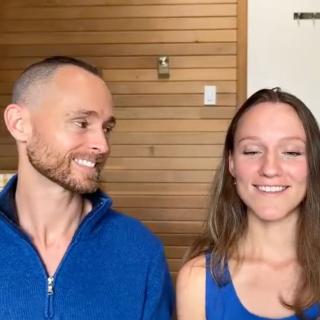
Co-Regulation Practice is a polyvagal-informed paired meditation in which two people use warm expression, soft voice, gentle eye contact, and close presence to steady each other's nervous systems, each partner's calm becoming a cue of safety for the other.
Last Updated
4 Jul 2026
We are still reviewing this page. Our research team checks every technique page for accuracy and evidence quality before final release. Details may change as that review completes. The evidence badge shows our current reading of the published research.
RECOMMENDED DOSE
No direct dose evidence; editorial synthesis. A short, gentle starting dose lets someone new to relational co-regulation build comfort and notice how their nervous system responds before committing to longer sessions.
No direct dose evidence; editorial synthesis. Once the practice feels familiar, a modest step up in length and frequency supports more consistent regulation without becoming demanding.
No direct dose evidence; editorial synthesis. An established maintenance level for those who find the practice beneficial; scale back if longer or more frequent sessions feel activating rather than settling, especially in relational or trauma-affected contexts.
Session length
Session length: 5–10 minutes
5
MIN
How long each individual practice session should last from start to finish.
Frequency
Frequency: 3–4 days
3
DAYS
The number of days per week to fit a session into your routine.
Session length
Session length: 15–20 minutes
15
MIN
How long each individual practice session should last from start to finish.
Frequency
Frequency: 4–5 days
4
DAYS
The number of days per week to fit a session into your routine.
Session length
Session length: 20–30 minutes
20
MIN
How long each individual practice session should last from start to finish.
Frequency
Frequency: 5–7 days
5
DAYS
The number of days per week to fit a session into your routine.
About this card. No direct dose-response literature exists for Co-Regulation Practice; these recommendations are based on general practice conventions for relational nervous-system regulation and should be treated as starting points only. These recommendations are not a substitute for personalised guidance from a qualified practitioner.
Quick answers to what people most often ask. Each card links to the deeper section below.
evidence
No trial has tested Co-Regulation Practice directly, so the research comes from close relatives in meditation and yoga. A meta-analysis of 36 randomized trials found meditative therapies produced meaningful reductions in anxiety symptoms, with no adverse effects reported. Yoga studies suggest calming brain-chemistry and body-awareness pathways, but none tested this paired method.
Read moregood for
Adults with anxiety, everyday stress, or a nervous system that struggles to settle alone may benefit from Co-Regulation Practice, and it particularly suits people who find solo self-soothing hard and steady more easily in another's presence. It is not a substitute for care when anxiety, trauma, or relationship distress is severe.
Read moresafety
Most healthy adults can practise Co-Regulation Practice safely, and meditation trials recorded no adverse effects, though they tested solo work rather than paired eye contact. Sustained mutual gaze and close proximity can feel activating rather than soothing, especially after relational trauma. Move slowly, keep the option to look away, and stop if arousal climbs.
Read morehow it works
Reading a partner's warm face, soft voice, and settled posture as cues of safety is thought to shift the nervous system toward its rest-and-recovery branch, which slows the heart and loosens fight-or-flight. As each person tracks both their own state and the other's, Co-Regulation Practice may widen the capacity to move between alertness and calm.
Read moreCo-Regulation Practice is a paired meditation in which two people use warm expression, soft voice, gentle eye contact, and close presence to steady each other's nervous systems, each partner's calm becoming a cue of safety for the other.
Partners sit close in a settled posture, holding gentle eye contact and speaking in warm, unhurried tones. Each person moves attention back and forth between their own inner state, breath, heartbeat, muscle tension, and the partner's, following paired exercises adapted for clinical use by Deb Dana. The carrier is the two-way field between two nervous systems, where one person's steadiness becomes a felt cue of safety for the other.
Co-Regulation Practice depends on a second person: the calming signals arrive through another's face, voice, and proximity rather than through self-soothing alone. It is not couples therapy, a communication technique, or a treatment for a diagnosed condition, and the gentle eye contact is meant as a cue of safety, not a staring contest or a test of endurance.
Not to be confused with
Romantic or tantric eye-gazing practices
Co-Regulation Practice uses gentle eye contact to signal nervous-system safety and mutual calm, not to build romantic intimacy or spiritual union. The aim is a shared sense of settledness, not attraction or bonding ritual.
Couples or relational therapy
This is a wordless, body-based practice of mutual settling through face, voice, and proximity, not a talk-based intervention for working through relationship conflict or communication. It can sit alongside therapy but does not replace it.
Solo self-soothing or self-regulation
Self-soothing calms your own system from the inside; co-regulation creates a bi-directional field where each partner's regulated state becomes a cue that helps steady the other. The presence of a second nervous system is the active ingredient.
Co-Regulation Practice appears to work by reading a partner's warm face, soft voice, and settled posture as cues of safety that shift the nervous system toward parasympathetic activity, the rest-and-recovery branch that slows the heart and loosens the grip of fight-or-flight. As each person tracks both their own inner state and the other's, the practice is proposed to widen autonomic flexibility, the capacity to move smoothly between alertness and calm instead of getting stuck in one gear. The supporting studies come from neighbouring practices rather than co-regulation itself: a randomized trial found that twelve weeks of yoga raised thalamic GABA, a calming brain chemical, in step with better mood and lower anxiety (Streeter et al., 2010), and a separate yoga trial linked a sharpening sense of internal body signals to falling stress (Park et al., 2020).
Feeling stuck in high alert or shut down can start to loosen as Co-Regulation Practice trains the nervous system to move more flexibly between activation and rest. Early evidence from related contemplative practices links this kind of shift to lower perceived stress and steadier mood, though it comes from yoga rather than co-regulation itself (Streeter et al., 2010), (Park et al., 2020).
When calming down alone feels out of reach, a partner's warm face, soft voice, and settled posture can register as cues of safety and engage parasympathetic activation, the body's rest-and-recovery branch that eases you out of fight-or-flight and toward rest and connection. In yoga and meditation studied so far, this settling tracks with calmer mood and lower stress, though the direct evidence comes from solo practice rather than paired work (Streeter et al., 2010), (Park et al., 2020).
Tracking your own breath, heartbeat, and muscle tension while you sit with another person builds interoceptive awareness, the skill of reading your body's internal signals, so you can catch rising stress earlier and steady yourself before it escalates. In one yoga-based trial, gains in interoceptive awareness went alongside lower perceived stress (Park et al., 2020).
In the body, Co-Regulation Practice is expected to tip the balance between the nervous system's accelerator and its brake toward the calming side, though this shift has so far been measured in a related solo meditation rather than the paired practice itself. In a small, non-randomized study of thirty adults practising a heart-based meditation, high-frequency heart-rate variability, a signal of the rest-and-recovery branch, rose within a single session, while the LF/HF ratio, which tracks stress-driven arousal, fell (Arya et al., 2018). People tend to feel this kind of downshift as the chest softening, the breath lengthening, and the sense of urgency quietly draining away.
When another calm presence helps you settle, the chest can soften and the breath lengthen as the body eases out of high alert. That felt downshift reflects a change in sympathovagal balance, the moment-to-moment tilt between the sympathetic branch that speeds the body up and the parasympathetic branch that slows it down; in a study of a related, solo heart-based meditation, this balance was measured moving toward the calming, parasympathetic side during practice (Arya et al., 2018).
When the body feels stuck in high alert, settling back down depends on autonomic flexibility, how smoothly the nervous system moves between activation and rest. In a study of a solo heart-based meditation, that balance shifted toward the parasympathetic, rest-and-recovery branch during practice, felt as the body softening and the breath slowing (Arya et al., 2018); Co-Regulation Practice aims for a similar settled state through a partner's calm presence, though this has not yet been measured in the paired practice itself.
When someone calm settles beside you, the body can grow heavier and the breath lengthen as urgency drains away. That felt downshift reflects sympathovagal balance, the moment-to-moment balance between the body's stress-activating branch and its rest-and-recovery branch, tipping toward rest; in a study of a related heart-based meditation it showed up as higher high-frequency heart-rate variability and a lower stress-to-rest ratio, measured in a solo practice rather than Co-Regulation Practice itself (Arya et al., 2018).
When the body feels keyed up, tense, and stuck on high alert, that is sympathetic activation, the fight-or-flight branch of the nervous system revving you up to meet a threat. In one study of a related heart-based meditation it measured lower during practice, with sympathetic markers falling and heart-rate variability rising toward a calmer balance (Arya et al., 2018), though that signal comes from a solo practice, not Co-Regulation Practice itself, and often feels like the chest and shoulders letting go as the sense of urgency drains away.

Sitting with a partner while tracking your own breath, heartbeat, and muscle tension can sharpen interoception, your felt sense of the body's internal signals. This sharpening hasn't been measured directly in Co-Regulation Practice; it is inferred from related practices that shift heart-rate variability toward a calmer, rest-and-recovery balance (Arya et al., 2018).
Moderate but indirect evidence supports Co-Regulation Practice for easing anxiety, and it comes from the broader meditation family rather than the paired practice itself. A meta-analysis of thirty-six randomized trials of meditative therapies found reductions in anxiety symptoms against waiting-list controls, a standardized mean difference of about -0.52, a small-to-moderate effect meaning the average participant ended up less anxious than roughly two-thirds of untreated comparisons, with smaller effects against active comparators (Chen et al., 2012). What is not yet supported: any trial of Co-Regulation Practice as taught, long-term follow-up, effects on diagnosed anxiety disorders rather than symptoms, or any claim that it replaces treatment for a diagnosed condition.
Anxious tension can start to loosen when your nervous system has another steady presence to settle alongside. Across a large body of meditation trials, practices like this have been linked to meaningful reductions in anxiety symptoms (Chen et al., 2012), though that evidence is for meditation broadly rather than Co-Regulation Practice specifically.
No study has yet tested Co-Regulation Practice exactly as it is taught, so the evidence comes from its close relatives in meditation and yoga. A meta-analysis of thirty-six randomized trials found that meditative therapies produced meaningful reductions in anxiety, with no adverse effects reported (Chen et al., 2012), and a study of a heart-based meditation recorded the nervous system shifting toward its calmer, rest-and-recovery setting during practice (Arya et al., 2018). Candidate explanations come from yoga research, which has linked a rise in a calming brain chemical and a sharper sense of internal body signals to better mood and lower stress (Streeter et al., 2010), (Park et al., 2020). The clearest limitation is that these studies test solo practices in mostly small samples rather than the paired method, so the findings read as encouraging for the wider family of contemplative practices rather than proof for co-regulation itself.
1
Meta-analyses
0
RCTs
0
Systematic reviews
0
Observational
4
Pilot
Studied populations
Effect of Heartfulness cleaning and meditation on heart rate variability
n = 30
Finding: In a study of 30 adults ranging from 19 to 70 years old, a single session of heart-based meditation shifted the balance of the nervous system toward its rest-and-recovery mode, with a clear rise in the calming, parasympathetic side of heart-rate activity and a matching drop in the stress-linked, sympathetic side. In plain terms, the body settled into a calmer state during the practice itself, which is the kind of physiological shift many people are hoping to feel. Two important limits: this looked at a solo meditation practice rather than co-regulation with another person, and there was no randomized comparison group, so it points to a plausible mechanism rather than proving the technique as taught here.
reported significant; p<0.01
MEDITATIVE THERAPIES FOR REDUCING ANXIETY: A SYSTEMATIC REVIEW AND META-ANALYSIS OF RANDOMIZED CONTROLLED TRIALS
2012
Finding: This review pooled 36 randomised trials of meditation-based practices and found that people who meditated reported meaningfully lower anxiety than those who waited for treatment or received a comparison activity, with a moderate benefit that held up across the studies. The trials logged no harmful effects, which points to meditation being a generally well-tolerated way to work with anxious feelings. Keep in mind that these studies looked at meditation broadly rather than Co-Regulation Practice specifically, and most tracked everyday anxiety symptoms rather than diagnosed anxiety disorders, so the results speak to the wider meditation family more than to this technique alone.
SMD = -0.52
Co-Regulation Practice grows from Stephen Porges's polyvagal framework of the social engagement system, Ruth Feldman's documentation of bio-behavioural synchrony, the neural, hormonal, and cardiac coupling observed between parents and infants, and Deb Dana's clinical adaptations that turned these ideas into paired exercises. These roots help explain the practice's form, its reliance on face, voice, and proximity as channels of safety, not its clinical effects. Adult dyadic co-regulation is far less studied than the parent-infant synchrony these thinkers described, so the lineage grounds the practice's shape rather than proving what it does.
For most healthy adults, Co-Regulation Practice is a gentle, low-risk way to settle the nervous system alongside another person. A meta-analysis of 36 randomized meditation trials recorded no adverse effects, though those trials tested solo meditation rather than dyadic eye-contact work, so that reassurance holds at the modality level rather than for this practice specifically (Chen et al., 2012). One caution is worth naming, and it is practice-informed rather than measured: sustained mutual gaze and close physical proximity, the active ingredients of this practice, can register as activating rather than soothing for some people, especially after relational trauma, when the nervous system reads closeness as a threat cue and arousal climbs instead of easing. Because no verified study evaluates Co-Regulation Practice as administered, this caution is inferred from how the nervous system responds to social cues, not observed in a trial (Arya et al., 2018). So move slowly, keep the option to soften your gaze or look away, and stop if the body tightens and the heart speeds up rather than settling.
People with complex or relational trauma, insecure attachment, or a tendency to dissociate should approach with particular care. The same closeness and eye contact that make co-regulation work can, for them, tip the body into heightened alert or a numb, checked-out state rather than calm. This concern is drawn from how the nervous system reads social cues, not measured in a trial of this practice. Practising with a trusted partner is the safer path, and where trauma runs deep, doing so alongside a qualified therapist; co-regulation is a complement to trauma-specific treatment, not a replacement for it. If closeness reliably feels unsafe rather than settling, treat that as a signal to pause and seek professional support.
Sustained mutual gaze and close physical proximity are the active ingredients of this practice, but for some people they register as activating rather than soothing, especially after relational trauma, when the nervous system reads closeness as a threat cue and arousal climbs instead of easing. This caution is inferred from how the nervous system responds to social cues, not observed in a trial. Move slowly, keep the option to soften your gaze or look away, and stop if the body tightens and the heart speeds up rather than settling.
| Technique | Best for | Use with care | Evidence strength | Distinction |
|---|---|---|---|---|
| Solo mindfulness or heart-based meditation | Regulating on your own when no trusted partner is available, or when you prefer a private, internal practice. | People who find it hard to self-soothe alone may settle more easily with another steady presence than in solo practice. | moderate EVIDENCE | Both aim to shift the body toward its rest-and-recovery branch, but solo meditation does this through individual attention, while Co-Regulation Practice explicitly harnesses a partner's calm face, voice, and presence as the settling cue. The regulation in co-regulation is bi-directional between two people rather than self-generated. |
| Yoga (movement-based contemplative practice) | Pairing physical movement and breath with mood and stress regulation, especially for those who prefer an active practice. | moderate EVIDENCE |
Co-Regulation Practice is a paired meditation in which two people use warm expression, soft voice, gentle eye contact, and close presence to help steady each other's nervous systems, so one person's calm becomes a cue of safety for the other.
+
Co-Regulation Practice is a polyvagal-informed paired meditation: two people sit close and use their social engagement systems, meaning facial expression, warm tone of voice, and gentle eye contact, to settle each other's autonomic nervous systems. Unlike solo self-soothing, which calms you from the inside, co-regulation is bi-directional, so each partner's steadiness supports the other's. This is a plain-language description drawn from the practice's theoretical roots rather than a claim of proven clinical effect.
Yes. Co-Regulation Practice is by definition a two-person practice: the active ingredient is a second present nervous system, whose warm face, soft voice, and closeness signal safety. You can regulate alone with other methods, but that is a different practice, not co-regulation.
+
Yes, a partner is essential. Co-Regulation Practice is a dyadic, polyvagal-informed meditation in which two people use gentle eye contact, warm tone, and close presence to steady each other's nervous systems, so that each person's calm becomes a safety cue for the other. That bi-directional field between two nervous systems is what makes it co-regulation rather than solo self-soothing. Solo methods such as mindfulness or heart-based meditation can help you settle on your own, but they work through individual attention rather than a shared, reciprocal exchange with a partner.
The process by which two people help steady each other's nervous systems through shared presence, using cues of safety carried in facial expression, tone of voice, and closeness. Each person's calm becomes a signal that supports the other's calm.
Bi-directional autonomic regulation between individuals via the social engagement system, in which safety cues entrain both nervous systems toward ventral vagal states.
Stephen Porges's framework describing how the nervous system continuously reads cues of safety or threat and shifts between states of social connection, fight-or-flight, and shutdown. It is the interpretive frame behind this practice, not itself proof of effect.
A model linking the ventral vagal complex to the social engagement system and to hierarchical autonomic responses to perceived safety and threat.
The pathway linking face, voice, and heart that lets warmth, eye contact, and calm tone signal safety to another person. When it is active, closeness feels reassuring rather than threatening.
The ventral vagal circuit coordinating facial muscles, middle-ear listening, vocal prosody, and cardiac regulation in the service of social connection.
The nervous system's automatic, below-conscious reading of whether a situation or person is safe or dangerous. It is why a warm face can settle you before you have thought about it, and why closeness can feel unsafe after trauma.
Subconscious detection of environmental and interpersonal safety and threat cues that shapes autonomic state without conscious appraisal.
Turning up the body's rest-and-recovery branch, largely through vagal pathways, which slows heart rate and eases physiology out of fight-or-flight. It tends to feel like the chest and shoulders softening and the breath lengthening.
Increased parasympathetic (vagal) tone shifting autonomic state toward recovery, often indexed by raised high-frequency HRV.
Narendra Kumar Arya, Kamlesh Singh, Anushree Malik, Rahul Mehrotra (2018). Effect of Heartfulness cleaning and meditation on heart rate variability. https://doi.org/10.1016/j.ihj.2018.05.004
Cited in: Research, Use with care, What happens in the body
Kevin W. Chen, Christine Ciecierski Berger, Eric Manheimer, Darlene Forde, Jessica F. Magidson, Laya Dachman (2012). MEDITATIVE THERAPIES FOR REDUCING ANXIETY: A SYSTEMATIC REVIEW AND META-ANALYSIS OF RANDOMIZED CONTROLLED TRIALS. https://doi.org/10.1002/da.21964
Explore guided sessions to deepen your Co-Regulation Practice technique.
Tuning into your own body, the pace of your breath, the beat of your heart, the places you hold tension, is a skill that tends to sharpen when a practice keeps asking you to track it, so you catch stress signals earlier and settle before a feeling builds. This ability, called interoceptive accuracy, has not been directly measured for Co-Regulation Practice; the closest measured marker, heart-rate variability, shifted toward the body's rest-and-recovery branch during a comparable heart-based meditation (Arya et al., 2018).
Outcomes measured
| Outcome | Effect size | 95% CI | N | Comparator | Source |
|---|---|---|---|---|---|
| LF/HF ratio (sympathovagal balance) | reported significant; p<0.01 | — | 30 | — | Arya et al., 2018 |
| High-frequency power (HFnu, parasympathetic) | reported significant; p<0.01 | — | 30 | — | Arya et al., 2018 |
| Anxiety symptoms | SMD = -0.52 | — | — | waiting-list control | Chen et al., 2012 |
| Anxiety symptoms | SMD = -0.59 | — | — | attention control | Chen et al., 2012 |
| Anxiety symptoms | SMD = -0.27 | — | — | alternative treatments | Chen et al., 2012 |
The central gap is that no trial has tested Co-Regulation Practice itself; the evidence rests on meditation and yoga studies, a small non-randomized heart-based meditation study, and general stress-physiology reviews. Samples are small, several findings report statistical significance without a full effect-size estimate, and none examine dyadic practice, trauma-affected populations, or sustained eye-contact settings, so all benefit and mechanism inferences remain modality- or mechanism-level rather than technique-specific.
Effects of Yoga Versus Walking on Mood, Anxiety, and Brain GABA Levels: A Randomized Controlled MRS Study
2010
Finding: In a small 12-week trial, 34 healthy adults were randomly assigned to either yoga or a walking routine matched for physical effort, and the yoga group showed larger gains in mood and bigger drops in anxiety than the walkers. Those improvements tracked with short-term rises in a calming brain chemical called GABA in the thalamus, pointing to a possible reason contemplative practices can steady mood beyond simple exercise. This suggests that how you move, not just how much, may matter for emotional balance, though the study tested yoga rather than co-regulation directly and involved only 34 people, so it hints at a shared mechanism rather than proving one for this specific practice.
See full citation in referencesMood disorders and allostatic load
2003
Finding: This review maps how ongoing stress wears down the body: when the systems that switch stress responses on and off stay stuck in the "on" position, the strain accumulates across the heart and blood vessels, metabolism, the immune system, and the brain, with an off-balance nervous system and stress-hormone axis at the center. That helps explain why practices that restore a calmer, more balanced nervous system could be protective over time. It is worth being clear about scope, though: this paper explains the biology of chronic stress in general and does not test co-regulation itself, so it sets the stage for why the practice might matter rather than showing that it works.
See full citation in referencesHow does yoga reduce stress? A clinical trial testing psychological mechanisms
2020
Finding: In a small study of 42 adults in a yoga stress-reduction program, the people who became more mindful, more tuned in to their body's internal signals, and stronger in their sense of spiritual well-being were also the ones who reported feeling less stressed and less rattled by stress. That points to a practical takeaway: building your ability to notice what's happening inside your body may be part of how contemplative practice eases stress, which is the same inner-awareness skill co-regulation aims to strengthen. Keep in mind this was a small group practising yoga alone rather than co-regulation with a partner, so the results speak to the general mechanism, not to this specific technique.
See full citation in referencesPeople with complex or relational trauma, insecure attachment, or a tendency to dissociate should approach with particular care. The same closeness and eye contact that make co-regulation work can, for them, tip the body into heightened alert or a numb, checked-out state rather than calm. This concern is drawn from how the nervous system reads social cues, not measured in a trial of this practice. Practise with a trusted partner, and where trauma runs deep, do so alongside a qualified therapist; co-regulation is a complement to trauma-specific treatment, not a replacement for it.
If closeness or eye contact tends to feel unsafe rather than settling, treat that as a signal to pause and seek professional support. A meta-analysis of meditation trials recorded no adverse effects, but those trials tested solo meditation rather than dyadic eye-contact work, so that reassurance holds at the modality level rather than for this practice specifically. Stop the exercise, return to something grounding, and work with a qualified professional before continuing.
Co-Regulation Practice is best approached slowly and with someone whose presence already feels genuinely safe to you, since the whole method rests on your nervous system reading the other person as a source of steadiness. A gentle starting format keeps more distance than feels necessary and a soft gaze rather than hard eye contact, with the shared understanding that either of you can add space or pause at any moment. Stay attentive to what your body is telling you, and let comfort, not effort, set the pace.
The whole method rests on your nervous system reading the other person as a source of safety rather than uncertainty, so practise with someone who genuinely feels safe to you.
Start further apart than feels necessary and let your eyes rest gently near the other person rather than locking into hard eye contact, then close the distance only as comfort allows.
Notice your breath, heartbeat, and any tension in your chest, jaw, or shoulders. If these ease and your breathing lengthens, the practice is settling you; if they tighten, that is your cue to slow down.
Agree in advance that either person can soften their gaze, look away, add space, or pause at any moment without explanation, so closeness never feels trapping.
If your heart races, your body braces, or your attention wants to go numb or flee, gently end the exercise and return to something grounding rather than pushing through.
If closeness or eye contact tends to feel unsafe, or you carry complex or relational trauma, practise alongside a qualified therapist and treat this as a complement to, not a replacement for, trauma-specific care.
This information is educational and is not medical advice. This practice is not a substitute for professional care and should not replace prescribed medication or treatment for any medical or mental-health condition. If you are managing a health condition or taking medication, talk with a qualified health professional before changing your practice. If you are in distress or crisis, seek professional support.
| Yoga combines posture, breath, and attention to regulate mood and arousal through the individual body, whereas Co-Regulation Practice stays still and relational, using shared gaze and prosody rather than movement. Both are proposed to work partly through parasympathetic and interoceptive pathways. |
| Loving-kindness or compassion meditation | Cultivating warmth, self-compassion, and goodwill toward others as an individual, without needing a present partner. | EVIDENCE | Both draw on the affiliative soothing system that produces warmth and safety, but loving-kindness meditation generates warm feeling toward others from within a solo practitioner, while Co-Regulation Practice receives and exchanges those safety cues live through a real partner's face, voice, and proximity. |
Promising, but not proven for this specific practice. No trial has tested Co-Regulation Practice itself, so its anxiety benefit is inferred from related work. A meta-analysis of 36 meditation trials found small-to-moderate reductions in anxiety symptoms (SMD ≈ -0.52 versus waitlist), and co-regulation applies similar calming through a partner (Chen et al., 2012).
+
Promising rather than established. The strongest signal is indirect: a meta-analysis of 36 randomized meditation trials found meaningful anxiety-symptom reductions with no adverse effects reported, but those trials tested solo meditation, not paired co-regulation (Chen et al., 2012). Because no verified study evaluates Co-Regulation Practice as taught, this evidence is best read as modality-level, and it applies to anxiety symptoms rather than diagnosed anxiety disorders (Arya et al., 2018). It is not a substitute for care when anxiety is severe.
No. No trial has yet tested Co-Regulation Practice as it is taught. The supporting evidence is borrowed from adjacent meditation and yoga research, so benefit and mechanism claims are modality- or mechanism-level rather than specific to this dyadic practice (Chen et al., 2012).
+
No. No verified study in this evidence set evaluates the paired practice as administered, so the research comes from its close relatives: a meta-analysis of 36 randomized meditation trials that found reduced anxiety with no adverse effects reported (Chen et al., 2012), a small non-randomized heart-based meditation study (Arya et al., 2018), and yoga trials (Streeter et al., 2010), (Park et al., 2020). These are best read as encouraging for the wider family of contemplative practices, not proof for co-regulation itself, which remains supported by theory and mechanism rather than confirmed by direct trials.
The proposed pathway is that a partner's warm face, soft voice, and settled posture are read as cues of safety, shifting your nervous system toward its parasympathetic, rest-and-recovery branch. This is a plausible mechanism drawn from related solo practices, not yet proven for co-regulation itself (Arya et al., 2018).
+
Your nervous system continuously scans for safety, and another calm person's face, tone, and posture can register as reassuring cues that shift you toward parasympathetic activity, the rest-and-recovery branch that slows the heart and eases fight-or-flight. The supporting evidence is suggestive rather than settled and comes from adjacent solo practices: a heart-based meditation study recorded a within-session tilt toward this calmer autonomic state (Arya et al., 2018), and yoga research links sharper interoceptive awareness, the ability to notice internal body signals, together with a rise in a calming brain chemical, to lower stress and better mood (Streeter et al., 2010), (Park et al., 2020). No study has yet measured this settling between adult partners directly, so treat it as a mechanism-level explanation rather than technique-specific proof (Arya et al., 2018).
Probably, though this hasn't been measured in the paired practice itself. Co-Regulation Practice is thought to slow the heart by reading a partner's calm face, voice, and posture as safety cues that raise parasympathetic, rest-and-recovery activity. A solo heart-based meditation study did record heart-rate settling within one session (Arya et al., 2018).
+
Probably, though the direct evidence comes from a related solo practice rather than co-regulation as taught. In a small, non-randomized study of 30 adults doing a heart-based meditation, markers of the rest-and-recovery branch of the nervous system rose while a stress-arousal marker fell within a single session, the kind of shift that tends to slow the heart (Arya et al., 2018). Co-Regulation Practice is proposed to trigger the same parasympathetic settling through a partner's safety cues rather than solo attention. This is a plausible mechanism, not yet a confirmed technique-specific effect, since no study has measured heart rate during the dyadic practice itself.
Because your nervous system constantly scans for safety below conscious awareness (neuroception), and for some people, especially after relational trauma, sustained gaze and closeness register as threat rather than reassurance, so arousal rises. This is a normal variation, not a fault: soften your gaze, add distance, or pause if your body braces.
+
Because the same social cues that settle one person can read as threat to another. Co-Regulation Practice relies on face, voice, and proximity signalling safety through the social engagement system, but neuroception, the nervous system's automatic, below-conscious reading of safe versus dangerous, can flag sustained gaze and closeness as a threat cue instead, so arousal climbs rather than eases. This explanation is inferred from polyvagal theory rather than measured in a trial of this practice, and it reflects normal variation, not pathology. If your heart speeds up or your body tightens, soften or look away, add space, or stop; where relational trauma is significant, work alongside a qualified professional.
Use care. If you carry relational or complex trauma, the sustained eye contact and closeness this practice relies on can register as threat rather than safety and may heighten arousal or trigger dissociation. This is inferred from how the nervous system reads social cues, not measured in a trial, so work with a trusted partner and, where trauma is significant, a qualified therapist (Chen et al., 2012).
+
Use care. Co-Regulation Practice is generally low-risk, and a meta-analysis of 36 randomized meditation trials reported no adverse effects (Chen et al., 2012), but those trials tested solo meditation rather than dyadic eye-contact work, so that reassurance holds at the modality level. The specific trauma caution is mechanism-inferred rather than trial-tested: for some people with relational or complex trauma, closeness and mutual gaze can read as danger cues and tip the body into heightened alert or a numb, checked-out state (Arya et al., 2018). Practise with a trusted partner, keep the option to soften your gaze, add distance, or stop, and treat this as a complement to, not a replacement for, trauma-specific care.
Start with a partner you already trust, sit a little further apart than feels necessary with a soft gaze, and track your own body as you go. Keep an exit always available and stop if your arousal climbs instead of settling; these are sensible starting steps rather than a trial-proven protocol (Chen et al., 2012).
+
Begin with someone who feels genuinely safe, because the whole method rests on your nervous system reading the other person as a source of safety. Start with more distance and a gentle gaze, then close the gap only as comfort allows, and notice your breath, heartbeat, and any tension in your chest or shoulders. Agree in advance that either person can soften their gaze, add space, or pause without explanation, and stop if your heart races or you feel like fleeing rather than settling. Meditation-family trials report a favourable tolerability profile with no adverse effects, though that reassurance is modality-level and no study yet tests this dyadic practice as taught (Chen et al., 2012), (Arya et al., 2018). Where trauma is present, practise alongside a qualified professional rather than treating this as a replacement for care.
The core difference is where the calm comes from. Solo meditation settles your nervous system through your own attention, while Co-Regulation Practice is bi-directional and paired: two people steady each other through a warm face, soft voice, gentle eye contact, and closeness. No head-to-head trial compares them, so this is a difference in form, not a claim that one works better (Chen et al., 2012).
+
The core difference is structural, not a matter of one being stronger. Solo meditation is self-generated regulation: you calm yourself through individual attention. Co-Regulation Practice instead harnesses the social engagement system, using a partner's calm face, voice, gaze, and proximity so that each person's steadiness becomes a cue of safety for the other. No study directly compares the two, and the calming evidence so far comes from the broader meditation family rather than co-regulation itself, so any settling benefit should be read as modality-level rather than proof that either practice outperforms the other (Arya et al., 2018), (Chen et al., 2012).
The moment-to-moment tilt between the body's stress accelerator and its rest-and-recovery brake. Shifting toward the calming side is felt as settling and a draining away of urgency.
The relative balance of sympathetic and parasympathetic influence on the heart, commonly estimated from the LF/HF ratio and high-frequency HRV.
The nervous system's ability to move smoothly between energized activation and calm rest instead of getting stuck in high alert or shutdown. It shows up as feeling less stuck and more resilient.
The capacity for adaptive transitions between autonomic states, related to a widened window of tolerance and HRV-based regulatory range.
The ability to sense and read internal body signals such as breath movement, heartbeat, tension, and temperature. Sharpening it helps you catch rising stress early and steady yourself before it escalates.
Perception and interpretation of visceral afferent signals, associated with insular and anterior cingulate processing.
The way two people's brain rhythms, heart rates, and breathing can fall into step during shared, attuned presence. It is often felt as being on the same wavelength or a palpable sense of shared calm.
Coupling of neural oscillations, cardiac, and respiratory rhythms between individuals engaged in synchronized interaction, also termed inter-brain synchrony.
The mammalian care-and-comfort system that produces feelings of safety and warmth through affection, gentle touch, and kind attention. Warm contact with a calm person is one way to switch it on.
The affiliative affect system in Gilbert's three-system model, linked to oxytocin release and ventromedial prefrontal safety processing.
Sensing and resonating with another person's inner state by attending to their expression, tone, posture, and energy. It feels like genuinely getting someone, or being emotionally transparent to each other.
Empathic perception engaging the mentalizing network and mirror neuron system to track another's internal experience in real time.
Cited in: Benefits, Research, Use with care
Chris C. Streeter, Theodore H. Whitfield, Liz Owen, Tasha Rein, Surya K. Karri, Aleksandra Yakhkind (2010). Effects of Yoga Versus Walking on Mood, Anxiety, and Brain GABA Levels: A Randomized Controlled MRS Study. https://doi.org/10.1089/acm.2010.0007
Cited in: How it works, Research
Bruce S. McEwen (2003). Mood disorders and allostatic load. https://doi.org/10.1016/s0006-3223(03)00177-x
Cited in: What happens in the body
Crystal L. Park, Lucy Finkelstein‐Fox, Shane J. Sacco, Tosca D. Braun, Sara W. Lazar (2020). How does yoga reduce stress? A clinical trial testing psychological mechanisms. https://doi.org/10.1002/smi.2977
Cited in: How it works, Research
Editorially curated. Tracks are not themselves clinically studied; evidence on the page applies to Co-Regulation Practice as a technique.
Beginner content for Co-Regulation Practice

★ 4.7
·
Talks
·
56 sec
Priyanka Rose
How hard is Co-Regulation Practice?
Co-Regulation Practice uses a shared Play Page Large Label profile so duplicate taxonomy placements produce one public effort assignment.
3
Mental Effort
2 / 4
▾Emotional Depth
2 / 4
▾Physical Intensity
1 / 4
▾Prior Knowledge
3 / 4
▾