The world’s largest free audio library for everyday wellbeing
Relational & Interpersonal
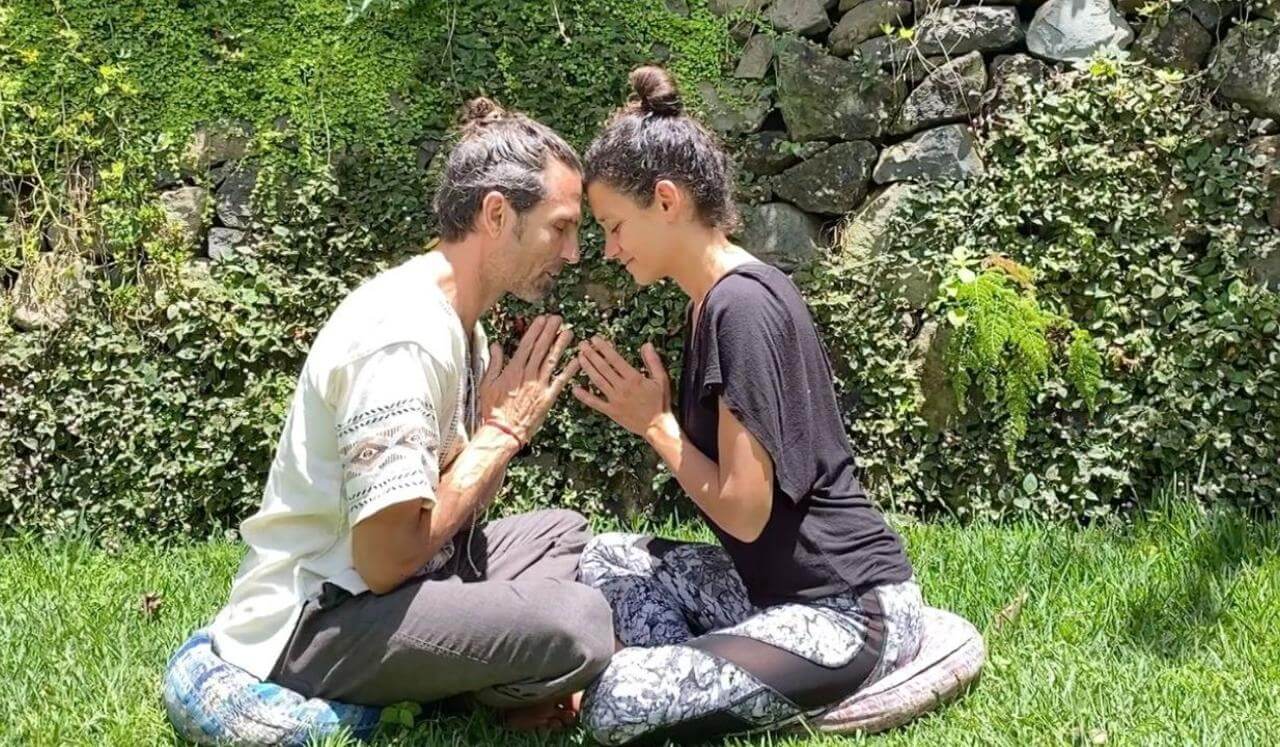
Partner Breathing is a dyadic breathing practice in which two people deliberately synchronize their breath rhythms, sitting close and using touch or sound to sense and settle into a shared, slow pace.
Last Updated
4 Jul 2026
We are still reviewing this page. Our research team checks every technique page for accuracy and evidence quality before final release. Details may change as that review completes. The evidence badge shows our current reading of the published research.
RECOMMENDED DOSE
No direct dose-response literature exists for this technique. These recommendations are based on general practice conventions for paired breathwork and should be treated as starting points only. A short, low-pressure session helps newcomers build comfort synchronising breath with a partner.
No direct dose evidence; editorial synthesis. This step up reflects general breathwork practice conventions once the basic pattern feels comfortable, allowing longer periods of paced, synchronised breathing.
No direct dose evidence; editorial synthesis. A longer daily practice is offered as a maintenance level for committed practitioners, based on general breathwork conventions rather than technique-specific trials.
Session length
Session length: 5–10 minutes
5
MIN
How long each individual practice session should last from start to finish.
Frequency
Frequency: 3–4 days
3
DAYS
The number of days per week to fit a session into your routine.
Session length
Session length: 10–20 minutes
10
MIN
How long each individual practice session should last from start to finish.
Frequency
Frequency: 4–5 days
4
DAYS
The number of days per week to fit a session into your routine.
Session length
Session length: 20–30 minutes
20
MIN
How long each individual practice session should last from start to finish.
Frequency
Frequency: 5–7 days
5
DAYS
The number of days per week to fit a session into your routine.
About this card. No direct dose-response studies exist for Partner Breathing, so these figures are editorial estimates drawn from general breathwork practice and should be treated as starting points only. These recommendations are not a substitute for personalised guidance from a qualified practitioner.
Quick answers to what people most often ask. Each card links to the deeper section below.
evidence
Research on related slow-breathing and stress-management practices—not paired breathing itself—links this kind of paced breathing with lower stress and anxiety. A meta-analysis of stress-management programs found a large-to-moderate drop in stress, and a randomized trial of mindfulness breathing lowered stress and anxiety. No trial has yet tested two people breathing in synchrony.
Read moregood for
Couples, caregivers, and grieving partners who want a simple way to settle and feel connected may find Partner Breathing helpful, as can anyone easing everyday stress or anxiety alongside another person. It is not a substitute for care when trauma, panic, depression, or relationship distress are severe.
Read moresafety
Most healthy adults can practise Partner Breathing safely. Sitting close, using touch, and sharing sustained attention can feel exposing or activating for people carrying trauma or relationship strain, so agree on comfort and consent first and stop if either partner feels on-edge. Slowing the breath may bring mild, short-lived lightheadedness that eases on returning to a natural rhythm.
Read morehow it works
Slow, long exhales of roughly four to six breaths a minute stimulate the vagus nerve and shift the body toward its rest-and-recovery branch, which slows the heart and loosens muscle tension. Doing it with someone adds co-regulation, where each partner's steadying breath becomes a cue for the other, though two-person synchrony has not yet been directly tested.
Read morePartner Breathing is a dyadic practice in which two people gently synchronize their breathing, usually sitting close and sensing each other's breath, to create a shared, settling sense of co-regulation.
Two people sit back-to-back or facing each other, often with a hand on the other's chest or abdomen to feel the breath cycle. Partners begin by noticing each other's rhythm, then slowly align inhale and exhale at a gentle pace of roughly four to six breaths a minute. Each person's breath works as both anchor and feedback for the other, so the rhythm is held together rather than led by one person.
Partner Breathing is a relational practice, not a solo breathwork drill: it aims at shared attunement between two people rather than breath control for its own sake. It is not a treatment for depression, panic, or trauma, and the two-person synchrony it aims for has not been directly measured in research. It differs from individual paced-breathing exercises done alone, though it borrows the same slow-breathing rhythm.
Not to be confused with
Bed-partner sleep-disordered breathing (snoring, sleep apnoea)
This refers to a sleeping partner's snoring or breathing pauses during sleep apnoea, a medical sleep condition affecting both people's rest, not a chosen wellbeing practice. Partner Breathing is a deliberate, waking exercise in which two people gently sync their breath.
Holotropic or other activating breathwork
Holotropic and similar breathwork use fast, forceful breathing to provoke intense altered states and strong physical release. Partner Breathing does the opposite, using slow, gentle breaths shared with a partner to settle the body and steady arousal.
Tantric or sexual couples breathing
Tantric couple practices may use synced breath to build erotic charge or intimacy. Partner Breathing centres on calm co-regulation and shared presence rather than sexual arousal, though partners always set their own comfort, touch, and consent.
Partner Breathing works mainly through slow, long exhales, around four to six breaths a minute, that stimulate the vagus nerve and shift the body toward parasympathetic activity, the rest-and-recovery branch that slows the heart and loosens muscle tension. Studies of slow meditative breathing, rather than partner breathing itself, have measured this move toward calmer parasympathetic activity (Kumar et al., 2024). Practising with someone adds a felt layer of co-regulation, where each person's steadying breath becomes a cue for the other's, so calming feels less like effort and more like being carried by a shared rhythm. The two-person synchrony behind that feeling is mechanistically plausible but has not yet been directly tested.
When each exhale slows and lengthens, the body starts to feel heavier and the shoulders drop. Those long, slow breaths of around four to six a minute stimulate the vagus nerve, the main pathway of the parasympathetic rest-and-recovery branch that slows the heart and eases muscle tension. Studies of slow, meditative breathing have measured this shift toward calmer parasympathetic activity (Kumar et al., 2024), which practitioners often feel as breath lengthening and a sense of settling shared with their partner.
When you're wound up, the body can be slow to calm, and slow, paced breathing at about five to six breaths a minute helps it recover faster and settle into a steadier baseline. It works by lifting vagal tone, the vagus nerve's steadying hold over heart rate (Kumar et al., 2024). Practising with a partner can make that settling feel less like effort and more like being carried by a shared, slowing rhythm.
In the body, slow shared breathing shifts the nervous system toward its rest-and-digest state. Studies of slow meditative breathing have measured increased heart-rate variability, a marker of how flexibly the heart adjusts between beats, alongside higher parasympathetic activity (Kumar et al., 2024). Because that measurement comes from a related meditation practice rather than partner breathing itself, read the direction, more calm-branch activity, as suggestive rather than confirmed for this technique. What practitioners usually feel is the breath slowing, the shoulders dropping, and the body settling alongside their partner.
Your breathing lengthens, your shoulders drop, and the body settles alongside your partner as slow, shared breathing tips you toward a rest-and-digest state, the nervous-system branch that calms the body rather than revving it up. In studies of slow meditative breathing, parasympathetic activity and heart-rate variability rose (Kumar et al., 2024), a signal the calm branch is taking stronger control.
Breathing in time with a partner, many people feel the breath slow, the shoulders drop, and the on-alert feeling ease. That settling reflects a shift toward the body's rest-and-recovery branch, measured as a higher parasympathetic-to-sympathetic ratio in a small study of a related slow-breathing meditation (Kumar et al., 2024).
As the body eases out of high alert, muscles loosen and the heartbeat slows. This is a drop in sympathetic arousal, the fight-or-flight activity that keeps the body keyed up and ready to react, and slow, meditative breathing has been associated with this shift toward calmer rest-and-digest activity in one study of guided Zen practice, though it was measured in a related breathing practice rather than in partner breathing itself (Kumar et al., 2024).

Sitting close and slowing the breath together, many people feel the body grow heavier and calmer, with a settling sense of safety that reflects parasympathetic activity, the nervous system's rest-and-digest branch that quiets fight-or-flight. Slow meditative breathing has been measured to raise heart-rate variability and shift toward this calmer state in a related study (Kumar et al., 2024), so for partner breathing itself read it as a plausible mechanism rather than a proven effect.
Moderate but indirect evidence supports Partner Breathing for stress and anxiety, drawn from research on related slow-breathing and stress-management practices rather than the paired practice itself. A randomized trial of mindfulness breathing lowered stress and anxiety (Komariah et al., 2022), everyday app use linked regular breathing exercises with greater stress relief (ASHER et al., 2024), and a meta-analysis found structured stress-management practices meaningfully reduced student stress (Juniar et al., 2025). Early-stage evidence also touches nervous-system calming, seen as higher heart-rate variability in slow-breathing studies (Kumar et al., 2024). What is not yet supported: any trial of two people breathing in synchrony, clear effects on depression, or any claim that it treats a diagnosed condition.
Structured slow-breathing and stress-management practices consistently lower stress and anxiety. A meta-analysis of stress-management programs for university students found a large pooled reduction in stress, a Hedges' g of −0.85 (95% CI −1.34 to −0.36) compared with control conditions, easing to a moderate −0.61 once statistical outliers were removed, meaning the average participant ended up less stressed than roughly three-quarters of those who did not take part (Juniar et al., 2025). A randomized trial in Indonesian university students found lower stress and anxiety after mindfulness breathing meditation (Komariah et al., 2022), and slow meditative breathing has been linked with a shift toward calmer, rest-and-digest nervous-system activity (Kumar et al., 2024). The main limitation is directness: no study has tested two people breathing in synchrony, so relational effects are inferred from solo breathing, and effects on depression were less clear than on stress and anxiety (Komariah et al., 2022).
1
Meta-analyses
1
RCTs
0
Systematic reviews
1
Observational
1
Pilot
Studied populations
Effect of Mindfulness Breathing Meditation on Depression, Anxiety, and Stress: A Randomized Controlled Trial among University Students
n = 122
Finding: In a randomized trial with 122 university students in Indonesia, those who practised mindfulness breathing meditation reported lower stress and anxiety than a comparison group who did not, with the drop in stress being the clearest result. Depression scores, however, did not shift meaningfully between the two groups, so this points to breathing practice as a tool for easing everyday tension rather than treating low mood. Worth noting: this study looked at solo breathing done alone, not partner or synchronized breathing, so it speaks to the wider family of breath-focused practices rather than the partner technique specifically.
reported significant; p=0.007
VRZM: Exploring the Psycho-physiological Benefits of Zen Meditation in Immersive Environments
n = 80
Finding: In this study, 80 people were split into four groups, and those who practised breath-focused Zen meditation in an immersive virtual-reality setting showed higher heart-rate variability and more "rest-and-digest" nervous-system activity than a group that did nothing, alongside lower stress and anxiety scores. In practical terms, this points to a plausible way that slow, focused breathing can shift the body toward a calmer state. It's worth noting this looked at solo VR meditation rather than partner breathing specifically, and the results were reported as significant without published numbers for how large the change was, so treat it as supportive background for slow-breathing practices rather than direct proof about breathing with a partner.
reported narratively
Partner Breathing grows out of a polyvagal-informed view of the nervous system and the long-observed tendency of mammals in close, safe proximity to fall into breathing together. Its dyadic form, the shared posture and the hand placed to feel a partner's breath, draws on the idea that one settled nervous system can help steady another through what is called the social engagement system. These roots help explain the practice's form and why it feels meaningful, not that lineage or theory proves a clinical effect.
For most healthy adults, Partner Breathing is a gentle, low-risk practice. A few situations call for care, and these cautions come from how the practice works and from clinical experience, not from studies measuring harm. Sitting close, using touch, and sharing sustained attention can feel exposing or activating for people carrying trauma or relationship strain, so agree on what feels comfortable and give consent before you begin, and stop if either partner feels on edge. Slowing the breath can also bring mild, short-lived lightheadedness, a common effect of voluntary slow breathing that eases as soon as you return to your natural rhythm. Partner Breathing is a supportive practice, not a treatment for depression, panic, or trauma.
Take particular care if you live with a trauma history or PTSD, if you are in acute relationship distress, or if physical closeness or touch feels uncomfortable, because the proximity and shared breathing can register as activating rather than settling. If any of these apply, you can adapt the posture, drop the touch element, or set the practice aside. Anyone who tends to feel faint or lightheaded from slow or deep breathing should keep the breath gentle and stay seated. And if you are living with a diagnosed mental health condition, keep working with your clinician and treat this as a supportive addition rather than a replacement for care.
Sitting close, using touch, and sustained shared attention can register as exposing or destabilising for people carrying trauma or PTSD, so the proximity may feel activating rather than settling. Agree on consent and comfort limits before you begin, adapt the posture, drop the touch element or sit back-to-back, and return to your natural breathing rhythm and open your eyes if you feel activated. Keep it a supportive addition alongside care from a qualified clinician, not a treatment for trauma.
| Technique | Best for | Use with care | Evidence strength | Distinction |
|---|---|---|---|---|
| Solo slow (coherent/resonance) breathing | Downshifting your own arousal when you are alone and want a portable, self-directed way to calm the body. | moderate EVIDENCE | Solo slow breathing uses the same long, slow exhale to settle your own nervous system, but you practise it alone rather than syncing inhale and exhale with someone else. Partner Breathing keeps that slow-breath core and adds physical proximity, touch, and a shared rhythm, so the calming is felt as something happening between two people rather than within one. The underlying autonomic shift is drawn from the same slow-breathing research. | |
| Mindfulness breathing meditation | Easing stress and anxiety through solo attention practice, or whenever no partner is available. | moderate EVIDENCE | Mindfulness breathing meditation trains sustained attention on your own breath to ease stress and anxiety, without a partner or deliberate synchrony. Partner Breathing keeps the slow-breath element but reorients it toward attunement with another person, so connection and shared presence, rather than solitary focus, become the point of the practice. |
No. Partners begin by sensing each other's breath and gradually drift into a shared slow pace, so approximate, loosely matched breathing is normal; exact, simultaneous timing isn't required for the felt sense of settling together.
+
No. As it is taught, each person begins by noticing their own rhythm and their partner's, then eases toward a common slow pace of roughly four to six breaths a minute, so alignment arrives gradually rather than needing perfect precision. This is how the practice is framed and taught, not a proven mechanism, and the two-person physiological synchrony behind the felt co-regulation has not yet been directly tested. Treat close-but-imperfect matching as normal and enough for the sense of settling alongside another person.
Yes. Touch is optional. You can sit back-to-back or facing each other and simply sense each other's rhythm by sound and breath, using a hand on the chest or abdomen only if both partners want that contact.
+
Yes. Touch is a choice, not a requirement. Partners can sit back-to-back or facing one another and follow the breath through sound and shared timing, adding a light hand on the chest or abdomen only if both agree, and no touch at all is a valid way to practise. If closeness or contact feels uncomfortable, drop the touch element or adapt the posture. This is practical how-to guidance rather than a claim that the no-touch version works better or the same as the touch version.
The process by which one person's calmer, steadier nervous system helps settle another's through shared cues like breath, voice, or touch. In Partner Breathing, each person's slowing breath becomes a signal that helps the other settle too.
The tendency for two people in close, connected contact to fall into matched physiological rhythms, such as breathing and heartbeat, and sometimes brain-wave patterns. It is often felt as being on the same wavelength or sharing a palpable sense of presence.
Synchronization of neural oscillations, cardiac rhythms, and respiratory patterns between people during shared activity; the coupling is bi-directional, with each person's regulated state supporting the other's.
A measure of how strongly the vagus nerve steadies heart rate and calms the body's stress response. Higher vagal tone generally means faster recovery from stress and a steadier emotional baseline.
Cardiac vagal control — the degree of vagus nerve influence over heart rate, breathing, and stress reactivity, associated with more flexible autonomic regulation.
The rest-and-recovery branch of the nervous system that slows heart rate and eases muscle tension, balancing the fight-or-flight response. Slow breathing tends to shift the body toward this calmer setting.
The branch of the autonomic nervous system, acting largely through vagal pathways, that shifts physiology away from fight-or-flight toward recovery and calm readiness.
The way body rhythms such as breath or heartbeat fall into step with a steady external rhythm, like a partner's breathing, so the pattern feels effortless to hold and often brings a sense of flow.
Synchronisation of physiological rhythms — neural oscillations, heart rate, respiration, and motor patterns — to an external periodic stimulus.
The ability to sense signals from inside your own body, such as breath movement, heartbeat, or tension. Strengthening it can help you notice early stress signals and settle sooner.
Maria Komariah, Kusman Ibrahim, Tuti Pahria, Laili Rahayuwati, Irman Somantri (2022). Effect of Mindfulness Breathing Meditation on Depression, Anxiety, and Stress: A Randomized Controlled Trial among University Students. https://doi.org/10.3390/healthcare11010026
Ajoy Kumar, Sahil Sankhyan, Kirti Tripathi, Akash K Rao, Arnav Bhavsar, Varun Dutt (2024). VRZM: Exploring the Psycho-physiological Benefits of Zen Meditation in Immersive Environments. https://doi.org/10.1109/ismar-adjunct64951.2024.00063
Explore guided sessions to deepen your Partner Breathing technique.
Outcomes measured
| Outcome | Effect size | 95% CI | N | Comparator | Source |
|---|---|---|---|---|---|
| Stress | reported significant; p=0.007 | — | 122 | control group | Komariah et al., 2022 |
| Stress symptoms (breathing-exercise moderation of stress reduction, weeks 1-6) | beta (breathing-exercise moderation) = -0.07 | 95% CI -0.13 to -0.01 | 490 | — | ASHER et al., 2024 |
| Stress (pooled meta-analytic estimate) | Hedges' g = -0.85 | 95% CI -1.34 to -0.36 | — | — | Juniar et al., 2025 |
The research is useful for setting expectations, but study methods and participant groups vary. Treat the findings as general guidance rather than a promise about any single session, and not a replacement for clinical care.
Stress management interventions for university students in low-and middle-income countries: a systematic review and meta-analysis
2025
Finding: This review pooled 28 controlled trials of stress-management programs for university students in low- and middle-income countries and found a clear drop in stress, a large overall effect that settled into a solid, moderate one once unusually strong outlier studies were set aside. For someone drawn to partner breathing, the practical takeaway is encouraging but indirect: the trials tested broad stress-management approaches rather than partner breathing itself, so the result speaks to structured stress practices in general, not this specific technique. It's also worth reading cautiously, since many of the included studies were small, compared practice against no treatment at all, and varied widely in quality.
Hedges' g = -0.85
Association of Digital Engagement With Relaxation Tools and Stress Level Reduction: Retrospective Cohort Study
n = 490
Finding: Following 490 adults with moderate or higher stress as they used a behavioral health app, this study found that overall stress dropped over the first one to six weeks, and the people who regularly used the app's breathing exercises saw a bit more of that drop than those who leaned on video sessions instead. For someone building a breathing habit, that hints breathing practice may add something extra to everyday stress relief. Two limits are worth keeping in mind: this was real-world app data rather than a controlled experiment, so it can show a link but not prove the breathing caused the change, and it tracked solo breathing exercises, not partner or synchronized breathing specifically.
beta (breathing-exercise moderation) = -0.07
When a relationship is under acute strain, the closeness and shared focus of paired breathing can feel activating instead of settling. Agree together on what feels comfortable, keep the option to pause or stop open to either partner, and set the practice aside if it adds tension rather than easing it.
If physical closeness or contact feels uncomfortable, the practice can adapt around it. Drop the touch element entirely, sit back-to-back rather than facing each other, or follow the shared rhythm through sound alone. No touch at all is a valid way to practise.
Voluntary slow breathing can bring brief, mild lightheadedness or a fluttery-headed feeling for some people. This eases as soon as you return to your natural rhythm. Keep the pace easy at roughly four to six breaths a minute, never strain to hold or deepen the breath, stay seated, and open your eyes and pause if dizziness appears.
Partner Breathing is a supportive practice, not a treatment for depression, panic, or trauma. If you are living with a diagnosed condition, keep working with your clinician and treat this as a supportive addition rather than a replacement for care.
Partner Breathing works best when both of you feel free to shape it together, so it helps to talk openly about how much closeness and touch feels comfortable before you settle in. A gentle starting format is a quiet, seated practice with a slow, easy breath and no pressure to match each other right away, where either person can pause at any moment. Treat it as a supportive practice you enjoy alongside any care you are already receiving, not a replacement for it.
Before you begin, each partner names how much closeness and touch feels okay, and you both agree that either person can pause or stop at any point without explanation.
Sit back-to-back or facing each other, and rest a hand on the chest or abdomen only if you both want that contact. A hand resting lightly is enough to feel the breath cycle, and no touch at all is a valid choice.
Spend the first minute simply sensing your own breath and your partner's rhythm before trying to match them, so alignment arrives gradually instead of being pushed.
Aim for a slow, comfortable pace of roughly four to six breaths a minute with an easy, lengthening exhale, and never strain to hold or deepen the breath.
If you notice dizziness, a fluttery head, or a sense of feeling exposed or unsettled, return to your natural breathing rhythm, open your eyes, and pause. These are cues to slow down, not to push through.
Use Partner Breathing alongside any treatment you are receiving, not instead of it, and check in with a clinician if you live with trauma, panic, or a diagnosed condition.
This information is educational and is not medical advice. This practice is not a substitute for professional care and should not replace prescribed medication or treatment for any medical or mental-health condition. If you are managing a health condition or taking medication, talk with a qualified health professional before changing your practice. If you are in distress or crisis, seek professional support.
| Structured stress-management programs | Students or groups wanting a structured, multi-session course that builds a range of coping skills. | moderate EVIDENCE | Structured stress-management programs bundle several coping skills, often including breathing, into a taught curriculum usually delivered to students or groups over several weeks. Partner Breathing is a single brief relational exercise rather than a multi-week program, and its focus is shared regulation between two people rather than a broad toolkit of skills. |
No. No study has tested two people deliberately breathing in synchrony, so its benefits are inferred from indirect research on solo slow-breathing and stress-management practices (Komariah et al., 2022). Treat it as a supportive practice, not a proven standalone treatment.
+
No. Direct research on the paired practice is currently absent, so its benefits are inferred from adjacent evidence, such as a randomized trial in which mindfulness breathing lowered stress and anxiety (Komariah et al., 2022), and this indirect base carries its own quality limitations and should be read cautiously (Juniar et al., 2025). The two-person synchrony and co-regulation behind the felt experience are mechanistically plausible but untested, with mixed findings in dyadic studies, so the evidence is suggestive rather than confirmed. Use Partner Breathing as a supportive practice alongside care, not as a proven clinical treatment.
Likely, though the evidence is indirect. No trial has tested two people breathing together, but the slow shared exhale it relies on is linked with lower stress and anxiety in related breathing and stress-management studies (Komariah et al., 2022), (Juniar et al., 2025).
+
Likely, though the support is indirect. The paired practice itself has not been trialled, so its backing comes from the slow breathing at its core: a randomized trial of mindfulness breathing lowered stress and anxiety (Komariah et al., 2022), real-world app use linked regular breathing exercises with more stress relief (ASHER et al., 2024), and a meta-analysis found structured stress-management practices meaningfully reduced student stress (Juniar et al., 2025). This is suggestive rather than confirmed for partner breathing, effects on depression are less clear, and it is not a substitute for care for a diagnosed condition (Komariah et al., 2022).
Partly, but it isn't proven for this practice. Some physiological coupling, matched breathing and heart rhythms, has been observed in closely connected pairs, yet no study has directly tested two people intentionally breathing in sync, so treat the felt sense of syncing as plausible rather than confirmed.
+
Partly. The sensation of falling in sync is real, and general research on connected pairs has documented some cardiorespiratory concordance during shared activity. But no study has directly measured two-person breathing or neural synchrony during intentional Partner Breathing, and dyadic findings are mixed, so the co-regulation behind that felt closeness is plausible rather than established. What is better supported is that slow breathing settles each person's own nervous system; the two-person coupling remains an untested inference.
Likely, but only indirectly. Slow breathing with long exhales, around four to six breaths a minute, has been linked to a shift toward calmer, rest-and-digest nervous-system activity and higher heart-rate variability (Kumar et al., 2024). Those findings come from solo slow-breathing studies, not partner breathing, so treat the calming as a plausible signal rather than a proven effect for the paired practice.
+
Likely, though read it as a direction rather than a promise. Slow breathing with long exhales engages vagal pathways and shifts the body toward parasympathetic activity, the rest-and-digest branch that slows the heart and eases muscle tension. Studies of slow meditative breathing have measured this shift as increased heart-rate variability, a marker of how flexibly the heart adjusts between beats (Kumar et al., 2024). Because that evidence comes from solo breathing rather than partner breathing, and the claimed two-person synchrony remains untested, the calming here is inferred from related practices, not directly demonstrated. It can help you settle alongside another person, but it is not a substitute for care for any diagnosed condition.
Use care. Sitting close, using touch, and sustained shared attention can feel activating rather than settling if you carry trauma or PTSD. Agree on consent first, adapt the posture or drop the touch, and stop if you feel on edge; treat it as a supportive addition alongside professional care, not a treatment for trauma.
+
Use care. Partner Breathing is usually gentle and low-risk, but its close proximity, physical contact, and inward shared focus can feel exposing or destabilising for people with trauma histories or PTSD. This caution comes from how the practice works and from clinical experience, not from studies measuring harm, so agree on consent and comfort limits before you begin, adapt the posture, drop the touch element or sit back-to-back, and return to your natural breathing rhythm and open your eyes if you feel activated. Keep it a supportive addition alongside care from a qualified clinician, not a substitute or a treatment for trauma.
Occasionally, yes. Slowing the breath can bring mild, short-lived lightheadedness for some people, which usually eases as soon as you return to your natural rhythm. Keep the breath gentle, stay seated, and pause if you feel faint.
+
Occasionally, yes. Voluntary slow breathing can sometimes produce brief, mild lightheadedness or a fluttery-headed feeling. This caution is inferred from how slow breathing works and from practice experience rather than from studies measuring harm in Partner Breathing itself, and it typically passes quickly once you stop pacing the breath and let it return to its natural rhythm. To stay comfortable, keep the pace easy at roughly four to six breaths a minute, never strain to hold or deepen the breath, remain seated, and open your eyes and pause if dizziness appears.
Mainly the company, not the mechanism. Both use the same slow four-to-six breaths-a-minute core, and the calming effect draws on the same indirect slow-breathing research for either form (Kumar et al., 2024). Partner Breathing adds proximity, optional touch, and a shared rhythm as felt co-regulation, but no study shows the paired version works better than solo.
+
Mainly the company, not the mechanism. The settling in both comes from the same slow, long-exhale breathing that shifts the body toward calmer, rest-and-digest activity, a direction measured in solo slow-breathing studies rather than in partner breathing itself (Kumar et al., 2024). What Partner Breathing adds is proximity, optional touch, and a shared rhythm framed as co-regulation, which can aid connection and the motivation to keep going (Komariah et al., 2022). Whether two people breathing in sync produces effects beyond solo practice is untested, and no study directly compares them, so treat the partner element as a meaningful vehicle rather than a proven boost (Kumar et al., 2024).

Visceral afferent processing — the detection and interpretation of internal bodily signals, associated with insular cortex activation.
The small, natural variation in the time between heartbeats. Higher variability usually signals a flexible, well-regulated nervous system that recovers easily from stress.
Beat-to-beat variation in heart rate used as a non-invasive index of cardiac vagal control and autonomic flexibility.
Slow breathing at roughly five to six breaths a minute, a pace that tends to steady the heart's rhythm and shift the body toward calm. Partner Breathing typically settles around this pace.
A polyvagal-theory idea describing the network linking face, voice, and breath that helps mammals feel safe and connected when close to one another, supporting the sense of shared calm in paired breathing.
Cited in: Benefits, How it works, Research, What happens in the body
Dilfa Juniar, Wouter van Ballegooijen, Gabrielle Kleygrewe, Anneke van Schaik, Jan Passchier, Heleen Riper (2025). Stress management interventions for university students in low-and middle-income countries: a systematic review and meta-analysis. https://doi.org/10.3389/fdgth.2025.1603389
INBAR BREUER ASHER, Marilyn D. Ritholz, David L. Horwitz, Omar Manejwala, Ephraim Behar, Yifat Fundoiano-Hershcovitz (2024). Association of Digital Engagement With Relaxation Tools and Stress Level Reduction: Retrospective Cohort Study. https://doi.org/10.2196/50506
Cited in: Benefits
Beginner video for Partner Breathing

★ 5.0
·
Guided
·
4 min
Alok Rocheleau
How hard is Partner Breathing?
Partner Breathing stays at 2 because the work is rhythmic coordination and closeness, not deeper emotional confrontation or advanced symbolic practice.
2
Mental Effort
2 / 4
▾Emotional Depth
2 / 4
▾Physical Intensity
2 / 4
▾Prior Knowledge
2 / 4
▾Editorially curated. Tracks are not themselves clinically studied; evidence on the page applies to Partner Breathing as a technique.