Hi,
It's Stefania,
And we had a request for some more mythology stories.
So we have one for you today.
It's called Pegasus,
The winged horse.
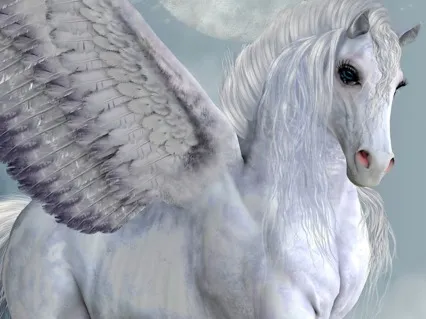
The Pegasus is a horse from mythical times.
It's a white horse,
And it has big wings,
Which means it can fly through the sky whenever it wants to.
This is the story of Pegasus,
The winged horse.
Once,
In the old,
Old times,
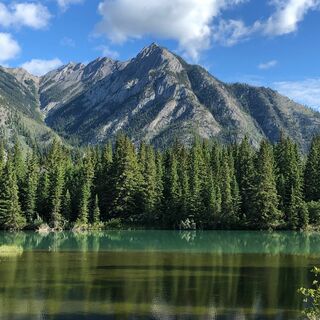
A fountain gushed out of a hillside in the marvelous land of Greece.
And for,
As far as I know,
After so many thousand years,
It is still gushing out of the very same spot.
At any rate,
There was the pleasant fountain,
Welling freshly forth and sparkling down the hillside in the golden sunset,
When a handsome young man named Bellerophon drew near its margin.
In his hand,
He held a bridle studded with brilliant gems and jewels,
And adorned with a golden bit,
Which is part of a bridle.
Seeing an older man and another of middle age,
And a little boy near the fountain,
And likewise a maiden who was dipping up some of the water in a pitcher,
He paused and begged that he might refresh himself with a drink.
This is very delicious water,
He said to the maiden as he rinsed and filled her pitcher at the drinking out of it.
Will you be kind enough to tell me whether the fountain has any name?
Yes,
It is called the Fountain of Pyrene,
Answered the maiden.
And then she added,
My grandmother has told me that this clear fountain was once a beautiful woman,
And when her son was killed by the arrows of the huntress Diana,
She melted all away into tears.
And so the water,
Which you find so cool and sweet,
Is the sorrow of that poor mother's heart.
I should not have dreamed,
Observed the young stranger,
That so clear a wellspring,
With this gush and gurgle and this cheery dance out of the shade into the sunlit,
Had so much as one teardrop in his heart.
And this then is the Pyrene.
I thank you,
Pretty maiden,
For telling me its name.
I have come from a faraway country to find this very spot.
A middle-aged country fellow,
He had driven his cow to drink out of the spring,
Stared hard at young Belarifun,
And at the handsome bridle which he carried in his hand.
The water-courses must be getting low,
Friend,
In your part of the world,
Remarked he,
If you come so far only to find the Fountain of Pyrene.
But pray,
Have you lost the horse?
I say you carry the bridle in your hand,
And a very pretty one it is,
With that double row of bright stones upon it.
If the horse was as fine as the bridle,
You are much to be pitied for losing him.
" I have lost no horse,
Said Belarifun with a smile,
But I happen to be seeking a very famous one,
Which,
As wise people have informed me,
Must be found hereabouts,
If anywhere.
Do you know whether the winged horse of Pegasus still haunts the Fountain of Pyrene,
As it used to do in your forefather's day?
But then the country fellow laughed.
Some of you,
My little friends,
Have probably heard that this Pegasus was a snow-white seed,
A snow-white horse with beautiful silvery wings,
Who spent most of his time on the summit,
The top of Mount Likon.
He was as wild and as swift and as buoyant in his flight through the air as any eagle that ever soared into the clouds.
There was nothing like him in the world.
He had no mate.
He had never been backed or bridled by a master,
And for many a long year he led a solitary and happy life.
Oh,
How fine a thing it is to be a winged horse,
Sleeping at night as he did on a lofty mountaintop and passing the greater part of the day in the air.
Pegasus seemed hardly to be a creature of the earth.
Whenever he was seen,
Up very high above people's heads,
With the sunshine on his silvery wings,
You would have thought that he belonged to the sky and that,
Skimming a little too low,
He had got astray among our mists and vapors and was seeking his way back again.
It was very pretty to behold him plunge into the fiery heart of a bright cloud and be lost in it for a moment or two,
And then break forth from the other side.
Or,
In a sullen rainstorm,
When there was a gray pavement of clouds over the whole sky,
It would sometimes happen that the winged horse descended right through it,
And the glad light of the upper region would shine after him.
In another instant,
It is true,
Both Pegasus and the pleasant light will be gone away together.
But anyone that was fortunate enough to see this wondrous spectacle felt cheerful the whole day afterward,
And as much longer as the storm lasted.
In the summertime,
And in the beautifulest of weather,
Pegasus often alighted on the solid earth,
And closing his silvery wings,
Would gallop over hill and dale for past time as fleetly as the wind.
Oftener than in any other place,
He had been seen near the fountain of Pyrrhine,
Drinking the delicious water or rolling himself upon the soft grass of the margin.
Sometimes,
Too,
But Pegasus was very dainty in his food.
He would crop a few of the clover blossoms that happened to be the sweetest.
To the fountain of Pyrrhine,
Therefore,
People's great-grandfathers had been in the habit of going,
As long as they were youthful and retained their faith,
In winged horses,
In hopes of getting a glimpse at the beautiful Pegasus.
Of late years,
He had been very seldom seen.
Indeed,
There were many of the country folks,
Dwelling within half an hour's walk of the fountain,
Who had never beheld Pegasus,
And did not believe that there was any such creature in existence.
The country fellow to whom Belipharon was speaking chanced to be one of those incredulous persons,
And that was the reason why he laughed.
Pegasus indeed,
Cried he,
Turning his nose up as high as such a flat nose could be turned up.
Pegasus indeed,
Ha!
A winged horse,
Truly!
Why,
Friend,
Are you in your senses?
Of what use would wings be to a horse?
Could he drag the plough so well,
Think you,
To be sure there might be a little saving in the expense of shoes?
But then,
How would a man like to see his horse flying out of the stable window?
Yes,
Or whisking him up above the clouds when he only wanted to ride to the mill?
Oh,
No,
I don't believe in Pegasus.
There never was such a ridiculous kind of horse,
Foul maid.
I have some reason to think otherwise,
Said Belipharon quietly,
And then he turned to an old grey man who was leaning on a staff and listening very attentively,
With his head stretched forward and one hand at his ear,
Because for the last twenty years he had been getting rather deaf.
And what say you,
Venerable sir,
Inquired he,
In your younger days,
I should imagine you must frequently have seen the winged steed.
Ah,
Young stranger,
My memory is very poor,
Said the aged man.
When I was a lad,
If I remember rightly,
I used to believe there was such a horse,
And so did everyone else.
But nowadays I hardly know what to think,
And very seldom think about the winged horse at all.
If I ever saw the creature,
It was a long,
Long while ago,
And to tell you the truth I doubt whether I ever did see him.
One day,
To be sure,
When I was quite a youth,
I remember seeing some hoof-traps round about the brink of the fountain.
Pegasus might have made those hoof-marks,
And so might some other horse.
And you have never seen him,
My fair maiden?
Asked Belaferrona the girl,
Who stood with the picture on her head while this talk went on.
You certainly could see Pegasus,
If anybody can,
For your eyes are very bright.
Once I thought I saw him,
Replied the maiden with a smile and a blush.
It was either Pegasus or a large white bird,
A very great way up in the air.
And one other time,
As I was coming to the fountain with my picture,
I heard a neigh.
Oh,
Such a brisk and melodious neigh as it was.
My very heart leaped with delight at the sound,
But it startled me nevertheless,
So I ran home without filling my picture.
That was truly a pity,
Said Belaferrona,
And he turned to the child,
Whom I mentioned at the beginning of the story,
And who was gazing at him,
As children are apt to gaze at strangers with his rosy mouth wide open.
Well,
My little fellow,
Cried Belaferrona,
Playfully pulling one of his curls,
I suppose you have often seen the winged oars.
That I have,
Answered the child very readily.
I saw him yesterday and many times before.
You are a fine little man,
Said Belaferrona,
Drawing the child closer to him.
Come,
Tell me all about it.
Well,
Why,
Replied the child,
I often come here to sail little boats in the fountain and to gather pretty pebbles out of his basin,
And sometimes,
When I look down into the water,
I see the image of the winged horse in the picture of the sky that is there.
I wish he would come down and take me on his back and let me ride him up to the moon,
But if I so much as stare to look at him,
He flies far away out of sight.
And Belaferrona put his faith in the child,
Who had seen the image of Pegasus in the water,
And in the maiden,
Who had heard him neigh so melodiously,
Rather than in the middle-aged clown,
Who believed only in cart-horses,
Or in the old man,
Who had forgotten the beautiful things of his youth.
Therefore,
He haunted about the fountain of Pervane for a great many days afterward.
He kept continually on the watch,
Looking upward at the sky or else down into the water,
Hoping forever that he should see either the reflected image of the winged horse or the marvelous reality.
He held the bridle,
With its bright gems and golden bit always ready in his hand.
The rustic people,
Who dwelt in the neighborhood and drove their cattle to the fountain to drink,
Would often laugh at poor Belaferrona and sometimes take him pretty severely to dusk.
They told him that an able-bodied young man like himself ought to have better business than to be wasting his time in such an idle pursuit.
They offered to sell him a horse if he wanted one,
And when Belaferrona declined the purchase,
They tried to drive a bargain with him for his fine bridle.
Even the country boys thought him so very foolish that they used to have a great deal of sport about him and were rude enough not to care,
Although Belaferrona saw and heard it.
One little urchin,
For example,
Would play Pegasus and cut the oddest imaginable capers by way of flying,
While one of his schoolfellows would scamper after him,
Holding forth a twist of bulrushes' branches,
Which was intended to represent Belaferrona's ornamental bridle.
But the gentle child,
Who had seen the picture of Pegasus in the water,
Comforted the young stranger more than all the naughty boys could torment him.
The dear little fellow in his play hours often sat down beside him and,
Without speaking a word,
Would look down into the fountain and up toward the sky,
With so innocent a faith that Belaferrona could not help feeling encouraged.
Now,
You will,
Perhaps,
Wish to be told why it was that Belaferrona had undertaken to catch the winged horse,
And we shall find no better opportunity to speak about this matter than while he is waiting for Pegasus to appear.
If I were to relate the whole of Belaferrona's previous adventures,
They might easily grow into a very long story.
It would be quite enough to say that,
In a certain country of Asia,
A terrible monster,
Called a Chimera,
Had made its appearance and was doing more mischief than could be talked about between now and sunset.
According to the best accounts which I have been able to obtain,
This Chimera was nearly,
If not quite,
The ugliest and most poisonous creature,
And the strangest and unaccountablest,
And the hardest to fight with,
And the most difficult to run away from,
That ever came out of the Earth's inside.
It had a tail like a boa constrictor.
Its body was like,
I do not care what,
And it had three separate heads,
One of which was a lion's,
The second a goat's,
And the third an abominably great snake's.
And a hot blast of fire came flaming out of each of its three mouths.
Being an earthly monster,
I doubt whether it had any wings,
But wings or no,
It ran like a goat and a lion,
And wriggled about like a serpent,
And thus contrived to make about as much speed as all three together.
Oh,
The mischief,
And mischief,
And mischief that this naughty creature did.
With its flaming breath,
It could set a forest on fire,
Or burn up a field of grain,
Or for that matter,
A village.
It laid waste to the whole country about.
While this hateful beast,
If a beast we can call it,
Was doing all these horrible things,
It so chanced that Bela Rufan came to that part of the world,
On a visit to the king.
The king's name was Ayobates,
And Lycia was the country over which he ruled.
Bela Rufan was one of the bravest youths in the world,
And desired nothing more as to do some valiant and beneficent deed,
Such as would make all mankind adore and love him.
In those days,
The only way for a young man to distinguish himself was by fighting battles,
Either with the enemies of his country,
Or with wicked giants,
Or with troublesome dragons,
Or with wild beasts,
When he could find nothing more dangerous to encounter.
King Ayobates,
Perceiving the courage of his youthful visitor,
Proposed to him to go and fight the chimera,
Which everybody else was afraid of,
And which,
Unless it would soon be killed,
Was likely to convert Lycia into a desert.
Bela Rufan hesitated not a moment,
But assured the king that he would either slay this dreaded chimera,
Or perish in the attempt.
But,
In the first place,
As the monster was so virgidiously swift,
He bethought himself that he should never win the victory by fighting on foot.
The wisest thing he could do,
Therefore,
Was to get the very best and fastest horse that could anywhere be found.
And what other horse in all the world was half so fast as the marvelous horse Pegasus,
Who had wings as well as legs,
And was even more active in the air than on the earth?
To be sure,
A great many people denied that there was any such horse with wings,
And said that the stories about him were all poetry and nonsense.
But wonderful as it appeared,
Bela Rufan believed that Pegasus was a real steed,
And hoped that he himself might be fortunate enough to find him.
And once fairly mounted on his back,
He would be able to fight the chimera at better advantage.
And this was the purpose with which he had traveled from Lycia to Greece,
And had brought the beautifully ornamental bridle in his hand.
It was an enchanted bridle.
If he could only succeed in putting the golden bit into the mouth of the Pegasus,
The winged horse would be submissive,
And would own Bela Rufan for his master,
And fly with her soever he might choose to turn the reign.
But indeed,
It was a weary and anxious time,
While Bela Rufan waited and waited for the Pegasus,
In hopes that he would come and drink at the Fountain of Pyrenees.
He was afraid that King Iobatus should think that he had fled from the chimera.
It pained him too to think how much mischief the monster was doing,
While he himself,
Instead of fighting with it,
Was compelled to sit idly,
Poring over the bright waters of Pyrenees as they gushed out of the sparkling sand.
And as Pegasus came through there so seldom in these later years,
And scarcely alighted there more than once in a lifetime,
Bela Rufan feared that he might grow an old man,
And have no strength left in his arms,
Nor courage in his heart,
Before the winged horse would appear.
Oh,
How heavily passes the time,
While an adventurous youth,
In yearning to do his part in life,
Had to gather in the harvest of his renown!
How hard a lesson it is to wait!
Our life is brief,
And how much of it is spent in teaching us only this!
Well,
Was it for Bela Rufan that the gentle child had grown so fond of him,
And was never weary of keeping him company.
Every morning,
The child gave him a new hope to put in his heart,
Instead of yesterday's withered one.
Dear Bela Rufan,
He would cry,
Looking up hopefully into his face,
I think we shall see the Pegasus today.
And at length,
If it had not been for the little boy's unwavering faith,
Bela Rufan would have given up all hope,
And would have gone back to Lycia,
And have done his best to slay the Chimera without the help of the winged horse.
And in that case,
Poor Bela Rufan would at least have been terribly scorched by the creature's breath,
And would most probably have been killed and devoured.
Nobody should ever try to fight an earth-born Chimera,
Unless he can first get upon the back of an aerial flying horse.
One morning,
The child spoke to Bela Rufan even more hopefully than usual.
Dear,
Dear Bela Rufan,
Cried he,
I know not why this is,
But I feel as if we should certainly see Pegasus today.
And all that day,
He would not stir a step away from Bela Rufan's side.
So they ate a crust of bread together,
And drank some of the water of the fountain.
In the afternoon,
There they sat,
And Bela Rufan had thrown his arm around the child,
Who likewise had put one of his little hands into Bela Rufan's.
The latter was lost in his own thoughts,
And was fixing his eyes vacantly on the trunks of the trees that overshadowed the fountain,
And on the grapevines that clambered up among their branches.
But the gentle child was gazing down into the water.
He was grieved for Bela Rufan's sake,
And that the hope of another day should be deceived,
Like so many before it.
And two or three quiet teardrops fell from his eyes,
And mingled with what were said to be the many tears of Pirene when she wept for her slain children.
But when he least thought of it,
Bela Rufan felt the presence,
The pressure of the child's little hand,
And heard a soft,
Almost breathless whisper.
See there,
Dear Bela Rufan,
There is an image in the water.
The young man looked down into the dimpling mirror of the fountain,
And saw what he took to be the reflection of a bird,
Which seemed to be flying at a great height in the air,
With a gleam of sunshine on its snowy or silvery wings.
What a splendid bird it must be,
Said he,
And how very large it looks,
Though it must really be flying higher than the clouds.
It makes me tremble,
Whispered the child.
I am afraid to look up into the air.
It is very beautiful,
Yet I dare only look at this image in the water.
Dear Bela Rufan,
Do you not see that it is no bird?
It is the winged horse Pegasus.
Bela Rufan's heart began to throb.
He gazed keenly upward,
But could not see the winged creature,
Whether bird or horse,
Because just then it had plunged into the fleecy depths of a summer cloud.
It was but a moment,
However,
Before the object reappeared,
Sinking lightly down out of the cloud.
Although still at a vast distance from the earth,
Bela Rufan caught the child in his arms and shrank back with him,
So that they were both hidden among the thick shrubbery which grew all around the fountain.
He was afraid if Pegasus caught a glimpse of them,
He would fly far away and alight in some inaccessible mountaintop.
For it really was the winged horse.
After they had expected him so long,
He was coming to quench his thirst with the water of Purim.
Nearer and nearer came the aerial wonder,
Flying in great circles,
As you may have seen a dove do when about to alight.
Downward came Pegasus,
In those wide,
Sweeping circles,
Which grew narrower and narrower still as he gradually approached the earth.
The nearer the view of him,
The more beautiful he was,
And the more marvelous the sweep of his silver wings at last,
With so light a pressure as hardly to bend the grass about the fountain or imprint a hoofprint in the sand of his margin.
He alighted,
And stooping his wild head began to drink.
He drew in the water with long and pleasant sighs and tranquil pauses of enjoyment,
And then another and then another drink,
And another and another.
For nowhere in the world or up above the clouds did Pegasus love any water as he loved this of Purim.
And when his thirst was slaked,
Satisfied,
He cropped a few of the honey-blossoms of the clover,
Delicately tasting them,
But not caring to make a heavy meal,
Because the herbage just beneath the clouds on the lofty sides of Mount Helicon suited his taste better than this ordinary grass.
After thus drinking to his heart's content and in his tainty fashion condescending to take a little food,
The winged horse began to caper,
Fur,
To and fro,
And dance as it were,
Out of mere idleness and sport.
There was never a more playful creature made than this very Pegasus.
So there he frisked.
In a way,
It delights me to think about fluttering his great wings lightly and running little races,
Half on earth and half in the air,
Which I know not whether to call a flight or a gallop.
When a creature is perfectly able to fly,
He sometimes chooses to run just for the pastime of the thing.
And so did Pegasus.
Although it did cost him some little trouble to keep his hoofs so near the ground,
Bella Ruffin,
Meanwhile,
Holding the child's hand,
Peeped forth from the shrubbery and thought that never was any sight so beautiful as this.
Nor ever a horse's eyes so wild and spirited as those of Pegasus.
It seemed a sin to think of bridling him and riding on his back.
Once or twice,
Pegasus stopped and sniffed the air,
Pricking up his ears and tossing his head and turning it on all sides,
As if he partly suspected some mischief or other.
Seeing nothing,
However,
And hearing no sound,
He soon began his antics and fun again.
At length,
Not that he was weary,
But only idle and luxurious,
Pegasus folded his wings and laid down on the soft green grass.
But being too full of aerial life to remain quiet for many moments together,
He soon rolled over on his back with his four slender legs in the air.
It was beautiful to see him,
This one solitary creature whose mate had never been created,
But who needed no companion,
And living a great many hundred years,
Was as happy as the centuries were long.
The more he did such things as mortal horses are accustomed to do,
The less earthly and more wonderful he seemed.
Bella Ruffin and the child almost held their breath,
Partly from a delightful awe,
But still more because they dreaded lest the slightest stir or murmur should send him up with the speed of an arrow into the furthest blue of the sky.
Finally,
When he had enough of rolling over and over,
Pegasus turned himself about and indolently,
Like any other horse,
Put out his forelegs in order to rise from the ground.
And Bella Ruffin,
Who had guessed that he would do so,
Darted suddenly from the thicket and leapt astride his back.
Yes,
There he sat on the back of the winged horse.
But what a jump did Pegasus make when for the first time he felt the weight of a mortal man upon his back.
A bound indeed,
Before he had time to draw a breath.
Bella Ruffin found himself five hundred feet high and still shooting upward while the winged horse snorted and trembled with terror and anger.
Upward he went,
Up,
Up,
Up,
Up,
Up,
Up,
Up,
Up,
Up,
Up,
Up,
Up,
Up,
Up,
Up,
Up,
Up,
Up,
Up,
Up,
Up,
Up,
Up,
Up,
Up,
Up,
Up,
Up,
Up,
Up,
Up,
Up,
Up,
Up,
Up,
Up,
Up,
Up,
Up,
Up,
Up,
Up,
Up,
Up,
Up,
Up,
Up,
Up,
Up,
Up,
Up,
Up,
Up,
Up,
Up,
Up,
Up,
Up,
Up,
Up,
Up,
Up,
Up,
Up,
Up,
Up,
Up,
Up,
Up,
Up,
Up,
Up,
Up,
Up,
Up,
Up,
Up,
Up,
Up,
Up,
Up,
Up,
Up,
Up,
Up,
Up,
Up,
Up,
Up,
Up,
Up,
Up,
Up,
Up,
Up,
Up,
Up,
Up,
Up,
Up,
Up,
Up,
Up,
Up,
Up,
Up,
Up,
Up,
Up,
Up,
Up,
Up,
Up of the wildest cartwheels that had ever been performed either by a bird or a horse.
I cannot tell you half of what he did.
He skimmed straight forward and sidewise and backward.
He reared himself erect with his four legs on a wreath of mist and his hind legs on nothing at all.
He flung out his heels behind and put down his head between his legs,
With his wings pointing right upward at about two miles height above the earth.
He turned a somersault so that Bela Rufan's heels were where his head should have been.
And he seemed to look down into the sky instead of up.
He twisted his head about and looking Bela Rufan in the face with fire flashing from his eyes made a terrible attempt to bite him.
He shook his wings so wildly that one of the silver feathers was shaken out and floated down to the earth where it was picked up by the child who kept it as long as he lived in memory of Pegasus and Bela Rufan.
But the latter,
Who,
As you may judge,
Was as good a horseman as has ever galloped,
Had been waiting,
Watching his opportunity and at last clasped the golden bit of the enchanted bridle between the winged steed's jaws.
No sooner was this done than Pegasus became as manageable as if he had taken food all his life out of Bela Rufan's hand.
To speak what I really feel,
It was almost a sadness to see so wild a creature grow suddenly so tame.
And Pegasus seemed to feel it so likewise.
He looked round to Bela Rufan with the tears in his beautiful eyes instead of the fire that had so recently flashed from them.
But when Bela Rufan patted his head and spoke a few authoritative,
Yet kind and soothing words,
Another look came into the eyes of Pegasus,
For he was glad at heart,
After so many lonely centuries,
To have found a companion and a master.
While Pegasus had been doing his best to shake Bela Rufan off his back,
He had flown a very long distance,
And they had come within the sight of a lofty mountain by the time the bit was in his mouth.
Bela Rufan had seen this mountain before,
And he knew it to be Helicon,
On the summit of which was the winged horse's house.
Then,
After looking gently into the rider's face as if to ask leave,
Pegasus now flew and alighted while patiently waiting until Bela Rufan should please to dismount.
The young man accordingly leapt from his prestige back,
But still held him fast by the bridle.
In his eyes,
However,
He was so affected by the gentleness of his aspect and by the thought of the free life which Pegasus had heretofore lived,
That he could not bear to keep him a prisoner if he really desired his liberty.
Obeying this generous impulse,
He slipped the enchanted bridle off the head of Pegasus and took the bit from his mouth.
Leave me now,
Pegasus,
Said he.
Either leave me or love me.
In an instant,
The winged horse shot almost out of sight,
Soaring straight upward from the summit of Mount Helicon.
Being long after sunset,
It was now twilight on the mountaintop and dusky evening over all the country roundabout.
But Pegasus flew so high that he overtook the departed day and was bathed in the upper radiance of the sun.
Ascending higher and higher,
He looked a bright spark,
A bright speck,
And at last could no longer be seen in the hollow waste of the sky.
And Bellerophon was afraid that he should never see him anymore.
But while he was limiting his own foolishness,
The bright speck reappeared and drew nearer and nearer until it descended lower than the sunshine.
And behold,
Pegasus had come back.
After this trial,
There was no more fear of the winged horse making his escape.
He and Bellerophon were friends and put loving faith in one another.
That night,
They lay down and slept together with Bellerophon's arm about the neck of Pegasus,
Not as a caution,
But for kindness.
And they awoke at the peep of day and bade one another good morning,
Each in his own language.
In this manner,
Bellerophon and the wondrous steed spent several days and grew better acquainted and fonder of each other all the time.
They went on long aerial sky journeys and sometimes ascended so high that the earth looked hardly bigger than the moon.
They visited distant countries and amazed the inhabitants who thought that the beautiful young man on the back of the winged horse must have come down out of the sky.
A thousand miles a day was no more than an easy space for the fast Pegasus to pass over.
Bellerophon was delighted with this kind of life and would have liked nothing better than to live always in the same way,
Aloft in the clear atmosphere.
For it was always sunny weather up there,
However cheerless and rainy it might be in the lower region.
But he could not forget the horrible chimera which he had promised King Iobatus to slay.
So at last,
When he had become well accustomed to the feats of horsemanship in the air and could manage Pegasus with the least motion of his hand and had taught him to obey his voice,
He determined to attempt the performance of this perilous adventure.
At daybreak,
Therefore,
As soon as he unclosed his eyes,
Opened his eyes,
He gently pinched the winged horse's ear in order to arouse him.
Pegasus immediately started from the ground and pranced about a quarter of a mile aloft and made a grand sweep around the mountaintop by way of showing that he was wide awake and ready for any kind of excursion.
During the whole of this flight,
He uttered a loud,
Brisk and melodious neigh and finally came down at Bela Rufon's side as slightly as ever you saw a sparrow hop upon a twig.
Well done,
Dear Pegasus.
Well done,
My sky skimmer,
Cried Bela Rufon,
Fondly stroking the horse's neck.
And now,
My fleet and beautiful friend,
We must break our fast.
Today,
We are to fight the terrible Chimera.
And that's the end of part one of Pegasus,
The Winged Horse by Nathaniel Hawthorne.
We'll be back again very soon with part two.
Bye for now.