Welcome to the Mindfulness Meditation Podcast.
I'm your host,
Dawn Eshelman.
Every Wednesday at the Rubin Museum of Art in Chelsea,
We present a meditation session led by a prominent meditation teacher from the New York area.
This podcast is a recording of our weekly practice.
If you would like to join us in person,
Please visit our website at rubinmuseum.
Org slash meditation.
We are proud to be partnering with Sharon Salzberg and teachers from the New York Insight Meditation Center.
In the description for each episode,
You will find information about the theme for that week's session,
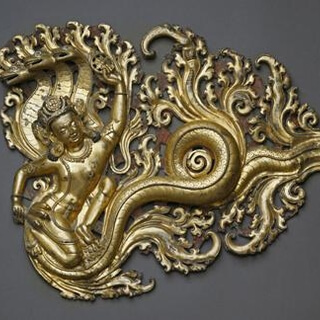
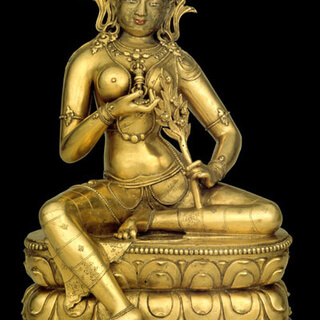
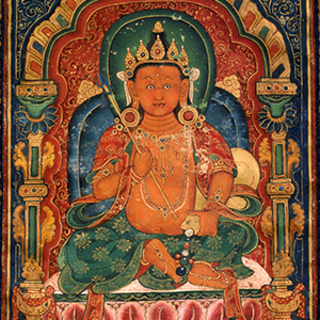
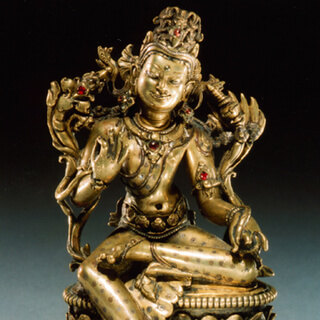
Including an image of a related artwork chosen from the Rubin Museum's permanent collection.
And now,
Please enjoy your practice.
Welcome to the Rubin Museum of Art and to our weekly mindfulness meditation practice.
Great to have you here on this August afternoon.
My name is Dawn Eshelman.
I see a lot of familiar faces out there,
But I'm just curious if anybody's here for the first time.
Welcome.
Great to have you.
Thanks for joining.
So we are talking this month about the juicy subject of fear.
Are you excited?
So fear is an emotion that gives us information about what's going on,
Right?
And it can be really helpful to keep us safe.
And then of course,
If it's,
If we're full or engaged in some ongoing obsessive fear,
That can be actually the cause of a lot of suffering for us.
And if that impacts our actions negatively than for others around us.
And we're having this conversation within this larger context of the year long conversation we're having all about power.
And we wanted to talk about fear because we thought it was important to also think about what it's,
What it can feel like to feel powerless.
And sometimes fear is a component of that.
So fear,
Anxiety,
Greed,
These are all things that can sometimes go together.
But fear is often something that we're feeling about the present moment,
Right?
Because anxiety can sometimes be more related to the future.
So it can also impact what type of power we are then seeking.
So we've been talking about the difference between having power with the sort of interdependent concept of power,
That we are powerful together.
And then also this idea of power as power over something that we can exert over others.
And I think fear often plays into that second type of power,
Power seeking,
Which as we've talked about and are coming to discover is not necessarily the type of power that we think is most beneficial,
Most helpful.
And of course,
Fear comes up often as many emotions do in our meditation,
Right?
We can really be able to see,
Oh,
Yeah,
There's some fear going on there,
Right?
And this is a process of being able to kind of befriend and have compassion for that fear.
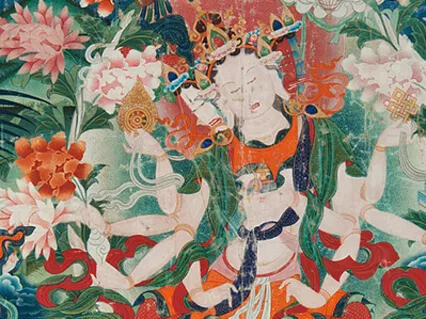
So we're looking today at Tara.
And Tara is,
I think if you've come regularly to mindfulness meditation,
Tara is a kind of a stock character in our cast of characters here and someone who we turn to from time to time and look at.
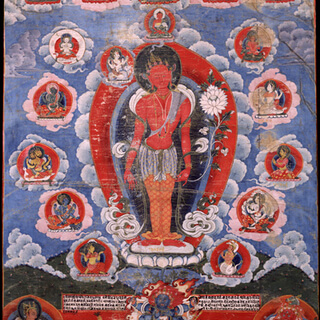
But I'm not sure we've ever looked at this particular tanka of Tara.
Tara is,
There's a lot going on here,
Right?
There's a lot.
And this tanka is from Tibet,
Late 19th century.
This is in our masterworks collection on the third floor.
And Tara is an embodiment of compassion.
This title of this artwork is Tara Protecting from the Eight Great Fears.
So Tara is this embodiment of compassion,
Known as a female Buddha and the great savioress of Tibetan Buddhism.
And she's known as a protector.
So she's often pictured.
You can see that she is central here with a kind of pinkish halo over her head.
And she is surrounded by these different vignettes that describe the Eight Great Fears.
And the Eight Great Fears are named as the following.
Elephants,
Thieves,
Water or drowning,
False imprisonment,
Ghosts,
Snakes,
Fires,
And lions.
So we can think about this metaphorically too for ourselves,
Right?
I'm just going to read the list one more time and you can think about what your elephants are.
Elephants,
Thieves,
Water or drowning,
False imprisonment,
Ghosts,
Snakes,
Fires,
And lions.
So there are three levels of meaning to these fears.
There's the outer,
Which is the real fear that's expressed and experienced in the world.
There's the inner,
Which really relates to our ego.
And then this is all according to Buddhism,
Of course,
This secret.
And this relates to tantric techniques and philosophies that engage this in tantric practice.
But I think,
You know,
I always can't help but pointing this out when we talk about Tara.
What is so interesting is that she's known as this figure that really helps you deal not necessarily with the dangers.
She's not removing the dangers.
She's removing the fear.
She's helping empower you to deal with them on your own without being overwhelmed by this idea of fear.
So we are talking about fear today with our wonderful teacher,
Kimberly Brown,
Who is back with us after last week,
Being here last week as well.
And she's a teacher who specializes in helping people cultivate compassion and loving kindness,
Kind of like Tara up here.
She has led classes,
Workshops and retreats since 2011,
Teaches at the Interdependence Project,
Mindful Astoria,
And the Shantideva Meditation Teacher,
And leads a weekly Monday night Metta group,
And has been a Buddhist student for many years working with individuals,
Couples and groups to learn to be more connected,
Kind and resilient.
Please welcome her back,
Kimberly Brown.
Hi,
Everyone.
Thank you,
Dawn.
So this amazing image with Tara protecting us from fear,
Right,
Is also Tara protecting us from our delusions.
Now this museum is filled with images of delusions being cut through,
Destroyed,
Protected from.
These delusions prevent us from seeing the truth,
The reality of our experience,
The reality of life,
Which is that we're interdependent and everything is impermanent and changing,
And that we have a great deal of suffering and struggle,
Each one of us,
Us and each other,
In part because we are caught up in our delusions.
So one manifestation of delusion can be misunderstanding danger,
Okay,
And that's where fear arises.
I wanted to mention that there really are two sort of types of fear,
And there is one that's useful.
That's the fear in which there truly is an immediate danger and external harm possibly,
And that our bodies react physiologically with a fight or flight or a freeze,
And it's a necessary mind state,
Right,
That we can use,
We can use in times of danger,
Right.
But today we're really talking about the type of fear that is a little bit less useful,
The type of fear that arises from delusions like greed and ignorance,
Pride and hatred,
Okay.
So before we talk about how we can work with fear that arises,
Another part of seeing clearly and having power,
Which is part of seeing clearly,
Is being able to see danger,
Right.
Sometimes we're fearful,
There is no danger there,
And now we're caught in a delusion.
Sometimes we're not fearful at all,
But there's danger right in front of us,
And then we're also caught in a delusion,
Okay.
That sort of ignorance of danger,
Well,
I know personally for myself and people close to me,
Sometimes someone you know has an addiction,
For example,
Someone you love,
Your mom,
Your dad,
Your daughter,
Your son,
Maybe you,
And you're really the only one blind to that danger,
And that's one type.
I think we see it globally,
Many nations are not really clear on the danger perhaps of the climate change,
Which seems like it's a real and present danger.
So that's an important thing to consider,
That there are just,
There are two ways that delusion might come up in terms of fear.
But today we'll be talking about more like fear arises,
But there's no danger present,
Okay.
That is often clinically called anxiety,
And the time in which we live right now is very anxious time.
Many,
Many of us struggle and suffer from a feeling that something disastrous and catastrophic might happen,
But it's not happening,
Right,
Not in the present.
One reason that we can get caught in fear is most of us have not been trained to work with our minds,
To understand what the difference between thoughts are,
How to use our body to become present.
If you,
One of the main treatments for anxiety is CBT,
Cognitive behavioral therapy,
Which takes a lot of techniques right out of Buddhism.
These anxious thoughts kind of create this cycle,
And it's very hard to get out of it,
It's hard to have balance,
Because it's a very negative cycle of bad things are happening,
Are going to happen,
What's going to happen to me,
And there's not enough room to allow new information about any beneficial things that are happening,
Anything that we actually have like appreciation.
So my experience with fear and anxiety,
It's really been the greatest struggle of my life,
And it is a very unfree and very powerless state.
So to be caught in fear is to almost have like a tunnel vision and not be able to put any new information in,
To make decisions out of fear are often not going to be beneficial to myself or others,
You know,
It's just sort of like freaking out.
And it's kind of the opposite of liberation,
Being ensnared in a delusion.
And what I mean is,
I don't know if this happens to you,
But I will sometimes wake up at 2 a.
M.
,
I'm in my bed,
Now I'm very lucky,
I live in a safe place,
I have a safe home,
I have a peaceful apartment,
And yet my mind is racing with worry and anxiety and fear.
It might be about a mistake I made at work,
It might be about something that's going on in the world,
It might be about possible illness or sickness someday that might possibly happen,
Okay?
And in that moment I am clearly in a delusion because what's happening in the present is there is nothing dangerous happening there.
So the way to start to work with fear and anxiety,
There are two ways,
Mindfulness and compassion.
So the mindfulness comes in to begin to work with these thoughts and your body,
Right?
The past and the future are just thoughts,
Okay?
The past and the future are just thoughts.
It doesn't mean the past didn't happen,
And certainly the future will,
But only the present is happening right now.
And wisdom and power,
Powerful people are very present,
They can see all the possibilities that are actually right here now,
All the dangers that are actually here right now,
And then appropriately respond.
Okay,
So using mindfulness with fear is to start to bring attention to your body because anxiety and fear are almost always associated with body feelings,
Right?
Maybe your stomach is tight or you're breathing shallowly,
Right?
So you can start to bring your attention there.
I'm a very nervous flyer,
So on an airplane,
You know,
Everything seems like it's going well,
And then I'll hear a noise,
Okay?
And so at that point,
I am holding on very tight to my seat and I'm looking at all the flight attendants,
And I'm actually looking outside the plane to see if I can find some problem,
Okay?
When this happens,
My mind is really racing because I'm so scared,
And I usually now take a breath and I start to notice my body.
I notice that my heart is racing,
That I'm clenching my jaw,
I can start to see thoughts,
And what I say to myself is,
Fear is arising,
Because that's what's happening.
It is not,
Oh,
There's danger out here.
There is fear arising,
Okay?
And that's very different,
And now I'm not tangled up in it.
And it's okay to have the fear.
So part of what compassion helps us with is it's okay to have the fear,
Right?
And that's part of,
That's why we see Tara here with her great compassion,
Allowing us to not get caught in it,
Not push it away,
And also sort of reclaim our own power.
Now one of the things that happens with great fear is that can turn into hatred,
And then that turns into violence.
Arguably,
Every war has started that way.
Hatred,
Fear,
Hatred into violence,
Okay?
So compassion helps us work with this fear,
And then it doesn't have to go into hatred,
Okay?
It can be much more useful,
Much more powerful,
And much more compassionate for ourselves and each other.
And we also,
If we are ever in moments of true danger,
You know,
The fire alarm goes off in this building.
Each one of us want to be able to be present for that so that we can act in a very rational way,
Right,
And help each other in that situation,
In that emergency.
They say in studies on disaster,
Something like the first five minutes are the most meaningful,
And if you're lucky,
There's someone who is able very quickly to see the best way to respond and to help everybody out.
So each one of us want to be that person,
And Tara can help us,
And mindfulness practice can help us do that.
So today we're going to practice some loving-kindness meditation.
This is often what I use when I'm at home two in the morning,
My mind is reeling.
I notice all fears arising,
And I practice loving-kindness.
So we're going to do it for ourselves.
We're going to do it for someone dear to us,
And we're also going to do it for each other.
So before we settle into our meditation seat,
Please take a moment to look around you.
Make eye contact with your neighbors and everyone in this room.
We have all different ages,
Different colors,
Different genders here tonight.
Okay,
Everyone,
So go ahead and close your eyes.
Now meditation can be done with your eyes open or closed,
So if you're more comfortable keeping your eyes open,
You may simply go ahead and gaze at the chair in front of you.
Go ahead and take a couple deep breaths.
Take your time.
Noticing your feet and your seat and your belly,
Feeling your shoulder blades and the back of your head.
Taking a moment to bring your attention to the center of your chest,
Your heart center.
And go ahead and allow your intention to arise.
And that simply means whatever brought you here to practice meditation together in this group.
You're in New York City.
I mean,
You could be doing anything you want,
And here you are practicing with your heart,
With your mind,
Developing your patience and your kindness with yourself and others.
So really appreciate that.
Just take a moment to say thank you to yourself.
You can say that audibly if you'd like.
Noticing your feet and your seat and your belly,
Feeling your shoulder blades,
The back of your head,
Allowing sound to enter your ears.
Bringing your attention to the center of your chest,
Your heart center,
And allowing the presence of yourself to arise.
Now,
You could have an image of yourself as if you're looking in the mirror right now.
You could imagine yourself as a child,
Or you could just have a sense of your felt presence.
And making this connection and offering these phrases,
May I be safe,
May I be free from fear,
May I be healthy,
May I be happy,
May I be safe,
May I be free from fear,
May I be healthy,
May I be happy,
May I be safe,
May I be free from fear,
May I be healthy,
May I be happy.
Continuing on your own as though you're giving yourself a gift silently.
Okay?
Boys,
Boys,
Boys.
You can hear is if you strayed from these phrases gently reconnecting coming back may I be safe may I be free from fear may I be happy may I be healthy may I be safe may I be free from fear may I be happy may I be healthy may I be happy may I be healthy moving your attention away from these phrases away from this sense of yourself noticing your feet bringing your attention to your seat your belly your shoulder blades relaxing the back of your head relaxing your forehead your cheeks and your jaw allowing sound to enter your ears and again bringing your attention to your heart center and allowing the presence of someone very dear to you someone with whom you have an easy loving relationship so maybe not your sister or brother but someone with whom you feel very loved and it doesn't have to be a human could be a pet and just allowing the presence of this being you could imagine them you could have just a sense of their presence or their smell and offering these phrases may you be safe may you be free from fear may you be happy may you be healthy may you be safe may you be free from fear may you be happy may you be healthy may you be safe may you be free from fear may you be happy may you be healthy and continuing on your own as so you're giving a gift to this dear one.
.
.
.
.
.
.
From fear may you be happy may you be healthy and once again bringing your attention away from this loved one feeling your feet noticing your seeds relaxing your shoulder blades relaxing your forehead your cheeks and your jaw allowing sound to enter your ears and bringing your attention to your heart center and from there imagining all of us in this room you might see us imagine in a visualization you might just have a sense of all of us here together and offering these phrases may we be safe may we be free from fear may we be happy may we be healthy may we be safe may we be free from fear may we be happy may we be healthy may we be safe may we be free from fear may we be happy may we be healthy.
Just taking a few moments to offer this silently to us.
May we be safe.
May we be free from fear.
May we be happy.
May we be healthy.
And letting go of this sense of the group and just noticing your feet and your seat and your belly.
Relaxing your forehead and your cheeks and your jaw.
Taking a moment to appreciate your efforts here.
And also to have a sense of gratitude and appreciation for everyone here in this room.
For all of us today.
Whenever you're ready you can move your attention back to our conversation.
Open your eyes.
Thank you all so much.
That concludes this week's practice.
If you would like to attend in person,
Please check out our website,
Rubinmuseum.
Org slash meditation to learn more.
If you're enjoying this podcast,
You can listen to more recordings from gatherings at the Rubin such as the conversation by black American Buddhist leaders on activism and community with Daraa Williams,
Kamila Majeed and Willie Mukay Smith.
You can find it at rubinmuseum.
Org slash media center.
Thank you for listening.
Have a mindful day.