Welcome to the mindfulness meditation podcast.
I'm your host,
Dawn Eshelman.
Every Wednesday at the Rubin Museum of Art in Chelsea,
We present a meditation session led by a prominent meditation teacher from the New York area.
This podcast is a recording of our weekly practice.
If you would like to join us in person,
Please visit our website at rubinmuseum.
Org slash meditation.
We are proud to be partnering with Sharon Salzberg and teachers from the New York Insight Meditation Center.
In the description for each episode,
You will find information about the theme for that week's session,
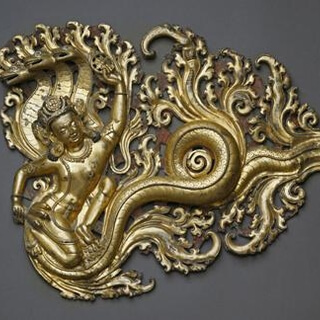
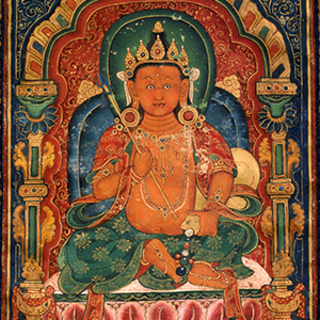
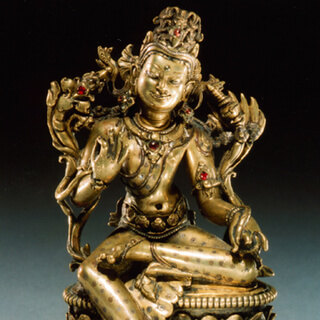
Including an image of a related artwork chosen from the Rubin Museum's permanent meditation collection.
And now,
Please enjoy your practice.
My name is Jeremy.
I am the coordinator of interpretation and engagement here at the Rubin Museum,
And I just want to say welcome,
Everybody.
Let's all have a good sit today.
So first thing,
If I could please remind you to please turn off your cell phones so that we have no disruptions during our meditation.
And this month,
We're dealing with the theme of hope.
And now in Western culture,
Hope is often encouraged in people,
Right?
You know,
We're always hoping for something better,
Something more.
But the thing about hope is that it often has a kind of flip side to it,
Right?
You know,
With hope comes a sense of fear that maybe we won't get what we hope for.
And with Buddhism in particular,
We begin to analyze this kind of concept of hope and see that hope is actually oftentimes our hopes are really rooted in desire,
Right?
And if you study Buddhism,
You know,
Desire is like the number one enemy,
Right?
That's what we're trying to get rid of.
That's goal number one.
So we know we really want to kind of analyze what we're hoped for and see again,
Where exactly is that hope coming from?
Is it really hoping,
You know,
For a better world?
Is it hoping to end suffering?
Or is it hoping that,
You know,
You're going to get that new car that you want or that new shirt or something like that,
Or you're going to get that new job that's going to fix everything.
But oftentimes,
When we get what we hope for,
We learn pretty quickly that,
You know,
It didn't actually solve our problems,
Right?
So that's what we're looking at this month here with mindfulness meditation,
We're exploring this concept of hope.
And again,
With Buddhism,
There's this idea that hopelessness could be the absence of desire,
Right?
But hoping to be hopelessness or hoping to not have desire is also a good thing too.
So we're kind of exploring these two sides of hope,
The positive and both the negative sides of hope.
And so to help us kind of illustrate this point of hope,
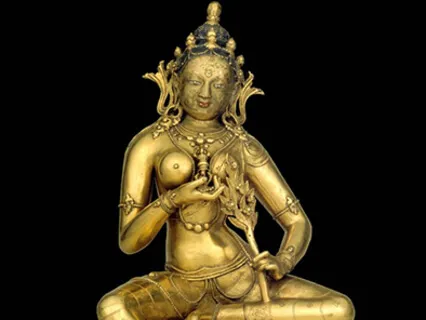
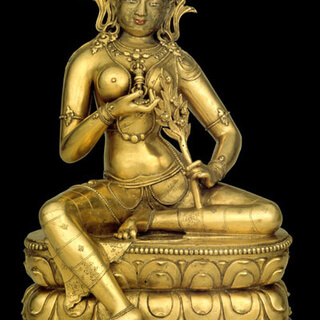
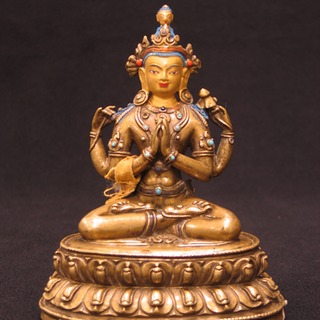
We have one of our most lovely sculptures in the museum.
It's a 17th century sculpture of the Buddhist goddess Marici,
And she is the goddess of the dawn,
Right?
And so no matter how dark things get for us,
You know,
We can always hope for the dawn,
Right?
And even though we're exploring both the positive and negative aspects of hope,
What I think of when I see Marici is I think of cycles,
Right?
I think of the sun rising and then the sun setting and the darkness coming,
And we all have these cycles in our lives.
And so Marici really teaches us to understand that when we live,
We're going to experience these cycles again and again and again.
And I often think of,
When I think of Buddhism and think about the concept of hope and the concept,
A big part of Buddhism is this teaching of impermanence,
Right?
And that any feeling that we have isn't going to last forever.
And so for me,
I know personally,
When I get into a dark place,
I just kind of remind myself that,
You know,
It's not going to last forever.
The dawn will come,
Right?
No matter what,
The dawn will come and the feeling will pass.
And that's what we're learning when we meditate too,
Right?
We're learning to recognize these feelings,
Acknowledge them,
And understand that they too will pass and what we find is really a sense of peace in our deep core.
So it is with my great pleasure to introduce our meditation teacher today,
Kimberly Brown,
Who I'm thrilled to introduce because she has personally been a great meditation teacher for me and I've worked with her a lot.
So again,
Really fantastic to introduce her.
She specializes in helping people cultivate compassion and loving kindness,
Has led classes and workshops and retreats since 2011.
She teaches at the Interdependence Project,
Mindful Astoria and Shanti Deva Meditation Center,
Leads the weekly Monday night metagroup at Interdependence Project,
And has been a Buddhist student for many years and works with individual couples and groups to learn to become more connected,
Kind,
And resilient.
So please welcome Kimberly Brown.
First off,
I want to thank Jeremy and I'm also just so happy to be with you today and for you to introduce me.
It's a joy in my life to study and practice the Dharma and the joy is mainly from the people with whom I practice and study.
Thanks.
So this is Marichi and this goddess or deity,
Bodhisattva,
I had never heard of this one before.
So I did a little reading about who she is and like Jeremy said,
She's meant to be the goddess of the dawn,
But she's also an emanation of Tara.
And as an emanation of Tara,
We know she's a Bodhisattva of compassion.
We can tell that because she's ready to move,
Right?
She's ready to spring into action when she recognizes suffering and as always compassion and wisdom are inseparable.
And we see that by she's holding what's called a Dorje between her breasts.
That is sort of the lightning quality of wisdom,
Right?
The cutting through the sharpness.
I read that travelers,
People traveling at night would often or perhaps still do pray to Marichi that they might be safe until the dawn,
Until the light.
So like Jeremy said,
Hope is not in Buddhism.
It's something to let go of.
You know,
Many of my teachers talk about going beyond hope and fear.
And the reason for that is,
You know,
Jeremy mentioned that it's created by desire and we would like to alleviate that.
But the reason we want to alleviate desire is not because it's bad or wrong.
We want to alleviate this desire,
This hope because it causes suffering.
Okay,
Dukkha in the first noble truth,
We all have this Dukkha,
This suffering,
This dissatisfaction.
And hope is one way to really create it.
It's one manifestation of it.
It's a sense of wanting things to be different than they are perhaps,
Hope.
It's also a sense that if it doesn't go that way,
It's going to be terrible,
Right?
That's why in the Buddhist teachings,
You'll always hear hope and fear because they come together.
Now impermanence,
Right,
Tells us that everything is changing in every single moment.
So it's not possible for us to sort of fix what we want to happen and make sure it happens in exactly that way,
Right?
I hope that on Tuesday that the weather is 72 degrees and that at 8.
15 I will walk out my door and the train will be waiting at 8.
22,
Et cetera,
Right?
We know that that's not possible,
It's impossible to control or fix.
So hope is really the desire for that to happen.
And fear is saying,
Well,
Oh no,
What if it's not 72 degrees on Tuesday?
What if it rains?
What's going to happen then,
Right?
The part of wisdom is understanding that the only actions we can take are right now,
Right?
I can't breathe in the past,
I can't breathe in the future.
I can breathe now.
I can plan to do things in the future,
But they may or may not go that way.
So wisdom is understanding that the past and the future are thoughts and right now is where reality is,
Okay?
And this is where we practice and where we really can affect ourselves and others.
So to relate that to hope and to fear is to recognize that we can live right now and we can let go of this sense that we're going to create a situation in the future the way we want it to be and if we don't,
It's going to be horrible,
Okay?
Instead we can cultivate our mindfulness here and now and see what's arising in the present moment.
We can also develop our intention,
Okay?
Our intention is to act with wisdom,
With compassion in any moment,
Right?
And this intention and this cultivating of mindfulness,
It enables us to act appropriately in whatever arises,
Okay?
And acting appropriately means being able to respond in a way that doesn't harm ourselves or others and being able to respond in a way that's beneficial to ourselves and others,
Okay?
And responding is with action,
Action being your speech and your behavior and your thoughts.
Part of that wisdom is knowing everything changes.
As Jeremy mentioned,
If you are in a difficult time in your life,
You might use your wisdom to be present with what's happening with yourself,
Knowing that everything changes,
Okay?
I have to tell you,
I've had an experience this week with hope and fear and have been really grasping and pushing away all week.
I have an older father,
He's 88,
And he last week was in a car accident and it was one of those scary phone calls.
We were very lucky.
He was uninjured and no one else was involved.
But the doctors and the policemen said he should not drive anymore and we know he shouldn't.
He's a little confused and struggling.
When he was told that,
He became very angry and determined that he will drive as long as he pleases.
So as of today,
He is still driving and,
You know,
The last week I wake up in the middle of the night and I think,
Oh my God,
What if he gets in another accident and he hurts himself?
What if he goes out there and he hurts somebody else,
Right?
And then I go to hope,
Which is,
Well,
I talked to the policemen and they're going to contact the DMV,
So they're going to revoke his license,
Right?
So that's where I've been going back and forth,
Right?
My practice has been to come to this moment and A,
Examine the feelings behind all of this desire for different outcomes,
Right,
For particular outcomes and fear of particular outcomes,
Right?
To notice that I'm concerned about my dad,
That I'm fearful there are things that I can't control,
Which are true,
Right?
And also to know that I can do my best and each of us can to plan and prepare for situations,
For things that we know are happening and at that point we have to let go of the outcome.
I'm forgetting that,
You know,
Tomorrow my father might say,
Okay,
Okay,
Everybody stop.
I'll try this Uber thing,
Right?
That is very possible.
But in the meantime,
You know,
I will do my best and other authorities to,
You know,
Make sure that he doesn't harm himself or others,
Okay?
And that's what we're all doing,
Practicing and learning to respond right now in the most appropriate way.
And part of this,
You know,
Sometimes you'll hear in the Buddhist tradition,
You'll,
Instead of having hope,
You can have faith,
Which is confidence and trust that no matter what arises you're going to meet it with compassion and wisdom.
You can know that by having confidence in your practice,
But you can also know it experientially.
Everyone here is an adult and throughout your life you've probably had many,
Many difficult situations.
And you have met those situations with wisdom and with compassion and you've learned from them so you can trust that you will do that again.
And then you needn't be frozen with fear or too caught up in hope.
So one way to cultivate the intention,
The intention of being compassionate and being wise is through loving kindness meditation,
Which is what we'll practice today.
What it helps us do if we practice it,
Then when we're in situations that are hard,
We'll be more likely to be inclined to have a compassionate heart in that moment.
In small ways,
Like,
Oh my God,
That jerk is blocking the door on the subway again,
Right?
And having a sense of,
Okay,
Well,
May he be safe.
He's struggling just like me,
Okay?
And in smaller ways,
When I feel so mad at my father who's not listening,
To be able to have some compassion for his struggle and wisdom for the best way to handle it.
This goes for even big things like climate change,
Right?
That's a very scary thing.
We know it's going to happen.
We don't know exactly how it's going to manifest.
So how can we plan for it without clinging and without terror,
Right?
Plan for it wisely and compassionately.
So we'll practice loving kindness meditation today for three beings.
The first will be someone dear to us,
Okay?
Pick someone with whom you have a pretty easy relationship,
Okay?
Someone in my situation,
Like it wouldn't be a sibling because I love them very much and there's a lot there.
So you might want to pick someone really easy,
Someone that there's no ambivalence,
Right?
Like a teacher,
An aunt,
An old close friend who really encourages you.
I have to admit,
Oftentimes I do my little cat,
Rigel.
Rigel is so clear about how much he loves me.
So it's very easy.
So first a loved one,
Then we'll do ourself.
And then we'll offer loving kindness practice to everyone here.
So before we begin our meditation,
If you're able,
Take a look around at the people next to you and behind you.
We have so many different faces here.
And take them,
Take us all in into your practice today.
So you can go ahead and close your eyes.
If you're feeling tired today,
You are welcome to keep your eyes open,
Gazing gently at the chair in front of you,
Just so you don't fall asleep.
So you can go ahead and just notice your body,
Noticing your feet,
Feeling your seat and your belly,
Noticing your shoulder blades and the back of your head,
Feeling your forehead and your cheeks and your jaw,
Allowing sound to enter your ears,
Noticing your feet,
Noticing your seat and your belly,
Relaxing your shoulder blades,
Relaxing the back of your head,
Relaxing your forehead and your cheeks and your jaw,
Allowing sound to enter your ears,
Resting your attention on your heart center,
The center of your chest.
And just take a moment to acknowledge your intention for being here today.
You know,
It's New York City and you really could do anything,
But you've chosen to come on a beautiful afternoon to practice meditation,
To learn to cultivate compassion and wisdom for yourself and others.
So really appreciate this intention,
This motivation.
Shanti Davis says,
That is like discovering a rare jewel.
You might want to thank yourself,
You can do that audibly or silently.
Bringing your attention to your feet,
Relaxing your seat,
Relaxing your belly,
Relaxing your shoulder blades,
Bringing your attention to your heart center and allowing the presence of this dear one to arise.
If you'd like,
You can imagine them and have a visualization of this person or being,
Or you can have a sense of their presence here with you,
Their smell.
And offering these phrases,
May your loving heart be open,
May you be free from fear,
May you be safe and healthy.
May your loving heart be open,
May you be free from fear,
May you be safe and healthy.
May your loving heart be open,
May you be free from fear,
May you be safe and healthy.
And continuing on your own silently as though you're giving a gift to this dear being.
Noticing where your mind is and if you've strayed from this dear one gently reconnecting.
May your loving heart be open.
May you be free from fear.
May you be safe and healthy.
May youreth be happy.
.
.
May your loving heart be open.
May you be free from fear.
May you be safe and healthy.
You can let go of this connection with this dear being.
Just noticing your feet.
Bringing your attention to your seat,
Your belly.
Relaxing your shoulder blades.
Relaxing the back of your head.
Gently feeling your forehead and your cheeks and your jaw.
Allowing sound to enter your ears.
And you can allow now in your mind,
In your heart,
A connection with yourself.
You could imagine yourself as though you're looking in the mirror or imagine yourself as a child.
Or you can just,
You know,
Have a sense of your presence.
And offering these phrases.
May my loving heart be open.
May I be free from fear.
May I be safe.
May I be healthy.
May my loving heart be open.
May I be free from fear.
May I be safe and healthy.
May my loving heart be open.
May I be free from fear.
May I be safe and healthy.
And continuing on your own silently as though you're giving yourself a gift.
Thank you.
.
.
.
.
.
.
.
May my loving heart be open.
May I be free from fear.
May I be safe and healthy.
And you can move your attention away from this sense of yourself and just feel your feet relaxing your belly,
Relaxing your shoulder blades.
Bringing your attention to your forehead and your cheeks and your jaw.
Allowing sound to enter your ears.
Feeling the air on your skin.
And taking a moment to connect with everyone here today.
You might visualize them.
You might just have a feeling of being with all of us right now.
And offering these phrases,
May our loving hearts be open.
May we be free from fear.
May we be safe and healthy.
May our loving hearts be open.
Giveaway.
May we be safe and healthy.
I'm just taking a minute or two to silently offer this to all of us,
Including yourself.
Okay.
Okay.
May our loving hearts be open.
May we be free from fear.
May we be safe and healthy.
Letting go of that connection and just bringing your attention to your feet,
Your seat,
Your belly.
Using your shoulder blades and the back of your head.
Allowing sound to enter your ears.
Taking a moment to appreciate your practice and your intention.
You might once again say thank you to yourself and thank you to everyone here.
In a moment I will invite the bell to ring.
Please stay still until you can no longer hear it,
At which time if you'd like you can join me in offering a bow to you for your great intention and your efforts here.
Thank you.
That concludes this week's practice.
If you'd like to attend in person,
Please check out our website,
Rubinmuseum.
Org slash meditation to learn more.
Sessions are free to Rubin Museum members,
Just one of the many benefits of membership.
Thank you for listening.
Have a mindful day.