Hi,
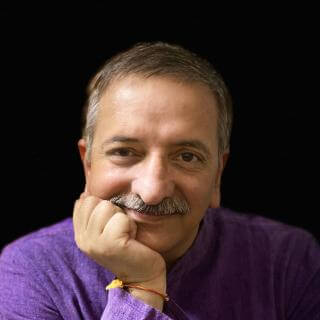
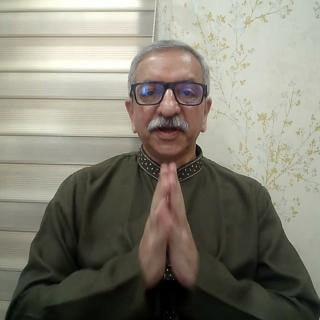
I am Rohit Bhardwaj.
In this track,
I will share with you a very interesting concept of Hindu philosophy.
If I were to ask you to think about your ancestors,
How far back could you go?
For many of us,
We might remember our grandparents or perhaps.
Great grandparents through an old faded photograph or we might be able to recognize someone from the generations prior to that.
But the reality is we are all the latest chapter in a massive unbroken human history.
We carry their DNA,
We carry their resilience and literally we are the building blocks of their lives.
We carry that in our lives,
In our bodies today.
In the Indian tradition,
Today marks the beginning of a profound 16-day period dedicated entirely to this realization.
It is called Pitru Paksha,
Which translates literally to the fortnight of the ancestors.
While it is a deeply rooted Hindu practice,
But the core philosophy behind it is universal and open for everyone to follow.
It is a dedicated time to pause our modern busy lives,
Look backward with gratitude and acknowledge the invisible shoulders we all stand upon.
So,
What exactly happens during these 2 weeks?
According to lunar calendar,
Pitru Paksha begins just as autumn season sets in.
It is viewed that this is a secret window when the veil between our world and the realm of the departed one grows very thin and it allows them to visit us in an invisible form.
How beautiful.
The central practice during this time is called tarpan,
Which means to satisfy or to please.
We offer water mixed with sesame seeds and have some special food offerings.
Usually we give this to fire.
That is the yag that we do in some places or we offer them to nature.
That is crows,
Birds,
Ants,
Dogs,
Cows.
Now to a modern Western observer,
Feeding a crow might look like a simple superstitious folk ritual,
But the symbolism is beautiful.
The crow in ancient philosophy represents a messenger,
A bridge between different realms of existence.
We called it Kaak Vishundi.
By feeding the living creatures around us in the name of the dead,
The tradition teaches a vital ecological and spiritual lesson.
We repay our debts to the past by nourishing the life that surrounds us in the present.
This brings us to another deeper psychological and conceptual relevance of Pitru Paksha.
Modern culture is heavily focused on the individual.
We praise self-made person,
We look forward,
We are obsessed with future,
We are obsessed with progress,
We are obsessed with what is next.
Through Paksha is the ultimate counter cultural pause button.
In Vedic philosophy,
Every human being is born with four fundamental debts.
In Sanskrit,
We call them Rins.
The first debt is towards the guest who comes to our house.
We call it Atithi Rin.
And the Atithi is equivalent to a God for us.
The second is Dev Rin.
It is our debt to all the celestial forces around us.
The third is Rishi Rin.
It is our debt to the teachers and philosophers and thinkers who gave us all the knowledge.
And the final is Pitru Rin.
Our debt to our ancestors.
The philosophy states that we cannot achieve true peace or internal freedom until we acknowledge these four debts and repay them by the acts which are prescribed.
Pitru Paksha is not about mourning or grief.
It is about acknowledgement.
It is a psychological alignment.
It is admitting that we are not self-made.
We are the result of thousands of people who loved,
Struggled,
Survived and passed on the torch of life down to us.
As we step into this fortnight,
The invitation of Pitru Paksha extends to everyone,
Regardless of your cultural or religious background.
This paksh and the practices can be adopted by anyone.
And to adopt these practices,
Only three things are required for next two weeks.
The first is practice gratitude.
Take a moment to silently thank all those who came before us.
Secondly,
Heal the lineage.
Please forgive the generations before us for their flaws.
Recognize that they too were human beings and they did their best just like you are doing your best.
They did their best with the resources available to them and awareness generated in them.
You are also doing the same thing.
Forgive them for what you think was their flaw.
And finally,
Be mindful of the future because realize this one day you and I will also be ancestors,
We will also be grandparents,
The choices that we make today will become the foundation of the generations of tomorrow.
Namaskar.