Hello sleepy listeners and welcome back,
I'm your host Joanne,
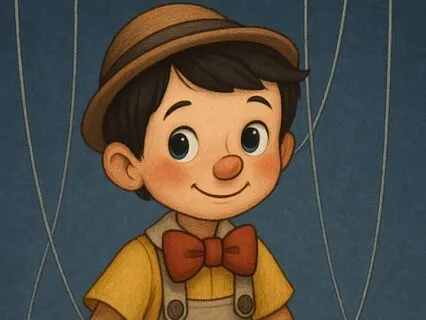
And tonight we continue our journey with the adventures of Pinocchio,
Picking up right where we left off.
In the last episode we began Pinocchio's tale,
His first steps as a mischievous little puppet full of curiosity and trouble.
Now the adventure deepens as we follow him through new twists and turns on his path to becoming a real boy.
But before we begin,
Let's take a few moments to settle in and fully relax.
Find a comfortable position,
Allowing your body to rest just as it wants to.
Take a slow deep breath in,
And as you exhale,
Feel your body beginning to soften.
Let's start by releasing any tension in your forehead,
Smoothing out the space between your eyebrows,
Allowing your eyes to gently relax.
Your jaw loosens,
Your shoulders ease back just a little more,
And with each breath,
Your body feels heavier and heavier,
And more and more at ease.
Feel your arms resting comfortably,
Your hands open and relaxed,
Your chest rises and falls in an easy way,
Peaceful rhythm.
Your belly softens,
Your back melts down,
Your legs grow heavier and heavier,
Sinking deeper and deeper into rest.
And as you continue to breathe slowly and deeply,
Each breath out,
Imagine any lingering thoughts or worries drifting away,
Like tiny leaves floating down a quiet stream.
There is nothing you need to do right now,
No place to be,
Just here,
Resting,
Listening,
Allowing sleep to gently find you.
And so,
My friend,
When you're ready,
Let's begin.
Chapter 19.
Pinocchio is robbed of his gold pieces and,
In punishment,
Is sentenced to four months in prison.
If the marionette had been told to wait a day instead of twenty-five minutes,
The time could not have seemed longer to him.
He walked impatiently to and fro,
And finally turned his nose toward the Field of Wonders.
As he walked with hurried steps,
His heartbeat,
With an excited tick-tack-tick-tack,
Just as if it were a wall clock,
And his busy brain kept thinking,
What if,
Instead of a thousand,
I should find two thousand?
Or if,
Instead of two thousand,
I should find five thousand,
Or one hundred thousand?
I'll build myself a beautiful palace,
With a thousand stables,
Filled with a thousand wooden horses to play with,
A cellar overflowing with lemonade and ice cream soda,
And a library of candies and fruits,
Cakes and cookies.
Thus amusing himself with fancies,
He came to the field.
There he stopped to see if,
By any chance,
A vine filled with gold coins was in sight,
But he saw nothing.
He took a few steps forward,
And still nothing.
He stepped into the field.
He went up to the place where he had dug the hole and buried the gold pieces.
Again nothing.
Pinocchio became very thoughtful,
And,
Forgetting his good manners altogether,
He pulled a hand out of his pocket and gave his head a thorough shaking.
As he did so,
He heard a hearty burst of laughter close to his head.
He turned sharply,
And there,
Just above him on the branch of a tree,
Sat a large parrot,
Busily preening his feathers.
What are you laughing at?
Pinocchio asked peevishly.
I'm laughing because,
In preening my feathers,
I tickled myself under the wings.
The marionette did not answer.
He walked to the brook,
Filled his shoe with water,
And,
Once more,
Sprinkled the ground which covered the gold pieces.
Another burst of laughter,
Even more impertinent than the first,
Was heard in the quiet field.
Well,
Cried the marionette angrily this time,
May I know,
Mr.
Parrot,
What amuses you so?
I'm laughing at those simpletons,
Who believe everything they hear,
And who allow themselves to be caught so easily in the traps set for them.
Do you perhaps mean me?
I certainly do mean you,
Poor Pinocchio.
You are such a little silly as to believe that gold can be sown in a field,
Just like beans or squash.
I,
Too,
Believed that once,
And today I am very sorry for it.
Today I have reached the conclusion that,
In order to come by money honestly,
One must work and know how to earn it with a hand or brain.
I don't know what you're talking about,
Said the marionette,
Who was beginning to tremble with fear.
Too bad,
I'll explain myself better,
Said the parrot.
While you were away in the city,
The fox and the cat returned here in a great hurry.
They took the four gold pieces which you have buried,
And ran away as fast as the wind.
If you can catch them,
You're a brave one.
Pinocchio's mouth opened wide.
He would not believe the parrot's words,
And began to dig away furiously at the earth.
He dug and he dug till the hole was as big as himself,
But no money was there.
Every penny was gone.
In desperation,
He ran to the city and went straight to the courthouse to report the robbery to the magistrate.
The judge was a monkey,
A large gorilla vulnerable with age.
A flowing white beard covered his chest,
And he wore gold-rimmed spectacles from which the glasses had dropped out.
The reason for wearing these,
He said,
Was that his eyes had been weakened by the work of many years.
Pinocchio,
Standing before him,
Told his pitiful tale word by word.
He gave the names and the descriptions of the robbers and begged for justice.
The judge listened to him with great patience.
A kind look shone in his eyes.
He became very much interested in the story.
He felt moved.
He almost wept.
When the marionette had no more to say,
The judge put out his hand and rang a bell.
At the sound,
Two large mastiffs appeared,
Dressed in carabineers' uniforms.
Then the magistrate,
Pointing to Pinocchio,
Said in a very solemn voice,
This poor simpleton has been robbed of four gold pieces.
Take him,
Therefore,
And throw him into prison.
The marionette,
On hearing this sentence passed upon him,
Was thoroughly stunned.
He tried to protest,
But the two officers clapped their paws on his mouth and hustled him away to jail.
There he had to remain for four long,
Weary months,
And,
If it had not been for a very lucky chance,
He probably would have had to stay there longer,
For,
My dear children,
You must know that it happened just then that the young emperor,
Who ruled over the city of Simple Simons,
Had gained a great victory over his enemy,
And in celebration thereof,
He had ordered illuminations,
Fireworks,
Shows of all kinds,
And,
Best of all,
The opening of all prison doors.
If the others go,
I go too,
Said Pinocchio to the jailer.
Not you,
Answered the jailer,
You are one of those.
I beg your pardon,
Interrupted Pinocchio,
I too am a thief.
In that case you are also free,
Said the jailer,
And,
Taking off his cap,
He bowed low and opened the door of the prison,
And Pinocchio ran out and away,
With never a look backward.
Chapter 20 Freed from prison,
Pinocchio sets out to return to the fairy,
But on the way,
He meets a serpent and later is caught in a trap.
Fancy the happiness of Pinocchio on finding himself free!
Without saying yes or no,
He fled from the city and set out on the road that was to take him back to the house of the lovely fairy.
It had rained for many days and the road was so muddy that at times Pinocchio sank down almost to his knees,
But he kept on bravely.
Tormented by the wish to see his father and his fairy sister,
He raced like a greyhound.
As he ran,
He was splashed with mud even up to his cap.
How unhappy I've been,
He said to himself,
And yet I deserve everything,
For I am certainly very stubborn and stupid.
I will always have my own way,
I won't listen to those who love me and who have more brains than I,
But from now on I'll be different and I'll try to become a most obedient boy.
I have found out,
Beyond any doubt whatever,
That disobedient boys are certainly far from happy,
And that,
In the long run,
They always lose out.
I wonder if father is waiting for me,
Will I find him at the fairy's house?
It is so long,
Poor man,
Since I have seen him,
And I do want his love and his kisses,
And will the fairy ever forgive me for all I have done?
She who has been so good to me and to whom I owe my life,
Can there be a worse or more heartless boy than I am anywhere?
As he spoke,
He stopped suddenly,
Frozen with terror.
What was the matter?
An immense serpent lay stretched across the road,
A serpent with a bright green skin,
Fiery eyes which glowed and burned,
And a pointed tail that smoked like a chimney.
How frightened was poor Pinocchio!
He ran back wildly for half a mile,
And at last settled himself atop a heap of stones to wait for the serpent to go on his way and leave the road clear for him.
He waited an hour,
Two hours,
Three hours,
But the serpent was always there,
And even from afar one could see the flash of his red eyes in the column of smoke which rose from his long pointed tail.
Pinocchio,
Trying to feel very brave,
Walked straight up to him and said in a sweet soothing voice,
I beg your pardon,
Mr.
Serpent,
Would you be so kind as to step aside to let me pass?
He might as well have talked to a wall.
The serpent never moved.
Once more,
In the same sweet voice,
He spoke,
You must know,
Mr.
Serpent,
That I am going home where my father is waiting for me.
It is so long since I have seen him.
Would you mind very much if I passed?
He waited for some sign of an answer to his questions,
But the answer did not come.
On the contrary,
The green serpent,
Who had seemed until then wide awake and full of life,
Became suddenly very quiet and still.
His eyes closed,
And his tail stopped smoking.
Is he dead?
I wonder,
Said Pinocchio,
Rubbing his hands together happily.
Without a moment's hesitation,
He started to step over him.
But he had just raised one leg when the serpent shot up like a spring and the marionette fell head over heels backward.
He fell so awkwardly that his head stuck in the mud,
And there he stood with his legs straight up in the air.
At the sight of the marionette kicking and squirming like a young whirlwind,
The serpent laughed so heartily and so long that at last he burst an artery and died on the spot.
Pinocchio freed himself from his awkward position and once more began to run in order to reach the fairy's house before dark.
As he went,
The pangs of hunger grew so strong that,
Unable to withstand them,
He jumped into a field to pick a few grapes that tempted him.
Woe to him!
No sooner had he reached the grapevine than crack went his legs.
The poor marionette was caught in a trap,
Set there by a farmer for some weasels which came every night to steal his chickens.
Chapter 21 Pinocchio is Caught by a Farmer Who Uses Him as a Watchdog for His Chicken Coop Pinocchio,
As you may well imagine,
Began to scream and weep and beg,
But all was of no use,
For no houses were to be seen and not a soul passed by on the road.
Night came on.
A little because of the sharp pain in his legs,
A little because of fright at finding himself alone in the darkness of the field,
The marionette was about to faint when he saw a tiny glowworm flickering by.
He called to her and said,
Dear little glowworm,
Will you set me free?
Poor little fellow,
Replied the glowworm,
Stopping to look at him with pity.
How came you to be caught in this trap?
I stepped into this lonely field to take a few grapes and.
.
.
Are the grapes yours?
No.
Who has taught you to take things that do not belong to you?
I was hungry.
Hunger,
My boy,
Is no reason for taking something which belongs to another.
It's true,
It's true,
Cried Pinocchio in tears.
I won't do it again.
Just then,
The conversation was interrupted by approaching footsteps.
It was the owner of the field,
Who was coming on tiptoes to see if by chance he had caught the weasels which had been eating his chickens.
Great was his surprise when,
On holding up his lantern,
He saw that,
Instead of a weasel,
He had caught a boy.
Ah,
You little thief,
Said the farmer in an angry voice.
So you're the one who steals my chickens.
Not I.
No.
No,
Cried Pinocchio,
Sobbing bitterly.
I came here only to take a very few grapes.
He who steal grapes may very easily steal chickens also.
Take my word for it.
I'll give you a lesson that you'll remember for a long while.
He opened the trap,
Grabbed the marionette by the collar,
And carried him to the house as if he were a puppy.
When he reached the yard in front of the house,
He flung him to the ground,
Put a foot on his neck,
And said to him roughly,
It is late now,
And it's time for bed.
Tomorrow we'll settle matters.
In the meantime,
Since my watchdog died today,
You may take his place and guard my henhouse.
No sooner said than done,
He slipped a dog collar around Pinocchio's neck and tightened it so that it would not come off.
A long iron chain was tied to the collar.
The other end of the chain was nailed to the wall.
If tonight it should happen to rain,
Said the farmer,
You can sleep in that little dog house nearby,
Where you'll find plenty of straw for a soft bed.
It had been Melampo's bed for three years,
And it will be good enough for you.
And if,
By any chance,
Any thieves should come,
Be sure to bark.
After this last warning,
The farmer went into the house and closed the door and barred it.
Poor Pinocchio,
Huddled close to the dog house,
More dead than alive from cold,
Hunger,
And fright.
Now and again he pulled and tugged at the collar,
Which nearly choked him,
And cried out in a weak voice,
I deserve it.
Yes,
I deserve it.
I have been nothing but a truant and a vagabond.
I have never obeyed anyone,
And I have always done as I pleased.
If I were only like so many others,
And had studied and worked and stayed with my poor old father,
I should not find myself here now,
In this field and in the darkness,
Taking the place of a farmer's watchdog.
Oh,
If I could only start over again.
But what is done can't be undone,
And I must be patient.
After this little sermon to himself,
Which came from the very depths of his heart,
Pinocchio went into the dog house and fell asleep.
Chapter 22 Pinocchio discovers the thieves,
And,
As a reward for faithfulness,
He regains his liberty.
Even though a boy may be very unhappy,
He very seldom loses sleep over his worries.
The marionette,
Being no exception to this rule,
Slept on peacefully for a few hours until well along toward midnight when he was awakened by strange whisperings and stealthy sounds coming from the yard.
He stuck his nose out of the dog house and saw four slender,
Hairy animals.
They were weasels,
Small animals very fond of both eggs and chickens.
One of them left her companions and,
Going to the door of the dog house,
Said in a sweet voice,
Good evening,
Malampo.
My name is not Malampo,
Answered Pinocchio.
Who are you,
Then?
I'm Pinocchio.
What are you doing here?
I'm the watchdog.
But where is Malampo?
Where is the old dog who used to live in this house?
He died this morning.
Died?
Poor beast.
He was so good.
Still,
Judging by your face,
I think you too are a good natured dog.
I beg your pardon?
I'm not a dog.
What are you,
Then?
I'm a marionette.
Are you taking the place of the watchdog?
I'm sorry to say that I am.
I'm being punished.
Well,
I shall make the same terms with you that we had with the dead Malampo.
I am sure you will be glad to hear them.
And what are the terms?
This is our plan.
We'll come once in a while,
As in the past,
To pay a visit to the hen house,
And we'll take away eight chickens.
Of these,
Seven are for us and one for you,
Provided,
Of course,
That you will make believe you are sleeping and will not bark for the farmer.
Did Malampo really do that?
Asked Pinocchio.
Indeed he did.
And because of that,
We were the best of friends.
Sleep away peacefully,
And remember that before we go,
We shall leave you a nice fat chicken,
All ready for your breakfast in the morning.
Is that understood?
Even too well,
Answered Pinocchio.
And shaking his head in a threatening manner,
He seemed to say,
We'll talk this over in a few minutes,
My friends.
As soon as the four weasels had talked things over,
They went straight to the chicken coop which stood close to the dog house.
Digging busily with teeth and claws,
They opened the little door and slipped in.
But they were no sooner in than they heard the door close with a sharp bang.
The one who had done the trick was Pinocchio,
Who,
Not satisfied with that,
Dragged a heavy stone in front of it.
That done,
He started to bark.
And he barked as if he were a real watchdog.
Bow wow wow,
Bow wow.
The farmer heard the loud barks and jumped out of bed.
Taking his gun,
He leaped to the window and shouted,
What's the matter?
The thieves are here,
Answered Pinocchio.
Where are they?
In the chicken coop.
I'll come down in a second.
And,
In fact,
He was down in the yard in a twinkling and running toward the chicken coop.
He opened the door,
Pulled out the weasels one by one and,
After tying them in a bag,
Said to them in a happy voice,
You're in my hands at last.
I could punish you now,
But I'll wait.
In the morning,
You may come with me to the inn,
And there you will make a fine dinner for some hungry mortal.
It is really too great an honor for you,
One you do not deserve.
But,
As you see,
I am really a very kind and generous man,
And I am going to do this for you.
Then he went up to Pinocchio and began to pet and caress him.
How did you ever find them out so quickly?
And to think that Malambo,
My faithful Malambo,
Never saw them in all these years.
The marionette could have told,
Then and there,
All that he knew about the shameful contract between the dog and the weasels.
But thinking of the dead dog,
He said to himself,
Malambo is dead.
What is the use of accusing him?
The dead are gone,
And they cannot defend themselves.
The best thing to do is to leave them in peace.
Were you awake or asleep when they came?
Continued the farmer.
I was asleep,
Answered Pinocchio,
But they awakened me with their whisperings.
One of them even came to the door of the doghouse and said to me,
If you promise not to bark,
We will make you a present of one of the chickens for your breakfast.
Did you hear that?
They have the audacity to make such a proposition as that to me.
For you must know that,
Though I am a very wicked marionette full of faults,
Still I never have been nor ever shall be bribed.
Fine boy,
Cried the farmer,
Slapping him on the shoulder in a friendly way.
You ought to be proud of yourself,
And to show you what I think of you,
You are free from this instant.
And he slipped the dog collar from his neck.
Chapter 23 Pinocchio weeps upon learning that the lovely maiden with azure hair is dead.
He meets a pigeon who carries him to the seashore.
He throws himself into the sea to go to the aid of his father.
As soon as Pinocchio no longer felt the shameful weight of the dog collar around his neck,
He started to run across the fields and meadows,
And never stopped till he came to the main road that was to take him to the fairy's house.
When he reached it,
He looked into the valley far below him,
And there he saw the wood where,
Unluckily,
He had met the fox and the cat,
And the tall oak tree where he had been hanged.
But though he searched far and near,
He could not see the house where the fairy lived.
He became terribly frightened,
And,
Running as fast as he could,
He finally came to the spot where it had once stood.
The little house was no longer there.
In its place lay a small marble slab which bore this sad inscription,
Here lies the lovely fairy with azure hair,
Who died of grief when abandoned by her little brother,
Pinocchio.
The poor marionette was heartbroken at reading these words.
He fell to the ground and,
Covering the cold marble with kisses,
Burst into bitter tears.
He cried all night,
And dawn found him still there.
Though his tears had dried and only hard,
Dry sobs shook his wooden frame,
But these were so loud that they could be heard by the faraway hills.
As he sobbed he said to himself,
Oh,
My fairy,
My dear fairy,
Why did you die?
Why did I not die,
Who am so bad instead of you,
Who are so good?
And my father,
Where can he be?
Please,
Dear fairy,
Tell me where he is,
And I shall never,
Never leave him again.
You are not really dead,
Are you?
If you love me,
You will come back,
Alive as before.
Don't you feel sorry for me?
I'm so lonely.
If the two assassins come,
They'll hang me again from the giant oak tree,
And I will really die this time.
What shall I do alone in the world,
Now that you are dead and my father is lost?
Where shall I eat?
Where shall I sleep?
Who will make my new clothes?
Oh,
I want to die.
Yes,
I want to die.
Poor Pinocchio.
He even tried to tear his hair,
But as it was only painted on his wooden head,
He could not even pull it.
Just then,
A large pigeon flew far above him.
Seeing the marionette,
He cried to him,
Tell me,
Little boy,
What are you doing there?
Can't you see?
I'm crying,
Cried Pinocchio,
Lifting his head toward the voice and rubbing his eyes with his sleeve.
Tell me,
Asked the pigeon,
Do you by chance know of a marionette,
Pinocchio by name?
Pinocchio?
Did you say Pinocchio,
Replied the marionette,
Jumping to his feet?
Why,
I'm Pinocchio.
At this answer,
The pigeon flew swiftly down to the earth.
He was much larger than a turkey.
Then you know Geppetto also?
Do I know him?
He's my father,
My poor dear father.
Has he,
Perhaps,
Spoken to you of me?
Will you take me to him?
Is he still alive?
Answer me,
Please,
Is he still alive?
I left him three days ago on the shore of a large sea.
What was he doing?
He was building a little boat with which to cross the ocean.
For the last four months,
That poor man has been wandering around Europe looking for you.
Not having found you yet,
He has made up his mind to look for you in the new world,
Far across the ocean.
How far is it from here to the shore?
Asked Pinocchio anxiously.
More than fifty miles.
Fifty miles?
Oh,
Dear pigeon,
How I wish I had your wings.
If you want to come,
I'll take you with me.
How?
Astride my back.
Are you very heavy?
Heavy?
Not at all.
I'm only a feather.
Very well.
Saying nothing more,
Pinocchio jumped on the pigeon's back and,
As he settled himself,
He cried out gaily,
Gallop on,
Gallop on,
My pretty steed.
I'm in a great hurry.
The pigeon flew away,
And in a few minutes he had reached the clouds.
The marionette looked to see what was below them.
His head swam,
And he was so frightened that he clutched wildly at the pigeon's neck to keep himself from falling.
They flew all day.
Toward the evening,
The pigeon said,
I'm very thirsty,
And I'm very hungry,
Said Pinocchio.
Let us stop a few minutes at that pigeon coop down there.
Then we can go on and be at the seashore in the morning.
They went into the empty coop,
And there they found nothing but a bowl of water and a small basket filled with chickpeas.
The marionette had always hated chickpeas.
According to him,
They had always made him sick,
But that night he ate them with a relish.
As he finished them,
He turned to the pigeon and said,
I never should have thought that chickpeas could be so good.
You must remember,
My boy,
Answered the pigeon,
That hunger is the best sauce.
After resting a few minutes longer,
They set out again.
The next morning,
They were at the seashore.
Pinocchio jumped off the pigeon's back,
And the pigeon,
Not wanting any thanks for a kind deed,
Flew away swiftly and disappeared.
The shore was full of people,
Shrieking and tearing their hair as they looked toward the sea.
What has happened?
Asked Pinocchio of a little old woman.
A poor old father lost his only son some time ago,
And today he built a tiny boat for himself in order to go in search of him across the ocean.
The water is very rough,
And we're afraid he will be drowned.
Where is the little boat?
There,
Straight down there,
Answered the little old woman,
Pointing to a tiny shadow,
No bigger than a nutshell,
Floating on the sea.
Pinocchio looked closely for a few minutes,
And then gave a sharp cry.
It's my father!
It's my father!
Meanwhile,
The little boat,
Tossed about by the angry waters,
Appeared and disappeared in the waves,
And Pinocchio,
Standing on a high rock,
Tired out with searching,
Waved to him with hand and cap,
And even with his nose.
It looked as if Geppetto,
Though far away from the shore,
Recognized his son,
For he took off his cap and waved also.
He seemed to be trying to make everyone understand that he would come back if he were able,
But the sea was so heavy that he could do nothing with his oars.
Suddenly,
A huge wave came,
And the boat disappeared.
They waited and waited for it,
But it was gone.
Poor man,
Said the fisherfolk on the shore,
Whispering a prayer as they turned to go home.
Just then,
A desperate cry was heard.
Turning around,
The fisherfolk saw Pinocchio dive into the sea and heard him cry out,
I'll save him!
I'll save my father!
The marionette,
Being made of wood,
Floated easily along and swam like a fish in the rough water.
Now and again he disappeared,
Only to reappear once more.
In a twinkling,
He was far away from land.
At last,
He was completely lost to view.
Poor boy,
Cried the fisherfolk on the shore,
And again they mumbled a few prayers as they returned home.
Chapter 24 Pinocchio Reaches the Island of the Busy Bees and Finds the Fairy Once More Pinocchio,
Spurred on by the hope of finding his father and of being in time to save him,
Swam all night long.
And what a horrible night it was.
It poured rain,
It hailed,
It thundered,
And the lightning was so bright that it turned the night into day.
At dawn,
He saw not far away from him,
A long stretch of sand.
It was an island in the middle of the sea.
Pinocchio tried his best to get there,
But he couldn't.
The waves played with him and tossed him about as if he were a twig or a bit of straw.
At last,
And luckily for him,
A tremendous wave tossed him to the very spot where he wanted to be.
The blow from the wave was so strong that,
As he fell to the ground,
His joints cracked and almost broke.
But,
Nothing daunted,
He jumped to his feet and cried,
Once more I have escaped with my life.
Little by little the sky cleared,
The sun came out in full splendor,
And the sea became as calm as a lake.
Then the marionette took off his clothes and laid them on the sand to dry.
He looked over the waters to see whether he might catch sight of a boat with a little man in it.
He searched and he searched,
But he saw nothing except sea and sky and far away a few sails,
So small that they might have been birds.
If only I knew the name of this island,
He said to himself.
If I even knew what kind of people I would find here.
But whom shall I ask?
There is no one here.
The idea of finding himself in so lonesome a spot made him so sad that he was about to cry.
But just then he saw a big fish swimming nearby with his head far out of the water.
Not knowing what to call him,
The marionette said to him,
Hey there,
Mr.
Fish,
May I have a word with you?
Even two if you want,
Answered the fish,
Who happened to be a very polite dolphin.
Will you please tell me if,
On this island,
There are places where one might eat without necessarily being eaten?
Surely there are,
Answered the dolphin.
In fact,
You'll find one not far from this spot.
And how shall I get there?
Take that path on your left and follow your nose.
You can't go wrong.
Tell me another thing.
You,
Who travel day and night through the sea,
Did you not perhaps meet a little boat with my father in it?
And who is your father?
He is the best father in the world,
Even as I am the worst son that can be found.
In the storm of last night,
Answered the dolphin,
The little boat must have been swamped.
And my father?
By this time he must have been swallowed by the terrible shark,
Which for the last few days has been bringing terror to these waters.
Is this shark very big?
Answered Pinocchio,
Who was beginning to tremble with fright.
Is he big?
Replied the dolphin.
Just to give you an idea of his size,
Let me tell you that he is larger than a five-story building and that he has a mouth so big and so deep that a whole train and engine could easily get into it.
Mother,
Mine!
Cried the marionette,
Scared to death.
And dressing himself as fast as he could,
He turned to the dolphin and said,
Farewell,
Mr.
Fish.
Pardon the bother,
And many thanks for your kindness.
This said,
He took the path at so swift a gait that he seemed to fly,
And at every small sound he heard,
He turned in fear to see whether the terrible shark,
Five stories high and with the train in his mouth,
Was following him.
After walking a half hour,
He came to a small country called the Land of the Bees.
The streets were filled with people running to and fro about their tasks.
Everyone worked.
Everyone had something to do.
Even if one were to search with a lantern,
Not one idle man or one trant could have been found.
I understand,
Said Pinocchio at once wearily.
This is no place for me.
I was not born for work.
But in the meantime,
He began to feel hungry,
For it was twenty-four hours since he had eaten.
What was to be done?
There were only two means left to him in order to get a bite to eat.
He had either to work or to beg.
He was ashamed to beg,
Because his father had always preached to him that begging should be done only by the sick or the old.
He had said that the real poor in this world,
Deserving of our pity and help,
Were only those who,
Either through age or sickness,
Had lost the means of earning their bread with their own hands.
All others should work,
And if they didn't and went hungry,
So much the worse for them.
Just then,
A man passed by,
Worn out and wet with perspiration,
Pulling with difficulty two heavy carts filled with coal.
Pinocchio looked at him and,
Judging him by his looks to be a kind man,
Said to him with eyes downcast in shame,
Will you be so good as to give me a penny,
For I am faint with hunger?
Not only one penny,
Answered the coal man.
I'll give you four if you will help me pull these two wagons.
I'm surprised,
Answered the marionette,
Very much offended.
I wish you to know that I have never been a donkey,
Nor have I ever pulled a wagon.
So much the better for you,
Answered the coal man.
Then,
My boy,
If you are really faint with hunger,
Eat two slices of your pride,
And I hope they don't give you indigestion.
A few minutes after,
A bricklayer passed by,
Carrying a pail full of plaster on his shoulder.
Good man,
Will you be kind enough to give a penny to a poor boy who is yawning from hunger?
Gladly,
Answered the bricklayer.
Come with me and carry some plaster,
And instead of one penny,
I'll give you five.
But the plaster is heavy,
Answered Pinocchio,
And the work too hard for me.
If the work is too hard for you,
My boy,
Enjoy your yawns,
And may they bring you luck.
In less than a half an hour,
At least twenty people passed,
And Pinocchio begged of each one,
But they all answered.
Aren't you ashamed?
Instead of being a beggar in the streets,
Why don't you look for work and earn your own bread?
Finally,
A little woman went by carrying two water jugs.
Good woman,
Will you allow me to have a drink from one of your jugs?
Asked Pinocchio,
Who was burning up with thirst.
With pleasure,
My boy,
She answered,
Setting the two jugs on the ground before him.
When Pinocchio had had his fill,
He grumbled as he wiped his mouth.
My thirst is gone,
If I could only as easily get rid of my hunger.
On hearing these words,
The good little woman immediately said,
If you help me to carry these jugs home,
I'll give you a slice of bread.
Pinocchio looked at the jug and said neither yes nor no.
And with the bread,
I'll give you a nice dish of cauliflower with white sauce on it.
Pinocchio gave the jug another look and said neither yes or no.
And after the cauliflower,
Some cake and jam.
At this last bribery,
Pinocchio could no longer resist and said firmly,
Very well,
I'll take the jug home for you.
The jug was very heavy,
And the marionette not being strong enough to carry it with his hands,
Had to put it on his head.
When they arrived home,
The little woman made Pinocchio sit down at a small table and placed before him the bread,
The cauliflower and the cake.
Pinocchio did not eat,
He devoured.
His stomach seemed a bottomless pit.
His hunger finally appeased,
He raised his head to thank the kind woman.
But he had not looked at her long when he gave a cry of surprise and sat there with his eyes wide open,
His fork in the air and his mouth filled with bread and cauliflower.
Why all this surprise?
Asked the good woman laughing.
Because,
Answered Pinocchio,
Stammering and stuttering,
Because you look like,
You remind me of,
Yes,
Yes,
The same voice,
The same eyes,
The same hair,
Yes,
Yes,
Oh my little fairy,
My little fairy,
Tell me that it is you,
Don't make me cry any longer,
If you only knew,
I have cried so much,
I have suffered so.
And Pinocchio threw himself on the floor and clasped the knees of the mysterious little woman.
Sweet dreams,
My friend.
Sleep well.
Good night.