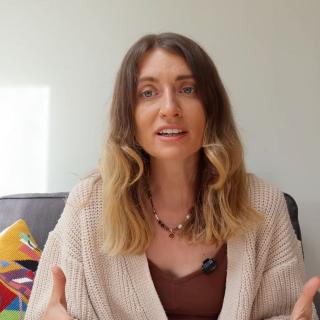
I'm Rachel and this is Awaken Your More.
I teach highly sensitive,
High achieving women to step into lives of peace,
Power and purpose so they can finally start living a life that feels like theirs.
Hi and welcome to today's episode.
Today we're going to be understanding and tapping into why highly sensitive people are burnt out more than the average person.
And I want to reiterate that sensitive person burnout is not just about doing too much.
It's actually about a few things.
One of these things is the fact that we operate from a sensitive nervous system.
I don't want to go into the science of this too much today,
But Elaine Aron coined this term sensory processing sensitivity.
As sensitive individuals,
Whether you associate yourself as being highly sensitive or empathic,
We are more likely to find that we are overstimulated and drained by our environments.
And this is because we are reacting to the world in a more sensitive way.
And this really came through for me personally.
Um,
I was living in a big industrial city in Asia for around four years.
And what I found over time is I found that I was constantly repeating these burnouts.
Out cycles.
One of them was because I was a perfectionist,
High achieving person and I wanted to do the best I could possibly do in every way.
But another was because I was absolutely chronically overstimulated by my environment.
And this caused me to constantly get sick and it caused me to constantly feel like I just was chasing my tail.
And I couldn't really work out why because other people were living in this environment.
They had the same pressures of the job.
And I was like,
Why am I getting sick?
Why am I constantly feeling drained and I want to isolate and And it was when I really tapped into that kind of idea that I was a highly sensitive person.
The penny drops and I was like,
Ah,
It's not because like there's anything wrong with me.
It's because my nervous system is processing things in a different way to how maybe other people are.
I'm not like a statistic genius here,
But there's a lot of people who do interpret the world in this way.
And while it can be a massive blessing,
It can make us more attuned to the natural world.
We can notice the things like the beauty of the trees or the birds.
Probably more than your average person.
It can also cause us to be extremely affected by our environment.
And I think when we learn this,
We can start to see how our environment really shapes how we show up as highly sensitive people.
And when I tapped into a more calmer environment,
When I was able to be in nature,
When I was able to slow down,
This was when I started to find that my nervous system started to rebalance itself.
I wasn't getting ill and drained so much.
So this is this analogy of like some people being like dandelions.
And some people being like orchids.
And I think highly sensitive people.
Are the orchids of this world.
We are the people that are deep feelers,
We need specific conditions to thrive and there's not something to be ashamed of.
That's something to know about yourself.
Whereas some people are like,
Yeah,
I'm fine.
I can just be anywhere.
I'm chill.
And I guess that's great for them.
But when you know that you're somebody who needs specific conditions to thrive,
Then you can work and manage that in the best possible way you can so that you're less likely to be burnt out.
And I guess we can't always change that.
So when I was living in Asia,
I couldn't just magically magic myself on an airplane somewhere really calm,
But I could do of the things such as the body-based work,
Such as the yoga,
Such as the taking time in stillness to recalibrate myself.
And I want to now talk about how burnout isn't just an environmental issue.
Burnout is also an identity crisis.
And this is what happens.
We are often burnt out as highly sensitive people,
Sensitive people,
By being in direct opposition of our values and what we love.
Like and enjoy doing and what lights us up.
So if we're in a career that is maybe really great on paper,
Maybe you've got the corporate job,
Maybe you're climbing the ladder,
You're putting all this effort in,
But you're still feeling depleted and numb inside.
This is going to contribute to your burnout because you're going to be feeling that you're not giving something back.
And I think.
.
.
Highly sensitive people,
Sensitive people are extremely heart led.
And when we're not doing something that lights us up,
When we're not doing something that there is a meaning behind,
No matter what that is for you individually,
We start to feel a bit like,
Oh,
Is this it?
Why am I doing this?
There's not really a point to this.
So when we're doing something that really feels unfulfilling,
We're really likely to experience burnout as well.
And one of the best tools for helping me navigate burnout as a sensitive person,
Especially someone who is high achieving,
Was to really learn to listen to my body.
And rather than pushing through and being driven constantly by external goals and where I needed to get to,
It was about stripping that back and really listening to how my body was feeling in the moment,
Nurturing my body and giving myself the care that I would often show for other people.
People which I was so bad at giving to myself because I didn't feel that I was worthy of that care because I was like,
Well,
Other people can do it.
Other people are managing,
So I should be fine.
And I think one of the really important lessons that I have learned in my own journey to burnout recovery is understanding that healing does not happen simply by pushing more.
It does not happen in isolation with the mind.
Neither does it happen totally in isolation with the body.
It is a multifaceted approach that I think highly sensitive people need in order to overcome burnout.
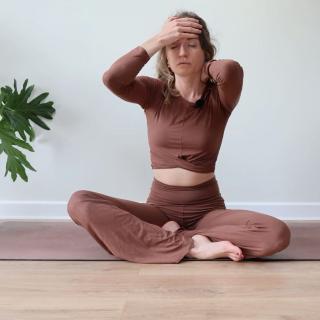
And that is also including working with our nervous system and working through body-based practices such as your somatics,
Your yoga,
Your breath work.
These practices really allow you to get into that parasympathetic branch of the nervous system and build safety.
And through that safety,
We're gradually able to build up more of a window of tolerance,
Which allows us to step into uncomfortable situations with a little bit more leeway and a little bit more grace than we might have if we weren't doing those practices.
We completely bypass these all the time.
We're just going to continue those loops.
Again and again and again.
And eventually that leads to illnesses,
That leads to dissatisfaction in our lives.
And that has a trickle-on effect into our relationships as well.
So I would really consider thinking,
How is my environment serving me?
Is my job,
Is what I'm doing aligning with who I am or is it draining me?
And am I checking into my body and leaning into those practices that could nourish and help me as a highly sensitive person?
You next time.