Welcome to Awakening Torah Musa Mindfulness.
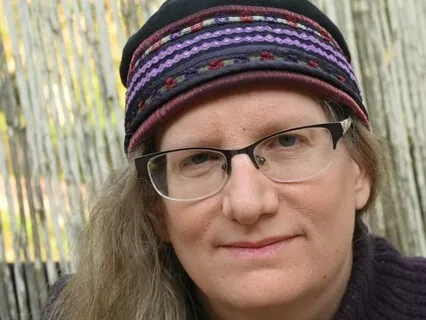
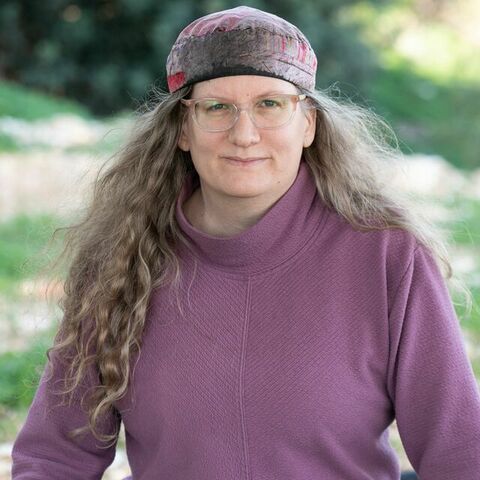
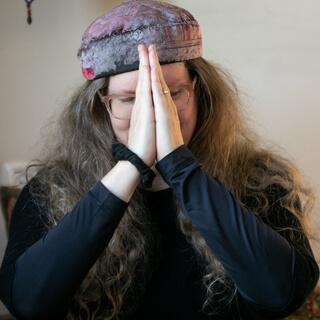
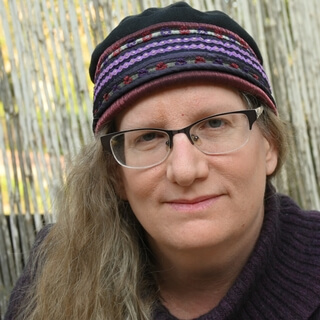
I am Rabbah Chassi Uriel Steinbauer,
The founder and director of the Institute for Holiness,
Kehillat Musa.
I am delighted that you have joined us today for our weekly series offering on Sundays at 1230 Eastern Standard Time,
B'sra Tasham,
God willing,
Where we look at the weekly Torah portion from the Hebrew Bible,
From the lens and practices of Musa mindfulness,
This combination of Musa in the Jewish tradition and mindfulness and Theravada Buddhism,
Bringing this synergy of these wise ancient traditions for us to get the most out of our spiritual discipline and practice,
To be able to move forward on this path towards holiness together.
I'm delighted that you've joined us.
And before we jump into this week's Parsha,
We always begin with our Kava notes,
Our intentions for today's practice.
If you are watching on video,
I'm going to share those on share screen right now.
If you are listening on audio or do not have vision,
I will read these out loud so you can hear them.
So here at the Institute for Holiness,
We see this practice we're doing together on Sundays as doing an act of radical self care.
Yadayshe,
Why?
So that we can care for others,
So that we can bring God's good to others,
So we can be of service to others and God.
So we say this is something I'm doing to strengthen my own soul,
In order to be of benefit to others in the future.
That is our first intention for today's practice.
The second intention is that we recognize we're doing this act for others.
So we say this is something I'm doing to strengthen my relationship to others,
To other practitioners here in our Sangha and our Vahd and our community,
Of Musa mindfulness practitioners and out on these concentric circles of love and obligation.
We do this so that I can we can be a better conduit of God's good to others when they need us.
And the third Kavanah,
The third intention for today,
That we're doing this to strengthen our relationship with the divine,
Whatever that may mean to you.
We say this is something I'm doing to strengthen my relationship to the Creator,
To the source of all being,
So that I can be a better conduit of God's good to others,
And even to myself,
When they need me and when I need myself,
Right?
Learning how to become our own best friend to practice this really inner compassion and inner self care.
So those are our intentions for today,
Like every Sunday,
May we merit that we can fulfill those intentions in today's practice.
So today's practice is sponsored by the Steinbauer family in honor of my daughter becoming a bat mitzvah,
Mezal tov,
Which she did yesterday on Shabbat,
Which was the 16th of Kislev in the Hebrew calendar.
It was on the 10th of December 2022,
Where she went before her community in obligation as someone now obligated in the Jewish tradition known as a bat mitzvah,
Daughter of the commandments,
Where she read from Vayishlach,
Which is our Torah portion this week.
So basically,
We look at the Torah portion from the day before that happened on Shabbat,
Hopefully you had the week prior to read it to delve into it,
To busy yourself in Torah as we say,
La'asok baTorah,
To really understand what's going on,
Some of the classical commentaries around it,
So you could come to the session,
Ready to delve into it from our shared lens and share vocabulary of Muslim mindfulness.
So today,
Obviously,
Is Sunday,
The 11th of December 2022,
We are in the 17th of Kislev,
The Hebrew month of Kislev,
5783,
The Hebrew year.
This is our eighth sitting together to the miracle,
I can't believe how quickly this is all happening,
Right?
1,
2,
3,
4,
5,
6,
7,
Yes,
Vayishlach.
So I'm going to give you a brief summary of this Torah portion,
And then move into what we're going to concentrate on today.
So,
In this week's parasha,
Yaakov,
Our ancestor who will become and is becoming the third patriarch in the tradition of Avraham,
Yitzhak and Yaakov,
He basically sends messengers or angels,
Depending on how you translate,
Malachim,
To his brother Esav,
His twin,
That you might recall that 20 years ago,
He had deceived his blind father,
Yitzhak,
And his brother in order to steal,
In order to get the bracha,
The blessing.
And that left Esav in so much anguish and pain and harm and suffering that his response was rage,
His response was wanting to cause harm to his brother,
To potentially kill him once his father died.
That was his storytelling that went on in his head,
What he was ruminating about.
And so,
20 years later,
Yaakov had,
You know,
Obviously fled in fear of that planned,
Hopeful murder.
He fled to his uncle's,
Levan,
Many,
Many miles,
Kilometers north.
And he stayed with him all this time.
And so he's letting Esav know 20 years later,
Almost 22 years later,
20,
He's saying,
I'm returning home,
Right,
I'm coming.
And that essentially,
He sends word for him and that he wants to return to the family.
And the messengers come back.
And his brother's coming with 400 men.
Now,
If you're listening to that,
Notice your own,
If there's any reactivity.
Is there any storytelling?
400 men?
We'll look into what does that mean,
Right?
Did we go to 400 men?
That's scary.
What does that mean?
Or 400 men?
It's open,
Could be pleasant,
Could be unpleasant.
It's neutral.
It could be neutral.
So we're going to notice that we're going to have some commentary on that.
So Esav's coming to meet him,
400 men.
Yaakov chooses the path of total reactivity and fear.
Storytelling,
He ends up planning for war,
Splits his camp up,
He prays to God to save him from what he fears the worst that his brother is coming to do to him.
And he sends 550 animals as a mincha,
As a matanah,
As a gift to placate his brother.
He thinks his brother is coming to kill him,
To hurt and harm him.
And then once he splits up the camps in the middle of the night,
One of the most famous stories in the Torah is that he wrestles with a man that turns out to be potentially an angel,
Something that's defined as both man and God.
Some people interpret it as that he's wrestling with himself,
His own consciousness,
Whatever it might be,
This is what's going on.
And he wrestles with it all night.
He ends up completely injured in the process to the point where he's disabled the rest of his life,
Where he will have to limp on his leg.
There's been a profound transformation physically,
And then even a giving of a new name,
Yisrael.
Okay,
So he then goes on to finally meet Esav,
And it's obviously not what he expected at all.
Esav runs to greet him.
Yaakov is prostrating,
Full prostration with his painful injury,
Seven times on his way to greet his brother.
They embrace and cry on each other's necks and kiss each other.
One of the most beautiful scenes in the Torah.
And the next day when they decide to travel and move on,
Esav says,
Come,
Come follow me,
Come be with me.
And Yaakov makes some excuses.
You learn through this that he hasn't completely changed.
It's still some of this genivata,
This deception that,
You know,
He says,
I have too many young animals and young children,
They won't make the journey,
You go ahead without me.
But meanwhile,
Fully in his head,
Knowing that he's going to go a completely different direction,
But he doesn't let Esav know that.
So Esav,
In his maturity and change in the 20 years,
Doesn't argue with his brother.
I think he fully knows what's going on and he moves on.
He travels back to where he came.
Later on in the parasha,
Some horrible things happen here.
We're not going to discuss them.
Yaakov's daughter Dina is raped and kidnapped by Shechem,
The prince there.
And in reactivity,
Her brothers,
Shimon and Levi,
Murder all the boys and men of that town and kidnap and take the girls and women.
It's a horrific story and scene and just want to honor that.
Also,
Rachel,
The beloved of Yaakov,
Who he loves more than his other wives,
She dies in childbirth on the road to Beit Lechem and he buries her there.
And then his final child with her,
Excuse me,
Benyamin,
Is born.
Well,
That's a summary of the parasha.
So what are we going to pay attention to today?
There's so much there,
Right?
What are we going to pay attention to?
We're going to pay attention to the relationship of Esav and Yaakov,
These twins who come from essentially family,
Great family dysfunction,
Where basically the parents are,
I would even call it,
I think psychologists call it the campification of the family,
Where they're put into two different camps.
There's the mother with Yaakov,
Who she loves,
And there's the Abba Yitzhak,
Who loves Esav because of the game that he brings to feed him.
And they don't speak and they don't meet.
OK.
And there's a first of all,
The fact that it's well known how they're treated,
How what goes on in the relationships,
That one is loved more than the other or valued more than the other.
That creates more family dysfunction.
So you have these boys being raised in this environment and then go on to learn from the mother who is like,
I would call her the master deceiver.
She's your master teacher and getting vata'at in this deception of knowing how to deceive in order to cause what it is that she wants to cause,
Betraying Yaakov in this,
This is what he grows up with and does,
Where his concern is about getting caught and not the morality of the event.
And so you have these two who are raised in this environment to the point where there's withholding of nutrients in order to cause someone under duress to sell their birthright,
Yaakov to Esav,
And then Yaakov deceiving with his mother,
His blind father,
And stealing the blessing.
So out comes of this,
This,
This dysfunction and rage,
And I would say trauma that Yaakov has to flee,
Essentially going into exile,
Has to actually leave the land that he's promised with his ancestors.
And Esav is left without a brother,
Just suddenly disappears.
And he,
Who had already married quite young,
17,
Already had two wives,
Decides to go ahead and marry again.
He's having to figure out,
How can I get my parents approval and love here,
Which is why he seeks out a wife with Yeshmael,
Hoping that they will finally approve of him.
Give me one second,
Please.
And,
You know,
He's having to deal with his own anger and rage.
And what we witness 20 years later is that he's dealt with it.
When he shows up with his 400 men,
He had the potential to do great harm.
He could have murdered Yaakov and all of the camps,
All of his family,
His four wives and the children,
And he didn't.
And that's an important thing to point out.
He didn't.
Okay.
So what I want to point out is coming out of this family dysfunction and trauma,
Essentially,
Is how are you going to respond in life?
How are you going to move forward as a practice with what life has been handed to you?
So if you happen to come from a family like Esau's and Yitzhak,
Are you going to spend,
Like Yaakov does,
The next 20 years holding on to what happened and that fear where he essentially is tortured by it,
Right?
In some sense.
It's why he has to wrestle with this angel.
He's tortured by his guilt and what he's done and the fear of the consequences for it,
Right?
This is the boy at 17 who,
I don't want to do this to my Abba,
My father,
Because I might get caught and I'll receive a curse rather than the blessing.
So he obviously has internalized this curse,
This guilt where he's tortured by it.
He plans for the worst.
He does a lot of storytelling.
Oh my God,
The 400 men are coming to murder me,
Right?
And my family.
He's caught up in reactivity.
So even in our tradition,
Which is lovely,
Is that we have rabbis and commentators,
Chazal,
Who can see the nuance that there's different approaches to this.
It doesn't have to be that Esau was coming to murder.
So the first who believes this really is Rashbam coming from France 950 years ago,
Where he essentially says that when he's coming to meet you with 400 people,
He's doing it.
Why?
Likvodecha,
Right?
He's saying that this is for to show you respect,
For your respect,
Right?
That's the simple meaning of the Peshat.
He feels that that's the simple,
Straightforward meaning.
He also brings an example of when this happened before that the same language is used to describe Aharon coming to meet Moshe.
He's coming to meet you.
And when he sees you,
He will be happy in his heart.
This is coming from Shemot chapter four,
Number 14.
Right.
And so that's the beautiful side of it.
And then in our parashanim and our commentators,
You get Rabbeinu Bachai.
He he comes from Spain 700 years ago,
And he actually holds the reactivity side.
He holds 400 men.
That means right.
It means that he it should be.
He is ready for war.
So the only way you can decide what's before you,
Are you going to live in the world of storytelling and reactivity and plan for the worst and think the worst?
And that's how you're going to orient your life.
Or are you going to be more like Rashman and be like he's coming to as an entourage,
Entourage,
I think.
No,
I'm saying the word incorrectly in English.
I think you know what I mean.
He's coming to honor to come with a large group.
We just wanted to use this in our own daily Musar mindfulness practice to notice our own reactivity.
What are the stories we tell ourselves?
Are we planning for the worst or we open and trusting and having betahchah and trusting in God that it it will work out?
I mean,
The only perspective we could take if if the rabbi is correct is that maybe a soft himself,
Too,
Was fearful.
I mean,
If you think about it from the other perspective,
A sub was lied to and cheated by his brother.
He knew not to trust the Yakov.
And now Yakov is a grown man.
Thirty.
He's now thirty seven.
Twenty years later,
He thought maybe if I come to meet him and bring him and welcome home,
He's going to do me more harm.
He's going to do more harm.
But I don't believe that.
I don't believe that at all.
I think that a sub is showing us and modeling for us what it means to let go from a dysfunctional family.
What it means to be like,
I'm not going to let this event and how they treated me define me.
And.
He's a wonderful Dubai,
He's a wonderful example of how we could react,
React or I should say,
Respond wisely to what's been handed to us,
What what's before us.
And so what you end up having basically is Yakov,
The very things that he feared in some ways,
He kind of does to himself through his internal guilt and then wrestling with this angel that causes harm and suffering to him long term.
He will now be disabled.
There is a physical harm,
Harshness to what goes on and happens to him both internally and externally.
And so when he finally does come to meet with his brother,
He really provides reparations with his 550 animals,
Changing it from a mincha,
From a gift,
A matanah to a bracha.
Bracha is what he stole from Esau from the begin with,
And he wants him to know that these 550 animals are basically what he would have received as the behor,
As the firstborn with the birthright to receive that double portion from the father when he passes away.
And he's essentially giving him what he feels that and recognizes he stole from him.
Those are reparations and they do reconciliation.
They're able to meet,
Have that moment of connection and intimacy,
And also go their separate ways,
As often is the case in dysfunctional families where you might have these reprieve,
This moment of beauty and connection,
But that doesn't mean that you're going to be physically close or in relationship like that every day or your whole life.
And Esau really models that well for us.
And this might be an ancient form of teshuva.
I'm really torn about this because today,
In modern practice of teshuva,
We have all these rules handed down to us from Rambam and others where we are to verbally recognize and say that this is what we've done.
We won't do it again.
We take responsibility.
We apologize when we've caused harm or suffering to another human being.
And there's a whole set way in which we call teshuva,
Right,
And that we don't do it again.
We don't repeat the deed that caused that harm and suffering.
And obviously that verbal exchange doesn't happen here in our Torah portion between Yaakov and Esau.
Esau doesn't verbally say,
I did this to you.
And I take responsibility and I'm sorry.
We don't witness that.
We witness instead,
Maybe even teshuva through deeds,
Through this reparation and through reconciliation,
Which in some ways might actually even be more powerful than there's someone saying,
I'm sorry,
I won't do that again.
I mean,
Also in this case,
Yaakov's never going to have that opportunity again to steal a blessing or manipulate the transaction,
The selling of something under duress.
So,
This is what we have before us.
And so what I think is very important for us this week in this practice,
As we head into the darkest hour,
Even in the season in the Northern Hemisphere,
Is for us as we head towards Hanukkah,
Is to really tap into forgiveness.
Forgiveness of others,
Forgiveness of the self,
To be able to open up to that ner within,
The or,
The light,
The candle within,
To be that light and candle to the world and others here.
As we head in to Hanukkah,
Where we'll be physically bringing light,
That we may also be that light.
So we're going to move into our practice now.
Please assume one of your four postures.
It could be seated.
It could be walking.
It can be lying down or standing.
You want to be as upright as possible,
Not West Point stiff,
As our teacher Jon Kabat-Zinn says.
A bit more indignified.
You're created in the likeness in the image of the divine.
Sit as such.
And so we'll begin with three deep cleansing breaths.
Inhalation now.
And exhalation.
Letting out all tension that might be there.
Inhalation,
We're beginning to arrive.
Exhalation.
Coming to stillness.
Inhalation.
And exhalation.
Grateful to be alive,
Grateful to be here and practice together in this present moment.
I want you to invite awareness,
You can even quietly whisper to yourself.
I'm inviting presence,
I'm inviting awareness to be here,
Right here and right now.
Using your breath and body and my voice as your anchor.
You may close your eyes.
If you are ready and you have vision.
Allowing your hands to rest wherever is comfortable.
You may want to put your hands on your chest where that inner nair,
The inner light will come from you and emerge.
To tap into forgiveness into slikhot.
We need to consciously acknowledge in any given moment.
The thoughts,
The feelings,
The behaviors that are affecting us.
To step out of any trance that we may be in.
To simply recognize that we were hurt or that we've hurt others.
Anything constricting our beliefs or emotions,
Physical sensations.
We think of Yaakov when he actually,
Esau,
When we think of Esau when he learned that his blessing was stolen,
His father did not have a blessing for him.
The crying out,
The anguish,
The sobbing,
The pain.
Yes.
He came out of the trance.
Fully felt how sick and dysfunctional his family was and how he was receiving the harm and suffering of it.
Coming out of these signs of trance really listening to the gift of the inner voice.
The signs of shame or fear,
The squeeze of anxiety,
The weight of depression and the body the heaviness.
Allowing that soft still whisper to come through that we hurt or that we have hurt someone.
We're not trying to fix it.
We're not avoiding anything.
And if we're having any self judgments,
The voice that's telling us we're not worthy.
We honestly acknowledge the rising of this judgment,
And any painful feelings underneath.
Many students and practitioners of mindfulness support their resolve to pause and let be the by silently offering an encouraging word or phrase.
So if you notice that you're in the grip of fear mentally whisper to yourself yes,
It is okay.
In order to acknowledge and accept the reality of your experience in this moment.
Once we have recognized and allow whatever's arising.
We had deep in our loving compassionate and kind attention with curiosity.
With the beginners mind.
We focus our attention on the present moment.
What most wants your attention.
What are you experiencing in the body.
What are you believing.
What does the vulnerable place within want from you.
Moving away from conceptualizing and bringing our primary attention to the felt sense in the body.
Attempting to practice non judgmental awareness.
Inviting a sense of safety,
Making it possible to honestly connect with our hurts,
Our fears,
Our shame.
As we move into inner or self compassion.
We offer a gesture of active care to address the wounded the frightened the hurting place inside or the other.
Does it need a message of reassurance of forgiveness of compassionship of love.
Experiment right now in your practice.
See which intentional gesture of kindness most helps to comfort,
Soften or open your heart.
It might be a mental whisper.
I'm listening,
It's not your fault.
Trust in the goodness.
If it feels difficult to offer love or forgiveness to yourself.
Imagine their wisdom and love flowing into you.
The smallest gesture of turning towards love,
Turning towards forgiveness,
Even if it feels awkward will nourish your heart over time and practice.
As we move into the creation of a meter the nighttime prayer before the Shema,
You can quietly repeat after me.
I forgive anyone who has angered me provoked me cause me harm or suffering,
Physically or financially,
Whether in word or deed.
Let no one incur punishments because of me.
May I forgive.
May I learn not to react.
As we sit the next moment.
The next minute in silence allow whatever has unfolded in this meditation practice for you to be fully present.
In silence allow whatever has unfolded in this meditation practice for you to be fully present.
In silence allow whatever has unfolded in this meditation practice for you to be fully present.
.
.
.
.
.
.
.
.
.
.
Open your eyes.
If they were closed during this practice.
Bring yourself back into this sacred zoom space or live streaming on our YouTube channel or on Facebook.
Thank you for your practice.
Thank you for being here with us today to engage in this deeply meaningful and loving practice.
May you feel more open.
May your intention for today's practice where you really are practicing that self-care for the benefit of others and God and so that we may bring God's good to others.
May you feel more open.
May we bring that light and that gold.
May we merit that we bring that Nair,
That or,
The candle and the light from all of us to others.
And be that for others during this time of darkness.
I wish you all Hanukkah.
We will be together next week before the first candle lighting for you.
We ask for your sponsorships and donations to offer this awakening series so please do reach out to us at the Institute on our website.
We welcome all levels of donation and sponsorship to honor someone in your life,
Or an occasion,
Or even in the loving memory of someone who has transitioned and passed away.
So I send you strength,
I send you light,
I send you forgiveness,
And I hope you have a blessed week.
Thank you for today.