Welcome again,
Laila.
I welcome you to take a moment to introduce yourself in this setting as is necessary and important.
Yes.
Greetings my kin and my people.
I'm from a clan of the Dene Nation.
We are also incorrectly known as Navajo.
My father's mother is of the Southern Cheyenne Clan and my mother's father is of the Salt Clan of the Dene.
My father's father is Biligana or American European.
And yes,
In that manner,
I present myself as a Dene woman.
We always introduce our clans,
Which the first clan I get from my mother,
You know,
So we're matrilineal people.
We get our last names from our mothers,
Not from our fathers.
And then the other clans are important,
Too.
But your root clan is your mother's,
Your mother's clan.
So I grew up in Taos,
New Mexico,
And went to a bunch of universities and definitely like pretty nerdy.
Just finished my Ph.
D.
I'm also a musician.
I'm also a community organizer and I'm just whatever,
Whatever the community needs me to be.
If I can pull it off,
I usually try to do it.
Wonderful.
Beautiful.
Thank you.
Yeah.
And I will I will for for those who don't know me,
I'm Kristen Barker.
I'm the director and co-founder of One Earth Sangha and so happy to host this interview with Laila.
I come from the Tiwa lands.
I was born and raised Albuquerque,
New Mexico,
Feel that those lands absolutely raised me.
And so it's it's really wonderful to be in conversation with Laila as having both of us know that landscape and also know some of the complex history from two very different perspectives.
In that.
So,
Yeah,
It is.
I loved doing the research for this interview and really looking forward to our conversation.
So with that context set and in the interest of serving a wider awakening to what is happening in this world,
To this world,
To Earth,
To all of her beings.
I just would like to open up by asking about the the the particular lens that you're bringing to the way that people of European descent can view our ancestry and the necessity of facing that both with honesty,
But also I hear in what you're saying,
A kind of compassion and along with the accountability,
But but a sensitivity to the causes and conditions of how it is dominant people would come to become dominant people.
Yeah,
So one of my elders told me once that you have to have compassion for those who came here from what we now call Europe because they went through 2000 years of open warfare prior to getting here.
2000 years of all out dog eat dog warfare.
So that will very much traumatize population,
Obviously.
And as I researched it a little more,
I started researching the witch burnings in particular and just the ways in which,
You know,
Thousands and thousands and thousands and thousands of women are persecuted and suspected to be witches.
And of course,
These women were no different than all of us women today,
You know.
So imagine,
You know,
Always being under the gun,
Always fearing for and even turning on each other as women.
And,
You know,
It was just it was a really hard time for the women.
Of course,
You know,
At patriarchy on top of that,
Where a lot of women were treated as property in some ways we still are today,
But much less so.
And the torture chambers,
You know,
The brutality that sort of arose from this carnage,
You know,
Nothing short of just carnage and being European myself on my paternal line.
I had to,
You know,
Research that for myself of what have I been through?
What am I carrying?
And also the language prohibition and the massacres of Indigenous European peoples.
For instance,
The harpists,
The Celtic harpists,
Who were,
You know,
Indigenous peoples of what we call Ireland.
These were the nobility.
And Queen Elizabeth ordered every single harpist to be hung because they carried the songs,
They carried the culture,
And they carried the dignity of the people.
And if you could destroy a sense of dignity amongst the people,
It's just a way to torture our spirits,
You know.
And so the Welsh language was prohibited in schools as recently as 1920.
And,
You know,
A lot of these Indigenous peoples were persecuted.
So you really have to see the deeper context.
And then looking beyond that of,
You know,
Before King Louis,
Before Napoleon,
Before all of these King Edward,
You know,
These people that we depict as Europe.
But really,
Europe has such a much better history than that.
For instance,
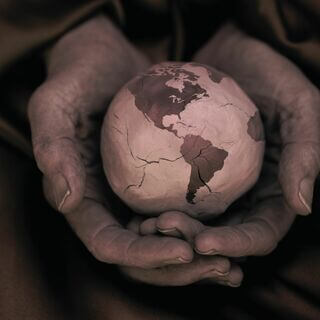
They found a clay effigy of a woman in German soil in 2009.
And they radiocarbon dated it,
It was 40,
000 years old.
This is how long European ancestors were,
You know,
Molding the earth into the image of a woman to honor the sanctity of the earth,
Sanctity.
So there used to be a really strong goddess culture,
Some people call it,
In Europe.
The feminine was centered quite a bit.
Chalice and the Blade is a wonderful archaeological book about when Europe transitioned from a chalice culture of abundance,
Community,
Generosity,
To a blade culture of fortification.
And so it's definitely an interesting,
Tragic story of how we,
And a lot of,
I'll just say lastly,
You know,
A lot of the things that were done to Native people here were tested on Europeans first.
So like,
We often are upset at the Spanish for bringing,
You know,
This conquistador culture where they were conquering us in the name of Christ,
You know,
Torturing us,
Sticking their dogs on us,
All kinds of atrocious things in the name of Christ.
But we have to understand Constantine,
The Roman emperor,
Was doing that 1000 years earlier,
When he saw a cross in the sky that said,
In signo,
In hoc signo ventis,
Which means in this sign you will conquer.
So he was going around conquering people in the name of Christ 1000 years before Columbus was ever born.
So a lot of this tactics,
A lot of these ways of legitimizing violence were already being practiced a long time ago.
The displacement,
The relocation,
You know,
The Romans would relocate people just like the Trail of Tears,
Just like the Long Walk.
So it's really,
You have to understand,
They were just replicating all of that BS over here.
So when you're fearing for your life,
And you're not sure if you'll have food tomorrow,
Then the conquest thing seems like a good idea.
Hoarding,
Dehumanizing others to give you a license to kill them,
Stocking up,
Accumulating wealth,
You know,
All this stuff is born of thousands of years of fear.
And summoning the justification for that,
In terms of a worldview,
The hierarchy,
Those kinds of things in order to carry out those,
Is it self-conditioned,
What I hear,
Right?
Like in the Dharma,
We talk about the conditioning of the mind,
How we are,
We are inevitably absorb the values and worldviews around us.
And so how can we blame a child for not saying,
You know,
Mom,
That was kind of racist,
Or that's,
You know,
Aren't we treating the earth as an object?
You know,
How would that happen if that child isn't raised with that,
With a different worldview?
And yet there is accountability there too.
And I've heard you speak about the necessity of that painful encounter,
In a way,
To have it go beyond maybe a conceptual understanding and really strike the heart.
Do I understand that correctly?
And if so,
Can you say more about that piece of it?
I've never seen accountability and these nuanced understandings of the context in which we come from as at odds with each other.
I think having compassion for ourselves and each other,
While also holding ourselves to higher standards,
Are completely compatible.
In fact,
You need them both.
You can't do one without the other,
I think.
Because we could point fingers and blame and shame all day.
But is that really going to heal us on a deeper intergenerational level?
On the other hand,
We can,
You know,
Say,
Oh,
Woe is me,
I went through all this bad stuff and never,
You know,
Rise to the occasion and be the better people that we're capable of being.
And it wouldn't be fair to each other to let ourselves not honor and address this stuff.
We have to hold each other accountable.
We have to be each other's mirrors.
And it might be extremely uncomfortable for some at the beginning or during the process,
But at the end of the day,
We're going to thank each other,
I do believe.
So I think that it's,
Yeah,
They're not mutually exclusive.
They need to happen in tandem,
Where we're having compassion and pushing ourselves to greater heights at the same time.
I remember when I was a little girl,
I was confronted by the Pueblo people.
Not confronted,
They were actually just telling a story and they didn't know I was Diné.
Because I was just a little girl in school,
You know,
And I was at an all Pueblo school,
Mostly Pueblo school.
And they were saying,
Yeah,
You know,
The Navajos used to come over here and steal our women,
Steal our food,
Steal the children.
And I remember thinking to myself,
No,
We didn't do that.
I don't know what they're saying,
But that couldn't be true.
And there was this denial.
You know,
I didn't want to take accountability.
I didn't want to acknowledge that my ancestors may have done that.
Until I got older and I realized,
Wow,
These people are,
This is their oral history.
And I say I honor oral history,
So I should honor what they're saying.
So I kind of had my own process of accountability,
Which took me 20 years or something like that,
You know,
Took me like many years to go from a child in denial to an adult that said,
Wow,
We did do this to our Pueblo neighbors,
And that's awful.
And I need to be 100% in service to their elders and their children.
Even though it wasn't me,
I want to be a part of healing and apology and sorrow and amends,
You know,
Reparations,
Because otherwise we're just going to be enemies forever.
And I don't want that.
So,
Yeah,
I think it's unfortunate that we take so long to admit our mistakes,
But it's incredibly joyful and fulfilling once we do,
I think.
Beautifully,
Beautifully spoken.
And I wonder,
I get curious myself,
Like,
What is it that enables that turn to suddenly say,
Oh,
This is painful to acknowledge,
Painful to confront,
And yet something in us becomes more whole when we can allow those complexities,
Right?
It's like it's painful,
But it's something that's deeply nourished,
Something wholesome,
I think,
Is deeply nourished in us when we have the confidence to say,
I can receive this difficult reality,
And there is the want to not always be the victim,
To not always be the,
You know,
To say,
Yes,
I am part of complex histories.
What do you think makes that turn possible?
What is it maybe even in you in that journey?
Well,
I think for me,
It may have been easier for others because I experienced the other side of the table of being a Native woman who America wasn't owning up to everything it did to my people.
Doesn't want to talk about the death march or the concentration camp that Hitler would later study for his own that the Americans put my people in.
So I experienced,
Like,
What it feels like,
You know,
To not be acknowledged,
To not,
For someone to not have the courage to,
And it's always easier when you're not in that position to see what the other person needs to do.
And then you can flip that on yourself and be like,
Oh,
Well,
That means I need to honor the Pueblo people because I'm being a hypocrite and I'm not doing the thing I'm asking these people to do.
So,
I mean,
You could say I'm lucky in that regard that I could have that moment.
I think that there's still a lot of white folks who are completely happy to come to terms with what has happened here and are actively rolling up their sleeves and being a part of the solution of healing Native communities,
Which were almost exterminated.
And in some places they were exterminated completely,
Like the island of Tasmania.
Almost,
I think there was like 12 folks left.
It was extremely complete,
The annihilation.
So,
Anyways,
Point being,
A lot of white folks are perfectly happy to really dig in and roll up their sleeves and admit,
Like,
Hey,
My ancestors have been a part of the problem and I'm still a part of the problem,
Consciously and unconsciously,
And it's okay.
I think that's the part that allows you to turn to say,
Like,
It's okay that it's not okay.
It's not okay,
But it's okay because what else am I going to do?
Like,
I'm here.
What more can I do but say,
Like,
Look,
I'm a work in progress,
But I'm dedicated to that work.
And I think an atmosphere of forgiveness and understanding hastens and facilitates that turning for people.
Because if we live in a punitive model where if you do something bad,
You get a slap on the wrist,
You go to jail,
You get a fine,
A lot of folks are not going to want to own up,
I guess you could say.
On the other hand,
If we're like,
Hey,
Look,
If you do come in your hands and you do admit that this happened,
We're going to be here for you.
We're not going to let you go.
We just want you to say what happened and start to make amends.
Then it's much easier,
Right?
So I think the other hard thing about Europe is it's very entrenched in this punitive model.
So by their own rules,
If they admit and confess,
They're going to get their butt kicked,
Right?
So it's sort of like this Catch-22 where,
Like,
The perpetrator has created their own rules where they're not allowed to admit their perpetration.
So there's that aspect,
Too.
Whereas I'm very much a believer in forgiveness and that helped me probably to come forward with my ancestors' misdeeds,
Perhaps a little more readily.
So how can we take that kind of understanding of the reckoning with harm,
That it doesn't take the punitive admonishment approach,
But rather supports a kind of profound healing,
Not only for the victim,
But in a way the perpetrator,
Because of the way that it can roll back and kind of create some retroactive understanding of how I got here and who I might need to kind of understand in my own history.
How do we take that when it comes to people's violence against each other?
How can we widen that and include the more-than-human world,
The earth,
The whole family,
The web of life?
Can you articulate that vision that where the one who has been so harmed,
The ones who have been so harmed don't speak human in a way that we can readily understand,
But yet the evidence is all around and maybe the moral injury is also resident in this very heart?
How does these notions apply to that objectification,
Exploitation realm?
Yeah,
We often talk about dehumanization,
But that doesn't give us a framework for how we've dehumanized non-humans.
I think maybe a better term is,
Like you said,
Objectification or de-spiritification,
Where we're blind to the spirit of these beings.
If it's a tree or a dog or mycelial network or whatever,
We are really absorbed with how they don't look like us,
They don't talk like us,
So they don't have a spirit,
They don't have dignity,
They have moral exclusion,
Meaning you can do whatever you want to them because they're not part of this little moral circle where morality applies.
I think that obviously that's a big task.
And it's something I've seen pop up all around the world lately is this catching up to what Indigenous folks have been saying,
Which is these are our relatives.
You would treat a horse the same way you treat your own grandfather.
That means you probably won't saddle him up and brand him and rope him.
You probably would only ride him if you really needed to.
And if he was like,
Yeah,
I want to help you,
I want to help you get over this mountain,
Let's do it together.
But it's not like you're my slave.
It's a cooperative,
It's a mutual relationship.
You have people understanding now that the salmon are our relatives and they have an intelligence and people understanding that the corn is our relative.
She's not to be genetically modified.
She's not to be dishonored.
And so all around the world,
People are waking up to this notion of kin-centricity or this notion that these are our kin.
And we must treat them the same way we treat our own mother,
Father,
Brother.
And that level,
And as Val Lopez says of Amah Mutsun,
They have the same parents as us,
The father sky and the mother earth.
So therefore we are relatives,
We're all relatives here.
And so,
Yeah,
Rupa Maria talks about white supremacy,
Male supremacy,
This notion that men are just more important or better than women,
This idea that white folks are more important than non-white folks.
But we have yet to really grapple with this notion of human supremacy.
This notion that for some arbitrary reason,
We are more important than all other life.
And our needs and our wants are primary because we're smarter or something.
But like they say in Spider-Man,
With great power comes great responsibility.
This power we've been endowed with,
With our brains,
Which can sometimes be more of a hindrance than a help.
This power of our opposable thumbs,
Of our ability,
Our language,
Ability to communicate and organize.
With that comes great responsibility to take care of all of our relatives.
And just because something can't fight back because it doesn't have opposable thumbs or is not intelligent in the way that we think is intelligent,
Doesn't give us a license to abuse them,
Enslave them,
Factory farm them and extract from them.
So it's very exciting how around the world people are coming to this realization.
Maybe we're not the center of the universe,
Maybe all life is sacred.
And if so,
How therefore would we act?
Just lastly,
I'll say we were doing a video shoot.
And the camera guy was like,
Hey,
Can I pull out this little oak?
It was a scrub oak tree.
It's in the way.
And I said,
No.
Like,
Is it okay if I take your life right now?
You're kind of in the way of the camera.
But I understand where he's coming from,
Right?
Because in our brains,
Just hack it down.
But I'm helping him understand like,
No,
This is our relative.
Like,
Yeah,
You can prune it if there's a need.
But if there's not,
No,
It's not in alignment with what we're trying to film.
So it's good people are waking up.
So beautiful that seeing the pattern of supremacy,
Objectification,
How that enables exploitation and saying,
Huh,
That doesn't just apply to the human family,
Right?
We can see the scope of that pattern and the conditioning and the impacts and the horror that comes about.
That there's a reckoning inside of that.
It will eventually reverberate and come for us,
As it were,
The dominator,
Right?
So I could just go on and on about this.
It's so good to hear you speak of it.
I'm particularly interested in the contributions of people who feel themselves to be part of Earth and a collaborator with Earth and Earth systems,
Forests,
Rivers,
Oceans,
Deserts.
The potential of not refraining from all harm,
But to be in participation.
Because I think because for my people,
For the dominant worldview,
The options are either I'm either harming or I'm not harming.
And so what I need to do is not harm.
And so my job,
Ecologically minded,
Is to shrink myself,
Shrink and shrink and shrink into where I'm just sitting,
Still doing nothing so that I don't cause harm.
Yeah,
I think that my whole dissertation has been all about what some people call disturbance to the lands and disturbing the land in a regenerative manner.
So fire might be a really good metaphor here or a good case study or,
You know,
Entry point is we as Indigenous peoples used to burn this whole continent.
And many nations still do with the intention of transforming dead plant tissues in the fall into nutrient dense ash with the intention of keeping fuel loads down so that we don't have catastrophic fires because every fall we burn and there's no buildup,
You know,
On the forest floor.
The litter is low or we burn with the intention of purposefully opening up meadows,
Purposely thinning out the forest so that deer and elk and other animals can easily walk around and also so that they can eat the grass,
The grasslands that come in the wake of fire.
We burn to reduce,
To keep the balance so that the pests,
You know,
Weevils,
Bugs,
Ticks,
Even fungal things,
You know,
Are put in check,
You know,
So they don't take over an ecosystem or the deer don't have to fight ticks all year long.
And so,
Yeah,
The fire was very much a mediating force and it was the human hand that applied it.
And we believe that our ecological role as a species,
One of them is to apply fire,
Which I know sounds crazy to some people because we're taught to hate fire,
We're taught to be scared of fire,
And all the catastrophic fires recently have really been freaking people out about fire.
But they don't understand that these catastrophic fires are not just due to the climate crisis,
They are due to the prohibition of Indigenous fire over the past hundred years,
Which has caused not only a buildup of forest litter,
But also the trees,
When they get that close together,
They are competing for limited sunlight,
Nutrients,
And water.
So you get a bunch of,
And they have immune systems,
If they don't have right nutrients,
Sunlight,
Water,
They can get sick.
And they're all dried out because they're competing for a limited water table,
Right?
So when you have all this dense thickets,
Hundreds of trees per acre,
That's actually not what this land looked like prior to Columbus,
It was much more 13 trees per acre or much more thinned out.
There was a lot of meadow,
There was a lot of grasslands,
There was more diversity.
If you let a forest go on its own,
Through its own succession,
It'll become pure pine.
It's almost like its own little monoculture.
So our fire also helped with biodiversity.
It helped in creating forest edges,
Which are really important for all kinds of reasons for birds and animals and medicinal plants.
And so when you have them all close together,
They become dried out,
And they're close together.
So it's like a tinderbox,
They can just catch fire really easy.
So a lot of the catastrophic fires are exacerbated by the climate crisis,
But I would not say caused by the climate crisis.
They're actually caused by the mismanagement of forests.
And the scale on which Indigenous Peoples would manage these forests is immense.
Which,
Anyways,
I could go into that of why Americans wanted to diminish how many of us there really were.
We densely populated this continent.
We weren't just little scattered bands of nomads.
We were vast civilizations all over the place.
Eco-cities,
All over.
So anyways,
That's an example of how we need to not be non-participatory.
We don't want to harm life,
But we don't acknowledge that maybe we are life.
We are also life.
So every rock has a purpose,
Every bird has a purpose,
Every star has a purpose.
We have a really easy time understanding that.
But can you then turn the mirror around and say every human has a purpose?
Every species has a purpose,
Including humans.
Every person has a purpose.
And that we have a job here to do.
We have a job here on Earth created and make us for no reason.
We are here with very great purpose to do specific jobs to take care of these lands.
And that's why we're here,
In part.
So we have to take up that mantle,
We have to take up that role for the system to be balanced once again.
I'm struck by the echo of so many things.
One,
To that last piece of the Bodhisattva ideal.
That I dedicate myself to the well-being of others.
And the sense of belonging and purpose that in a way is a reclamation,
Countering what we were talking about at the beginning,
The ways that we're caught in this individual self that needs to be a brand.
That's my purpose somehow.
Instead of seeing myself in the web of life and dedicated and feeling the value of it,
Not just someone telling me,
But I can see really how I belong.
And that I'm in relationship and collaboration with life.
I'm going to ask one more question and then to wrap us up here.
And anything else that you feel needs to be said at this moment,
I also invite in this.
But I wonder if we could speak to the necessity of cultivating reverence and joy.
As so much a part of what we're talking about in this,
In what it is we're beginning to understand that excites,
That I hear excites you,
Excites me from my perspective and where I sit.
What about reverence?
What about joy in all of this,
In our journey?
I see them as two very important things and two very different things.
And I know they're extremely related,
But I feel like joy needs its own space to shine.
Because it's so important.
I highly recommend that we take care of animals because they really teach us a lot.
But I was walking with my dog the other day and he was so happy.
He's been locked up in Albuquerque and he was actually getting sick.
And I finally moved to the countryside near Gallup,
New Mexico.
And now he can run around and frolic and play.
And he looks so happy and joyful and I can see it.
And as his dog mom,
I said to him,
Yes,
Be happy.
I want you to be happy.
Go frolic,
Go run,
Go smell stuff,
Go pee on stuff.
Whatever makes you happy,
Man,
Just go.
And it made me realize that's what Creator wants for us.
Creator wants us to be happy.
Creator wants us to go frolic,
Go have fun,
Go enjoy life,
Go smell the flowers.
Go laugh with your friends.
And I think for me,
Being the workhorse that I am,
I can work myself to the bone.
And there's a weird part of me that enjoys it to just see the fruit of my labor.
But I definitely think that it can eclipse the need for joy.
And joy is so important,
Even though my life wouldn't necessarily reflect that.
But I'm working on it.
And I just appreciated my dog giving me that teaching.
Because now that I see him out of that suburban spot where he was getting tumors and stuff,
He just wasn't happy.
And now his tumors are gone,
He's running around.
He has two puppies now that are his new friends.
So just knowing that that's what Creator wants for us.
Creator wants us to really savor and feel joy.
Feel joy is akin to joy,
Absolutely.
Because I think when we give reverence to the earth,
We have a deep sense of joy,
A spiritual joy.
Because we're living out our purpose.
We're living out our true calling as warriors or Creator.
And I think reverence is such a vital piece of the puzzle.
And how do you teach a man to revere a woman when he's been raised to see them as just a thing to catch?
They call us females.
I was talking to a female yesterday.
Or they said,
I want a bag of shorty.
I want to go bag of shorty tonight.
Meaning I'm going to sleep with a girl.
This is the training that all of our young men have right now.
How do we support them?
How do you teach someone reverence?
How do you say,
Wow,
This is actually the mother of all life.
This is actually a woman who's been through a lot of crap.
And she needs you to be gentle with her.
This is a woman who has thoughts,
Feelings,
And needs and dreams.
How do you have respect and reverence for that?
It's really similar to trying to teach a capitalist that soil is sacred.
How do you teach them that?
How do you teach someone,
Oh,
This tree is sacred?
Like,
Okay,
Cool.
Yeah,
Laila,
You're crazy.
It's like,
No,
It's sacred.
It has a spirit.
It has life.
It's a miracle.
Every life,
Even the life you said was on your eyebrow,
It's a miracle.
It's a miracle.
And so,
How do you teach someone that?
But I think reverence and the lack thereof,
Not because people are evil,
But because they've had no training.
They've been trained to do the opposite,
In fact,
Is really at the heart of our ecological crisis,
I think,
Is this blindness to what reverence means,
To what sacred means.
But to me,
Reverence means knowing what sacred means.
And once you know what sacred means,
You walk gently,
And you walk with extreme appreciation,
And you would never hurt something on purpose.
And you know there's something there that can be hurt.
And so,
Yeah,
I think the two are incredibly important.
You might even say the most important.
But again,
There's that balance,
Right?
It's like taking the energy to revere,
And also taking the energy to enjoy.
I think we need both of those.
That's beautiful.
Thank you so much.
Is there anything else that you would like to put into the field here as part of wrapping up and closing?
Yeah,
Just hope you all have a beautiful day.
And love yourself.
Go out there and kick some butt.
Take some names.
Love others.
And just keep praying,
Because our prayer is what guides us,
Ultimately.
It helps us reach those higher heights that we don't even know we could reach.
And then go into directions we didn't even know we needed to go in.
So always pray.
Always be open to the fact that we don't know what the heck we're doing.
And always be open to learning more.
Because the more we're open to learning through our prayers to be able to know more,
The more we can really express our potential as human beings.
And the more we can really explore our potential and explore what other kind of magic this life has to offer.
So always pray for help.
That's a really powerful prayer.
I was told,
Just help.
One word.
You don't have to say,
Help me with this,
Help me with that.
Just help.
Because frankly,
We don't even know what we need help with.
So help is a very powerful prayer,
Because it unlimits the creator to do all kinds of things.
So be open to the grandeur and the vastness of creator's abilities,
Which are beyond what we understand.
And keep that prayer going,
Because that will bring you to all kinds of places of beauty and service.
And we can change the world through those prayers.
So thanks,
Everyone.
Thank you so much,
Laila.
Thank you,
Thank you,
Thank you.
Thank you.