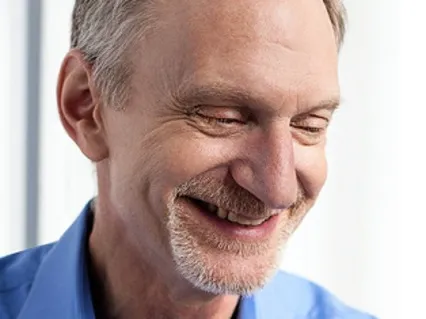
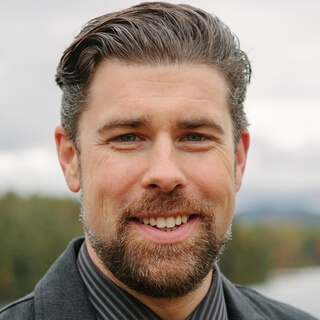
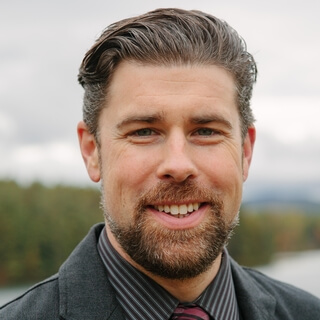
I would say my core intention is to help people get more connected to their own lives and to each other.
So it's a kind of dual intention there.
Can you say it again?
To help people get more connected to their own lives and to each other.
Hey everybody,
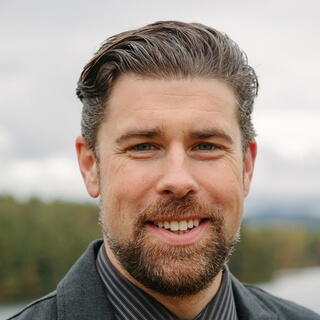
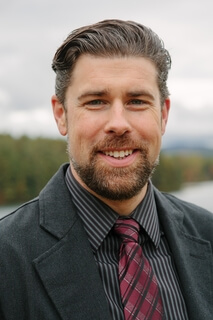
I am Tom Bushlach,
Your host for Contemplate This,
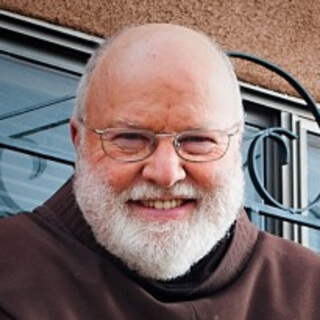
And this interview is with Dr.
Robert Waldinger.
Now if his name sounds familiar to you,
It might be because he has one of the most viewed TED Talks of all time,
With over 33 million views.
It's called What Makes for a Good Life.
Just to give you a teaser,
He gives us the answer to what makes for human happiness in just two words,
All within the first five minutes of the show.
Bob Waldinger is also a clinical psychiatrist at Harvard and the fourth and current director of the Harvard Study on Adult Development.
This study began in 1938.
It's now in its 83rd year,
And it's the longest running research study ever conducted that we know of in human history.
To top it all off,
Bob is also a Zen Buddhist priest.
How cool is that?
I had the good fortune of being on a Zoom call with Bob recently,
And I immediately emailed him to invite him to be a guest on the show.
Amid a very busy and stressful time and schedule,
He graciously said yes,
And now you all get to share in the benefits.
I hope you enjoy listening as much as I did conducting this interview.
I've added a ton of resources into the show notes page at thomasjbushlack.
Com forward slash episode 27.
That's episode 27 with no spaces.
There you can watch Dr.
Waldinger's TED Talk,
Explore more about the Harvard Study on Adult Development,
And learn more about the boundless ways Zen tradition and lineage that Bob carries forward and teaches.
I'm always grateful to hear from listeners,
And the best way you can pay this wisdom forward is to share it with others.
So whether that's by word of mouth or social media,
I appreciate you helping to share the word and the message of Contemplate This.
Don't forget you can always kickstart your own contemplative practice with a free guided meditation by joining my email list at thomasjbushlack.
Com.
Okay,
With that intro,
Let's jump right into my interview with Dr.
Robert Waldinger.
Thanks everybody for tuning in to Contemplate This.
I'm here with Bob Waldinger,
And thanks for being here and just would like to invite you to introduce yourself to the people listening at home.
Sure.
I'm a psychiatrist.
I work at Massachusetts General Hospital in Boston,
And I'm a professor at Harvard Medical School.
And I teach Zen.
I'm a Zen teacher in a community called Boundless Ways Zen.
So I'm going to cut right to the chase because you're sort of famous for answering the question of what makes for happiness.
And I know you can do it in one word.
So what's your answer?
One word,
Relationships.
Great.
Well,
Thanks for the interview.
That was short.
Yeah,
Yeah.
No,
Actually two words.
Good relationships.
Oh,
Nice.
Yes.
So to unpack this a little bit more,
You've got a lot of data behind that response,
Good relationships.
You are currently the director of,
I want to say it correctly,
The Harvard study of adult development,
Formerly known as the grant study.
Is that right?
Okay.
Yeah.
So some people know it.
It was known as it was two studies originally.
One was called the grant study and one was called the Gluck study and then they were brought together and now they're called the Harvard study of adult development.
Oh,
Okay.
I have followed this in my own research in previous iterations,
But I didn't know that piece of it specifically.
So can you tell people a little bit about that study and your work as the director and what you've learned from that?
The study is,
As far as we know,
The longest study of adult life that's ever been done.
We're now in our 83rd year.
It was started in 1938 and what's unique about it is that it has followed the same people through their entire adult lives.
That there are lots of studies that will study some people and then go on and study a different group of people and may do that over many years.
But the idea of taking the same people from the time they're teenagers all the way into their nineties is unheard of.
That's what's unprecedented about what we do.
And the study is really composed,
As you were saying,
Of two groups of people.
One was a group of Harvard College undergraduates,
Sophomores in the late thirties and 1940s,
And the other was a group of inner city Boston boys.
And so those two groups,
One very privileged and one very underprivileged,
Were then brought together.
So now we study them together and we've started studying all their children who are middle aged and now we're about to reach out to their grandchildren and their great grandchildren.
Now have you begun that reaching out to the descendants yet or is that just starting?
Not yet.
That's a game in play.
We're planning it.
We're thinking about exactly how we're going to do it and what we want to ask.
So that's the first stage and then we'll start doing the reaching out.
And I know these kinds of longitudinal,
Qualitative quantitative studies take a very long time to set up.
So I'm sure there's a lot going into that.
So I,
Like many people,
Have watched your TED Talk,
Which I'll link to in the show notes to this conversation.
So one of the questions I had after watching it was,
Have you found any distinctions between the two groups?
I would imagine that the relationship factor is probably common because it's sort of human nature.
But was there,
If you kind of drill into some of that data,
Did you learn anything else about the difference between the access to privilege that people had or how that has played out?
Yes.
Probably the biggest headline that we learned about the differences in two groups is that the Harvard men lived on average 10 years longer than the inner city men.
And we think that has a lot to do with health practices,
Self-care practices.
So access to good health care was there from the beginning for the Harvard men.
And for many of the inner city men,
They were so poor,
They had very little health care.
And similarly,
All the education that the Harvard men had meant that they probably read more throughout their lives,
Which meant that as we began to understand that smoking cigarettes is really bad for you,
That abusing alcohol,
Really bad for you,
Exercise,
Very good for you.
As we began to understand how important those things were as you went through your adult life,
The Harvard men probably got that message much sooner than the inner city men.
And so we think that the inner city men for so many reasons,
Weren't able to take care of themselves in the same way that the Harvard men were.
Yeah.
And so you talked about it in terms of self-care and you also talked about it in terms of access to societal resources.
And it seems like the two are directly related here because if you have the resources and the information,
You can make different choices.
But if you don't have access to that,
It's a little harder maybe to get out of the rut of some of those habits.
Absolutely.
Yeah.
Was there.
.
.
Even access to good food,
If you think about it.
We talk about food deserts in various parts of the country where people just have much more access and easier access to junk food than they do to fruits and vegetables.
And that's a huge difference in your health over time.
Were you able to drill down at all into any kind of racial differences,
Ethnic background and how that played out?
There were no racial differences in the sample.
So everybody was Caucasian.
And we are.
.
.
Which is probably a bit of a sign of the times when it started,
Unfortunately.
It was a sign of the times.
The city of Boston was 97% Caucasian in 1936,
That the waves of immigration of people of color didn't come till after World War II.
So do you think in this new sample set,
You'll be able to diversify a little bit?
Or I guess if you're following the descendants,
That might be somewhat limited,
But.
.
.
Right.
Well,
First of all,
The diversification began with expanding to all the children of these original men because the original people were all male.
So we had all white men.
The most politically incorrect research sample you could possibly have.
But now we've expanded so that half of our participants are women.
And then we think that as the generations go on,
There will be more diversity because many of our Caucasian participants will marry people of color,
Will have children with people of color.
And so that's where we hope we will get more diversity.
But you're right.
If you follow the descendants of a particular group,
You get their descendants.
Yeah.
Well,
And it's interesting if there's some young researchers out there listening to this or following this work who could start a similar kind of study that by the grace of God could last as long that we could be more intentional about that and kind of learn from everything that's gone before.
Yeah.
There are lots of studies now that look at different ethnic groups and much more examples.
And we're hoping some of those studies,
As you say,
Will last a long time.
Yeah.
And I really appreciate it in your TED Talk when you talked about how I don't know when this happened in terms of the 75 year period,
But that you started asking the spouses and the wives of the men if they could participate.
And they said,
Yeah,
It's about time.
So it started with all white men,
But now you've brought some of the female perspective in as well.
Are there any differences that you note in that distinction,
The sex gender distinction?
Oh,
Yes.
Well,
Let me say first that there's much more commonality than difference between men and women in our sample.
And I think that's important because at the core of it all,
We're studying the experience of being human.
Sure.
And so genders and classes and ethnic groups have much more in common than they have differences.
But that said,
What you're asking about is right on,
Which is that there are gender differences.
One big difference,
As you can imagine,
Won't surprise you,
Is that women have more of a sense of the importance of connection than men,
Particularly women who were also of the World War II generation.
And that group of people,
Many women were charged with being the social glue in families,
Keeping families together,
Really maintaining a family's social life in the community.
So these were differences between men and women.
Many of the men just relied on their wives to be their social directors.
And it was actually quite a shock to some of the men when they retired and they came home and they didn't see very many people anymore because they took for granted all the people they would see every day at work.
Women are much better at staying connected.
Certainly there are health differences,
As we know,
Big health differences between men and women.
Women live longer.
Women are a little bit less happy in their marriages on average than men.
It seems like marriage is a better deal for men.
That resonates with my experience.
Yeah,
Yeah.
I think they take the brunt.
But obviously,
Yeah,
Yeah.
I mean,
I think women,
Especially now,
Women have more complex roles.
Men often stay more primarily in the role of breadwinner and they're doing more of the work at home and the childcare and all that,
Which is great.
But often when you read about this and you talk to women,
It's the women who shoulder the burden,
More of the burden of holding the house together and the family together.
And at the same time,
Many,
Many more women are now out there working full time in the world.
From what I've seen anecdotally from our friends and family that they might be out there working,
But they're not doing less at home necessarily.
So it's kind of a both and.
Yeah,
Yeah.
So those are some of the gender issues that we think about and we're going to be looking at more of those gender differences as we go forward because now dealing with the second generation,
There were many more women in the workplace.
Almost none of the wives of our original men worked outside the home.
They did a lot.
They worked for unity workers and very capable people,
But they didn't have traditional careers.
Now many women have those in our second generation middle age group.
And we expect that that trend is just going to be increased in the third and fourth generations.
So it'd be interesting to study what that means for family life,
What that means for social connections.
Yeah.
Yeah.
There's certainly the standard nuclear family is shifting quite drastically for a lot of reasons,
Not just because of the ones we've listed,
But yeah.
Okay.
I want to,
I think there's plenty that we can come back to in the Harvard study,
But I want to pivot a little bit and ask you about your role as a Zen priest and how,
Like,
How did you get introduced to Zen and meditation?
And how did that,
How'd you go from there to being in a leadership role?
Sure.
So I got introduced to Zen totally by accident.
So I'd always been interested in meditation since one of my colleagues,
When I was in my early thirties,
Said that she and her boyfriend had spent the whole weekend doing a silent retreat in their apartment.
And I was fascinated by this.
At first I thought this sounds totally crazy to me.
I would never spend my weekend that way.
And then I got interested in it and I started to do some reading about Buddhism and mindfulness and found it very compelling.
One of the most compelling spiritual frames that I'd encountered.
And,
But I would try to meditate and I do it for a while and I get busy and then I'd stop.
And of course,
When you get busy,
That's just when you want to be able to meditate.
And yeah,
This is,
There's something wrong with this picture.
And I asked friends of mine who had more sustained spiritual practices and they said,
What you need is to find a group to meditate with regularly and you need to find a teacher.
And I didn't find one.
And then one day I went to the local Unitarian church down the road from where I live because my son's middle school friend was having a coming of age ceremony and we were at the ceremony and one of the parents knew I was interested in meditation and pointed to the minister and said,
He's a Zen master.
So I got in touch with them and said,
Could I come and talk to you?
And the rest is kind of history.
So I found a group.
I sat,
Started sitting every Monday night with the Zen group that he led and really then began to do retreats overnight,
Residential retreats,
Started doing koan practice and really began a deep dive into Zen.
Like I thought I was just interested in relaxation and maybe paying attention a little better.
And Zen took me into this whole realm of kind of inquiry into what it means to be a human being in the world.
And it was wonderful and scary and eye-opening and I just got more and more involved.
And then I ordained as a priest and then I began to do more teaching and all this culminated a year ago when I got full transmission to teach,
Full Dharma transmission from my teacher.
Okay.
Can you talk a little bit about what that process is to become ordained and receive that?
I don't know what the right word is,
The credentials.
It's interesting because there are two paths in Zen.
One is the path of service,
Which involves becoming a priest.
And one is the path of teaching and they are separate.
So you can be a priest without being a teacher and you can be a teacher without being a priest.
So I have started to do both.
I started doing both and now that's both of my paths in Zen.
I began to feel like I wanted to really make a commitment to being of service in a way that the priesthood in Zen sort of symbolizes where you say,
I really want to help further this knowledge and help people in the world in all the ways that I can.
And so I talked about it a lot with my teacher,
With my friends,
With my wife.
That's the last thing I would have thought I would do.
I'm a Harvard professor,
I'm a psychoanalyst.
People like me don't become Zen priests.
Maybe it's a good thing.
Well,
I hope it's a good thing.
Inquiry into the mind,
Right?
I was embarrassed.
Like,
What's wrong with me that I want to do this?
But I felt really called to it.
And so what you do is you study about what being a priest is.
You go through a set of ceremonies.
I had to shave my head and don a set of priestly robes that had to be made especially for me.
And I'll tell you,
Shaving my head was a big deal because I'm a doctor.
I have a clinical practice and suddenly I come in with a bald head.
But you didn't have to wear your robes into the clinic or the classroom?
No.
No.
Because that would be kind of fun.
I've offered to sometimes.
But the place I do wear my robes,
So I have now been asked to officiate at weddings and sometimes at funerals.
And I love doing it.
And I mean,
The funerals I don't love,
But I really feel like it's an important thing to do.
And the weddings are joyous.
And so I get to wear my robes sometimes there,
Depending on what people want.
So there's a whole process by which I move toward being a priest and then have since served in various priestly roles.
And then becoming a teacher is different.
It's in boundless ways and it involves being asked first to learn to give Dharma talks and then eventually to learn to do brief interviews in Zen.
There's a tradition of doing very quick interviews where people come and can talk about anything they want to in their spiritual practice.
Anything from why does my leg keep falling asleep when I sit in meditation to what is this thing we call emptiness to?
I mean,
It could be just about anything.
What you learn in the process of becoming a Zen teacher is how to meet people in these interviews and what's involved.
So one of the really interesting things for me was to learn the difference between being a psychotherapist,
Which I am every day.
Every day I see one or two patients in psychotherapy to learn the difference between that and being a Zen teacher in an interview.
And it's very different.
So it's been a wonderful challenge to learn that.
That sounds similar to a tradition that I'm more familiar with of spiritual direction where you have somebody who is a master on some level,
Whether that's publicly recognized or just something you see in that person who walks you through the questions that come up on the spiritual path.
Can I ask,
Do you do that or is that something that's part of your life now?
I don't currently have,
Well,
No,
Let me rephrase that.
I have teachers right now.
There have been periods of my life where I very intentionally had a spiritual director.
My very first spiritual director sort of happened by accident.
He was a Catholic priest and a Benedictine monk at the university that I went to for my undergraduate.
And he sort of became a mentor to me and he lived in the residence halls and we just started talking and then I think one day a couple of years later I realized,
Oh,
We're doing spiritual direction.
At later periods I intentionally sought out a spiritual director.
And now I have my own practice is sort of informed by the Benedictine Catholic Christian contemplative tradition,
Especially centering prayer.
But I also have been more invested,
Not in any way leaving my original tradition,
But also deeply engaged with teachers in the yoga tradition.
And particularly teachers that focus on the kind of the three limbs of Ashtanga yoga that lead in towards deeper states of meditation.
So I have teachers in that tradition.
I don't call them a spiritual director in quite the same way because it's a little bit different,
But the idea is there.
And I don't do spiritual direction to anybody that I work with,
Though I guess if somebody asked I'd be open to exploring that.
But yeah.
I had a,
Thank you for asking.
I had a clarifying question about the difference between being a priest and being a teacher.
Is the priestly role in Zen more of a ritual function,
Whereas the teacher role is more of like verbally or in other ways passing on the Dharma?
Oh,
Yeah,
That's it.
That's actually a great question.
So there's a lot of ritual involved.
So in being a priest,
You're right,
There's a lot of ritual.
But a lot of it too is really this vow of service.
So not ritual,
But maybe delivering food to,
You know,
Shut ins,
Maybe.
Oh,
I see.
Helping the homeless.
So it's a vow of service that includes all kinds of things.
It might include making sure that the altar at the meditation hall is well kept intended to,
But it may also include working in a homeless shelter.
Okay,
That makes more sense.
Yeah,
I just wasn't clear on that.
Yeah.
So how would you define,
Because there are these different branches of Buddhism historically,
How would you define what the Zen lineage is and where it fits?
Especially for somebody like me who loves Buddhism deeply and reads as a total non-expert,
But really find it have a deep love for the tradition.
Yeah,
Yeah.
Well,
First of all,
You know,
In the deepest sense,
There is no such thing as an expert in Buddhism.
Well,
So not to worry about that.
In the void.
Yeah.
But,
Wait,
So I'm sorry,
I lost track of the question because I was Well,
I guess maybe it's a two part question.
One is more like the lineage that leads to Zen and then the other one would be like,
What do you see as the essence of what you teach in a Zen Buddhist tradition?
Sure.
Okay.
So Buddhism,
You know,
As you know,
Started in India and then it,
It spread to first to most of the countries in Asia,
Most of the areas of Asia.
And when Buddhism was taken to China and then Japan,
It was embedded in a culture that was Taoist and Confucian,
Right?
And so Buddhism became mixed with Taoism in particular,
This idea of the way and so Zen is really an amalgam of traditional Buddhism and Taoism in particular.
And so it first developed in China and then moved to Japan.
There is also a strong Zen tradition in Korea and a pretty strong one in there was in Vietnam.
I think there still is.
And Zen has more of an emphasis on simplicity and on the idea that we are already enlightened.
That there is the famous saying in Zen is there is nothing to attain.
And they really mean that.
The idea being that,
That anytime we set up some hierarchy of first you do this and then you attain this level and then you do that level.
Zen says that is simply a one more construction of the mind and not a problem.
Our minds construct stuff all the time,
But that's not real.
And that what is real is just this.
It's just me sitting in this chair talking to this screen with you behind it somewhere,
But the sounds coming in and that the ability to tap into that is it.
That is what our life is,
Right?
That there is nothing bigger,
Nothing greater.
And so in fact,
There's a lot of emphasis in Zen on paying attention to just this,
Like whatever is here,
Right here in the moment.
And that's important because Zen particularly emphasizes the idea that we don't want to set up something outside of ourselves to reach for.
There's another famous Zen saying,
If you meet the Buddha on the road,
Kill him.
And what that refers to is this idea that if you've set up some icon out there that you're going to bow to and say,
That's what I want to get because I don't have it.
That is a story that's a source of a lot of pain and misdirection for us.
And that really human life is what it is.
We've each got it.
We're each living it.
And in that sense,
Enlightenment is just knowing more and more deeply what this human heart and mind is in the world.
So that's a long way of saying it,
But it is kind of the core of what Zen teaches.
Yeah,
I would say that was pretty succinct actually and easy to follow.
Yeah,
Thank you.
So I'm curious about what your,
What is your daily practice look like?
It looks like lighting incense,
Bowing to my cushion,
Sitting down,
Meditating for 25 minutes.
And occasionally I will meditate longer or I will do walking meditation,
But mostly it's that 25 minutes a day.
The reason why we do 25 minutes,
There's nothing sacred about 25 minutes,
But Zen emphasizes absolute stillness.
There are other meditative traditions,
Including Buddhist traditions that don't worry about stillness.
Like if your knee starts to hurt,
You just move.
And so movement is not a problem.
In Zen it's not a problem,
But the goal is to sit absolutely still so that whatever arises arises without our being reactive to it,
With just to be able to be present for it.
But since the human body wasn't meant to be absolutely still for really long periods of time,
We always limit it to 25 minutes,
Half an hour,
Something like that.
And then we do something else.
So that's why my practice is 25 minutes of sitting meditation.
And do you do that kind of first thing when you get up or does it vary depending on the day?
I used to do it invariably first thing,
Because I had young kids living at home and as soon as they got up,
All bets were off.
That's me right now.
Yeah.
I've got to get up early and do it or it's not happening.
It's not happening.
So that's what I did.
And now I find with my kids launched that I can sometimes meditate later in the day and that it's nice for me because the meditation has a different quality for me at different times of the day.
I find it interesting and helpful to be meditating at different times on different days.
In a lot of the practices that I'm familiar with,
Including centering prayer or mantra work,
You talked about just allowing whatever comes up to observe it without reacting to it.
And I think that's really key for my own understanding of,
Particularly when you talk about the benefits of the practice,
Which again,
Isn't necessarily the point in air quotes,
But it's a nice side effect.
There are beneficial side effects to be sure.
Yeah.
But often there's a focal point to use to come back if you notice the mind start to wander.
And so would you say that that's,
Is it the breath?
Is it the focus on the stillness of the body or is that idea just foreign to a Zen practice?
It's not foreign at all.
It's the first thing we teach.
So when people start meditating,
What you're describing,
The breath or the sensations of the body are both what we think of as concentration practices.
And what that means is simply choosing an object of concentration,
An object to focus on.
And that's what you come back to when your mind wanders.
So it could be the breath,
It could be bodily sensations.
One of the things I love this time of year is to come back to bird sounds,
Which is really wonderful.
It's funny you mentioned that because I've been noticing that during my morning set and it must be the time of year where the sun is just coming up at the right time with my alarm clock.
Yeah.
Anyways,
Sorry,
Keep going.
So that concentration practice,
Right?
When some people do,
And that is a way to steady the mind and the instruction in Zen is not to worry about thoughts.
Thoughts are not the enemy.
The mind manufactures thoughts.
That's its job.
Not a problem.
But to let the thoughts be there,
But then to come back to the breath or whatever you're concentrating on.
In Zen,
There's another form of meditation.
The Japanese word for it is Shikantaza.
And it's sometimes translated as just sitting.
And what that involves is not prioritizing anything,
But simply coming back to the present.
So when your mind carries you off and you start thinking about what you're going to have for dinner,
When you remember,
You come back to whatever is reaching your awareness.
So it might be your breath.
It might be bird sounds.
It might be my aching knee.
Might be anything.
But then what it means is we don't prioritize any one object of concentration.
So Shikantaza is one of the classic standard practices of Zen meditation.
Sometimes it's also called choiceless awareness.
But sometimes I go back and forth.
Sometimes I'll do Shikantaza.
Sometimes I'll do breath practice.
Lately I'm listening to the birds a lot.
So I vary it.
I recently read a book by Arthur Jaisonc.
I don't know if you're familiar with him.
I know the name,
But I don't know.
Yeah.
He's a physicist by training.
But this book is on meditation.
But he calls this cognitive breathing,
Which is what happens,
What you were just describing in sitting,
When we move back and forth between the space of open awareness and just observation.
And then when we start to concentrate on an object or a thought or a word or breath,
Body,
And he talks about the dance back and forth in practice between those two.
He calls it cognitive breathing.
But it very much is akin to what you were just describing.
Yeah.
And often what I do is I will normally do one thing or another.
I don't move back and forth a lot.
But sometimes,
For example,
If my mind is really greasy,
I'll say,
I can't just sit there with choiceless awareness because I'm just going to make laundry lists of all the things I'm anxious about.
So I will start doing breath practice.
Yeah.
And I'll switch to coming back to the breath.
And I find that very helpful sometimes.
Well,
And that strikes me as a wisdom of knowing yourself and knowing when one point of practice might be more helpful.
This is a wild day,
And I'm going to do this.
And other days,
Maybe I can just sit and not be as distracted.
So you've had,
To put it mildly,
An interesting life,
An interesting career.
I would imagine practicing as a psychiatrist,
Being a director of this major study at Harvard.
So I'm really curious to hear your thoughts on how this daily practice has grounded you for public difficult work that you could look at from a certain perspective and say is a pretty high achieving,
Influential place that you've been able to do a lot of good.
I mean,
How many 33 million people have watched your TED Talk because they find something really meaningful in it.
So how do you see your practice informing work and career?
And then I want to talk about relationships,
But those are two separate things.
Yeah.
Well,
I think one of the challenges for me has been the popularity of the TED Talk.
Then all this kind of attention has started coming my way,
Which I wasn't used to.
So I've been high achieving.
I've been a good test taker.
I get A's and I become the Harvard professor.
And that's all.
I never met an MD that wasn't extremely driven.
Exactly.
Exactly.
Or a PhD for that matter.
But yeah.
And so what I find is that practice has really helped me both learn about that,
Learn about both the benefits and the shadow side of being so achieving and how my mind will gravitate toward some brass ring I'm supposed to grab for.
And then just to be more aware of it and say,
Okay,
Now to be able to pause and say,
Look at what comes up for me when they put a brass ring in front of me and like,
Whoa.
And that's been really helpful,
Particularly with this,
The TED Talk and the kind of attention that sometimes comes with it to say,
Okay,
What really matters here and what is my intention?
Because we always have to struggle with ego and self-interest and self-promotion and all that stuff.
And I've begun to be better at kind of accepting,
Okay,
There is some of this that's fun.
And I really like the fact that so many people watch my TED Talk and I'm not going to,
You know,
And it's okay.
And I don't have to like make myself wrong about liking that.
But I also have to really be careful to stay with the intentions that I start with and not to get drawn away into,
You know,
Stuff that's really not important.
I mean,
How many views the talk gets in and of itself is not important.
It's whether somebody says,
Wow,
That actually means something to me,
What you said.
That idea you're putting out there has made a difference for me.
That's what's really important,
Right?
But I could get really caught up in the number of views the TED Talk has had.
So I think what practice has helped me with is trying to keep playing with those distinctions and,
You know,
Keep bringing myself back.
So you don't believe your own press.
I mean,
You know,
You have to be really,
I have to be really mindful and it's a constant thing to do that.
Yeah.
I,
Wow,
I love that because I think that you talked about the kind of shadow side of the popularity that comes or just of being a high achiever.
And that to me,
I think is the real gold in a commitment to a deep spiritual practice is the ability to explore that side of who we are without shaming ourselves for it.
Right.
Noticing that everybody has it.
This is what it happens to look like for me,
You know,
Counting how many clicks are on TEDx or,
You know,
On whatever or how much money I have.
But being able to look at that and then step back and say,
Okay,
Where do I?
And then you talked about intention.
Where do I really,
What's really my purpose in this work?
How would you describe that?
What is that intention that you come back to as the real heart of what you want to offer?
Whether it's Bob,
The Zen priest and teacher,
Bob,
The researcher at Harvard,
Bob,
The psychiatrist,
Bob,
The spouse,
Right?
What would you say is the core intention?
One of my Zen teachers actually helped me clarify this.
So I actually,
I can actually say what I keep,
Cause I have to keep reminding myself of it.
So really what I would say,
My core intention is to help people get more connected to their own lives and to each other.
So it's a kind of dual intention there.
Can you say it again?
To help people get more connected to their own lives and to each other.
Yeah,
I just,
I wanted you to say it again cause I want it to sink in.
I used to,
Before I kind of changed my career to working in healthcare,
I used to teach undergraduates and I wish I had known about your talk then because I loved how you opened it with,
I won't remember the exact statistics,
But it was something like 80% of young college age people when asked what they think will make them happy in life said wealth and all the data that you have over 80,
What is it?
86 years.
83.
83,
Thank you.
Suggests that it's the quality,
Not the quantity of good relationships that you have in your life.
The money comes and goes.
So that's a place where that,
I think that intention sort of plays out.
You know,
If you think about it now in this very strange time we're in,
That all gets highlighted.
Cause people are,
I think saying,
Okay,
What is really important?
What's enduring?
What lasts for me?
What do I care most about?
I think most people are thinking more about people,
About relationships because a lot of the rest of it just isn't that relevant right now.
And some of that is coming to the forefront out of absence,
Right?
Out of longing because we're all of a sudden like,
Oh my goodness,
I didn't realize how much I depended upon connecting with these people consistently when now I can't.
And zoom is great,
But it's not quite the same.
And you know,
We need,
We're embodied people.
We need,
We need hugs and food and all of that to share together.
Absolutely.
Which will return.
But one of my hopes out of a bad situation is that we might return to whatever normal is and that we won't.
We won't return to what was before,
But that we might maintain that sense of what is most important.
Yeah.
I mean,
The hope would,
For me,
The hope would be that we get better at figuring out what we can let go of.
Cause it's not essential.
Cause a lot of what we have too much of pollutes the planet and does lots of other things that aren't so good for us.
Yeah.
And maybe,
Maybe there will be this sense that we can let go of some of it.
I don't miss my daily commute.
I don't either.
I mean,
I,
I used to drive a lot and I now I can't,
I haven't filled up my tank since before,
Before this all started.
Yeah.
Huh.
It's interesting.
Cause a lot of those attachments that you talked about polluting the earth,
They also pollute our bodies and our minds,
Which I think is something I've really learned from my engagement with Buddhist approaches to practice is the pollution and attachment craving of the mind and the way that that causes more suffering.
Yes.
You know,
I,
Right now I've been thinking a lot about Thich Nhat Hanh's teaching that what you put into your mind shapes your mind.
And what I'm finding is that I have to be really careful about how much I expose myself to the news and that I have to for me,
Reading the news is better than watching it because visual media is designed to inflame me and literally and,
And arouse and,
And excite me and that's not helpful right now.
So reading the news and reading it in small doses has been my way of curating what I put into my mind.
And I think that's,
That's been an important lesson for me that it's something I ought to be doing all the time more than I am.
It's really funny you mentioned that because not this past year,
But the year before in my own liturgical practice of Lent in the Catholic tradition of giving something up,
I gave up news.
And but I know I,
I really stuck with it.
So I used to listen a lot in the car and now I mostly listen to either music or podcasts or other things.
And I like you,
I'm extremely selective in what I read and I do zero,
Zero visual news because like you said it,
And because I really found like I detoxed and I feel,
I felt so much better that I was like,
I don't even want to go back.
Yeah.
You know,
The way the place I learned this is when I would go on retreats because when you go on a Zen retreat,
You put away all,
All screens,
You don't read the news,
You don't,
You don't have any contact with news.
And I would come back after seven days away and realize that I could get caught up in about 30 seconds on what really mattered and the rest of it was,
Yeah.
Yeah that was really brought home for me a couple of years ago.
I was out at a,
It was a four or five day retreat in snowmass,
Colorado,
Followed by another five days of solo backpacking in the Rockies.
So it was like 10 days.
This was my wife's 40th birthday present to me,
Which was my goodness,
One of the best things I've ever received.
But yeah,
When I came back,
It was like,
It was like stepping into a rock concert when I got back into civilization.
So you become aware of how unnecessary a lot of that noise is.
Yeah.
Yeah.
Yes.
One of,
One of my Zen buddies and I made a tradition of driving home from retreats together and stopping for lunch.
But what would happen is we would walk into a restaurant and just find it overwhelming and we would start to laugh because the amount of stimulation was just unbelievable.
And of course it's what's hitting us most of the day all the time in the world.
And we realized that we had been in this place of so much calm and so much less stimulation that we were really able to take everything in in a way that we couldn't when we walked,
Just the act of walking into a restaurant was overwhelming.
And of course we still have to go out there.
I have to go out there in the world and live again and I hope we will.
But it was a really important lesson for me in trying to be careful about the amount of stimulation that I allow in.
All right.
I want to kind of tie some of this together because we talked about the Harvard study of adult development.
We talked about your introduction to Zen and your practice and your teaching and the importance of relationships.
So how do you see your practice in Zen informing relationships?
Which is another way of saying,
How does your practice relate to your sense of happiness and inform that?
I guess the first thought that occurs to me is that saying,
Don't believe everything you think.
Oh,
I love it.
Yeah.
This idea that in relationships,
That one of the things that Zen practice teaches me is how my mind spins out stories and it spins out stories about my relationships.
So stories like,
I think that's what he meant when he asked me that question or,
You know,
He didn't answer my email yesterday because dot,
Dot,
Dot,
And I fill in the blank.
And what Zen has shown me is how creative my mind is in filling in the blanks and that I need to be really careful about paying attention to what's filling in the blank and then what is actually going on in the relationship itself.
And so just looking again at an interaction with a friend.
The other day I thought that a friend was being disrespectful because he didn't wait for me to respond to a question that someone else had asked.
And actually it turns out that wasn't what his intention was at all.
And he wasn't being disrespectful,
But my mind just like went there.
And so what Zen has done is it just helps me have that little pause between registering a feeling and a thought and acting on it.
And that to me has been the most important thing in my relationships and keeping them a little saner.
Yeah.
Wow.
That really very deeply resonates with my own experience and talking with other people.
And I can imagine that your,
Probably your wife more than anyone appreciates that work that you're doing to recognize.
But also your children,
Your clients,
Your students,
Your colleagues,
Right?
Because I think when you're in the space and interacting with somebody who's aware at that level,
You feel it.
You feel like that person sees you and welcomes you in a way that you don't.
If you feel that sense of them kind of imposing the gaps and what their mind is filling in and suddenly you start to feel a little pushed out and you may not even know why it's just something you sort of intuit.
Yeah,
Absolutely.
It's an experience of not feeling seen by the other person.
Yeah.
I have a few questions that I like to ask every guest and they're kind of like rapid fire questions,
Fill in the blank.
I use the word contemplation,
But you might think of it as your Zen practice or meditation,
However you think of that.
So if you're game,
Do you mind if I,
These are,
Well,
You'll appreciate this as a psychiatrist.
These are like Rorschach block tests,
Just whatever comes to your mind.
Okay.
All right.
So contemplation is paying attention to what's right here in the moment.
The purpose of contemplation is all about seeing life as it is.
Is there a word or a phrase that captures the heart of your contemplative or Zen experience?
Do nothing.
And with an emphasis on the do and the emphasis on the nothing.
I believe you just gave us a call on.
I'm going to take that and chew on it.
What is your hope for the next generation of contemplative practitioners?
The hope is that contemplation leads to engagement.
So one of the worries about contemplative traditions is that we sit and contemplate our navels and we don't do anything.
And there's a lot of need to step forward and do things to see what needs to be done and then to do that.
One of the shadow sides of Buddhism,
Zen,
All contemplative practices,
It can,
Is it can be an acceptance of what is even when there's a lot that needs repair in the world.
So my hope for the next generation is that they are more engaged as contemplatives than the previous generations have been in repairing the world.
Reminds me a bit of Thich Nhat Hanh's engaged Buddhism concept,
Or it's not a concept,
Practice.
Yeah.
Where can people go to find out more about what you're up to?
And I can put this information in the show notes page.
Sure.
Two places.
One is they could watch the TED talk about the study.
They could go to Newtonzen.
Org,
N-E-W-T-O-N-Z-E-N dot org,
To look at how we teach Zen.
And there are reading lists.
I have a bunch of recorded Dharma talks on that site.
And they could go to our foundation website.
It's www.
Lifespanresearch.
Org.
Great.
I will put all of that in the show notes page for anybody who wants to follow up on any of that.
Okay.
Yeah.
Great.
Well,
I cannot thank you enough for your time.
This has just been really enjoyable.
It's been fun.
Yeah.
It was a great interview.
Thanks,
Tom.
Thanks again,
Everybody,
For listening to Contemplate This and my interview with Bob Waldinger.
You can watch his TED talk,
Learn about the Harvard study and the Boundless Ways Zen tradition,
All on the show notes page at thomasjbushlack.
Com forward slash episode 27.
One of the things that really inspired me about this interview was how clearly Bob answered my question.
When I asked him what his core intention and purpose in life are,
How many of us can provide a clear and direct answer to that question?
And yet it might be one of the most important questions we can ponder.
In fact,
As I've built and grown the Contemplate This podcast,
The resources on my website and the new site at centeringforwisdom.
Com,
It got me thinking about what my core intention and purpose is that drives all of my work.
So here's what I came up with as a working draft.
I help others get free from their reactive habits of mind that hold them back from living into their full potential.
That's really what the whole centering for wisdom thing is all about.
Let me say it again.
I help others get free from their reactive habits of mind that hold them back from living into their full potential.
So what is your core intention and purpose?
Have you ever thought about that before?
And can you provide an answer to that question?
I would really love to hear what your core intention is.
So I'm throwing out both a challenge and an opportunity to develop our Contemplate This community or tribe.
I want you to write yours out and send it to me.
You can submit it in the Contact Us form at thomasjbushlack.
Com.
I'll collect them and put them into a blog post.
Don't worry,
I'll only use first names or no name at all if you ask me to leave it out in your message.
Just imagine how inspiring it will be to see all those good intentions out there in the universe collected in one place.
So seriously,
Think about it.
Write it down.
It doesn't have to be perfect.
Just do it as a draft and then send it my way so we can share your light and intention with the world.
Thanks again for listening and I really can't wait to hear about your core intention and purpose.
With boundless peace and gratitude,
I hope you are well wherever you are listening in the world.
Thank you.