Hello friends,
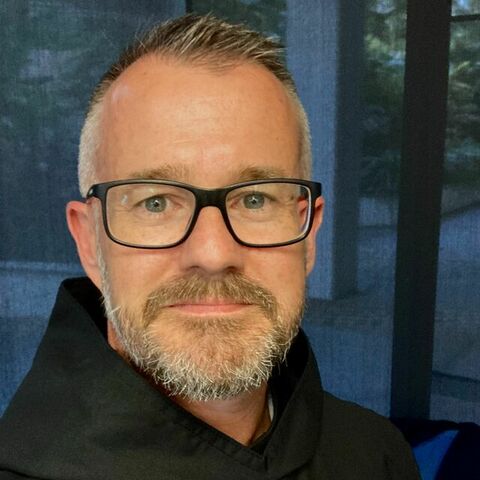
This is Mark Gladman,
Also known as Brother Frederick James,
Your friendly neighbourhood monk in dogs.
Welcome back.
To the way home.
We've been taking a journey through the scriptures that share stories of return.
The son who walked away from home,
The sheep who got lost.
We've had disciples who've walked away in disappointment.
Who had to find his way home after failure.
We've had the Shepherd.
Of Psalm 23,
Who's led us to rest.
And last episode,
Uzair invited us to recognize the deepest thirsts we have and to come to the waters that truly satisfy.
Today we're coming to one of the most probably unsettling portraits of God's love that's in the whole of scripture.
The Prophet Hosea.
Jose speaks about a people who've wandered far from God.
A people who've forgotten.
The one who loves them.
Yet,
When God speaks through Jose,
Something surprising emerges.
It's a God who speaks with longing,
Not as you'd expect.
A God who speaks with anger,
There's tenderness and even grief.
In the voice,
It's the ache.
Of a parent who can't stop loving a child who's wandered away.
And I think this is one of the deepest truths about homecomings that we really need to grapple with.
We may stop loving God.
Long before.
God stops loving us.
I guess that's because God simply doesn't stop loving us.
While we'll forget,
Or wander,
Or get distracted,
Or even turn our backs at times,
God's love does not disappear.
It waits,
It calls,
It aches,
And it keeps the door open.
So today we're going to sit with the love of God that refuses to give up.
So you might ask,
Well,
What is so surprising and unsettling about that?
Well,
The fact that most of us,
Most of the time,
Can't accept it for ourselves.
And it's also very difficult to accept that for others.
So let's take a moment to wrestle with it and to see what the Spirit does in our hearts as we do.
So let's begin just by centering ourselves.
Take a nice slow deep breath in.
And out.
Be fully present.
Fully still in mind,
Body and heart.
Here in this moment.
God of steadfast love,
You know the way it is that we easily wander,
You know how quickly we forget,
You know the things that we choose that aren't the right ones.
Meet us,
We pray,
In our wandering and let us hear your voice calling us home.
Teach us.
That your love isn't fragile.
And that your mercy isn't exhausted easily and help us to trust the love that will not let us go.
And so I invite you to hear some of these words from Jose,
And we're reading excerpts from chapter 11.
God speaks of Israel as a child,
Saying,
When Israel was a child?
I love them.
And out of Egypt I called my child.
Then God says through Josiah,
Yet the more I called them.
The more they went away from me.
And so the people turn towards other gods and they forget the one who brought them out of slavery.
And then God says,
How can I give you up,
E-Frame?
How can I hand you over?
Israel.
And then there's this fascinating line,
My heart recoils within me.
My compassion grows warm and tender.
And then in the end.
I will not execute my fierce anger.
I will not again destroy E-Frame.
For I am God,
Unknowing mortal,
The Holy One in your midst,
And I will not come.
In Roth.
So the first thing that God says is so simple you could miss it.
When Israel was a child,
I loved them.
Now this is important.
When Israel was a child.
This is before Israel did or achieved or became faithful or got it right.
Before all those things,
Still a child.
Still not making sense of things,
Still young and tripping up and falling over and not getting it right.
It's then that God says,
I love them.
Love comes first.
And this is a theme that we've encountered again and again.
In part of this series,
The father loves the son before the son returns.
The shepherd searches for the sheep before the sheep can find its way home.
Peter loves Peter before Peter.
Has repaired his failure.
And here God says,
I loved you.
And I think this is a good place for us to begin.
It's easy to sit there and think through all that we've done or haven't done,
Where we've messed up or where we've been successful.
But maybe what we need to sit with most of all is just,
I am loved.
So for a moment,
Allow those words to be spoken directly to you.
As an invitation.
Imagine God saying,
I loved you.
I loved you before you knew me.
I loved you before you understood yourself.
I loved you before you had everything to offer.
I loved you before you got anything right.
And just take a moment to sit in those words knowing I am loved.
And then there's some heartbreak.
We hear the words,
The more I called them,
The more they went away from me.
And I think this is one of the things that makes this passage incredibly powerful.
God calls.
And they still walk away.
God reaches and they go somewhere else.
God loves and they forget and look the other way,
And maybe Maybe you can recognise something of yourself in those things.
As seasons when we know what's good for us and yet we still choose to do something else.
We know we need rest but we keep working.
We know we need silence but we keep filling the spaces up.
We know we need forgiveness,
But we hold on to resentment.
We know we need God,
But we keep ourselves busy enough not to notice.
Sometimes we don't consciously reject God either,
We just become distracted and distraction.
Can in and of itself be a form of this wandering too.
And the thing we've got to remember is that it's a slow drift.
Most wandering happens slowly.
We don't just wake up one day and decide,
Well,
I'm going to move away from God.
Well,
At least not most of the time.
Instead we just stop paying attention,
Miss one prayer and then another.
Stop making space for silence.
Let go of the practices that seem to hold us steady.
We get consumed by work.
Let our worries absorb us.
We preoccupy ourselves and then we realize that the relationship with God's become distant.
God hasn't moved.
We have.
And the beautiful thing about Jose is that God notices and God cares.
And God calls.
So take a moment now just to ask the question,
Where have I wandered?
Maybe it's wandering away from your prayers or from hope,
From trust,
From a person,
From yourself even.
Maybe wandering away from stillness,
Whatever it happens to be,
Just see what rises.
And offer it to God.
And then.
.
.
A beautiful passage in all the Hebrew Scriptures here,
How can I give you up,
God says.
Imagine hearing God say that.
Imagine messing up and God saying,
Rather than how dare you or you failed me.
Well look what you did,
But how can I give you up?
And I think.
.
.
The tenderness here is the thing that makes it so,
I don't know,
Tricky to accept.
God just doesn't seem to be able to walk away.
God's love is way too deep,
Too invested,
Too committed,
Too faithful.
God says,
My compassion grows warm and tender.
This is a God.
Who's not indifferent or distant.
But a God whose heart is moved.
Even by our wandering.
Sometimes I think we imagine God as completely detached.
From human life somehow.
Unmoved.
Untouched.
Scripture gives us a very different picture.
Again and again,
God is described as grieving.
As delighting,
As longing.
As rejoicing as having compassion even.
And Jose gives us a God whose heart moves towards us.
A god.
Who's emotionally invested.
In creation.
Doesn't just want to observe lives from a distance like a Bette Midler song.
This is a God who cares,
And cares deeply.
So for a moment.
.
.
Imagine standing before God.
You've wandered.
You know it.
God knows it.
You expect that anger,
Disappointment.
But instead you hear God say,
How can I give you up?
How can I stop loving you?
I know where you've been,
I know what you've done.
I know what you've forgotten and I still.
.
.
Love you.
Just allow yourself to absorb those words for a moment.
Now there's something that's really important here.
God's love isn't controlling.
There's no coercion here on Israel to come back.
And that's because love allows freedom and freedom creates.
The possibility for us to wander,
And that's part of the mystery of love.
If God had wanted obedience with our relationship,
God could simply control us.
But God wants love to be what holds us together.
So God calls and invites and waits and keeps loving.
And maybe that's why the way home can take so long,
Because for a lot of that time,
God's waiting for us to turn.
Now think about how often.
We imagine that we have to get ourselves back to God.
People even use that language.
I need to get back to God.
And when you think about how to do that,
You might think about praying more or trying to live better or fixing your life somehow.
You know,
Getting your faith back,
Whatever that means.
Maybe.
The first thing to do.
It's just to turn,
To look.
And to notice,
Because God's already there.
The door's already open.
The invitation has already been spoken to us and love is already waiting.
And then in the passage again,
God says,
I am God and no mortal,
The Holy One in your midst.
And those three words,
In your midst.
Really should sink deep and maybe even ring a bell.
They echo.
The words of John,
Or maybe John's words echo Hosea,
Would probably be a better way to put it,
Seeing as though it came later,
Where John writes,
And the word became flesh.
And dwelled among us.
Not far away or distant,
But right here.
In our midst,
Now,
This moment,
Your life,
Your ordinary world.
We don't need to go somewhere special to find God.
We just need to be attentive to God.
Who is already here.
So take a breath.
Notice the room around you,
The sounds,
The air,
Your body.
You may even hear the beating of your heart.
This ordinary moment.
And imagine God saying,
I am here.
Think back over the stories that we've encountered.
The father watches the horizon,
The shepherd searches,
Jesus walks the Emmaus road and prepares breakfast for Peter,
The shepherd leads through the valley,
Isaiah calls the thirsty to the water and then Hosea says,
God's love follows us even when we wander.
There's a thread,
Obviously,
That's running through these series.
And it's subtle enough that you might not have quite seen it,
So I'll just point it out.
This season,
This series is called The Way Home.
Probably a better way to put it isn't so much that we find our way back.
But that God is continually making their way towards us.
So why harm?
Maybe doesn't require us to move much at all.
Because.
.
.
The way home is already a road that's being built underneath our feet.
Maybe you know someone who's wandered,
Someone who's left faith behind,
No longer prays,
Has become distant,
Who's been wounded by religion.
Maybe they've just lost their way.
Bring that person to mind for a moment.
And hold them in God's love.
And just pray God love them.
And realise that God already does love them,
Even if they don't realise it.
And even if sometimes we.
Don't realize it.
But then.
.
.
I'd like you to turn that prayer towards yourself.
It may be you.
Are the one who's wandered.
Maybe there's some part of your life that feels a distance from God.
Just bring that into the light.
And hear the words that Hosea reminds us of.
I have not forgotten you.
I have not stopped loving you.
I'm still here.
You can come home.
All we need to do is to turn our face.
Towards God.
And maybe that's just what repentance really means.
In fact,
That is what the word metanoia really means.
Turning around.
Re-turning.
Coming home.
We are the ones who've made the word repentance sound heavy.
But maybe at its heart,
It's always meant to be seen and understood as something just beautifully simple.
You realize you're walking in the wrong direction and you turn.
That's it.
That's all.
One small turn,
One small yes.
One small step.
And then the journey begins again.
So as we come towards the end of our time,
Just imagine yourself standing on a road.
You've been walking away,
You stop,
You turn.
You look behind you,
And lo and behold,
There's God.
But God's not angry or disappointed.
Rather God is waiting.
And the distance suddenly seems smaller than you thought.
And that's because while you've been walking,
God's been walking towards you as well.
Take one step.
And then another.
You don't need to run.
You don't need to make promises,
Just.
.
.
God of steadfast love,
Thank you that your love does not disappear when we wander.
Thank you that our failures don't exhaust your mercy,
That your compassion is deeper than any disobedience.
When we forget you,
Call us.
When we become distracted,
Awaken us.
When we turn away,
Wait for us.
And when we finally turn back.
.
.
Help us discover that you are already moving towards us anyway.
May we trust the love that asks,
How can I give you up?
May that love lead us home and may grace,
Peace and love hold us in our returning.
And that's earning.
Today.
And always.
Amen.
Thanks again for being with me for another reflection on the way home.
Maybe today is a day where you can simply turn towards love,
Towards mercy and towards God.
The way home is not a road that God waits for us to travel.
The way home is a road that's already walking towards us.
Until tomorrow,
Bye for now.