Greetings my friends.
This is Mark Gladman,
Also known as Brother Frederick James,
Your friendly and neighborhood monk in dogs.
Welcome back to another episode of our journey through Paul's letter to the Philippians.
Over the past few days,
We've been watching as Paul paints a picture of the spiritual life.
It begins with grace,
Grows through humility.
It takes shape in communities where people serve one another.
We've met Timothy and Epaphroditus,
These ordinary disciples whose lives reflected the mind of Christ.
And today,
We see the tone of the letter change just a little bit.
Paul starts getting.
.
.
Incredibly personal,
He begins to tell his own story.
But the purpose for doing that is because he wants the Philippians to understand something that changed his life forever.
And if I had to summarize today's passage into one sentence.
.
.
It would be this.
There comes a moment when everything we once relied upon becomes less important than knowing the Spirit of Christ.
Before we listen to Paul's writing,
Let's just stop ourselves and become still.
Just allow yourself to hear your breathing.
Feel the rhythm of your heartbeat.
Bring yourself,
Mind,
Heart and body fully into this moment.
As we recognise the presence of the God who's been here the whole time,
Even before we've recognised them.
And in the stillness,
Just bring to mind the things that help define your life,
The work you do,
Your family,
Any achievements or successes.
Your hopes.
And perhaps even your disappointments.
And just hold them gently in your hands before God as we listen to Paul's words in Philippians chapter 3 verses 1 to 11.
Paul Rotz.
Finally,
My brothers and sisters,
Rejoice in the Lord.
To write the same things to you is not troublesome to me,
And for you it is a safeguard.
Beware of the dogs.
Beware of the evil workers.
Beware of those who mutilate the flesh.
For it is we who are the circumcision.
Who worship in the Spirit of God and boast in Christ Jesus and have no confidence in the flesh.
Even though I too have reason for confidence in the flesh.
If anyone else has reason to be confident in the flesh,
I have more.
Circumcised on the eighth day,
A member of the people of Israel.
Of the tribe of Benjamin,
A Hebrew born of Hebrews.
As to the law of Pharisee,
As to zeal,
A persecutor of the Church,
As to righteousness,
Under the law.
Blameless.
Yet whatever gains I had,
These I have come to regard as loss because of Christ.
More than that,
I regard everything a loss because of the surpassing value of knowing Christ Jesus my Lord.
For his sake I have suffered the loss of all things and I regard them as rubbish.
In order that I may gain Christ and be found in Him.
Not having a righteousness of my own that comes from the law,
But one that comes through faith in Christ.
The righteousness from God based on faith.
I want to know Christ and the power of his resurrection and the sharing of his sufferings by becoming like him in his death.
If somehow I may attain the resurrection from the dead.
Wow,
So Paul begins,
Further,
My brothers and sisters,
Rejoice in the Lord.
We've heard that word before,
Yeah?
Rejoice.
It echoes throughout Philippians like a beautiful song.
Notice where Paul tells us to rejoice.
He says to rejoice in God.
The Lord.
So joy for Paul isn't detached from relationships.
It's this beautiful confidence that our lives are held within the love of Christ.
That's why joy can exist,
Even as he sits writing this in prison.
Then Paul offers a strong warning.
He urges the Philippians to beware of those who place their confidence in religious performance rather than in Christ.
And his language here is Shop.
Really shop.
Why might that be?
Well,
Paul knows how seductive religion can be when it shifts from relationship to relationship.
To achievement.
Now,
Be careful here,
Paul isn't criticizing Judaism.
After all,
He himself is a faithful Jew who's discovered Jesus as Israel's Messiah.
But what is happening here is that he's warning against any system that suggests our worth before God depends upon what we accomplish.
In every generation,
Religion faces this temptation.
Faith becomes performance.
Grace becomes earning.
Relationship becomes rule-keeping.
Paul's lived that life,
He knows where it leads to.
Paul does something that's a little bit unusual.
He starts to list his credentials.
Circumcised the eighth day of the people of Israel,
The tribe of Benjamin,
A Hebrew of Hebrews.
In regard to the law of Pharisee,
As for zeal,
Persecuting the church,
As for righteousness based on the law,
Faultless.
And so really what he's saying here is if anyone had reason to be confident in religious achievement,
It was him.
Paul possessed the right ancestry,
The right education,
The right tradition,
The right devotion,
The right reputation.
Everything.
His culture valued,
Paul had it in abundance.
Imagine handing someone your resume.
Every qualification,
Award,
Accomplishment,
Promotion.
Paul does something similar,
He lays it all on the table and then.
.
.
He does something amazing.
He says.
Whatever were gains to me,
I now consider loss for the sake of Christ.
Now,
Paul wasn't saying these things were bad,
Wrong or evil.
They weren't.
His education,
Heritage,
Discipline.
They were all gifts.
But the problem wasn't the gifts.
The problem was trusting the gifts.
More than they give up.
This is one of the most subtle temptations in the spiritual life,
That we can build our identity on things like ministry,
Family,
Reputation,
Knowledge,
Generosity,
Even spirituality,
And none of those things are bad.
But if they become the foundation of our identity,
They can't bear the weight.
Sooner or later.
Something in that list will disappoint us,
And other things.
But Paul's discovered a deeper foundation.
Christ himself.
Paul goes on,
What's more,
I consider everything a loss because of the surpassing worth of knowing Christ Jesus my Lord.
This is probably my favorite sentence in the whole letter.
Paul's laying out what he values here,
And it's not believing the correct things about Christ,
Or defending Christ,
Or working for Christ.
It is knowing.
Christ and the word no in scripture as you've probably heard me say before.
Isn't just something in our head.
It speaks of an intimate relationship.
Similar word is used for intimacy between a husband and wife.
You would know your partner.
And so this is all about personal encounter,
Deep communion,
Paul Long's.
Not just to understand Jesus.
He longs to share the very life of Jesus.
Everything else fades beside that desire.
And then he writes the beautiful phrase,
The surpassing worth,
Or as some translations put it,
The surpassing value.
Be careful,
Though.
Paul isn't saying everything else is worthless.
He's not denying the goodness of friendship or work.
Or even the creation that's around us.
He's saying that once we encounter Christ deeply,
Everything else finds its proper place.
Think of standing underneath the beautiful stars at night.
It's beautiful,
Right?
And as dawn breaks,
They begin to fade.
No,
The stars are still there.
They still exist.
But a greater light has appeared,
And so the stars begin to fade from our sight.
And this is Paul's same experience of Christ.
The things he once treasured are still there,
But there's a brighter light that's shining now,
And those things just don't have the same prominence for him.
And then Paul uses some,
Well,
Some interestingly strong language.
I consider them rubbish,
" he says.
And the Greek here is vivid.
The Greek word is skubla,
And it actually refers to poop,
To refuse,
To waste,
Right?
It's something to be discarded.
Poop.
Here is describing what happens when something infinitely greater enters your life.
That all the things that you once had just don't have the same value anymore.
I mean,
Think of a kid who's been collecting little rocks and then someone comes up and places some beautiful marbles in their hands.
All of a sudden,
A lot of those pebbles will lose their importance.
The pebbles whenever the problem.
But something of greater value has been received.
And that's Paul's experience of Christ.
Then comes a statement that's profoundly freeing.
He says that he longs to be found in him,
Not having a righteousness of his own,
But that which is through faith in Christ.
And I love those words.
He wants to be found.
There's a moment here where Paul is kind of revealing.
That he wants to be found not by his achievements or his status or his mortality or his religious devotion but again in Christ.
In Christ.
It's a beautiful way that Paul puts in a lot of his letters.
To describe the spiritual life.
Our deepest identity.
Never built in what we've done,
But rooted in where we belong.
And we belong in Christ.
And that changes everything because our identity rests in Christ.
And when it does,
And when we realize that,
We actually become free from proving ourselves,
From comparing ourselves,
From pretending to be someone we're not.
And we're released to be free to love and to love fully and without abandon.
And then Paul finishes this section with a beautiful prayer,
One of the most moving prayers that he's written in the text of letters that he wrote.
He says,
I want to know Christ.
Yes,
To know the power of his resurrection and participation in his sufferings,
Becoming like him in his death.
Do you notice the order?
Paul just doesn't want resurrection,
He wants Christ.
If knowing Christ means sharing his sufferings,
Then Paul accepts that.
If knowing Christ means experiencing resurrection,
He welcomes that as well.
And the goal here.
It's about communion.
Maybe that is the invitation of the spiritual life.
To remain close to Jesus wherever the path may lead us.
So this passage.
.
.
Prompts us then to ask a very deep question.
Where does your identity rest?
If everything that you usually rely on were taken away,
Your job,
Your reputation,
Your success,
Your health,
Who would you be?
Paul would answer.
I would belong to Christ.
And that's the freedom that he's discovered.
And maybe that's the freedom that God offers to every single one.
One of us.
And then there's another question.
What does it mean?
To know Christ.
Again,
This is not knowing about Christ,
That's a different question.
This is a question that concerns relationships.
Formation is always about that question.
What does it mean for you to know Christ?
Spiritual growth is only ever visible.
When you see the one that we know and love shining through our own lives.
And so today.
.
.
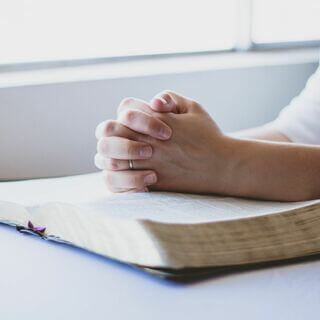
I'd want to invite you to pray with open hands,
Literally,
If you're able.
Just hold your hands open before God right now.
And imagine placing into them.
God's hands.
Every identity you cling to,
Your achievements,
Your failures,
Your titles,
Fears.
And as you do,
Hold in your heart just the simple prayer.
Jesus,
Teach me to find my identity in you alone.
And let your open hands become a prayer of trust.
Jesus.
Teach me to find my identity in you alone.
Forgive us,
God,
For the times when we've built our identity on things that just won't last.
Teach us to know you,
Not with our minds alone,
But with our whole lives.
Free us from comparison,
From the endless need to prove ourselves.
May we be found in you,
And may knowing you become the deepest joy of our lives,
For you alone are enough.
And may grace,
Peace and love go with us and remain with us today and always.
Amen.
Thanks so much for continuing the journey with me today.
Tomorrow,
We're going to continue in the second half of Chapter 3.
Where Paul reminds us that the spiritual life is never complete.
We're always becoming,
Always pressing on,
Always discovering.
That God is still drawing us forward.
So until tomorrow,
Bye for now.