It's really one of the potentially deadliest things about our culture,
This separation between the somatic and living in the head.
Ideas are very dangerous if they're not anchored in human reality,
And human reality is an embodied reality.
The worst atrocities in human history really have to do fundamentally with the total indifference to human suffering,
Which I attribute in part to just being in one's head.
So being in the body is really,
Really important.
Welcome to Mind & Life.
I'm Wendy Hasenkamp.
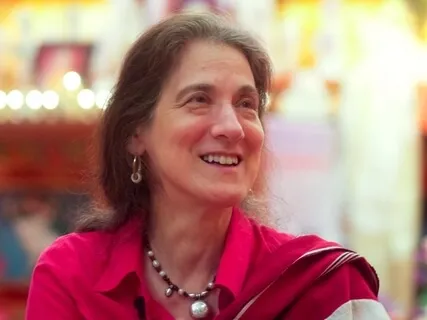
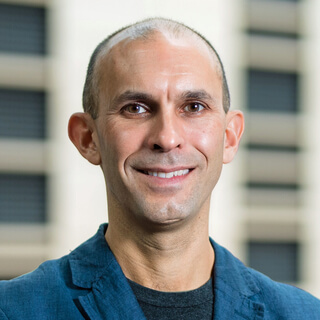
Today I'm speaking with Buddhist scholar Anne Klein.
Anne teaches Buddhism and Tibetan language at Rice University,
Where she's professor of religion.
She's also co-founder of Don Mountain Center for Tibetan Buddhism in Houston,
Where she teaches traditional practices and texts,
As well as basic life arts,
Such as resting in awareness and kindness.
Her passion is for understanding how knowing works,
Especially knowing our minds and bodies,
And through this knowing,
How we can gain compassion.
I spoke with Anne last winter on Zoom,
And our conversation feels as timely today as it did then.
We discuss how she came to see Buddhism as a lens on the mind,
The role of the body in contemplative practice,
And the dangers that can come with not being embodied.
We also talk about the method of inquiry called micro-phenomenology.
This also came up in my conversation with Andreas Ropstorff,
And how she's applying it in various aspects of her work.
Earlier in the episode,
Anne shares her wisdom on the Eastern conception of the subtle or energy body,
The construction of self and other,
How the body can help us break out of rigid self-concepts,
The power of the imagination,
Why we think things will always stay the same,
And how studying the feminine sheds light on interdependence.
As always,
You can check out the show notes for this episode on our website if you'd like to learn more about Anne's work.
And we've also posted a bonus clip there of Anne discussing her retreat center,
Don Mountain.
I find Anne's perspective on the mind to be both refreshing and deeply grounding.
I hope you enjoy this conversation as much as I did.
It's my pleasure to share with you Anne Klein.
Well,
Anne,
Welcome.
Thanks so much for joining us.
Thank you,
Wendy.
It was lovely to be with you.
So I'd be curious to start just hearing how you got interested in Buddhism as a lens on the mind.
Well,
Actually,
It was when I realized that Buddhism was a lens on the mind that it totally hooked me because I did not know that at all.
I,
You know,
In the early 70s and even late 60s,
There wasn't much.
There was a little bit from Zen telling you that you were already a Buddha,
Which I found unfathomable.
And then I went to the University of Wisconsin,
Madison,
Because they had a Buddhist studies program.
And Jeffrey Hopkins invited Kinser Nolan Licton,
Who was the last abbot of Yume Tantra College of Lower Lhasa and as such,
One of the great figures of his generation.
And he was invited to Madison my second year there.
And Jeffrey taught Tibetan,
Which he said would be required to take a seminar with him,
Which of course I wanted to do.
So that was the beginning of my learning anything about Tibetan Buddhism.
And we started reading about dependent arising and about emptiness and compassion and all the great topics that are obviously so nuanced in how they talk about mental slash emotional.
And now I would even say somatic states that I just had never heard anything that precise at that time,
East or West.
And I was just thrilled,
Absolutely thrilled.
I couldn't get enough of it.
And I felt,
Well,
This is what I have to make time for for the rest of my life.
I want to unpack some of those fascinating topics that you mentioned there,
Maybe as we go along.
But I know that you have done a lot of your work on embodiment and the role of the body in contemplative practice.
And I think a lot of the discourse in the contemplative research world so far is really focused on the mind,
Oftentimes viewed as the brain,
But very much also on mental,
Not necessarily embodied experiences.
So can you talk a little bit from your perspective about the role of the body in this path?
I would love to talk about the role of the body,
Because that was actually another huge discovery for me personally.
I mean,
I was in graduate school.
I was all about the brain and knowledge and all of that.
And Kintzernal and Laketon in Madison,
He taught meditation as well as seminars.
And so I actually was a practitioner for 17 years before I discovered that I had a body.
I think that's a common experience.
Well,
I think it is.
I think maybe not so much now.
I mean,
Now in my in my academic and Dharma teaching,
I pointed out right from the beginning,
Because I don't want anybody else to wait quite so long.
But of course,
Buddhism is so intellectually stimulating.
And some of the first practices I taught did seem to emphasize reflection,
Analysis,
Impermanence,
Depenitorizing,
Emptiness.
At the same time,
Using the imagination,
What I now call a trained imagination,
To touch into compassion,
Love,
Which of course involves the body.
It's not just the head.
And so this is very important.
I think it's one of the I'm going to take a little loop out here and maybe a bit of a digression for a moment.
But I feel that it's really one of the potentially deadliest things about our culture,
This separation between the somatic and the ideologue.
There's nothing more dangerous than a disembodied ideologue.
Ideas are very dangerous if they're not anchored in human reality.
And human reality is an embodied reality.
Human body is the instrument of pain as well as pleasure.
And a lot of the worst atrocities in human history really have to do fundamentally with the total indifference to human suffering,
Which I attribute in part to just being in one's head.
People who make policy,
People who cracked India,
Just draw a line on the map.
That's a famous and pernicious example of really,
Really abstract disembodied thinking.
So being in the body is really,
Really important.
And the Cartesian emphasis on objects being out there,
Many people have talked about,
That deeply impacts our experience.
It's not just philosophy.
If some guy in France some time back,
It filters down to us,
Even if we never heard of Descartes.
Yeah,
I've been really struck by that the last several years.
I've been very aware of how much Descartes' ideas continue to really pervade our society.
Can you,
For listeners who might not be familiar,
Summarize a little bit about his view?
Well,
He famously said,
I think therefore I am.
Well,
He didn't say I feel,
And I know what's going on in my body.
Also,
That then coincides with,
As you know,
The tremendous so-called enlightenment,
The emphasis on the rational as opposed to superstitious,
Which was a really important step in history.
And it didn't have to end up the way it did,
But it did function to precipitate what I think Buddhism would consider proclivities that we all have anyway,
Really,
To reify,
To objectify,
To over-substantialize what we think is more out there than it really is.
In other words,
To fail to recognize how much our own experience,
Our own what we might call projections,
Our own imputations,
We put out.
And most of what we see is what we put out there.
So we feel very disconnected.
It's possible for us to rationalize tremendous disconnection.
And that also contributes to legalized cruelty,
It seems to me.
And actually Descartes didn't really only think that,
But he actually wrote about how these body and perception and objects and so on are really kind of connected.
And even he recognized emotion to some degree in some of his famous letters.
But anyway,
That's what got iconicized for us.
And it merges very well with a tendency that human beings do have in any culture to project.
I mean,
It's just something that we do because we have very lively minds and we can intentionally imagine something in a way that is positive for us.
And some of the Tibetan style practices really do that.
That's really what we do.
As you know,
You imagine that you're compassionate.
You just pretend.
Fake it till you make it.
Exactly.
But that's helpful.
It does train your brain in a way I'm sure that neuroscientists could explain.
So but that's a trained imagination.
There's also the confused imagination,
Which is mostly what we walk around and we either think there's more out there than there is,
Or we think there's less than there is.
So for me,
I think anybody who does practice at some level eventually recognizes that body and mind are profoundly interconnected.
They're one dynamic,
Like the drum,
You know,
Is always the sound of the drum.
You can't separate the sound from the drum.
And you can't separate our mind from our body and they each impact the other.
And if I understand neuroscience,
It's not only the brain directing the body,
But the body is sending signals to the brain,
The base nerve,
All of that.
So this is actually coming up now,
Which I think is really,
Really important culturally.
And the whole,
I mean,
Ancient sciences,
Of course,
See body and mind as a single organism.
Yeah.
From the very moment of conception,
There's a little bit of energy,
A little bit of consciousness and just a tiny,
Tiny bit of matter to keep it in place,
So to speak.
And then,
You know,
It grows and then we maybe end up spending,
Paying more attention to the mind.
But when we really pay attention to the mind,
We can't help but see that that itself affects our embodied experience.
So I like to say that certainly Tibetan practice,
Any practice,
Really breathing practice,
Which all the traditions do is a whole body experience.
It's a whole person experience.
Of course,
Your body is involved,
You're in a certain posture,
Your breath energy is involved,
That's what you're attending to.
And that itself affects the other energies.
You know,
We famously feel a little more settled.
We say we feel a little more calm.
We land on some kind of somatic experience.
Oh,
My shoulders are not,
You know,
Up around my ears anymore.
My belly is more relaxed.
There's breath,
There's air coming into it.
It's somatic.
And also we have our own intention of why we're doing it.
Or if we're merging breathing practice with compassion practice,
There's some cognitive element also.
So the cognitive,
The somatic,
And within the somatic,
The body and the energy,
They're all working together.
And that's one of the powerful things about practice,
Because it does engage us as whole beings and as organisms,
Just a living organism loves to be engaged with all of itself.
I mean,
It just makes us more alive.
So more and more,
I think of practice as being whole,
Entering a state of wholeness of some kind.
And that seems very important.
I'd love to hear your take on something that we actually don't talk about much in the Western academic scientific world.
But I know as a very common concept in Eastern thought,
Which is the idea of the subtle body,
And you were mentioning energies and,
You know,
Words like prana,
Chi and Tibetan lung.
These are very central,
As I understand,
For those philosophical systems and even medical systems.
That's true,
But definitely hasn't entered really our Western concept.
Could you talk a little bit about that idea?
Yeah,
Thank you for asking.
Also it's very significant,
Really,
Really significant to understand that appreciation of oneself as an organism,
Whether medically or psychologically,
Or just as a person who's alive and wants to sense into what being alive feels like.
The energetic dimension,
Which I have,
Is sometimes called the energetic sensibility,
Because it is somatic.
It's not,
I want to be clear that it's not an abstract idea.
And I want to say two things about that,
At least to start with.
One is that it is an intrinsic part,
As you said,
Of medical wisdom throughout Asia.
It is said that the Asian systems developed through observation of a living body.
Western systems,
To a large extent,
Developed through working with the dead body.
Interesting.
So we have very,
Very sophisticated how the bones are connected,
How the different blood vessels carry blood here and there,
And so on.
All the material,
Physical material elements.
Exactly.
It's a material part of what is going on.
But even then,
It seems to me,
If we look closely,
There is,
So what is energy?
And Tibetans,
They have definition of everything.
So air,
Which is the element which is associated with energy,
Is that which is light and moving.
So that's what prana is.
It's light and it's moving.
And there's plenty of that in Western medicine.
It's just not put out as a category.
I mean,
Blood moves.
How does it move?
The heart beats.
It sends the blood here and there.
Well,
You don't have to add anything onto the Western system to recognize that there is what Asian traditions will call energy already there.
To talk about energy is really what functions to heal the division that we were just talking about between mind and body.
Because energy,
The wind horse that Tibetans talk about,
The mind,
How does it get to its object?
It rides on energy.
It rides.
It's not just some kind of abstract,
I don't know what it would be.
It has to contact its object.
Another human being,
When you look in the eyes of another human being,
There's what we now call limbic resonance.
And that's a certain kind of energetic,
To use the vocabulary of Asia,
We could say that limbic resonance is coming into sync in a certain way with the energy of the person whose eyes you are looking into.
And we say,
Eyes are the mirrors of the soul.
Well,
There's a connection between the eyes and the heart.
What's in your heart comes out through your eyes somehow.
And traditional physiologies make this very explicit.
But we know very well that looking at another person will shift us.
And it's not just our ideas.
Oh,
This is a really nice person because they're looking at me kindly.
We may think that,
But that's not all that happens.
Something in us,
Perhaps,
Grows softer,
Or maybe resist.
Don't look at me like that.
Some kind of defense coming up.
But that's neither strictly an idea,
Nor is it strictly the body as a material expression,
Either.
It makes a lot of sense to talk about that as an energetic response.
Now,
An energetic response can also be an emotional response.
So we know very well,
Just from our experience in the human body,
That emotions are definitely connected with different kinds of energies.
You're angry,
You're in love,
You're nervous.
It's clear.
And what that does is to say that,
As I said,
Give us a kind of,
And not just a middle ground,
Actually.
It's actually the field in which ideas and the body itself exist,
You could say.
Not just little bits of energy running around the body,
But there is a kind of energetic support.
There's energy everywhere in the body.
One of the great Dzogchen figures of Tibet,
Longchen Ropchen,
Says,
Wisdom exists throughout the body.
And that's a very interesting statement.
It doesn't say it's in the brain.
It exists throughout the body.
And what everybody in Asia knows is that wherever you have mind,
You have some kind of energy supporting you.
So we know the difference between looking out at space and staring at our computer.
Everybody knows how that feels different.
And one way in which this is explained,
According to at least basic Tibetan type traditions,
And probably not limited to Tibet,
Is that,
Okay,
If you're looking at space,
There's actually,
Your energy that is supporting your eye consciousness,
As well as your mental consciousness,
Is actually expanding.
That feels good.
You're staring at your computer,
You know,
Cramped.
Restrictive.
Very restrictive.
And we feel tight and so on.
So it's a very helpful category,
It seems to me,
And really not as strange as if we look at it closely as we might think,
Because we actually operate with knowledge of that all the time.
We just haven't vested it as a kind of nameable category.
It's too bad that it's been captured on the one hand by the oil industry,
As a word,
And on the other hand,
A little bit by new age,
You know.
But,
I mean,
Maybe it's important to say that when the map of prana in the body is extremely complex.
Yeah,
I was going to ask about that.
So I know that there are,
Yeah,
Very detailed maps and multiple maps,
As I understand.
Is there an understanding of how it relates to,
For example,
The nervous system or other material physical systems that we know of in Western science?
That's a great question.
And I'm not sure.
I think there is,
Maybe it's like the Venn diagram,
There's some overlap.
I've heard it said that some are at least beginning to make some kind of connection between what these systems,
The agent systems call the central channel,
Which basically starts sort of mid-belly,
About four fingers down from the navel and four fingers within,
And then goes straight up to the crown and it's open at the crown.
Well,
The place that it's open at the crown is the same place that is very soft when we're born.
Also,
I have heard that the Vagus nerve,
There's some similarities.
The location may or may not be identical,
But there actually,
Actually it was Lama Willa who did an amazing dissertation on the debates that went on in Tibet,
I think 14th centuries,
I forget exactly which centuries,
About the location of the central channel.
You know,
Was it like right up against the spine?
Is it in the middle of the body?
Oh,
Interesting.
Yeah,
It's really interesting.
So at the very least,
There's an agreement that something that runs from deep in the body up to the crown is really important,
East and west.
Right.
And I also wonder,
You know,
The Western scientist in me wonders how with the technologies and tools that we have,
Like,
Is there a way that this could be measured?
Because I feel like that's the currency for something to be quote unquote real,
Right?
It's like if you can actually measure it.
And I know,
Did you work with Cathy Kerr before she passed?
Yes.
I know that she was probably the only person that I knew of who was like really making efforts to do this in a rigorous scientific way.
Wonderful efforts.
And I was invited to be one of the people who was going to be on her project that was going to.
.
.
Yes.
I think it was the Vitality Project.
Is that?
Yes.
I think some of her students are still going to carrying it on.
When I was at Brown,
I met some of them and they said they were,
But I haven't heard anything.
I'll have to check in about that.
Yeah,
I hope so.
Yes.
Where I've gone with that is,
Yeah,
There's measuring through machines.
That's one way.
I'm not going to be the expert who can tell you whether that can be done or not.
But there's also refining our own sense of lived experience,
Which is what Claire Petit Mongeant has been working for so long with.
And I've done several trainings with her and really have incorporated into my everything.
And I do because she did say to me once,
Actually,
At the European Mind Life,
That she really feels that finally the conversation between science and the Eastern ways of understanding body mind is going to depend very much on the ability to be precise about one's own experience.
Yeah,
That makes sense.
I find that very exciting.
Yeah.
And so just so listeners understand this context,
You're referring to Claire Petit Mongeant and her work in what's now called micro phenomenology.
Yes.
Can you give a little overview of what that's about?
Well,
She teaches a very simple method for drawing someone else out,
But one can also draw oneself out by asking pertinent questions about one's experience.
And if we do this in the context of meditation,
We have done,
For example,
When she did a training at Dawn Mountain for people who had been meditating for a long time.
When you really want to delve in a precise way into experience,
It has to be a very boundary to experience.
If we talk about how you feel today,
That's never going to get a really precise description.
So we did a little meditation,
And then we asked people,
I think,
To pay attention to an object and notice what happened.
And then they would get distracted,
Of course,
And then what happened exactly right then.
So in order to do that,
You will ask a person to go back to that experience in a way to relive it,
Not claiming that experiences can be identically reproduced.
But that's not so much the point.
To get back to that feeling that you had in that experience and then answer interesting questions about it.
Like you might discover you felt something in your body.
You might discover that there was a train of memory,
Which turns out to be meaningfully connected to your own sense of not staying with an object,
For example.
Often with these kinds of inquiries,
People actually have very amazing experiences,
Amazing in the sense that we often will say afterwards,
I never dreamed I could talk for 45 minutes about brushing my teeth.
What moment of brushing my teeth.
But the truth is,
We are extraordinarily rich in body,
Speech,
And mind,
And we always have so much going on.
And so to be able to have trained people,
It does take training to interview in the most productive way.
And it takes some training also to allow yourself to really go into your go down there.
And here's the first reaction usually and being interviewed is,
That's not important.
But everything's important.
We're trying to understand.
So you use this method now,
You said in all of your work,
How has it come into play?
So I actually did a class at Rice.
I called it flowing body glowing mind or something like that.
That's great.
I would love to take that.
Oh,
Good.
Please go.
And I introduced,
I mean,
I will not say that I'm teaching micro phenomenology as she does.
But I did introduce key aspects of her training,
Which involves,
For example,
Her first lesson on satellite experience.
So mostly when we talk about experience,
People will often talk about why I went there,
What I was hoping to accomplish,
How good I am as a photographer,
Because I wanted to take pictures,
The time,
The weather,
The fact that I didn't eat breakfast.
These can be important.
But none of those are actual descriptions of experience.
Right.
Those are like all the external conditions.
Exactly.
She calls them satellites.
And the first lesson is to learn for yourself to distinguish between when you're actually talking about experience and when you're talking about,
Oh,
And then she said the darkest thing,
You know,
That's not an experience.
The experience is when you say,
She said that and my body was about to explode.
And then I remembered how my big sister used to,
You know,
And just go into,
As one of my friends said when I was interviewing her at one of Claire's trainings in Europe,
We listened to a sound.
She talked for 45 minutes and she went took her back to her grandmother and the history of her family.
And then she looked up and then she said,
So really,
When you hear a sound,
You hear it through the lens of your whole life.
Yeah,
That's very true.
When you live,
When you talk to anybody,
When you do meditation practice,
You do it through the lens of your whole life.
So I've taught it some at Rice.
I think it was kind of revelatory.
It was hard actually for students to do.
One of the things I pair with that when I teach it in connection with Buddhism,
Which is how I teach it generally,
Is,
You know,
The difference between going back to this Cartesian pervasive sense of just being in one's head,
I find that it's very important to have an experiential sense of the difference between thinking and feeling.
And I have found to my utter astonishment that some people don't know the difference.
People feel that thinking is,
How do you feel?
Well,
I think that's wrong.
And that's really pervasive.
So I suppose that may be part of my mission in life.
It's an important mission.
Get that difference,
You know.
Yeah.
And that speaks to what you were saying about the disconnection from the body,
Right?
And it's just everything's in our mental space.
Exactly.
And it really vitiates vitality,
Living in the head.
It's not enough for us to live in the head,
No matter how brilliant we are.
I think it's so wonderful that at Mind Life,
You usually do some Tai Chi or Qigong or something like that.
It's so great.
Yeah,
Absolutely.
And I think that everybody at Mind Life appreciates energy,
Even if they're not willing to name it.
Cathy Carr herself was not.
That's how we first became friends.
Oh,
Yeah?
Yeah.
It was at one of the Garrison Institute.
I felt it was a little bit of a spacey question from somebody who was charming and young and full of enthusiasm and said,
Well,
Won't you talk about energy?
And Cathy said something like,
Not as a scientist I will.
And then slowly we got to know each other.
Cathy,
You do Tai Chi.
Yeah,
That's funny because it was such a central part of her experience.
But she was so good about making clear what we know through scientific investigation and what we don't.
And I really appreciated that.
Yeah,
Invaluable.
And what was so exciting and so precious and so tragic,
If in fact it's ended,
About her vitality project was that she was going to put those things together.
And she had amazing research,
As you know.
They could say we'll be healing for this culture.
I mean,
Even just to talk the way politicians talk,
The way they make policy,
It's like nothing to do with a human being.
Yeah.
Polluting water,
Profit.
Profit is not always profit.
It is a crushing drain on most other people besides the profiteers.
So I feel that there's a cluster of issues that come together that can contribute to a very mean,
Not life supporting culture.
And being,
Quote,
Objective,
Feeling that the world is out there and there's a chasm between you and the ecosystem that you live in is very problematic.
Failing to realize that everything is so profoundly interconnected is a huge blind spot.
And if you think of it,
It's one of the most pernicious things in the world,
As we know,
Is hatred.
Hatred of who?
Hatred of people who aren't like you and who aren't that much not like you.
They eat the same food.
They have the same bodies.
They have the same emotions.
Oh,
But they're a different color.
Their imagery of the divine is different.
I mean,
Really.
And yet we know how powerful this is,
How dangerous this is.
It's horrifying.
And until recently,
And still in a very few places,
Most people hadn't met people from other cultures.
So it was very easy to tag them as weird or evil or people we should get rid of.
But we have no excuse now.
And maybe this needs to be further emphasized in our educational system.
I mean,
People should be taught in kindergarten that race is really not a thing.
And we need to emphasize the similarities among people,
Similarities in how we react to life and also similarities in where we come from.
We came from the same source,
However we might understand that.
Yeah,
I'd love to talk more about this and this whole idea of othering something that we've been thinking a lot about too with Mind & Life.
And obviously it's very alive in our culture today.
And it seems intrinsically related to the sense of self and the way that we construct our sense of self and therefore almost inherent to that there is the other,
Right?
The non-self.
Absolutely.
I know you've done a lot of thinking about this too and the role of the body and the way we understand ourselves.
Can you say more about that?
Well,
The construction of self in all the ways that that occurs,
Cultural,
Physiological,
Psychological,
Etc.
It fundamentally means drawing a boundary around this and calling itself.
And then as soon as you have a line of self,
As you just said,
Everything else is other.
And we like to do that.
Actually Larry Barcelo,
He wrote this wonderful article called The Vice of Nouning.
So as children,
And I remember this very well,
We gravitate toward what is concrete.
And I think child development theories have shown that it is certain that Piaget and following him there's certain stages that you go through before you can grasp intangibles,
Abstraction.
And he suggests that this is something that doesn't quite go away.
We like to have something that we can draw a line on and say this is this.
And he says that even scientists who know better than anyone how contextualized nuance is essential to account for will like to have a theory that puts a box around things because you can hold on to it and that feels secure.
And that's fundamentally what we do with this idea of self.
Everyone does it.
It's not like people who grow up in Asian cultures don't have an idea of self,
Although it could be quite different from ours.
Alan Rolland,
He had a book called In Search of the Self,
I think.
Anyway,
He did a lot of study in India in particular,
And he said that in India,
The self is really is not an individual.
It's the family unit,
Which would consist probably of the couple,
Their children,
The parents,
Maybe aunts and uncles.
And that would be I really,
That when you say I,
That would be what you were referring to.
Still,
It's a unit that will suffice to other everybody else.
And the very fact that self and other create each other shows how they're interdependent.
You know,
As Shantideva,
The eighth century Indian Buddhist poet famously said,
Self and other are like far and near.
They're relative terms.
Nothing is intrinsically far.
Nothing is intrinsically near.
And so we have these kind of reified notions.
We glom the idea of far and near onto,
And emotionally far and near also,
Onto certain groups.
It's so easy to do.
And then people have noticed that they can gain a lot of power by playing on this natural inclination.
And they will reify those others in certain ways that finally convinces others,
Yet others,
To really be inhumanly disembodied.
It's just like totally forgetting that we're talking about human beings.
And all the things that we've talked about until now,
I think contribute to that capacity in some people,
In all of us actually,
If we don't guard against it.
Is there a way that working with the body,
In your experience,
Can help to maybe loosen our sense of a restricted self?
That's another great question,
Wendy.
Thank you.
I think it's powerful in several ways.
Being sensitive to one's body also puts us in touch with our feelings.
And the kind of situation that we're describing,
The kind of hatred that we're describing,
Or the kind of indifference that we're describing,
Locking teenagers up in a freezing building in Texas,
Separated from their parents,
Is,
We might say it's very hard-hearted.
And I think it's also these people,
If you look at them,
They're not in their bodies.
They're ideologues.
They're focused on whatever it is they want,
Political advantage,
Money,
Just some kind of celebrity.
They're not in their bodies.
If you're in your body,
I feel you can't hear these things and be unconcerned.
So that's one thing.
Let's win in touch with one's own feelings.
People who are not in touch with their own feelings are very unlikely to care about the feelings and experience of others.
Also,
Being in touch with our body actually puts us in the present.
The body is always in the present.
Sensory experience is always in the present.
Thought and ideas almost never are.
So it's grounding,
What we call grounding.
When I say grounding,
I mean,
Okay,
Here,
In conversation,
Emotionally and intellectually,
With all of the permutations that will come out of an action that I am now contemplating,
A lot of information comes through the body.
And we're learning more and more about that,
A lot of information.
So discounting it is really pernicious.
It cuts us off from our energy,
It cuts us off from our feelings,
And cutting off from our own feelings,
As I said,
Means we're less likely to care about others.
It takes us out of the present,
Being with the body keeps us in the present.
And it teaches us things,
You know,
It teaches about impermanence and interdependence.
I realized that when a certain person walks up to me in a certain way,
You know,
I feel something.
So I realized,
Well,
I wasn't feeling that before.
We're affecting each other.
No person is isolated from the influence of anyone else,
Of others at any level,
Even if you're in a room alone,
You have history,
You remember people,
They've impacted you,
We carry those experiences in the body,
The body remembers,
The body remembers.
We don't know why we're tense in a certain place,
Or why we always kind of go like this if somebody moves towards us too directly.
We might not remember,
But physiologically the imprint is there.
Something you were just saying reminded me of you were speaking earlier about the role of the imagination.
And practices in Buddhism that particularly in Tibetan Buddhism,
Maybe,
That intentionally leverage our capacity to imagine in order to become aware of things we might not normally be aware of,
Like you spoke about impermanence in a piece you recently wrote.
Could you unpack that a little bit,
How imagination can work to help us?
Imagination is so lovely.
I mean,
It has so much potential.
And I think one of the things,
At least in Tibetan Buddhism,
One of the fundamental things about reality,
Speaking particularly in a kind of Dzogchen orientation,
Is that there's infinite creativity as possible.
Fundamentally creativity is an inalienable part of reality.
Big bang,
What happens?
It's really,
And so from this space comes a big bang and then everything else follows.
From the space of our minds comes ideas,
And everything comes from that.
Everything we do comes,
Really starts with our mind.
So to be able to train,
To use this capacity to train the mind is a very big deal.
So imagination has a bit of a bad rap in it,
Or that's just imagination.
There's confused imagination,
As I said before,
Most of what we do is that.
But there's trained imagination,
Which actually has perhaps been developed to its hilt from what I understand in sports.
So imagine doing whatever their maneuver correctly,
It absolutely impacts the whole capacity of the body to actually carry it out.
I remember when I was at camp as a kid and I was having trouble coordinating the breast stroke.
You pull your arms out and then when your elbows bend,
Your knees bend,
But until then your legs are straight.
And so I spent most of the night just imagining,
Just decided to do that because I understood what I was supposed to do,
But my body wasn't doing it.
And I imagined it and I got it.
No problem ever since.
Yeah,
I think it is from a neuroscience lens.
The idea is that you're running those circuits.
You don't actually have to be moving or enacting them,
But because they still operate at a lower level of activity when you're just thinking something that you are repatterning and kind of reinforcing circuitry that way.
So it strikes me that these practices are using that same capacity.
Absolutely.
So for example,
I don't know if I'm not in a good mood.
I don't really care about how anybody else feels right now,
But am I willing and I feel my resistance to imagine what it would be like to,
Oh,
Put myself in their shoes for a moment.
Oh,
They've just had a loss.
They're hungry.
They're afraid and start to encourage.
I would say encourage,
But a little imagination helps.
Imagining these people's faces,
You know,
Round-eyed with fear or little kids holding their stomach or shaking with fever,
Right?
We could decide to imagine that as a way to bring forth a quality that we've decided we want to cultivate.
So this is just not,
This is very purposeful.
I can imagine happy kids too,
But I'm going to do this because I want to develop my empathy or compassion.
So this kind of imagining is used a lot.
I'm writing about it now in Mungchimba's Seven Trainings.
So it's used,
Or to understand impermanence,
To bring the seasons to mind.
Oh yeah,
The trees are really different in the fall.
Or I really look different 10 years ago.
And my mother,
When I see a picture of her as a child,
I can't even recognize her.
So we bring these images to mind as a way of teaching ourselves.
That's one thing.
And then in the Tibetan way,
What is most common,
What I'm really interested in,
Just in learning a little bit about how this might work.
So a lot of Tibetan practice,
As you know,
Is imagining really that,
Let's say,
Green Tara,
This female enlightened being,
Or any number of others,
Buddha,
Is right in front of you.
So that means you're entering the world of your imaginary.
And it feels to me more and more that there's something that one does,
Right,
To leave behind,
If only for a moment,
And if only partially,
The ordinary surround,
And feel that,
No,
It's not just my bookshelves here.
I have Tara,
You know,
And she's made of light.
And then,
So that's one whole thing to see how that affects one.
How do I feel being in front of an enlightened being?
And then how do I feel if I,
In many,
Many practices,
One of the main things that one does is imagine that one's own body is light?
And I'm really curious.
And that is somatically very powerful in my experience and experience of,
I think,
Most people who do it in an intensive way,
Or having light wash through your body and wash out whatever illness,
Etc.
You need to get rid of.
It's really a powerful experience.
And it is not like ordinary imagining.
And it is not like thinking,
Either.
And often you're chanting,
Also,
So you've got that sound vibration going through you.
So there's something energy,
There's something cognitive,
And just your whole sense of the field that you're in changes.
And at the very least,
It means you're not,
As in that moment,
Under the power of whatever happens to be in front of your senses.
And that's quite important for many things in Buddhist practice.
It's important for cultivating equanimity,
So that you have a power to remain as you are,
As it were.
You know,
Even people are smiling,
Or they're being really,
Really nasty.
And equanimity doesn't mean you're stupid,
It doesn't mean you don't know that they're doing something wrong or even dangerous,
And protect yourself.
But it doesn't contract your heart,
It normally would.
So you keep that space open through being free of that kind of reactivity.
And so if you're imagining your body as light,
That gives you,
In a way,
A further remove from a certain kind of reactivity.
You're reacting now to what you have chosen for a particular purpose to bring to mind.
And then that's the world you're living in at that moment.
That strikes me as really related to the idea of resilience,
And of Western medicine and psychology,
Equanimity,
And being able to bounce back from adversity or kind of remove a little bit from the immediate circumstances.
Yeah,
Very,
Very important connection.
In the piece you wrote about the imagination,
And you were talking about using it to recognize impermanence more,
And you just gave some examples of how you would do that,
Something clicked for me,
Because you were just saying something that I think is very obvious to all of us about,
You know,
We see someone years later,
And they look different,
And somehow that's a surprise.
Or,
You know,
We think everything is just,
We just assume everything will stay the same,
Somehow.
No,
It's crazy.
We totally do it.
Yeah,
That's really a common experience.
And so I started thinking about why,
You know,
Why would our minds and our brains be set up like that?
Because it's clearly not the way things are,
You know,
In the long term.
And I had two thoughts about it,
Both of which I need to think more about.
But one is,
Are you familiar with ideas that are really gaining a lot of traction now about the mind as a prediction machine or predictive mind?
No,
I would like to.
Yeah.
Okay,
So this is a massive oversimplification,
But,
And I may not be getting it totally right,
But my understanding is that the view is that a lot of what the brain is up to is predicting what should be coming next.
Oh,
I have heard this.
I didn't realize it was a thing,
But I have heard that.
Yeah,
Okay.
Yeah,
There's models being developed and it's kind of a very popular idea in cognitive science now.
And it's actually a very old idea,
The mind as being involved in prediction,
But it's becoming more formalized now mathematically and being applied as we learn more about anatomical structures and things like that.
So the general idea that I take from it is that we have this model of the world that we are operating with based on all of our experiences and we're kind of using that to predict what we think is most likely to be happening next.
And then when things don't match,
That's called a prediction error and that motivates us to do any number of things to remedy that error.
So in that case,
The prediction,
You could say,
Is kind of always the same.
It's just like a default that it stays the same.
Yes,
Uh-huh.
And to me,
That was interesting to think about,
Like even just in a very simple way,
You could think about a visual scene.
And if you're just sitting still,
That visual scene,
It's a pretty safe bet to predict that the majority of that incoming information will remain the same unless you move or someone comes in or something happens.
But it's kind of a safe bet maybe as a default that things are going to stay as they are.
Or maybe it's just simpler to do that because you wouldn't know how they would change,
Right?
And if you don't have any information suggesting that they would change in a certain way.
And it could also be the lowest energy state.
So a lot of the things I've been thinking more and more about brains and minds is that there's such an energy conservation rule about it.
And so whatever is kind of the lowest energy is what we will tend to do.
Similarly with habits in the mind and things like that,
They're more hardwired and they really take less energy to enact.
So I'm just thinking about that as like maybe it takes less energy to assume that everything will stay the same than to generate ideas about what it could be.
But then also I think we're set up very much to operate for the immediate future in our minds and bodies.
We don't think a lot about long term.
There's a lot of work about,
For example,
With climate change,
Like we're not designed to,
Even though we understand future consequences,
We don't act on them.
So maybe it is more about the immediate.
In most cases,
You see someone,
You see them the next day,
They're going to pretty much look the same.
And so we don't understand,
Like we're not as bombarded with the changes.
I'm not sure.
Anyway,
Those are just things I was thinking about.
I think that's really interesting.
And I think there's a lot to it.
I think the energy conservation part is surely there.
And I think there's also an emotional bit to it.
We really are creatures who want stability.
We don't want things to change in ways that will surprise or endanger us.
So it's just more soothing and in that way also,
I suppose,
Conserving of energy.
That's true.
Staying the same is safe.
It's safe.
I survived it before.
It'll be okay now too.
And I also think that this thing about the vice of nouning,
It's just somehow easier emotionally,
Energetically,
Pedagogically somehow to grasp these things that are clear cut.
And I'm reminded that in psychology,
They talk about invariant representation.
So it's the same idea.
Basically,
We get stuck in our head that I'm a lousy cook or nobody wants to talk to me at parties or something like that.
And one thing that we discover,
I think,
By going into the body is that we have a lot of ideas about ourselves and a lot of self judgment,
Which often have very little to do in reality,
But they're absolutely fixed.
And it's hard to change your story.
This is one of the things that I think therapists know and Buddhist practitioners and teachers know that even when there's genuine progress,
The person will say,
What's the use?
Nothing is changing.
Even when they just told you an amazing story about how they handled a difficult situation differently than they ever could before.
And then the next moment they'll say,
But I don't think my meditation or my therapy or is helping.
And Harvey and I talk a lot about this and the difficulty of accepting a new narrative because it does mean new identity.
And that's a change in that theory,
Even if it's what you want.
I was going to ask you personally,
What have you noticed for yourself if you have experiences to share in all of your work with the body?
Are there ways that you're different now or transformations that you've experienced?
Yeah,
That's a great question.
It's completely,
It's a process.
I mean,
It's not black and white for me,
But it's,
Yeah,
Definitely I pay more attention to or I'm more aware of what I am actually experiencing.
In fact,
I've learned that I'm very aware of what I'm experiencing.
If I open my mind to it and that a lot of information comes,
Not as ideas,
But maybe as colors and shapes or feeling that I wouldn't have noticed otherwise.
And that's very constant actually with how Tibetan practice expresses itself in the body.
There are colors,
There are feelings,
Certain parts of the body.
So all of that has been very helpful.
And I think it's also helped me to become a little less spacey.
I'm definitely an air person,
You know,
Feet barely touch the ground,
But that is changing and I'm grateful for that.
I actually can feel the ground now.
And that is something very important.
I think groundedness is actually crucial for kindness.
You can just space out and say,
La-la-dee-da,
Everything is happy because you're flying in the sky and you're not noticing anything.
So yeah,
Those kinds of changes.
One other thing that I know you have studied a lot is the role of the feminine in Buddhism and contemplation.
I just wanted to open that door if there's anything you feel is relevant to the conversation we've had.
Well,
I think it's not accidental that a lot of the people who have been studying and interested in the body,
And I would include Claire Petit-Mont-Jean really,
Even though she doesn't frame it that way,
Because in fact,
The process of inquiry that she teaches does inevitably involve looking at your body,
Have been women.
And culturally,
In Western culture,
The guy's the head,
The brain,
The rational,
And women are the body.
And feminists had been writing about that since feminists,
At least more modern feminism,
Began.
So it's probably not an accident.
And it's probably not an accident that a woman in academia doesn't pay attention to her body for a good while because nobody else is supposed to anyway.
You know,
It's kind of not what you're there for.
And it's just kind of so hard in graduate school anyhow,
To keep everything in your head.
So the emphasis goes there.
And then after a while,
If you're lucky,
Finally,
Like,
No,
This is not it.
This is not the whole thing.
And I think the problem,
Which I try to talk about in my book,
The Meaning of the Great Bliss Queen,
Is still that women are so,
I mean,
I think partly what happens maybe in academia is a reaction against the over identification culturally of women with the body.
And you know,
We don't want that.
And yet that's what makes us women in a certain way,
Gender wise.
And that,
Of course,
Is getting even more complicated in this day and age.
So we don't want to,
I think it's kind of like a middle way thing for the culture that maybe women are the canaries in the coal mine on this.
To be too in the head is no good.
To get assimilated entirely to the value or visual exquisiteness or muscular accomplishments of the body,
You know,
That's also reductionistic for men or women.
So what interested me about thinking about the whole gender,
Feminine,
Female nexus of terms is because I started to see it as rather analogous to what the Buddhists were talking about.
In other words,
Being the old debate,
You know,
The essentialist constructionist conversation among feminists.
So,
You know,
Some feminists said,
Why is it when women are finally getting some voice in the world that all of a sudden we have deconstruction and we even have Buddhism talking about no self,
We don't want to hear about no self,
We're about to get one.
And so that's a kind of,
It's very important point.
And it's also kind of confusion of terms,
I think.
And so,
I mean,
There are problems with both the essentialists and the constructionist position taken to extremes.
And I think that's what I was talking about.
They kind of are analogous in Buddhism to the permanent and nihilist,
You know,
Eternalist and nihilistic positions.
Either you have nothing to go on,
Or you are essentially,
You know,
A woman as if there was ever an essential woman who some essential quality that makes one a woman,
But still,
There is a category that has some meaning.
So,
Those kinds of,
You know,
Kind of questions,
I think,
Are kind of at the heart of the whole business of self and other and connection and disconnection and interdependence.
And now that there's more acknowledgement of spectrum of sexual identities,
I mean,
That also makes sense.
There's a spectrum of everything.
And then look at how the culture is desperately trying to hold on to the vice of nouning.
You know,
We have male and female,
And that's kind of clean and clear cut.
And that's what we're used to.
And that's what we want,
Because that's the way it is.
But obviously,
That's not the way it is.
So you know,
It seems like,
Okay,
I think bottom line,
Whether we're talking about gender issues,
Self other issues,
The world getting along issues.
If we understand the interdependent arising of all beings on this planet,
I think we have to recognize that holding to the vice of nouning of nation and national boundaries,
It simply can't work anymore.
So I think a bottom line is something like that,
That there really isn't a sealed boundary around anything,
A nation,
A gender.
It doesn't mean that everything is just poof,
And you can mix everything together anyway,
And willy nilly without thinking about it.
But things are more open and fluid than we tend to recognize.
And I suppose that's frightening.
But that's the way it is.
That's just the way the world is.
It's a universe,
You know,
And even if there are multi universes,
Then it's a multiverse.
But there's some kind of huge field that we are all a part of and affected by and affect.
And somehow we have to figure out at every level,
You know,
Personal relationships,
Distribution of land and wealth,
Gender allocation,
Self othering.
I mean,
We just have to figure out how to live in the truth of that.
And the good thing is that now it's not only philosophies and religions that are pointing this out,
Science is also.
And maybe we can kind of get together on this and make it something that is people can really absorb and live in the light of.
That's a wonderful note to end on,
I think.
Thank you so much for taking the time.
I really enjoyed chatting with you.
That was great.
Thank you.
Thank you for asking me and putting thought into it and having these great questions.