In this episode of the Meditation Mind podcast,
We talk about mysticism,
Intuition and Kabbalah.
Honest and open to all religions,
All traditions,
All ages and all levels of experience.
Radically accessible,
Pragmatic and eye-opening.
Simply for everyone.
Welcome to the Meditation Mind podcast.
We'll take you on a journey across the globe and talk with others about their practice,
The lessons they've learned and what they want the world to know.
Good day and welcome to the podcast.
I'm your host,
Christian Netzon and I'm incredibly grateful you've joined us today.
As you might have noticed,
We have a fresh new logo and a new name.
Hope you enjoy it.
Without further ado,
Let's dive into this talk I have with Zev about mysticism and Kabbalah.
So today on the podcast,
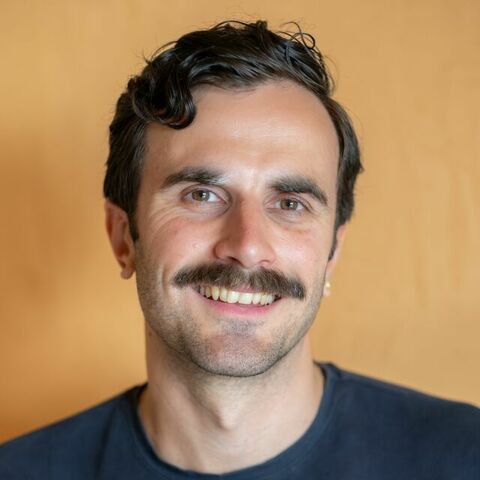
Our guest is Zev Slevin.
Zev has been studying and teaching religious topics for a few years now and his expertise being in Judaism and now slowly in mysticism in general.
He started a YouTube channel dipping into different topics like talks about Spinoza,
Schopenhauer,
Buddhism,
Kabbalah,
Suvism,
Many other topics.
Central to his work is mysticism and if I may say so,
Unity.
So welcome Zev,
Great to talk to you.
Thank you very much.
Great to be here.
Thank you so much.
Yeah,
So tell me what exactly is Project Unity?
So Project Unity is kind of something I cooked up like one night at 2,
3 a.
M.
I had been researching,
I got into,
I'm raised,
I'm Jewish,
I was raised Orthodox.
So in a very different sort of religious uprising than you were raised,
But I guess similar in some ways because both quite,
You know,
Extreme,
Seriously religious community,
Different spectrums.
And then through a strange course of events,
We can talk about it,
I got into philosophy and then mysticism and not just Jewish philosophy and Jewish mysticism,
But philosophy and mysticism in a global sense.
And I began,
It began sort of slowly and then as I had more free time because I had taken a break from teaching,
I really threw myself into this research of history and philosophy and mysticism.
And,
But I was doing it all independently.
I wasn't doing it in university.
I wasn't doing it with peers and with mentors and it was a very lonely project.
And I wanted people to unite with,
To explore the ideas ironically enough of unity itself,
Which is what I find mysticism to be mainly about.
So I started to just,
I began with a book review.
That was the first thing I did,
William Stace's Philosophy of Mysticism.
And then people really liked it more.
And then I'm like,
Why am I doing this myself?
I should get my friends,
My colleagues,
My interlocutors,
People that I know through my research that are also researching this to come and share their ideas.
And that's what I decided to call Project Unity to try to bring people on board,
To try bring creators on board to share their ideas in all their different forms and mediums and contents.
I mean,
The Internet's an incredible place because there is this ability to share freely,
Reach people in a crazy way.
And I think there's almost a responsibility for people that feel like they have something valuable,
Knowledge which they have gained.
Why wouldn't you share it?
And you get a chance to interact with amazing people like yourself and people from all over the world that reach out through comments and questions.
It's just so,
So the Project Unity is trying to get people on board together to share.
In my case,
It's specifically about mysticism,
But really anything that's positive and helpful and will move the world into a better,
Kinder,
Happier place together.
So that's kind of the way behind the project.
That's awesome.
Yeah,
I mean,
That's the reason we got into contact.
I saw you interacted on Reddit,
An Internet forum,
And I looked up your stuff and it was really interesting.
You do YouTube videos,
You have a podcast,
Different kinds of things,
But they all are about this sort of connecting,
Right?
They're connecting the dots,
So to say.
Where did that sort of connecting the dots come from?
Because,
I mean,
You weren't necessarily raised in a mystical family,
Were you?
Right,
So let's try to make some sense that connecting the dots is very much what it is,
Because it is finding all of these seemingly separate and disparate ideas and showing how they're really united and really pointing the same direction.
I was raised in a Hasidic Jewish family,
Which is an ultra-orthodox family,
And the Hasidic community technically is a mystical community.
The philosophy of Hasidism is a mystical one,
Beginning in the 18th century with Rabbi Israel,
The Baal Shem,
And we can talk about that if you want the history of it.
But it's a mysticism which is not pluralistic,
It's not universalistic,
It's very parochial,
It's very,
We have the truth and this is how it is.
And even just the idea that there was a concept of mysticism that other traditions had as well was beyond anything which I could have comprehended as a teenager.
And when I was like 16 or 17 or so,
I encountered,
Just through a novel actually,
I encountered biblical Christian mysticism.
And I was interested in Second Temple literature and in the New Testament,
Sort of from a Jewish history standpoint,
And then to discover that there was this thing called Christian mysticism,
And that many of the concepts and ideas which they were talking about were similar to the ideas that were being studied in my own very religious academies,
Yeshivot.
That blew my mind.
And then as I began to discover,
Wow,
There's also mysticism in Islam,
And there's also mysticism in Hinduism and in Buddhism and Taoism and in Native American traditions,
And it just,
And then I realized,
Wow,
There's this global story here and it's not just,
So I actually,
I was raised in a mystical community,
But in a mystical community that was very much focused and sort of had these blinders on where it only saw its own mysticism.
And then through a strange turn of events,
I was fortunate enough to see that it's actually a global phenomenon and a tremendously beautiful phenomenon.
So maybe for the listeners who really don't know what mysticism is,
Could you give a short summary or a briefing of what it is?
Might be hard,
But.
.
.
Finding mysticism is a complicated subject and there have been whole books written on it.
The problem was initially the definitions of mysticism were coming from predominantly Christian scholars with a very sort of Christocentric view without taking into account the global data which would have to fit into a true definition of mysticism.
I mean,
That's of course being corrected for in contemporary scholarship.
The definition of mysticism,
Which appeals to me both intellectually and looking at the material and both emotionally and sort of resonates deeply,
Is simply the quest after,
And this may be no surprise based on the name that I gave to my project,
Is the quest for unity.
And that means both unity in experience,
That we can have an experience where the sense of a separate self,
Of a separate ego,
Which is unconnected and unattached to what's going on around it and sort of lives independently,
That dissolves away and one feels one with their surroundings,
Which is a very common experience now.
And so an experience in theory when we build theologies,
Theosophies,
Mythologies,
Metaphysics,
Scientific theories around a unitive system,
So systems that aren't predicated on duality or parietal division or divisiveness,
But they're predicated on some unifying feature,
Function,
Divinity,
Whatever it is.
And then in practice,
When we try and do practices to live in accordance with that ethically,
Ritually.
So I see those three components as so unity in experience theory and practice is how I like to define it.
There's a great line from a contemporary Jewish mystic that says,
The mystic is the one who senses that beneath the brokenness and beneath the duality and multiplicity that we observe in everyday reality,
There underlies a deeper unity that unites and combines everything.
And that's really the definition which appeals to me.
But I don't have a sort of a homogeny on the definition and people will disagree and I welcome that.
Yeah,
Because it's a quite old,
I don't know if you could call it tradition,
But sort of thing.
Because in your video about the history of mysticism,
You go back all the way to shamanism and really early on,
This sort of seeking of unity with the universe or the gods or whatever it was up until now.
Yeah,
Absolutely.
I think so.
So some historians like to call those periods of sort of shamanism and animism as proto mysticism.
The belief that the human is united with nature around them and that they live in a symbiotic relationship and they're not differentiated.
And that somehow fundamentally they're one with what surrounds them goes back a really,
Really long time.
I mean,
In recorded history,
I think it goes back until the beginning of recorded history.
I think it really goes back as far as we can tell with humans.
And there's something,
There seems to be something very innate and universal and perennial about this feeling,
This idea,
Which is cool.
Yeah.
And so you went from your journey where you grew up,
This Hasidic fate,
You went to explore other sort of.
.
.
First,
You came into the country with Christian mysticism,
But you also named the Islam mysticism,
Which I assume is Sufism,
Sufi and Hindu and Buddhist.
And I can imagine that there's people who might not have a lot to do with God,
For instance,
Or might not have so much to do with divinity.
Is it still for them,
Mysticism?
Is that still,
Could that still be part of their.
.
.
Right,
Right.
So the relationship between mysticism and God,
Mysticism and theology is a very fascinating one.
And because I grew up in a deeply religious household,
Deeply believing in God,
That's a question which has always been central to my thinking.
I haven't really explored this yet on the channel publicly because it's still quite sensitive and it's still something which I'm working through internally.
But I think that the conception of the divine,
The theology that the mystics typically have,
And I'm speaking here in a very broad umbrella term because there are many mystics and they don't all see eye to eye on all issues.
But it seems like the idea that the mystics have of God is a radically different one than traditional religions have of God in their more orthodox,
Exoteric theologies.
And it's an idea of God,
Which I find to actually be more compelling and patterable intellectually.
And it's an idea of God,
Which many people who are on the spectrum of atheism are actually more comfortable with accepting and with buying into.
Because it doesn't necessarily demand that there be sort of a personal,
Patriarchal,
Fatherly figure who has this sort of choice and agency and wants to see who wins wars.
But it's a God which is much more related to a philosophical abstraction,
A principle.
It's almost like the God of Spinoza,
For example,
Which is both at the same time very mystical and very non theistic.
Yeah.
So the idea of God that the mystics have is a really incredible one.
And I think it's one which leaves room for people who aren't comfortable with traditional ideas of God to still find a place for divinity and for deity and for the sacred in an otherwise secular scientific life.
And I think that the bridge between science and mysticism is a very strong one.
And it's not undermined by its sort of God talk.
Right.
I mean,
For me personally,
The quest sort of,
Or the journey towards the unknown,
Whatever it is that is out there,
Or whatever it is that is outside of my self,
So to say.
I think that's very relatable for basically everyone on this entire planet,
This sort of quest of finding out what is out there,
Whether it's discovering new land or discovering a new planet or discovering a new sort of conscious state or perspective.
And I think,
In that way,
For me,
That that really resonates,
Because I find that,
You know,
At some point in my life,
I got into Zen Buddhism.
And the reason I got into it is because what happened when I read the stories is first,
I did not understand what was going on.
So there was sort of didn't feel good,
Right?
And when you don't understand something,
It doesn't feel good.
You feel a little bit stupid.
You feel maybe even a little bit angry or annoyed.
But something inside you also wants to know what is going on?
Like,
Why?
Why don't I understand it?
And how can I understand it,
And you start to go on this quest of discovering what what it means and discovering what it can mean for you.
And I love that.
I love that quest.
And that keeps me,
You know,
That's the reason for me why I did this whole meditation of mindfulness.
Because all of that are tools to discover what is outside of my usual perspective,
Maybe so to say.
I don't know if that makes sense.
I think you're right about that.
I think there is this quest of wonder,
Of awe,
Of mystery that drives us all and propels us all.
And whether that is to explore the galaxy or explore the globe or explore the inner recesses of the self.
There's that similar drive,
And it's the same drive which spurs on religious imagination and scientific inquiry.
I think that's true.
Also with the community,
I've seen so many different people,
Also from different backgrounds just come together and finding a shared space where they can share what they're doing.
And I think language sometimes is the hardest part of that because everyone has,
You know,
Different definitions of what exactly is consciousness or universal thing is.
Words are a tricky thing and words can often like,
Can get,
I mean particularly from an Eastern tradition,
Words are the thing that separate reality.
Whereas reality without the filter of words can be perceived in its whole totality.
It's the labeling and naming and separating of things.
But it's interesting because from,
It's actually from perspective of Jewish mysticism,
Which I think is quite unique in this regard.
Words are actually seen as part of the solution and not part of the disease.
Where words are seen as a creative thing because God in the traditional accounts of Genesis creates the world with speech,
With 10 utterances.
And the Kabbalists see the usages of words as a way to manifest ideas and to bring,
To draw down the energy from the realms of consciousness,
From the mind,
Which is like transcendent,
Keter,
Chachmabinah,
The different supernal labels which they have for the minds.
And then there comes,
We filter that through our body,
Through our emotions.
And then that comes out in speech and speech has a creative function and we create narratives and we create relationships and we create realities through words.
So as much as words can separate us,
They can also draw us together.
I mean,
If you're a songwriter and a poet,
You know that the power that words have to evoke emotion and to connect people and to show us,
You know,
The shared struggles and humanity that we have.
Right.
In our community,
There's quite some people interested in Kabbalah,
But it seems that there's very limited knowledge or really insightful books about it in English.
Now,
I have a friend who said it's actually because they want to keep it that way.
But you probably know a lot more about that than I do.
So what is your take on Kabbalah and why it's actually so secretive in a way?
Yeah,
Yeah.
So,
I mean,
Historically,
That's very much the case.
Kabbalah was kept very much a secret and there were many restrictions about who Kabbalah could be taught to and how can be taught to them.
Typically,
One had to be a male over the age of 40.
They had to be fully,
They had to be Jewish.
They had to be fully versed in all of the Jewish sort of general knowledge before even daring to begin to learn the secrets of Kabbalah.
It could only be taught to one or two students at a time.
It couldn't be taught to more than that.
So the transmission was very tight,
Very regulated.
And the person who was being taught would be supervised for like a few years in advance to see whether they were,
Whether they had the aptitude and the correct constitution and morals to receive this tremendous wisdom.
That was the case for hundreds of years.
And that sort of tradition of secrecy and esotericism was very deeply baked into the DNA of Kabbalah.
Things changed with the beginning of the Hasidic movement into which one of the dynasties my community belongs to,
My family was born into.
Where the Hasidic ideology was to,
That it was time that the world was ready to take these secrets into and to let them be free,
Let them be taught en masse to whoever was willing to hear.
And this received a lot of antagonism and a lot of detractors from within the Orthodox Jewish community.
It was a whole massive camp.
Literally,
They called themselves the opponents,
The mitzvotim in Hebrew,
Who thought this was the worst idea ever.
And this was the end of Judaism and the end of Kabbalah.
And there's this interesting relationship between mysticism and esotericism,
Between the mystical and the occult.
How much of it does need to be kept hidden?
How much of its power is in the fact that it's secret?
How much can we actually share without losing its energy?
But,
I mean,
History has shown that the Hasidic movement has sort of won its place in Jewish history and is now considered an Orthodox and a sort of viable path in authentic Judaism,
Whatever that means.
And so firstly,
That's been one proponent to allow Kabbalah,
At least through the interpretation of Hasidic thought,
To enter into a wider circulation.
I mean,
The Hasidic movement is not a huge movement and not everyone in the world has heard about it.
But through the writings of people like Madam Gubber and Heshal and a handful of others who wrote to a wider public,
Hasidic ideas are known out there,
Whereas the Kabbalah were really just a handful of people in each generation.
It didn't go beyond 10 people.
You could count on your hands the amount of people in one generation who were studying the seriousness of Kabbalah.
And now that's changed.
I mean,
So with there's been three things I think that's really changed the playing field of Kabbalah.
One is the emergence of Hasidut,
Which on principle,
One of those secrets to be no longer secrets to be disseminated.
Number two is the fact that the academic world,
Beginning with Professor Gershon Shalom,
Who began the modern academic study of Jewish mysticism and Kabbalah.
And so he brought that into an academic place.
And academia is free for anyone.
Anyone can sign up and take a course.
So that's opened up the world as well.
So the scholastic,
Historical,
Critical,
Analytical,
Which is very different from the practitioners themselves studying it,
But it still opens up to people who don't have access to a practitioner's space or language.
And number three,
I think,
Is the Internet where ideas are now free to be shared.
And sort of what Gutenberg did to the world with this printing press,
The Internet has now put on steroids.
So there are,
I mean,
It's a bit different because I live in that world,
But there's a tremendous amount of publications from a whole spectrum of fields,
Both from traditional Kabbalists,
From academic Kabbalists,
From people that are sort of in between the two of them,
From secular.
And there's a great amount of literature available on Kabbalah.
I did a video on the channel like top 10 books on mysticism.
I probably do one top 10 books on Kabbalah if people still don't know what's.
Yeah.
Yeah.
And part of the hard work is like seeding,
Filtering through what's rubbish and what's good.
So that's a great idea.
Maybe we'll do that.
But yeah,
I mean,
There are definitely from each one of those camps,
From a traditional practitioners point of view,
From an academics point of view,
From an outsider's point of view,
There are definitely some very good works that have been written.
I mean,
Gershon Shalom is the is the like sort of the father figure of the academic world.
People like Aria Kaplan have written a tremendous amount from within the Kabbalistic world.
And so,
I mean,
The books,
The ideas are out there.
They're still very obtrusive and obscure and esoteric.
And it takes it really does take a long time until one develops an intimacy and understanding with the world system that Kabbalah is.
Because it's really all encompassing,
All encompassing system.
It's like this huge map of reality,
Of the psyche,
Of the soul,
Of God that all like interweaves and interrelates.
And it takes time.
It takes definitely a few years until one is really comfortable with it.
But that doesn't mean that one can't spend a few days or a few weeks at least pick up the basic principles,
The basic cosmological structure and the basic ideas and the basic materialogy.
And it's a beautiful system like like like everyone,
Like every of the mystical systems,
I feel.
Yeah,
But it's super interesting that,
You know,
If you compare it to ingredients,
You have sort of a pure ingredient.
Let's say,
I don't know,
You have mint leaves,
Right?
And they come from a certain place and they have a certain flavor.
And I feel that there's sort of this is sort of a paradox about sharing all of the information that comes from different places is that it can also at some point taste like nothing.
And I don't mean that,
You know,
As a bash to anyone.
It's just I find that this is how I entered Zen.
I entered Zen by interpreting everything that I heard in a sort of already known for me sometimes new age,
Sometimes Christian way.
And what happened then is if,
You know,
My teacher at that point didn't correct me and didn't sort of say like,
You know,
That's great,
But that's not what this is,
Then it probably would have formed some sort of mishmash of all these different ideas.
And but losing some of its essence.
And I think what you mentioned is very,
I think it's a very valid point.
Once you share something,
It also becomes less of you.
You're not,
You know,
It's,
It's like a song once you put it online.
It's not your song anymore.
In a way,
It's everyone's song,
And everyone can do anything with it all the time,
And you don't have real control over it.
So,
So that seems to be sort of a,
Yeah,
Kind of two polarities,
You know,
Sharing and opening up some of the wisdom but also losing the energy,
Like you said,
And losing maybe some of its essence and,
And,
Yeah,
Just,
Yeah.
Yeah,
It's a tricky,
It's a tricky thing.
I mean,
This is this is like a constant,
Like,
Problem in when we're studying when we're trying to study something else's tradition or culture or language or art or music.
Often I think in philosophy it's called the hermeneutical circle from people like Gadamer who was a very famous philosopher of hermeneutics of interpretation,
Essentially,
Where we come to the other tradition and we're bringing our own lenses interpretive tradition on our own cultural mindset and linguistic suppositions and,
And then we imply we put all that baggage on what we're trying to learn and that's the only way we can learn it then we bring that back to us.
And as we bring it back we're sort of polluting diluting distorting the material that we're bringing back,
But I think,
I think there's,
I mean,
The issue is that there's really no other way to,
To explore something which is outside of us,
Because we come with all that and I think,
I mean,
The,
I think,
Like the ultimate golden like balance is to find a place where we can acknowledge everything that we're bringing to whatever we're exploring that takes a Western person exploring Buddhism and Taoism I mean,
I remember Alan Watts,
He writes one of these books that something that he learned from Christian Humphrey he was like the person who introduced him to Buddhism,
Is that no matter how hard he tries and Alan Watts is the man responsible for for spreading Zen was single handedly to the Western world.
Yeah,
That no matter how hard he tried.
He would always be a Westerner and and Eastern thought would always be far dim.
So I think on the one hand we have to acknowledge that.
I mean that that applies to me studying,
You know the great Christian mystics you know,
Jacob Burma trees have a lot of St.
John the cross my stack up,
I know that I'll always be a foreigner to them.
And on the other hand,
To recognize that.
We're all human and there is something common and there is a point where we can relate and there is a point where we can find commonality and unless we do find that commonality,
Then we're bound to be strangers and to be ostracized from one another forever.
So,
I guess like in everything in life it's about finding the correct balance,
Right,
Between those two sides.
Yeah,
So there's no need for fear of losing an essence.
No,
I,
Because I think I think the essence goes beyond,
I believe that the essence I mean I ascribe to sort of a perennialist interpretation of mysticism,
Which isn't,
Which isn't,
Which is a controversial position in the Academy today.
It's kind of fallen out of favor in the past 20 years but I do believe that there isn't there is an essence with which which goes deeper which transcends the differences that divide us I think what unites us is greater than what divides us essentially.
So,
So we should approach it with with caution and with respect and with trepidation,
But not with fear and not with them.
I think we should approach it with with hope and with them with optimism.
Right.
And so,
What is the connection between actually mysticism and intuition,
If there is such a connection.
Yeah.
So,
To use the technical jargon is is apophatic apophasis literally means to,
To,
By way of negation that that we realize that when we're talking about ultimate reality,
We can no longer talk,
We can no longer say any positive positive positive means affirmative statements.
That is great we can't see being is magnificent this kind because it goes beyond any of those things and all we could say is it is,
It's not limited it's not malevolent it's not and that's,
That's,
That's called the via negative in begins with pseudo Dionysus and Platonism in the West and in in the east they call it neti neti the not not the negating of negation.
And I think that what this leads one too often is a place of any citizen Christian mysticism Jewish mysticism really across the board,
A place of silence,
Where where words are inadequate to to describe reality as reality is unfiltered and unmitigated.
And I think the place of silence and wordlessness and intuition,
Often related because intuition is nothing that we can put down towards I asked them to explain to me what,
What is what does it feel like to intuit something what is it,
You can get sort of all sorts of descriptions and we'll actually begin to talk about the body usually which is interesting because the somatic experience is close to the wordless experience so it's it's in my gut it's in my heart it's here it's deep it's it feels like a,
But ultimately,
I think the point where we,
Where we where we peak off where we go off the cliff of whether that be language or articulate double knowledge or.
And I think I think I think intuition is another way of us describing that beyond that that the mistakes takes times for right and intuition isn't purely something to survive.
Right,
Because that that's that's sort of like a psychological sort of perspective,
Especially evolutionary psychology,
The idea is that intuition is mainly sort of survival mechanics that you can't consciously access,
But subconsciously they're trying to tell you something which is like a gut feeling or,
But but for me that that's very limited,
I don't.
That's not how my intuition works with music,
Why,
What,
That doesn't make sense right.
Right,
I think,
I think,
I think,
I think an evolutionary biologist would talk more about an instinct perhaps a survival instinct where there's an inbuilt,
An innate tendency to prefer one thing over the other and although we may not really realize that consciously that somewhere deep subconsciously we know that that helps us to,
To,
It makes us fitter chances for survival but I think I think intuition as you say intuition when it when it begins to when it taps into realms of truth and beauty and goodness.
I think that goes beyond simple survival instincts.
And I think this is something which actually,
You know,
I'm not a scientist and I'm not an evolutionary biologist,
But I think,
I think a point when I read literature and I read a lot of scientific literature,
I often feel like there's a point where they,
They,
They're acknowledging,
I mean it's so beautiful and explanatory and the predictor power of it is incredible but it explains only up to a point of human survival,
But beyond survival,
Human,
What about human thriving,
What about human transcendence to use a term from Maslow,
What about,
Like once we're all comfortable and surviving easily,
There are still aspects of the human nature that are that are going on there's there's intuition,
There's inspiration,
There's there's there's there are these things that that sort of enter this new realm,
And that that realm often like kind of gets hijacked by by you know people who who begin to talk too much like this,
And I think that's a woohoo for my liking.
But,
But I don't think the science does justice to realms,
At least evolutionary science to the realms of human living that go beyond simply surviving.
So I think you're right about that I think I think maybe sort of intuition and instinct is a good distinction there.
I think maybe the end goal,
Like,
Is there an end goal is there a place where there's a Nirvana or there's heaven or there's enlightenment,
That is complete because that's something that comes up a lot when people are,
You know,
Getting into meditation or Buddhism,
Actually,
A lot of religions is,
Okay,
I'm going from being,
You know,
Not connected to fully connected,
Is that possible?
And if so,
How does that look like?
You,
You asking specifically in Jewish mysticism or mysticism in general?
I think,
Partly your perspective,
And I definitely want to hear sort of Jewish mysticism perspective on that.
Sure.
Yeah,
So,
I mean,
This is a fascinating question and one which fascinates me a lot.
In academia the term for this is soteriology,
Soteriology,
Soter being like the Greek goddess of salvation,
And the soteriology is like the science of salvation,
How is one saved,
It's more of a Western term but it can be applied as well to,
To Eastern traditions with things like moksha and Nirvana and whatnot.
I,
Listen,
I'm like a puny little human with a tiny brain.
And these are like massive,
Massive cosmic questions.
And like,
I turn and I look at like the geniuses of,
Of,
You know,
Religion and philosophy throughout the ages.
And it seems like there's like,
There's two,
There's like one of two,
A general schema,
Which are produced by mystics,
Which seem to be at odds,
But I actually don't think they are.
There's,
There's more Eastern notions,
Typically,
Which see things as more cyclical,
Where there is no sort of arrow,
Which ends in one final point of a,
You know,
The kingdom come or the Siena age or the day of judgment.
But sort of things go on and on and on and,
And,
And kind of for all eternity.
And that's sort of the,
The,
The dance of Shiva or the going through these,
These eons of,
Of,
Of creation and destruction.
Which,
Which,
Which kind of that in itself is quite liberating because,
Because you're not necessarily looking to get to one final goal.
And then whereas typically in the more Western approach,
There's more of like an A to B trajectory where we begin with creation,
Some sort of cataclysm and rupture and fall.
And then we move to perfect human nature to be right in right reconciliation with divine,
With divine grace,
Whatever it is to move towards some sort of utopianistic messianic age.
And what happens from there or so is not so simple.
I mean,
In,
In,
In Jewish mysticism and other Western forms,
We do also have ideas where,
Where cycles repeat themselves.
And that's where I think this distinction between cyclical and linear is probably more accurate than it's more of a spiral where,
And that's what happens when you combine the linear and the cyclical where sort of we progress,
But we keep going and we keep like this.
The mystics talk about how,
How God is infinite,
How being is infinite and therefore the,
The,
The,
The spiral continues to progress,
But,
But infinitely deep and infinite levels of love and infinite degrees of manifestation.
Right.
So,
So I,
I mean,
Who knows,
Who knows?
But I think I do think sometimes I think many of the mystics in,
In all traditions tried to turn people away from this kind of specialization.
I mean,
The Buddha was adamant to,
To,
To,
To show a total agnostic face in,
In,
In,
In,
In front of metaphysical theological questions.
Mystics in Judaism,
Christianity and Islam very often would chastise the people for wanting to get into heaven and wanting to get into hell.
And I think the real beauty of mysticism is its power to draw us into the here and now,
Into the here and now,
Into the terrestrial,
Into the everyday.
And I think,
I think that,
That the great mystics throughout history saw the,
The salvation,
The soteriology,
The eschatology as being something which is imminent.
There's a term from Hans Jonas,
Which he was a scholar of Gnosticism,
Which is the immanentized eschatology at the eschaton,
The end of days,
Which is now,
Which is here all the time.
Yeah,
That's,
And that's something which I found in Jewish mysticism early on where,
Where although Jewish theology throughout certain periods developed a very extensive theology of the afterlife,
Of heaven and hell,
Many of the Jewish mystics totally mocked that and totally said,
No,
Like heaven and hell are here now as options for how we choose to live our lives in our own relationships with ourselves,
With one another,
With the world around us.
Right.
And,
And that's a message which,
Which talks deeply to me.
Yeah,
Yeah,
That makes sense.
And I also really connect with that.
It's fascinating,
Though,
That I think it's also very typical human to always have a destination to go towards.
And,
But let's say,
You know,
The now is sort of the ultimate reality or the ultimate manifestation of,
I don't know,
Consciousness or God.
What do you have some,
Like,
Ways sort of to,
You know,
I call it mindfulness to be mindful of the present moment to be mindful of,
Of the here and now and whatever is occurring.
Do you have practical ways and are there also practical ways that you learn from Jewish mysticism site?
Yeah.
Yeah,
I mean,
So it's very important to have to have practices to have habits and rituals that do that for us.
And I think one of the things which Judaism did very well was that there was a lot of a lot of genius put into its into its ritual and into its daily habit.
I think I mean,
I don't know any other religions from the inside,
So I can't say this fair,
But I think Judaism really excels in taking what's otherwise a very ordinary act and turning it into a signpost,
Which which draws one into the presence of God into the now.
In Judaism,
Anything from from from tying your shoelaces,
From the way that we wipe our bottom and flush the toilet,
From the way that we put a fork of food into our mouth,
From the way that we go to sleep and wake up there.
There literally is not a thing that we do in our day from the way that we cut our our toenails.
It doesn't have a either a prayer,
A recital,
A ritual,
A way of doing it.
And what that does is it creates all of those moments,
All those tremendously mundane,
Even profane activities to be points of entry into the now,
To be points of entry into the and obviously Jewish mysticism,
Which is theistic,
Will use will use language that includes the divine.
And so it will be ways of bringing one into the presence of God.
And the maxim,
The in Hasidic thought for this is called Rech HaDeh,
Which means no God in all your ways.
And the mystics often would see which they say a story of the mystic who would travel 100 miles to watch just how his master ties his shoelaces because he tied his shoelaces imbued with the presence of God.
And so,
And yeah,
So this idea is really replete throughout Kabbalah,
Throughout Jewish mysticism of treating everything that one encounters,
Every person,
Every object as a manifestation of the divine.
And,
And when one is doing that,
It's really,
It's a whole different way of being,
I mean,
From the bottle you pick up to the friend that you turn to,
To the dog that comes with you for a walk.
If they're all sort of manifestations of the divine,
Then that's a very,
It's a very powerful way of living it.
So,
Yeah,
Yeah,
That's,
That's,
I mean,
A lot of my spirituality is obviously framed through Jewish mysticism.
And I've had the great blessing of incorporating other traditions and other practices and meditations.
But that's,
That's definitely a very strong principle and a very,
Very,
Very effective one I find.
Yeah,
Definitely.
I totally connect with that.
Definitely seeing,
You know,
Everything that is happening here and now also as a,
As a,
As a,
As a present,
A sort of blessing.
And also these,
You know,
These hardships and things that happen as teachers and not as enemies or as sort of things you have to push away but things you can learn from and things you can work with.
But I think this is an important point,
Particularly for a moment like this.
I think one of the struggles of sort of the new age mystical world that isn't grounded so much in a traditional religion is the challenge to create new rituals.
And I think that's something that we're all kind of working on collaboratively,
Although we don't know it,
We're trying to sort of create new structures and new rituals,
New patterns to try and sort of invite and consecrate our experiences.
Right.
And so,
Do you think there will.
.
.
Because you talked again referencing your video about the history.
What do you think the future of mysticism is?
Wow,
That's an exciting question.
It's a really exciting question because,
Because I think mysticism,
On one hand is so rich historically,
And there's so much amazing historical research that's been done being done and still to be done.
And I love that aspect of it.
And yet mysticism is so rich in its present fields of exploration.
I mean,
Mysticism and its role in therapy is only something which I'm getting to explore with humanistic and transpersonal psychology.
Mysticism and its role in physics,
There's been some very bad books,
But also some very good books looking at the relationship between modern quantum mechanics and mysticism.
And I think that's a fascinating field.
The Tower of Physics is a good example of a book well written on that subject.
Mysticism and neuroscience,
Looking at the function of consciousness in the brain,
Looking at the lateralization work being done by people like Ian McGilchrist and Jill Bolteo.
So I think mysticism and psychedelics is a tremendously exciting field,
Which is now getting funding again as being legalized to be researched.
So I think that it's a firstly,
Just from a theoretical standpoint,
It's a field which has so much exploration and is so exciting to be in from a real plethora of angles.
And I think also,
And this may be me being way too wishful thinking,
But I think that the greatest role that mysticism has to play for the future is mysticism as a way of being not just individually,
But societally.
I think that we're at a point in history where the system that we're living in,
The consumeristic,
Capitalistic,
Individualistic systems,
Nationalistic systems have kind of reached their expiry date.
And we're beginning to see just the tremendous amount of people saying,
OK,
These systems are serving so few.
They're really just fundamentally messed up.
And people are not happy beyond them.
We need to imagine new ways of being collectively as a globe.
And we have to stop thinking globally if we can get our act together in time to save this planet.
And I think that mysticism societally,
Economically,
Socially potentially can provide either the narrative or play a role in shaping that narrative towards a new way of being.
And this is me being very messianic and being very utopianistic.
But I really do think that beyond all the theoretical fields,
Which are wild right now,
That there's really a potential for mysticism to become a global reality.
And I almost hate to say this,
But I don't know what the other options are.
This may be a fatalistic position,
But I don't know if we don't move into a position that sees us as living in relationship to nature and not in domination of nature.
That sees us living in collaboration with one another,
Not competition.
I don't know how much longer we cannot make.
I think that choice is inevitable because it's the only choice we can go forward with.
And so I see that as the real future of mysticism.
All right.
Well,
Very interesting.
And I think hopeful.
Definitely something to consider and look forward to in a way.
But it requires active interaction of those who are on that path,
At least,
You know.
Yeah,
Yeah.
That's also my really my heart and my passion is more and more finding out if I don't move,
If I don't interact,
If I don't go out there or go in there,
It doesn't matter which way.
But if I don't do that,
You know,
Nothing happens from my part of existence.
And if we all do that,
You know,
Then,
Yeah.
I mean,
Look at you getting up,
You know,
No one asks you to do this.
You've gone up and you've made a podcast about mindfulness,
About living in the now,
About peace of mind.
And I think I think it's the more people like myself,
Like you who are doing like really tiny things on the global scale,
But enough people that are doing this and that are that aren't sort of just happy enough to be just enjoying the fruits of these of these discoveries from the cells that really feel compelled to share them.
I think I think what you're doing is part of is part of that hopeful dream.
And when I see people like you,
When I see people that are joining my project,
That's that's what makes me so hopeful.
Awesome.
Yeah.
I'm super glad to connect with you.
And so as sort of a closing to the podcast,
I want to ask you,
Like,
What can you give away for our listeners who,
You know,
Listen to what we talked about?
We talked about the history of mysticism.
We talked about Kabbalah,
But also about being in the present moment.
And and even the future of a sort of mysticism,
Mysticism and intuition.
What can you give as a takeaway for our listeners to sort of get started with mysticism if they never looked into it or they never.
Knew that there was this was the name that was connected to their search.
Right.
Right.
Yeah.
There's something very powerful about finding the names,
Finding sort of the word that's been used because you realize that you're onto something and it's not just you're not just losing your mind.
And that's sure you encountered moments like that in your research and in your in your seeking.
The the piece of advice which I like to give is that is that one one's one who will never find wisdom,
Knowledge and is somewhere out there.
We have this sort of very romantic idea that if we travel to the Far East,
If we if we get on,
If we climb to the top of the Himalayas,
We'll find some sort of answer out there somewhere.
And it's almost a cliche now,
But I think it works.
It's a cliche worth repeating that the the answers are inside and in one's own backyard.
And I mean,
Two things by that.
Firstly,
In one's own backyard means that one if one was luckily,
If one was lucky enough and it also comes with its challenges.
So to be born into a into religious community and family,
A traditional community family,
I would I say that one has almost an imperative to begin by exploring.
Their own organic,
Germane tradition,
Like the ones,
Whatever,
If you want to use the religious language or a scientific language,
One's soul,
One's DNA is born into that tradition.
And at the core of every tradition is the same path to the same one,
To the same silence,
The same absolute,
The same beyond.
So firstly,
Begin by exploring your own tradition.
And I'll tell that to a Muslim,
To a Christian,
To a Hindu,
To a Buddhist,
To a Zoroastrian,
To a Baha'i,
Whatever it is.
That's number one.
Number two is that beyond one's backyard,
Really the truth is is is not even in one's tradition,
But it's really within them within the person themselves.
And I think that takes honest introspection.
It takes it takes silence.
It takes sometimes it takes getting out away from the city,
Takes time in nature.
It takes as there's a very beautiful tradition across across many faiths where there's a pilgrimage,
A Hajj,
A Aliyal or a Galan Jewish tradition where people actually go for a journey.
And that journey means you leave behind your laptop,
You leave behind your phone,
You go out and you just spend some time in the trees,
Spend some time walking.
So,
Yeah,
My little bit of advice would be to although I'm putting in I'm putting content on the Internet and I think the Internet is a great resource is in libraries,
A great resources and professors and journals and friends.
Start with start with yourself,
Because that's like the beginning and the end of every journey and go inside.
That would be my my my piece of advice.
Awesome.
Well,
Thank you so much for joining me on the podcast today and sharing your wisdom and insights.
And it was great connecting with you.
It's been an absolute pleasure and I hope that this is the beginning of a beautiful relationship.
Thank you for listening.
Have a great day.