Hello,
It's Mandy here.
Welcome back to Cranford by Elizabeth Gaskell.
Tonight we're going to be listening to Chapter 8,
Your Ladyship.
But first,
An interesting fact about Elizabeth Gaskell and her life.
In 1850,
The Gaskells moved to a villa in Manchester and Elizabeth took her cow with her.
One of her friends was Charlotte Bronte,
Who stayed at the house three times and on one occasion hid behind the drawing room curtains because she was too shy to meet the Gaskells' other visitors.
Anyway,
Before we begin,
Please go right ahead and make yourself really comfortable settling down into your chair or your bed.
Just relax your hands,
Soften those shoulders and release any tension in your jaw.
That's lovely.
So if you're ready,
I'll begin.
Chapter 8 Early the next morning,
Directly after 12,
Miss Pole made her appearance at Miss Mattie's.
Some very trifling piece of business was alleged as a reason for the call but there was evidently something behind it and at last out it came.
By the way,
You'll think I'm strangely ignorant but do you really know I am puzzled how we ought to address Lady Glenmire?
Do you say,
Your Ladyship,
Where you would say you to a common person?
I have been puzzling all morning and are we to say my lady instead of ma'am?
Now,
You knew Lady Arleigh.
Will you kindly tell me the most correct way of speaking to the peerage?
Poor Miss Mattie.
She took off her spectacles and she put them on again but how Lady Arleigh was addressed she could not remember.
It is so long ago,
She said.
Dear,
Dear,
How stupid I am.
I don't think I ever saw her more than twice.
I know we used to call Sir Peter,
Sir Peter but he came much oftener to see us than Lady Arleigh did.
Deborah would have known in a minute.
My lady.
Your ladyship.
It sounds very strange,
As if it was not natural.
I never thought of it before but now you have named it,
I am all in a puzzle.
It was very certain that Miss Pole would obtain no wise decision from Miss Mattie who got more bewildered every moment and more perplexed as to etiquettes of address.
Well,
I really think,
Said Miss Pole,
I had better just go and tell Mrs Forrester about our little difficulty one sometimes grows nervous and yet one would not have Lady Glenmire think we were quite ignorant of the etiquettes of high life in Cranford.
And will you just step in here,
Dear Miss Pole,
As you come back,
Please and tell me what you decide upon.
Whatever you and Mrs Forrester fix upon will be quite right,
I'm sure.
Lady Arleigh,
Sir Peter,
Said Miss Mattie to herself,
Trying to recall the old forms of words.
Who is Lady Glenmire,
Asked I.
Oh,
She's the widow of Mr Jameson,
That's Mrs Jameson's late husband,
You know,
Widow of his eldest brother.
Mrs Jameson was a Miss Walker,
Daughter of Governor Walker.
Your ladyship,
My dear,
If they fix on that way of speaking,
You must just let me practice a little on you first for I shall feel so foolish and hot saying it the first time to Lady Glenmire.
It was really a relief to Miss Mattie when Mrs Jameson came on a very unpolite errand.
I notice that apathetic people have more quiet impertinence than others and Mrs Jameson came now to insinuate pretty plainly that she did not particularly wish that the Cranford ladies should call upon her sister-in-law.
I can hardly say how she made this clear,
For I grew very indignant and warm while with slow deliberation she was explaining her wishes to Miss Mattie who,
A true lady herself,
Could hardly understand the feeling which made Mrs Jameson wish to appear to her noble sister-in-law as if she only visited county families.
Miss Mattie remained puzzled and perplexed long after I had found out the object of Mrs Jameson's visit.
When she did understand the drift of the honourable lady's call,
It was pretty to see with what quiet dignity she received the intimation thus uncourteously given.
She was not in the least hurt.
She was of too gentle a spirit for that,
Nor was she exactly conscious of disapproving of Mrs Jameson's conduct,
But there was something of this feeling in her mind,
I am sure,
Which made her pass from that subject to others in a less flurried and more composed manner than usual.
Mrs Jameson was,
Indeed,
The more flurried of the two,
And I could see she was glad to take her leave.
A little while afterwards Miss Pole returned,
Red and indignant.
Well,
To be sure,
You've had Mrs Jameson here,
I find,
From Martha,
And we are not to call on Lady Glenmire.
Yes,
I met Mrs Jameson halfway between here and Mrs Forrester's,
And she told me.
She took me so by surprise I had nothing to say.
I wish I had thought of something,
Very sharp and sarcastic.
I dare say I shall tonight,
And Lady Glenmire is but the widow of a Scotch baron after all.
I went on to look at Mrs Forrester's peerage to see who this lady was that is to be kept under a glass case,
Widow of a Scotch peer,
Never sat in the House of Lords,
And as poor as Job,
I dare say,
And she fifth daughter of some Mr Campbell or other.
You are the daughter of a rector,
At any rate,
And related to the Arleys,
And Sir Peter might have been Viscount Arley,
Everyone says.
Miss Matty tried to soothe Miss Pole,
But in vain.
That lady,
Usually so kind and good-humoured,
Was now in a full flow of anger.
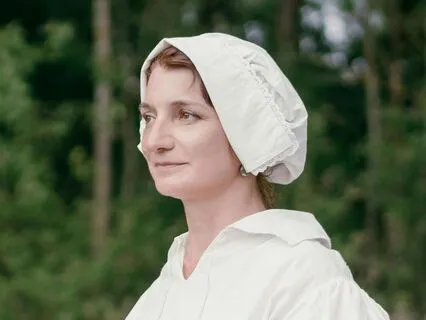
And I went and ordered a cap this morning,
To be quite ready,
Said she at last,
Letting out the secret which gave sting to Mrs Jameson's intimation.
Mrs Jameson shall see if it is so easy to get me to make forth at a pool when she has none of her fine Scotch relations with her.
In coming out of church,
The first Sunday on which Lady Glenmire appeared in Cranford,
We sedulously talked together,
And turned our backs on Mrs Jameson and her guest.
If we might not call on her,
We would not even look at her,
Though we were dying with curiosity to know what she was like.
We had the comfort of questioning Martha in the afternoon.
Martha did not belong to a sphere of society whose observation could be an implied compliment to Lady Glenmire,
And Martha had made good use of her eyes.
Well,
Ma'am,
Is it the little lady with Mrs Jameson you mean?
I thought you would like more to know how young Mrs Smith was dressed,
Her being a bride.
Mrs Smith was the butcher's wife.
Miss Pole said,
Good gracious me,
As if we cared about a Mrs Smith,
But was silent as Martha resumed her speech.
The little lady in Mrs Jameson's pew had on,
Ma'am,
Rather an old black silk and a shepherd's plaid cloak,
Ma'am,
And very bright black eyes she had,
Ma'am,
And a pleasant sharp face,
Not over young,
Ma'am,
But yet,
I should guess,
Younger than Mrs Jameson herself.
She looked up and down the church like a bird,
And nipped up her petticoats when she came out,
As quick and sharp as I ever see.
I'll tell you what,
Ma'am,
She's more like Mrs Deacon at the coach and horses,
Nor anyone.
Hush,
Martha,
Said Miss Matty,
That's not respectful.
In't it,
Ma'am,
I beg pardon,
I'm sure,
But Jem Hearn said so as well.
He said she was just such a sharp,
Stirring sort of a body.
Lady,
Said Miss Pole,
Lady as Mrs Deacon.
Another Sunday passed away,
And we still averted our eyes from Mrs Jameson and her guests and made remarks to ourselves that we thought were very severe,
Almost too much so.
Miss Matty was evidently uneasy at our sarcastic manner of speaking.
Perhaps,
By this time,
Lady Glenmire had found out that Mrs Jameson's was not the gayest,
Liveliest house in the world.
Perhaps Mrs Jameson had found out that most of the county families were in London and that those who remained in the country were not so alive as they might have been to the circumstance of Lady Glenmire being in their neighbourhood.
Great events spring out of small causes,
So I will not pretend to say what induced Mrs Jameson to alter her determination of excluding the Cranford ladies and send notes of invitation all round for a small party on the following Tuesday.
Mr Mulliner himself brought them round.
He would always ignore the fact of there being a back door to any house and gave a louder rat-tat than his mistress,
Mrs Jameson.
He had three little notes which he carried in a large basket in order to impress his mistress with an idea of their great weight,
Although they might easily have gone into his waistcoat pocket.
Miss Matty and I quietly decided that we would have a previous engagement at home.
It was the evening on which Miss Matty usually made candlelighters of all the notes and letters of the week,
For on Mondays her accounts were always made straight,
Not a penny owing from the week before.
So,
By a natural arrangement,
Making candlelighters fell upon a Tuesday evening and gave us a legitimate excuse for declining Mrs Jameson's invitation.
But before our answer was written,
In came Miss Pole with an open note in her hand.
So,
She said,
Ah,
I see you have got your note too.
Better late than never.
I could have told my Lady Glenmire she would be glad enough of our society before a fortnight was over.
Yes,
Said Miss Matty,
We're asked for Tuesday evening and perhaps you would just kindly bring your work across and drink tea with us that night.
It is my usual regular time for looking over last week's bills and notes and letters and making candlelighters of them,
But that does not seem quite reason enough for saying I have a previous engagement at home,
Though I meant to make it do.
Now,
If you would come,
My conscience would be quite at ease and luckily the note is not written yet.
I saw Miss Pole's countenance change while Miss Matty was speaking.
Don't you mean to go then,
Asked she.
Oh no,
Said Miss Matty,
You don't either,
I suppose.
I don't know,
Replied Miss Pole.
Yes,
I think I do,
Said she rather briskly and on seeing Miss Matty look surprised,
She added,
You see,
One would not like Mrs Jameson to think that anything she could do or say was of consequence enough to give offence.
It would be a kind of letting down of ourselves that I for one should not like.
It would be too flattering to Mrs Jameson if we allowed her to suppose that what she had said affected us a week,
Nay ten days afterwards.
Well,
I suppose it is wrong to be hurt and annoyed so long about anything and perhaps after all she did not mean to vex us,
But I must say I could not have brought myself to say the things Mrs Jameson did about our not calling.
I really don't think I shall go.
Oh come,
Miss Matty,
You must go.
You know our friend Mrs Jameson is much more phlegmatic than most people and does not enter into the little delicacies of feeling which you possess in so remarkable a degree.
I thought you possessed them too that day Mrs Jameson called to tell us not to go,
Said Miss Matty innocently.
But Miss Pole,
In addition to her delicacies of feeling,
Possessed a very smart cap which she was anxious to show to an admiring world and so she seemed to forget all her angry words uttered not a fortnight before and to be ready to act on what she called the great Christian principle of forgive and forget and she lectured dear Miss Matty so long on this head that she absolutely ended by assuring her it was her duty as a deceased rector's daughter to buy a new cap and go to the party at Mrs Jameson's.
So we were most happy to accept instead of regretting that we were obliged to decline.
The expenditure on dress in Cranford was principally in that one article referred to.
If the heads were buried in smart new caps,
The ladies were like ostriches and cared not what became of their bodies.
Old gowns,
White and venerable collars,
Any number of brooches,
Up and down and everywhere,
Some with dog's eyes painted in them,
Some that were like small picture frames with mausoleums and weeping willows neatly executed in hair inside,
Some again with miniatures of ladies and gentlemen sweetly smiling out of a nest of stiff muslin.
Old brooches for a permanent ornament and new caps to suit the fashion of the day,
The ladies of Cranford always dressed with chaste elegance and propriety,
As Miss Barker once prettily expressed it.
And with three new caps and a greater array of brooches than had ever been seen together at one time since Cranford was a town,
Did Mrs Forrester and Miss Matty and Miss Pole appear on that memorable Tuesday evening.
I counted seven brooches myself on Miss Pole's dress alone.
Two were fixed negligently in her cap.
One was a butterfly made of scotch pebbles,
Which a vivid imagination might believe to be the real insect.
One fastened her neckerchief,
One her collar.
One ornamented the front of her gown,
Midway between her throat and waist,
And another adorned the point of her stomacher.
Where the seventh was I have forgotten,
But it was somewhere about her,
I am sure.
But I am getting on too fast in describing the dresses of the company.
I should first relate the gathering on the way to Mrs Jameson's.
That lady lived in a large house just outside the town.
A road,
Which had known what it was to be a street,
Ran right before the house,
Which opened out upon it without any intervening garden or court.
Whatever the sun was about,
He never shone on the front of that house.
To be sure,
The living rooms were at the back,
Looking on to a pleasant garden.
The front windows only belonged to kitchens and housekeepers' rooms and pantries,
And in one of them Mr Mulliner was reported to sit.
Indeed,
Looking askance,
We often saw the back of a head covered with hair powder,
Which also extended itself over his coat collar down to his very waist.
And this imposing back was always engaged in reading the St James's Chronicle,
Opened wide,
Which in some degree accounted for the length of time the said newspaper was in reaching us,
Equal subscribers with Mrs Jameson,
Though,
In right of her honourableness,
She always had the reading of it first.
This very Tuesday,
The delay in forwarding the last number had been particularly aggravating,
Just when both Miss Pole and Miss Matty,
The former more especially,
Had been wanting to see it in order to catch up with the court news ready for the evening's interview with aristocracy.
Miss Pole told us she had absolutely taken time by the forelock and had been dressed by five o'clock in order to be ready if the St James's Chronicle should come in at the last moment.
The very St James's Chronicle,
Which the powder had,
Was tranquilly and composedly reading as we passed the accustomed window this evening.
The impudence of the man,
Said Miss Pole in a low indignant whisper,
I should like to ask him whether his mistress pays her quarter share for his exclusive use.
We looked at her in admiration of the courage of her thought,
For Mr Mulliner was an object of great awe to all of us.
He seemed never to have forgotten his condescension in coming to live at Cranford.
Miss Jenkins at times had stood forth as the undaunted champion of her sex and spoken to him on terms of equality,
But even Miss Jenkins could get no higher.
In his pleasantest and most gracious moods he looked like a sulky cockatoo.
He didn't speak except in gruff monosyllables.
He would wait in the hall when we begged him not to wait and then look deeply offended because we had kept him there while,
With trembling,
Hasty hands,
We prepared ourselves for appearing in company.
Miss Pole ventured on a small joke as we went upstairs,
Intended,
Though addressed to us,
To afford Mr Mulliner some slight amusement.
We all smiled in order to seem as if we felt at our ease and timidly looked for Mr Mulliner's sympathy.
Not a muscle of that wooden face had relaxed and we were grave in an instant.
Mrs Jamieson's drawing room was cheerful.
The evening sun came streaming into it and the large square window was clustered round with flowers.
The furniture was white and gold,
Not the later style,
Louis Cattles,
I think they call it,
Or shells and twirls.
No,
Mrs Jamieson's chairs and tables had not a curve or bend about them.
The chair and table legs diminished as they neared the ground and were straight and square in all their corners.
The chairs were all a row against the walls,
With the exception of four or five which stood in a circle around the fire.
They were railed with white bars across the back and knobbed with gold,
Neither the railings nor the knobs invited to ease.
There was a Japaned table devoted to literature on which lay a Bible,
A peerage and a prayer book.
There was another square Pembroke table dedicated to the fine arts on which were a kaleidoscope,
Conversation cards,
Puzzle cards tied together to an interminable length with faded pink satin ribbon and a box painted in fond imitation of the drawings which decorate tea chests.
Carlo lay on the worsted-worked rug and ungraciously barked at us as we entered.
Mrs Jamieson stood up,
Giving each of us a torpid smile of welcome and looking helplessly beyond us at Mr Mulliner as if she hoped he would place us in chairs for,
If he did not,
She never could.
I suppose he thought we could find our way to the circle round the fire which reminded me of Stonehenge,
I don't know why.
Lady Glenmire came to the rescue of our hostess and somehow or other we found ourselves for the first time placed agreeably and not formally in Mrs Jamieson's house.
Lady Glenmire,
Now we had time to look at her,
Proved to be a bright little woman of middle age who had been very pretty in the days of her youth and who was even yet very pleasant looking.
I saw Miss Pole appraising her dress in the first five minutes and I take her word when she said the next day my dear,
Ten pounds would have purchased every stitch she had on,
Lace and all.
It was pleasant to suspect that a peeress could be poor and partly reconciled us to the fact that her husband had never sat in the House of Lords which,
When we first heard of it,
Seemed a kind of swindling us out of our prospects on false pretenses,
A sort of a lord and no lord business.
We were all very silent at first.
We were thinking what we could talk about that should be high enough to interest my lady.
There had been a rise in the price of sugar which,
As preserving time was near,
Was a piece of intelligence to all our housekeeping hearts and would have been the natural topic if Lady Glenmire had not been by.
But we were not sure if the peerage Ette preserves,
Much less knew how they were made.
At last Miss Pole,
Who had always a great deal of courage and savoir-faire,
Spoke to Lady Glenmire,
Who on her part had seemed just as much puzzled to know how to break the silence as we were.
"'Has your ladyship been to court lately?
' asked she,
And then gave a little glance round at us,
Half timid and half triumphant,
As much as to say,
"'See how judiciously I have chosen a subject befitting the rank of the stranger!
' "'I never was there in my life,
' said Lady Glenmire,
With a broad Scotch accent but in a very sweet voice.
And then,
As if she had been too abrupt,
She added,
"'We very seldom went to London,
Only twice in fact,
During all my married life,
And before I was married my father had far too large a family —fifth daughter of Mr Campbell was in all our minds,
I'm sure— to take us often from our home,
Even to Edinburgh.
' "'You'll have been in Edinburgh maybe,
' said she,
Suddenly brightening up with the hope of a common interest.
"'We have none of us been there,
But Miss Pole had an uncle who had once passed a night there,
Which was very pleasant.
Mrs Jameson,
Meanwhile,
Was absorbed in wonder why Mr Mulliner did not bring the tea,
And at length the wonder oozed out of her mouth.
' "'I had better ring the bell,
My dear,
Had not I?
' said Lady Glenmire,
Briskly.
"'No,
I think not.
Mulliner does not like to be hurried.
' "'We should have liked our tea,
For we dined at an earlier hour than Mrs Jameson.
"'I suspect Mr Mulliner had to finish the St James's Chronicle before he chose to trouble himself about tea.
' "'His mistress fidgeted and fidgeted,
And kept saying,
"'I can't think why Mulliner does not bring tea.
I can't think what he can be about.
' "'And Lady Glenmire at last grew quite impatient,
But it was a pretty kind of impatience after all,
And she rang the bell rather sharply on receiving a half-permission from her sister-in-law to do so.
"'Mr Mulliner appeared in dignified surprise.
' "'Oh!
' said Miss Jameson.
"'Lady Glenmire rang the bell.
I believe it was for tea.
' "'In a few minutes tea was brought.
"'Very delicate was the china,
Very old the plate,
"'very thin the bread and butter,
And very small the lumps of sugar.
"'Sugar was evidently Mrs Jameson's favourite economy.
"'I question if the little filigree sugar tongs,
Made something like scissors,
"'could have opened themselves wide enough to take up an honest,
Vulgar,
Good-sized piece.
"'And when I tried to seize two little minikin pieces at once,
"'so as not to be detected in too many returns to the sugar basin,
"'they absolutely dropped one with a little sharp clatter,
"'quite in a malicious and unnatural manner.
"'But before this happened,
We had had a slight disappointment.
"'In the little silver jug was cream,
In the larger one was milk.
"'As soon as Mr Mulliner came in,
Carlo began to beg,
"'which was a thing our manners forbade us to do,
Though I am sure we were just as hungry.
"'And Mrs Jameson said she was certain we would excuse her "'if she gave her poor dumb Carlo his tea first.
"'She accordingly mixed a saucerful for him and put it down for him to lap.
"'And then she told us how intelligent and sensible the dear little fellow was.
"'He knew cream quite well and constantly refused tea with only milk in it,
"'so the milk was left for us.
"'But we silently thought we were quite as intelligent and sensible as Carlo,
"'and felt as if insult were added to injury when we were called upon "'to admire the gratitude evinced by his wagging little tail "'for the cream which should have been ours.
"'After tea we thawed down into common life subjects.
"'We were thankful to Lady Glenmire for having proposed some more bread and butter,
"'and this mutual want made us better acquainted with her "'than we should ever have been with talking about the court,
"'although Miss Pole did say she had hoped to know "'how the dear Queen was from someone who had seen her.
"'The friendship begun over bread and butter extended on to cards.
"'Lady Glenmire played preference to admiration "'and was a complete authority as to ombra and quadrille.
"'Even Miss Pole quite forgot to say,
"'My lady,
And your ladyship,
And said,
"'Basto,
Ma'am,
You have spadile,
I believe!
"'Just as if we had never held the great Cranford Parliament "'on the subject of the proper mode of addressing a peeress.
"'As a proof of how thoroughly we had forgotten "'that we were in the presence of one "'who might have sat down to tea with a coronet "'instead of a cap on her head,
"'Mrs Forrester related a curious little fact to Lady Glenmire,
"'an anecdote known to the circle of her intimate friends,
"'but of which even Mrs Jameson was not aware.
"'It related to some fine old lace,
"'the sole relic of better days,
"'which Lady Glenmire was admiring on Mrs Forrester's collar.
"'Yes,
' said that lady,
"'such lace cannot be got now for either love nor money,
"'made by the nuns abroad,
They tell me.
"'They say they can't make it now even there.
"'But perhaps they can,
"'now they've passed the Catholic Emancipation Bill,
"'I shouldn't wonder.
"'But in the meantime,
I treasure up my lace very much.
"'I don't even trust the washing of it to my maid,
"'the little charity schoolgirl I have named before,
"'but who sounded well as my maid.
"'I always wash it myself,
And once it had a narrow escape.
"'Of course,
Your ladyship knows "'that such lace must never be starched or ironed.
"'Some people wash it in sugar and water,
"'and some in coffee,
To make it the right yellow colour.
"'But I myself have a very good recipe "'for washing it in milk,
Which stiffens it enough "'and gives it a very good creamy colour.
"'Well,
Ma'am,
I had tucked it together,
"'and the beauty of this fine lace is that,
"'when it is wet,
It goes into a very little space,
"'and put it to soak in milk,
"'when,
Unfortunately,
I left the room.
"'On my return,
I found pussy on the table,
"'looking very like a thief,
But gulping very uncomfortably,
"'as if she was half chocked with something "'she wanted to swallow and could not.
"'And,
Would you believe it,
At first I pitted her and said,
"'Poor pussy,
Poor pussy,
Till all at once I looked "'and saw the cup of milk empty,
Cleaned out,
"'and I believe I was provoked enough to give her a slap,
"'which did no good,
But only helped the lace down.
"'Just as one slaps a choking child on the back.
"'I could have cried I was so vexed,
"'but I determined I would not give the lace up "'without a struggle for it.
"'I hoped the lace might disagree with her at any rate,
"'but it would have been too much for Job "'if he had seen,
As I did,
That cat come in,
"'quite placid and purring,
Not a quarter of an hour after,
"'and expecting to be stroked.
"'No,
Pussy,
' said I,
"'if you have any conscience you ought not to expect that.
"'And then a thought struck me,
"'and I rang the bell for my maid "'and sent her to Mr.
Hoggins with my compliments,
"'and would he be kind enough "'to lend me one of his top boots for an hour?
"'Jenny said the young men in the surgery laughed "'as if they would be ill at my wanting a top boot.
"'When it came,
Jenny and I put Pussy in "'with her forefeet straight down "'so that they were fastened and couldn't scratch,
"'and we gave her a teaspoonful of currant jelly,
"'in which,
Your ladyship must excuse me,
"'I had mixed some tartar emetic.
"'I never shall forget how anxious I was "'for the next half hour.
"'I took Pussy to my own room "'and spread a clean towel on the floor.
"'I could have kissed her when she returned the lace to sight,
"'very much as it had gone down.
"'Jenny had boiling water ready,
"'and we soaked it and soaked it "'and spread it on a lavender bush in the sun "'before I could touch it again,
"'even to put it in milk.
"'But now your ladyship would never guess "'that it had been in Pussy's insides.
"'We found out in the course of the evening "'that Lady Glenmar was going to pay Mrs Jameson a long visit "'as she had given up her apartments in Edinburgh "'and had no ties to take her back there in a hurry.
"'On the whole,
We were rather glad to hear this,
"'for she had made a pleasant impression on us,
"'and it was also very comfortable to find,
"'from things which dropped out in the course of conversation,
"'that in addition to many other genteel qualities,
"'she was far removed from the vulgarity of wealth.
"'Don't you find it very unpleasant,
Walking?
' "'asked Mrs Jameson,
As our respective servants were announced.
"'It was a pretty regular question for Mrs Jameson,
"'who had her own carriage in the coach-house "'and always went out in a sedan chair "'to the very shortest of distances.
"'The answers were nearly as much a matter of course.
"'Oh dear,
No,
It is so pleasant and still at night,
"'such a refreshment after the excitement of a party.
"'The stars are so beautiful.
' "'This last was from Miss Matty.
"'Are you fond of astronomy?
' Lady Glenmar asked.
"'Not very,
' replied Miss Matty,
"'rather confused at the moment to remember "'which was astronomy and which was astrology.
"'But the answer was true under either circumstance,
"'for she read and was slightly alarmed "'at Francis Moore's astrological predictions.
"'And,
As to astronomy,
"'in a private and confidential conversation,
"'she told me she never could believe "'that the earth was moving constantly "'and that she would not believe it if she could.
"'It made her feel so tired and dizzy "'whenever she thought about it.
' "'In our patterns,
We picked our way home "'with extra care that night.
"'So refined and delicate were our perceptions "'after drinking tea with My Lady.
'" To be continued.