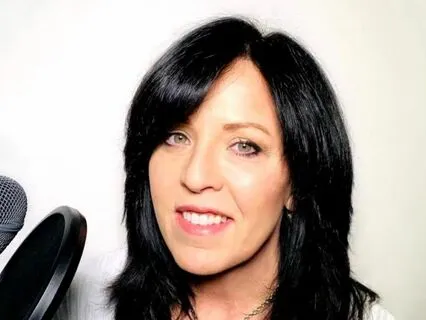
Welcome to the Breakdown to Breakthrough Podcast.
My name is Lisa A.
Romano.
I am a life coach,
Best-selling author,
YouTube vlogger,
Meditation teacher,
And expert in the field of codependency and narcissistic abuse.
I am a believer in the power of an organized mind.
My aim is to help people learn what it means to live above the veil of consciousness rather than living a reactive life.
May your heart feel blessed,
Your mind feel expanded,
And your spirit find hope as you spend time with me here at the Breakdown to Breakthrough Podcast.
So today we're going to be talking about DARVO,
Which is basically a term or an acronym used to describe how narcissists are so cleverly able to deflect responsibility onto their victims.
When I was a younger person,
We didn't have the benefit of words like triangulation or smear campaign or projection or future faking or gaslighting to help us understand when we were in a toxic relationship dynamic.
I grew up at a time or in a time where if you made your bed,
You were expected to lie in it.
I remember going to my mother two years after my son was born and telling her,
Mom,
I think I made a terrible mistake.
This was three years into my marriage.
And she looked at me.
She never asked me why I felt that way.
She never asked me what was going on.
And she just said,
Lisa,
Get in the car.
You made your bed.
Go home and lie in it.
And I remember recoiling in shame,
Like there was something wrong with me because I felt like I had made a mistake.
I was terrified.
I was terribly unhappy.
Every cell in my body knew that I was in the wrong relationship.
And I was made to feel like I had no other recourse but to make it work.
And so women who grew up in my generation,
Those of us who are in our 50s,
60s,
70s,
And more,
We didn't have the benefit of terms like DARVO.
DARVO stands for Denial,
Attack,
Reverse,
Victim,
And Offender.
And just think about the magnificence of this acronym because it basically explains how a narcissist operates in the context of a relationship.
First of all,
Narcissists don't take responsibility.
So even though you might show up in a relationship wanting to meet this other person halfway,
Wanting to get to the other side of a conversation,
When you're dealing with someone who is narcissistic,
Someone who has a high conflict personality,
You will learn in time that they deny everything.
They deny what you're talking about.
They deny that there's an issue.
They dance around the topic at hand.
They go into circular conversations.
And they will also attack you.
So imagine saying to a narcissist that when your mother was here and you lied about where I was last Friday,
I thought that was unfair.
I told your mother that I was at work,
I was at work,
But you made it sound like I just took off from work,
That I was just floating around,
And I didn't want to take her to the doctor's office.
Do you realize how wrong that was?
Narcissists can deny that an offense took place at all.
Narcissists might deny that he or she said that at all.
The next thing that's going to happen is you're going to be attacked for daring to suggest that they did anything wrong.
Now,
When you understand why you're being attacked,
So why would you attack someone?
You would attack someone because they were taking something from you.
You would attack someone to protect something that you owned or that you wanted.
Or you would attack someone for attacking you to protect yourself.
It's a natural thing to do,
Right?
When it comes to why a narcissist attacks you when you are suggesting that they've done something wrong is because you are threatening their source of narcissistic supply,
Which is your validation,
Which is the energy that they drain from you,
Which is your financial part of the relationship.
Whatever it is,
Whatever the narcissist is gaining from you as a source of narcissistic supply may be control over you.
Now,
When you have the audacity and the gumption to confront someone who is highly narcissistic,
They will attack you because to them you are threatening their source of narcissistic supply,
Which they need in order to feel in control and emotionally regulated.
So just by confronting a narcissist,
You're threatening their source of narcissistic supply,
And that supply is you.
The next thing that you're going to have to deal with or what you'll notice is that you won't notice it in the beginning.
You might be confused by it because a narcissist messes with your ability to hold onto your perception of reality,
Which is the whole game.
They don't want you to be able to stay rooted in their perception of reality.
That's why DARVO works.
And so what you're going to notice eventually is this reverse victim offender role.
Suddenly they're the victim and you're the offender.
This was such a staple in my first marriage,
And it was so mind bending,
And I didn't have the acronym DARVO to explain it.
I just always felt wrong.
I just felt like no matter when I tried to resolve an issue,
I was labeled crazy.
I was labeled too emotional.
I was labeled negative.
You're always so negative,
Lisa.
You're always so negative.
You always make a big deal out of nothing.
I don't have any problems with anybody.
You're the one that has problems.
Well,
Yeah,
I have problems because nothing's getting resolved,
Right?
When you live with someone who tries to play the good guy all the time,
You're always the bad guy.
If I want to walk around and allow people to say whatever they want,
Do whatever they want,
Not have a boundary,
And do it so that I actually am someone who people look up to as a good person,
Right?
It's not real.
It's all baloney,
Right?
I'm the great person.
Anybody who comes after me is then the bad person because I'm the nice guy.
I'm the covert,
Vulnerable,
Nice guy narcissist.
He is the one that intentionally doesn't say no to people because he's trying to control you.
He'll talk about you behind your back.
He has no.
.
.
Nothing is genuine.
It's all done for manipulation.
It's a complete facade.
People on the outside don't see that.
When you're married to the nice guy narcissist or the nice guy vulnerable narcissist,
The person who is,
Rather than grandiose and takes a lot of self-care or spends a lot of time on the way that he looks and the way that he dresses and drives a flashy car,
It's the opposite.
They present as very vulnerable,
Almost not having any needs whatsoever,
But that is a form of manipulation.
If you live with that person long enough and you expect them to step up to the plate,
You expect them to do the right thing or to be there for you or to take some interest in the relationship,
That's when you'll see this Darvo tactic employed.
That's when you are threatening their source of narcissistic supply by saying,
Wake up.
We have a problem here.
You have to make a stand.
Now you're asking me to make a stand?
Well,
That's going to risk all of this narcissistic supply I have in the neighborhood.
It's sort of like when I've coached women who have been married to pastors in a church and the wife comes to the pastor of the church who everybody in the congregation thinks is a wonderful person and asks him to do the right thing for whatever the situation is.
Say something to a parishioner that is bullying the wife.
The pastor doesn't want to get involved because that risks this communal narcissistic supply that the pastor has.
So the wife gets thrown under the bus or the kids get thrown under the bus.
So it's sort of like that type of dynamic and you have to have lived through it to really understand it.
But I hope I've made my point clear.
So back in the day when I was a young woman,
We didn't have this acronym.
So if you come from that generation,
I think it's amazing to have a term to explain what happens when you are living with someone who denies everything,
Who attacks you and reverses the victim and offender role so that they can control the nature of the relationship.
And if you've been in this relationship dynamic long enough and you hear someone's talk about Darvo,
You're eating your sandwich,
Your cucumber sandwich,
And you're like,
Wait a minute,
That's my marriage.
That's my relationship.
All I did was tell my husband or tell my wife how this thing made me feel.
And I was attacked and then I was seen as an offender.
And somehow this person who really attacked me and victimized me initially,
Which is why I complained,
Suddenly they're the victim.
It's fascinating.
It's enlightening.
It sheds a whole new ray of light on the relationship dynamic.
But it can also be mind bending because you're like,
Well,
What do I do now?
Because the person that you're married to or the person that you're engaging with or the family member,
You could have a sister,
A father,
A mother,
Or a brother that does this to you,
Chances are you're not going to change the dynamic.
Chances are the best thing that's going to happen for you is that you recognize the dynamic you're in,
So you stop engaging in it.
So Darvo is a way that narcissists manipulate to avoid responsibility.
And in terms of manipulation tactics,
I'll go over it again.
Darvo stands for deny,
Attack,
Reverse,
Victim,
And offender.
It was a term coined by Jennifer Freud,
Which is a psychologist specializing in the study of interpersonal relationships and trauma.
So Darvo is a manipulation tactic commonly used by narcissists and other forms of abusers also.
So essentially narcissists are looking to deflect and shift the blame onto their victims.
The first step in Darvo is denial.
When confronted with their harmful behavior or actions,
Narcissists will often defend that they did anything wrong at all.
They might gaslight the victims,
Making them doubt their own perception and memory of events.
By refusing to acknowledge their wrongdoing,
Narcissists hope to avoid facing the consequences of their actions.
The second step in Darvo is attack.
Once they have denied responsibility,
Narcissists may turn the tables on their victims and launch a counterattack.
This can take the form of blaming the victim for the situation,
Accusing them of overreacting or being too sensitive,
Or even attacking the character.
By shifting the focus onto the victim,
Narcissists attempt to discredit their claims and undermine their credibility.
The final step in Darvo is to reverse victim and offender roles.
Narcissists will portray themselves as the true victim in just about every situation,
Claiming that they have been unfairly accused or persecuted.
They may play the role of the wounded party,
Seeking sympathy and support from others while painting you,
The victim,
As the aggressors.
The reversal of these roles can be particularly damaging to the victim,
As it can lead to feelings of guilt,
Like it's their fault,
Shame,
And self-doubt.
It's important to recognize and understand Darvo as a manipulation tactic used by narcissists and abusers.
So by being aware of how it works,
Victims can better protect themselves from falling into the trap of taking on undeserved blame and responsibility.
Sometimes that's the best we can do.
Understanding what we're dealing with oftentimes just clears the air.
It's like,
Oh,
He's reversing this on me.
Oh,
She's reversing this on me.
How did I end up being the offender when the person that I'm talking to actually offended me?
My brother stole money from my bank account,
But somehow I'm his abuser.
Somehow I've offended him.
I'm upset that my sister took my car without asking,
But how is it that I'm suddenly feeling all sorts of guilt because I called her out on it?
How is it that my sister ended up in the victim role?
How is this happening?
Sometimes the best you can do is understand the dynamic so that you don't lose yourself in this crazy-making conversation,
So that you can step out of it and observe it.
And then from that point,
You have a couple of options.
I think it really does matter who you talk to.
I think that arming yourself with this information and understanding what you're going through helps you have a conversation with someone else,
Someone that you might be seeking support with.
Not everybody is going to understand this,
So if you start talking to a family member or a friend and they don't see it,
Be aware of that because that alone might be triggering for you.
Don't misunderstand or minimize DARVO.
It's a painful manipulation tactic used by narcissists,
And it's all about shifting the blame onto the victims.
By understanding how DARVO works and learning to recognize its signs,
You can empower yourself to resist manipulation and protect your well-being.
The effects of DARVO on victims can be profound and long-lasting.
This tactic can lead to self-doubt,
Confusion,
And a sense of isolation.
Victims may find themselves questioning the reality,
A state often referred to as gaslighting.
Moreover,
DARVO can erode the support system of the victim,
As outsiders might only see the confidence of the denier and the counter accusations of the narcissist rather than the truth of the situation.
Navigating DARVO is important.
Understanding that this tactic is not about truth,
But about power and control can help victims reclaim their reality and trust in their perceptions.
So here are a few strategies that you can do to help yourself.
Seek support.
Connect with someone who understands narcissistic abuse,
Someone who can provide validation as well as guidance.
Dear one,
Document everything.
Keep a record of all your interactions,
All your conversations,
And all your text messages.
This can help you maintain a clear picture of reality,
Which is crucial when you're facing gaslighting in any form of DARVO,
Where they are reversing the victim and offender role.
Establishing and maintaining clear boundaries with the narcissist,
If you have to interact with them,
Is necessary.
This can help you protect yourself against further manipulation.
So just knowing what could happen,
Knowing when the reversing is coming,
When the blame shift is coming,
Knowing when that's happening,
Can help you set a boundary and get out of the conversation.
Focus on self-care.
Healing from narcissistic abuse is a deeply personal journey that requires attention to your physical,
Emotional,
And mental wellbeing.
It's such an isolating experience when you've been married to a narcissist,
Trying to divorce a narcissist in a relationship with the narcissist,
And this can also happen in relationships with friends,
When DARVO has been the operating system of the relationship and you were never aware of it.
If you are highly codependent,
Then this becomes even a more intensified situation,
Because codependents are other-focused,
Codependents are shame-based,
Codependents go in other-focused.
So we go into a relationship,
Myself included,
As a recovering codependent,
We go into a relationship hoping that this other person is going to accept us.
So we go in expecting conditional love,
Conditional validation.
We go in expecting that it's going to be really,
Really hard for us to convince you that we're worthy of loving.
And when you're dealing with someone whose base emotional personality is to be a predator,
Is to drain other people of their energy,
Is to use people as a source of narcissistic supply,
This can be a really daunting,
Entangled mess,
Where a codependent can absolutely,
Their identity can become so lost in what they think the narcissist thinks about them.
You can actually lose yourself so much that who you think you are is what you think the narcissist thinks you are.
And you can strive to get the narcissist to approve of you.
And if you're not aware of DARVO,
Then this is really,
Really dangerous,
It's precarious.
And so being aware of DARVO is really,
Really important.
But what is equally important is recognizing how you show up in relationships,
Understanding your relationship patterns.
Do you seek approval?
Do you not feel good enough?
Do you struggle with setting boundaries?
Do you feel like you default to worrying about what other people think about you versus do you even know what you think about you?
Do you default to worrying about how other people feel?
And do you default to taking care of how other people feel?
Do you default to feeling responsible for how other people feel?
Because if you do,
And DARVO is being employed on you,
Then this is a very dangerous situation to your mental health,
Your emotional health,
Your spiritual health,
Your financial health,
Your physical health,
Because it's almost like you're in quicksand,
It's emotional quicksand.
And you will be drowning and drowning and drowning.
And this other person in their head,
As they switch the role from victim and offender,
You feel all sorts of shame,
You feel all sorts of guilt.
And after every argument,
It's sort of like they just keep putting another cinder block on top of you,
And you are just drowning and drowning and drowning in the weight of this mental confusion.
And your mind can be so scrambled to the point where you can't make heads of tails of anything.
The minute you try to open your mouth and say anything,
You are just attacked,
Or the reality is denied.
And then even though they have abused you,
Somehow you become the offender.
And when you're struggling with low self-worth,
When you're struggling with low self-esteem,
And not everybody who is experiencing DARVO went into the relationship experiencing that,
You could be someone who is highly successful,
You could be someone who had a lot of self-love,
And who also has a lot of empathy,
And be someone who just thinks,
Well,
You don't throw the baby out with the bathwater,
You've invested time in a relationship,
So we've got to work this out.
You can be that type of a person,
And have self-confidence,
And just be determined to work something out with someone that you have fallen in love with,
And end up a sack of self-doubt.
You can go to work and feel like you know what you're doing,
And then on the drive home become someone else,
Because you just don't trust the way that you think anymore.
And you don't realize that you're being conditioned,
Like Pavlovian conditioning,
You're being conditioned to worry about what this offender,
The true offender,
The true narcissist in the relationship,
The true predator in the relationship,
What they're going to say to you.
So now what happens is you are detached from the self,
You're not thinking about yourself,
Your entire mind is focused on what is he going to think about me,
What is she going to say about me,
How is she going to perceive what I just said,
I have to be careful how I say it.
You're literally walking around on eggshells,
And you're being conditioned through the Darvo technique to be afraid that the person that you're dealing with is going to accuse you of being an offender.
I actually lived like this as a child.
My mother would persecute me for things that I wasn't guilty of,
And it left such a stain on my soul that I became somebody who felt like she needed to prove to people how much she loved them.
So I wasn't focusing on how I felt,
I wasn't focusing,
I had no awareness of it,
The data didn't exist.
I had no data for how important it is to pay attention or have some idea of how you feel about the people that are in your life.
Are they good to you?
Are your needs being fulfilled?
How is this person making you feel?
Does this person show up for you?
Didn't exist.
My brain was programmed at the neurological level and at the subconscious level to believe that it was my job to prove to other people that I was worthy to keep around.
And that was because love was withheld,
And because no matter what I did,
My mother would flip it on me,
And she would turn me into an offender.
I grew up this way.
So obviously when I met my ex-husband,
Or if I was in a relationship,
I mean,
I never really attracted anybody healthy because I wasn't healthy.
I'm so grateful that I've figured this out.
And in the years that I was separated and divorced,
I really dove into healing myself and personal development work,
And healing from codependency,
And rewiring the subconscious mind,
And getting into a meditation practice,
And a journaling practice,
And creating my online courses,
And all that,
To the point where I was able to understand the power of my subconscious mind to reclaim the authority of myself,
To reconnect to my authentic self,
To heal shame,
To realize I was enough.
It wasn't my fault,
And it's not me.
It's my programming.
And to understand and harness,
Not just to be a hero of the word,
Just not to watch a video or read a book,
To become a doer of the word,
And to go after my mental health as if I was knocking over a wall,
And I wasn't going to stop until I knocked that wall over.
Understanding that that was my process allowed me to believe that I was worthy of a beautiful relationship,
Which is I am in the middle of experiencing the fruits of that labor right now.
And it's incredible to believe that you can transform your life.
It's not easy,
But nothing ever is that's worth this transformation,
This level of transformation.
I had to want recovery as much as I wanted to breathe,
And I did.
And I think that's why I am where I am.
And so now I spend my time trying to teach other people about what is wrong,
Right?
Before you can come up with a solution,
You have to identify the problem.
Back in the day when I was,
I mean,
I'm 59 years old.
So back in the day when I was in an abusive teenage relationship,
And I was asking my boyfriend,
You know,
Why didn't you show up last night?
And he flips it on me and he says,
Get off my back,
You're such a needy person,
Then I feel like I offended him.
It happened often,
Or I dated someone who didn't show up.
And when I left the house and he got ahold of me later on,
He accused me of being uncaring.
He accused me of being selfish,
And I'm thinking,
Dude,
You didn't show up.
Like,
What was I supposed to do?
But it is so common to have unhealthy people,
Toxic people flip the narrative on you.
And it's so common if you don't have self-esteem,
Or this has been your reality as a child,
You've suffered childhood trauma where,
You know,
Your mother was supposed to feed you and she didn't feed you,
And now you're hungry,
And now she's offended because you need some chicken soup,
Right?
Now you're a nuisance.
Now you're feeling all sorts of guilty because you have a need and it is her responsibility to make sure that you get what you need,
But somehow you're an offender.
This happens all the time.
The roles are reversed.
And so if that's your childhood,
It's not uncommon for that to be your emotional set point or a part of your personality makeup.
So you go into a relationship as an adult,
Almost a magnet for this stuff,
And that's not your fault.
It is what you are patterned for.
It is what's familiar.
And the mind at the subconscious level always seeks the familiar over the unknown,
Even if the familiar is dangerous,
Even if the familiar is self-sabotaging.
And that's really important information to know.
So this idea that so much of our personality is subconscious,
And so much of what keeps reoccurring in our life is due to patterns and programs at the subconscious level that are tied to childhood is just phenomenal to me.
So I think that before we can develop solutions,
We have to truly identify the problem.
And exploring this concept of DARVO and recognizing the patterns in narcissistic people or toxic people,
Even people with borderline personality disorder,
It's not uncommon for them to deny what's going on,
To attack you,
And to reverse this victim-offender role.
So the more that you understand this,
The more that you can spot it in your own relationships,
And maybe even in yourself,
Or maybe I do that,
Then now that you've identified this hole in the wall,
We've got some meat on the bone that we can work with.
So this conversation today is just about exploring DARVO,
Making you aware of what DARVO is,
And also taking it to the level of,
Have I been groomed to be exposed to DARVO since childhood?
One last story.
Many of you have heard me tell this story,
But it's worth repeating in this context.
I bought my mom,
When I was about 9 or 10 years old,
A pair of sneakers,
Because she used to clean the floor with bleach and water,
And she would wring the dirty mop out with her bare feet.
So my mom's feet were always cracked and weathered.
And I took my babysitting money,
Yeah,
Believe it or not,
When you were 9 or 10 years old back in the 70s,
You can babysit a couple of kids who are a little bit younger than you,
And if their mom did good at bingo,
You did good.
So I had some money saved up from babysitting a couple of kids down the block,
A neighborhood family.
And I thought it'd be a really sweet and tender thing to do to prove to my mom that I loved her if I bought her a pair of sneakers.
And again,
Back in the day,
We could take our 10-speed bike,
Go down to a Woolworths store and buy a pair of sneakers if we wanted to.
Things are a little changed right now,
But that's the way it was back then.
So I bought my mom this pair of sneakers.
I was so excited.
I was so proud of myself.
I thought,
Certainly she's not going to see me as selfish,
Which was one of the words she used to describe me often.
And I thought,
How could she possibly see me as selfish if I took this babysitting money and I bought something for her with it?
I thought I was safe.
And there she was standing outside on our stoop in Queens,
Smoking a cigarette.
And I drove up to the front of her and I had this shoe box.
And I said,
Here,
Mommy.
And she opened it and she looked at it and she said,
What do you think?
You can buy my love,
Lisa.
And I was crushed.
So suddenly,
Here I was,
An offender again.
Somehow she was a victim of this beautiful sentiment that her nine,
10-year-old little girl wanted to offer her,
Sort of to prove to her that she loved her.
And my mother switched it.
And this happened throughout my relationship with my mother the whole time.
Until my mom got dementia,
She wasn't very nice to me.
But it's sad that that was her perception,
That she had so many childhood wounds that she couldn't let love in,
She couldn't let love out,
That she was operating at survival.
I think she was projecting a lot of her unhealed traumatic wounds with her mother onto me.
Her mother was an alcoholic and I just paid the price of it.
But I was able to work through it and to grieve that relationship that I would never have with my mom,
Like all adults' daughters have to do.
If you have a mom who has these types of issues,
We have to get to a point where we surrender to what is so that we can move on,
So that we don't remain these wounded little girls seeking this woman's approval when DARVO is a tactic that they are going to employ.
So DARVO is not just about partner relationships.
DARVO can happen between mother and daughter relationships,
Father-son relationships,
Mother-son relationships,
Sister-sister relationships,
Sibling relationships.
That's really important to know.
It could be employed in a coworker's situation or a friendship.
So I just hope that this information has been enlightening and has offered you an opportunity to think about your relationships and to think about yourself,
To think about your childhood,
To think about who raised you,
How they raised you,
And were you conditioned and programmed to step into this DARVO type relationship and not even know that you're in this tornado.
Remember when you're in the eye of the tornado,
You never know how big it is until you get kicked out of it.
And as you get kicked out of it,
That's when you gain perspective.
And really interesting about perspective,
The further you get away from the tornado,
The more able you are to recognize just how big that tornado was.
It wasn't until I got kicked out of my marriage or I pulled myself out of that marriage.
It wasn't until a year later,
Two years,
Three years later.
And even today where I look back and go,
Wow,
That was really toxic.
But it was what I was groomed for.
And you don't realize how toxic a situation is when you as a child have grown up this way and you've acclimated to this level of disrespect.
You have acclimated to this level of abuse.
You have acclimated to this level of persecution.
You have acclimated to being accustomed to feel like somehow you have offended someone.
Somehow you've done something wrong.
And today I have zip zero,
No tolerance for when someone accuses me of something,
Even if they're hurting.
I'm very sorry that you're hurting,
But I have no tolerance for being accused of something I'm not guilty of because you want to flip the victim offender role and possibly have that become my Achilles heel so that I can chase after you and cater after you and make you feel better.
I'm just not going to do that.
And that can cause some ripples in some relationships because some people aren't aware.
That they're doing it,
But I'm able to snuff that out these days and I won't let it happen to myself anymore.
I just will not be accused of something that I am not guilty of.
Even if the person who is accusing me of something I'm not guilty of is wounded,
That's just not fair.
You know,
Narcissists are wounded,
Vulnerable narcissists are wounded,
Grandiose narcissists are wounded,
But I'm sorry.
I'm not going to allow myself to be persecuted because someone else is wounded.
I'm just not going to.
If I do,
Then two people are staying stuck in that dynamic and if I can get out,
I'm going to get out.
And if I can teach my children to do that,
If I can teach my clients to do that,
If I can teach my friends to do that,
And if I can teach you to do that,
That to me,
That's a wonderful,
Wonderful way to spend my time.
Namaste everybody.
Until next time,
As I bow to the love and light that is absolutely in you,
Try to remember that even on your darkest day,
The light exists within you and you have a right to find that light and to let it shine.
Namaste everybody.
Until next time.
Bye for now.