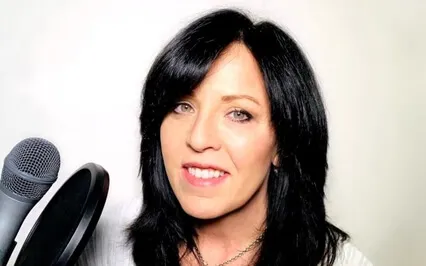
Welcome to the Breakdown to Breakthrough podcast.
My name is Lisa A.
Romano.
I am a life coach,
Bestselling author,
YouTube vlogger,
Meditation teacher,
And expert in the field of codependency and narcissistic abuse.
I am a believer in the power of an organized mind.
My aim is to help people learn what it means to live above the veil of consciousness rather than living a reactive life.
May your heart feel blessed,
Your mind feel expanded,
And your spirit find hope as you spend time with me here at the Breakdown to Breakthrough podcast.
Today we're going to be talking about why you can't stop loving the narcissist.
So today we're talking about things like trauma bonding and Stockholm syndrome and why it is so many of us find it so difficult to stop loving a narcissist.
Why is it so difficult to end a relationship with someone who is toxic?
Why is it so hard for us to walk away from someone that we know is unhealthy?
What's really going on?
If you're like me and so many of my clients,
You've wondered in your life,
Are you crazy?
Like am I crazy?
I know this person is lying to me.
I know this person is passive aggressive.
I know this person needs to feel powerful in the relationship.
I know this person is manipulative.
I know this person is is jockeying for dominance in our relationship.
Always puts me down.
Is very fragile.
Accuses me of things that I'm not guilty of.
I know this person is cheating on me.
I know this person has had multiple affairs.
Like what's up with me?
Why can't I just leave this relationship?
And so if you're like so many of us,
You're experiencing things like trauma bonding.
So trauma bonding is what happens to us when we become psychologically addicted to someone who is toxic.
And what does that mean exactly?
Like how does that work?
When you are in a trauma bonded situation,
This means that you are experiencing relationships with really high highs and really low lows.
When you are in a relationship with an abusive person,
This person convinces you that you are the reason that you experienced the abuse in the first place.
So it's all your fault.
When you are in a trauma bonded situation,
When ends up happening is you have this really terrible blow up and then the abusive person does something that is kind and you think,
Oh,
Okay,
This is awesome.
So you become addicted to the next kind gesture.
You live in fear of the next blow up and at the same time live seeking the pleasure or the validation or the affirmation of the abusive partner.
When you are in a relationship with someone who is abusive,
You walk around on eggshells and your life becomes very,
Very micro.
And all you're thinking about is making sure that this person doesn't get set off.
So you are losing yourself.
You're detached from the self.
You become self alienated.
Everything becomes about your partner and not wanting to upset him or not wanting to upset her.
So you're losing yourself.
In the losing of yourself,
This person becomes your focus and you become addicted to trying to please this person.
You become,
You live in fear of upsetting this person,
Of this person becoming upset.
And so there are two things going on.
You live in fear of the next explosive episode,
And,
But you also live seeking the next reprieve.
And so it's like this pain versus pain versus pleasure pump that's operating.
It's all below the veil of consciousness and men and women in these types of abusive relationships don't even know what's going on.
So when you are in a trauma bonded situation with a narcissist,
You can also idealize the narcissist.
This is a coping strategy.
That's what Stockholm syndrome is all about.
So when you're experiencing Stockholm syndrome,
You idealize the abusive person.
Why would anyone idealize an abusive person?
Because idealizing them helps you feel not so afraid about being in this terrifying situation.
And so you idealize the narcissistic partner.
You make excuses for the narcissistic partner.
You will even defend the narcissistic partner,
The abusive partner.
When people try to tell you,
Hey,
It looks like something's going on here that you need to be aware of.
You will push these people away when you're in a trauma bonded situation,
You become psychologically addicted to seeking this person's validation,
To keeping them calm and to proving to them that you are not the person that they suggest that you are.
When you're dealing with someone who is highly narcissistic and they're telling you that there's something wrong with you and your world now revolves around this narcissist,
They have been able to train you through a series of high highs and low lows,
Right?
So you want the high again and you live in fear of the low.
So that's all that matters to you.
When you're in an abusive relationship,
Your world becomes really,
Really small,
Which is what a narcissist wants someone who you're in a trauma bonded situation with someone who is emotionally abusive or physically abusive.
This is what they want.
They want you not to trust anybody.
They don't want you to trust any of your friends,
Any of your family.
They want to isolate you.
And in this isolation,
You experience this roller coaster type of relationship.
During the roller coaster type of relationship,
You're being belittled,
You're being devalued,
And your sense of self is really,
Really being diminished.
Not only is your sense of self,
Your sense of your self worth being diminished,
Your ability to connect to yourself,
Your true self,
Your authentic self is all but lost.
Everything is about this narcissist.
It can become nearly impossible to end relationships in which you are psychologically addicted,
To which someone has been able to convince you that the way that you think is inappropriate.
This idea that someone is able to convince you that you are the reason that you are being yelled at,
You are the reason that you are being devalued,
You are the reason that they're cheating on you.
It's all your fault.
And so what happens is you end up seeking this person's approval.
You end up chasing after this person's approval.
And at the same time,
You're living in fear of the next blow up.
So this is a psychological addiction.
This is not your fault that this is something that you're going through.
You have to ask yourself how little or how big is your world?
Have you lost contact with family?
Have you lost contact with your friends?
Has this person isolated you?
Has this person been able to convince you that you shouldn't be able to trust your best friend?
Or you shouldn't be able to trust your mother or you shouldn't be able to trust your father.
This is what happens in trauma bonded situations.
An abusive person is going to want to isolate you and make your world very small.
So if you think this is something that you're going through,
Ask yourself how big or how small it has my world become?
Is my relationship erratic?
Are there high highs and low lows?
This is not what we want.
This is not a healthy relationship.
Try to get objective about what you're going through.
Does your partner blame you for everything?
Does your partner seem to get off or get excited about putting you down?
Does your partner seem to exhibit narcissistic highs when they're able to destroy you mentally and emotionally?
Do you feel that the narcissist in your life or the abusive person in your life is absolutely happier when you're upset?
Another thing too that's difficult to consider is you have to ask yourself what type of a home did you come from?
Did you grow up feeling like you had low self-esteem?
What did you experience in your childhood?
Because those of us who come from homes where we saw this type of trauma bonded situation in our parents or with our siblings,
Those of us who grew up with low self-esteem,
We don't have very high values or high expectations for relationships.
And so when we're in relationships that mirror what we experience as children,
We don't always recognize this as something that's wrong.
And so this becomes our norm.
And so if you grew up in a home that mirrored your adult relationship,
Then it's time for you to step back from that and recognize the pattern there.
Another thing to consider is that when there is someone who is treating us in a punishing way and we live in fear of this person's punishment,
We don't always recognize that we think that this person is the only person that can make us feel better.
And this gives all the power to the abusive partner.
And so we really have to step out of this situation and we have to recognize when this is happening to us.
If we can,
Awareness is key.
So you have to ask yourself when I am in a relationship such as this or in the past when I've been in a relationship like this,
Did I live in so much fear of this abusive person,
In so much fear of their accusations,
Did I live in fear of their punishing comments,
So much so that I began to believe that the only person that could relieve me of this pain was the abusive person.
This is classic trauma bonding inside the mind of someone who's been abused this way.
It's not easy to leave a trauma bonded situation.
It's not easy to leave someone who idealized you in the beginning of the relationship,
Who convinced you that you needed him or convinced you that you needed her.
It's not easy to leave a relationship in which someone has caused you to trust them so much that you shared all of your deepest,
Darkest secrets with them.
It's not easy to leave a relationship in which someone who has been able to get you to lean on them financially and now you're dependent upon them financially.
It is not easy to leave a situation with someone who has convinced you that you are nothing,
Who has convinced you that you're crazy,
Who has convinced you that you shouldn't trust your thoughts.
It is not easy to leave a situation in which this person has become your absolute everything.
You have given this person everything.
Sometimes you put these people through school.
I have clients who have put their partners through school and as soon as the partner got what they wanted,
That's when they began to devalue my client and that's when things really,
Really escalated.
But at that point for a lot of my clients,
They were already really invested in the relationship and being able to see and recognize the pattern wasn't easy because there were all these fears in the beginning,
All of this CPTSD,
All of this emotional reactivity and this deep trepidation about disappointing someone who they have become psychologically addicted to.
The fear associated with breaking a trauma bond is unbelievable and if you have never known what that feels like,
It's hard for you to relate to that.
But if you are someone who has been in a trauma bonded situation and you're lying awake at night after a terrible,
Horrific argument that has gone on until four or five o'clock in the morning and you feel yourself riddled with fear and hoping and hoping that you'll be able to somehow make the narcissist eggs in the morning and make them their favorite French toast just so that they can calm down,
Just so that they're not angry at you anymore,
Just so maybe they offer you a reprieve of the harassment.
If you've never been in that situation,
It's hard for you to relate to that.
But if you have,
You do relate to that.
I would say that the best thing to do is to learn everything that you can about narcissistic traits,
Learn everything that you can about coercive control,
Learn everything you can about trauma bonds,
Learn everything you can about what happened to you as a child and try to be objective about what happened to you as a child and try to draw analogies or parallels if you can find them to what you're experiencing now.
Of course,
Going no contact is probably the most important thing that you can do.
But again,
It's not always feasible in every situation.
Learning to go gray rock,
What I call shutty shutty,
Learning to cut that out.
In other words,
You stop communicating with the narcissist at all costs,
No matter what you have to do,
You stop communicating with them.
So even if they're standing there yelling at you,
You offer them nothing.
You say nothing.
You don't give them any source of narcissistic supply whatsoever.
You don't go back at them.
They try to bait you into conversation.
You don't go back at them.
You recognize that you going back to them is their narcissistic supply.
It's not always easy.
And I can hear some people saying,
You know,
Because I've read these comments on my YouTube channel,
I've also had feedback from some of my podcasts and inside my Facebook groups where people will say,
Well,
That might trigger the person that I'm with even more.
This is a valid,
Valid point.
Narcissists are not black and white in the sense that they're all exactly the same.
They do all tend to follow a certain pattern.
However,
They can be volatile.
You have the garden variety narcissist,
You have a covert shy vulnerable narcissist,
And then you have the more malignant narcissist that you actually can be very,
Very dangerous.
And this is something that,
You know,
We really have to know what we're dealing with and we have to be very,
Very careful about how we deal with the narcissist moving forward.
But certainly the long-term goal is to be able to recognize what's going on,
Recognize this as a psychological addiction,
Recognize that it's not your fault.
This is a real thing.
Recognize that gaslighting and projection and blame shifting and being accused of things that you're not guilty of.
And certainly the trauma bond cycle in and of itself being put down through terrible,
Terrible lows,
And then chasing after this person's approval and having this person return love and affection to you through these intermittent periods of reprieve where they show up with roses,
They show up with presents,
They show up with gifts,
They say that they're sorry.
You can become addicted to that aspect of the relationship.
Recognizing this is something that is going to take you a while perhaps to unravel and step away from.
Many women and men in these types of situations go back four,
Five,
Six,
Seven times before they finally break free.
So try not to beat yourself up if you find it difficult to leave the narcissistic relationship.
Recognize long-term,
The goal would be no contact.
Long-term,
No following on Facebook,
No contact on Instagram,
No contact on any social media.
I suggest if you have the means to move,
Move,
Do anything that you can to make sure that this person is out of your life for good.
Remember that self-care is absolutely essential.
Get yourself a support system,
Make sure that you make long-term plans,
Begin to reevaluate what you've tolerated in a relationship thus far and begin to reframe what you believe a healthy relationship is.
And of course,
Do your inner child recovery work.
If you acknowledge that you have some codependency,
Then that would be a great place to start.
Codependent recovery can actually help you change your entire life.
When you realize that you don't have to acquiesce,
You don't have to subjugate your needs for the sake of other people,
When you learn what it means to live your truth and to feel your feelings,
You no longer have to tolerate trauma-bonded situations.
Not now,
Not ever.
You are enough,
You are worthy,
And you are divine.
Namaste everybody.
Until next time.