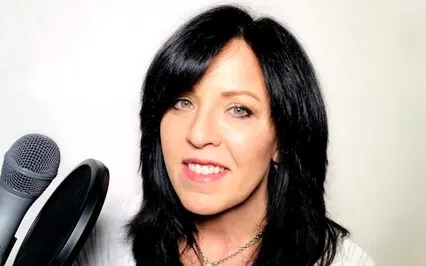
Welcome to the Breakdown to Breakthrough podcast.
My name is Lisa A.
Romano.
I am a life coach,
Bestselling author,
YouTube vlogger,
Meditation teacher,
And expert in the field of codependency and narcissistic abuse.
I am a believer in the power of an organized mind.
My aim is to help people learn what it means to live above the veil of consciousness rather than living a reactive life.
May your heart feel blessed,
Your mind feel expanded,
And your spirit find hope as you spend time with me here at the Breakdown to Breakthrough podcast.
So today we're going to be tackling what it takes for a codependent person to leave a frightening narcissistic relationship.
So as a codependent person myself or someone who I consider is in recovery,
I would say that confronting the truth is incredibly scary.
When you are a codependent person,
You are fawning,
Which means that you are more than just people pleasing.
You are maintaining the emotional balance of another person.
You are hypervigilant.
When your husband or wife is around,
You're immediately concerned about how they feel.
You are reading their energy.
You're looking at their eyes.
You're looking at the way they're moving about in the house.
You're looking for clues or cues to figure out how this person feels.
When you are codependent,
You are other focused.
Now the key to all of this is to understand that you don't know it.
You grew up feeling very insecure as a child.
You are unable to secure a healthy attachment to your primary caretakers.
The blueprint that you have for relationships is very insecure.
You aren't secure in who you are.
You as a child were taught that you needed to be on high alert in your home.
Perhaps you grew up feeling abandoned or like a burden.
Perhaps your mother was codependent or maybe she was a narcissist or maybe dad was an alcoholic or maybe dad was the codependent and mom was the narcissist.
Whatever your unique experience is,
What we're trying to understand is why we are codependent and more than that,
Recognize that if we are codependent,
It's certainly not our fault.
So if we are codependent and we're in unhealthy relationships,
We're recognizing that we have a propensity to people please.
We have a propensity to feel anxious.
We are on guard.
We are trying to figure out what people need and we have made our way through life finding value in making sure other people are happy.
We do this because it makes us feel safe.
We feel unsafe and one of the ways that we have learned to feel safe is by taking care of other people.
We don't feel worthy.
We don't feel good enough.
And so if we are people pleasing,
If we are taking care of other people,
If we are rescuing people,
If we are fixing their lives,
If we're trying to figure out what's wrong with them and we throw on our super cape,
Then we avoid feeling more out of control.
We feel more out of control when the people in our lives are unhappy,
If they are unsettled,
If they have addictions,
If they have money issues,
If they are unhappy.
We feel more secure in our skin if everyone around us feels good because we don't know how to cope with how other people feel if these people are unhappy because we feel responsible for how other people feel.
It's very natural for someone who has codependency to look out into a room and to figure out who's in pain and to be what that person needs.
They are someone who,
If they notice that someone's upset,
They go right into,
How can I fix you?
What's going on?
What do you need?
How can I help you?
And this is really out of anxiousness.
This is really out of anxiety and it's out of fear.
Because we've been taught that if other people are unhappy,
Bad things can happen.
If other people are unhappy and they don't get settled down real quick,
Maybe things go from bad to worse.
We have learned that by fawning,
By validating other people,
By figuring out what they need,
They stay happier and we get to avoid pain.
That pain could be criticism,
It could be anger,
It could be a narcissistic rage,
It could be rejection.
So we tend to take care of other people in order to control our own anxiety.
Parents who have children who are addicts,
We can overcompensate for our children.
We could pay their rent.
We could send them across the globe.
We can give them a place to live.
And it's our fear because we're afraid that if we don't take care of our child,
Then our child will fail.
And we don't know how to deal with our children's suffering or with our child failing.
We feel responsible for our children's lives.
And we can become enmeshed,
We can enable,
And we really hinder our children's ability to thrive.
It's like we're saying,
I don't trust that you can make it in life without me.
And our children feel that.
And so this is something that if you're codependent,
You really need to see that in yourself and get a hold of that so that you can give your children the idea that you do trust them and that you do believe that they can make it in the world without your help.
Now if you are a codependent woman,
Let's say,
And you're trying to leave a narcissistic relationship,
You will have significant challenges within your own heart because doing so is going to require you to face all of your fears,
To face the possibility of narcissistic rage,
To face the fear of a smear campaign,
To face the fear of financial ruin,
And to just really go against all of your coping mechanisms.
I have a codependency as a coping mechanism.
I take care of you because you've taught me over time that if I don't manage your mood,
You get snarkier,
More passive aggressive,
You stonewall me,
You put me down,
And it's very painful.
And I've learned through conditioning that if instead I keep my fingers on your pulse and I remain other focused and I run around like a circus animal figuring out what you need and then become what you need and you feel like I am your pacifier,
I can regulate your emotions and regulating your emotions allows me to regulate my emotions.
Now I've decided I want to leave you and all of my fears are coming to the surface.
When I decided to get a divorce,
I can tell you it was the most frightening time in my life.
I was part of this dynamic.
I backed myself in the corner.
I was unaware.
I didn't know what codependency was.
I didn't know what people pleasing was.
I didn't know what various attachment styles were like.
I wasn't really clear about what narcissism was or passive aggressiveness was.
I had no clue.
What I did know was that I was unhappy.
My body was failing.
I was miserable in my marriage and I physically could not take it anymore.
More importantly,
I had the spiritual awakening moment where I understood that I was teaching my children how to be codependent too.
That even though I told myself I'd never become like my mother,
I became like my mother.
I even had one son and two daughters just like my mother.
I ended up being highly codependent,
Frustrated and angry and lost inside dynamics that I was unaware that I was a part of creating.
Here I was saying,
I have to change this.
All of my defense mechanisms,
All of my coping strategies,
I drew a blank.
I didn't know who I was outside of trying to control everything,
Trying to keep everybody happy,
Worrying about what people thought about me,
Seeking validation,
Feeling best when I was rescuing people,
Falling into fawning,
Being afraid that people were upset with me.
I had so much anxiety over relationships and letting go of what people thought about me.
I had no clue how to put myself first.
I had been taught and labeled selfish when I was a child,
Whenever I thought about myself,
Whenever I spoke my truth,
I was called a drama queen.
I was called a liar.
So many different labels were attached to this idea of speaking my truth.
Here I was wanting to end a marriage and having to come face to face with all of my fears.
If you are struggling with codependency and you are at the end of the rope and it's time for you to end a toxic relationship,
It's important that you recognize that the fact that you're afraid is normal.
You don't know what's coming around the bend.
Your mind is not prepared for the next event.
There is the fear of the unknown.
Your brain prefers to keep you in loops,
Even if they're dysfunctional,
Because your brain can anticipate what's going to happen next.
The brain will default to the familiar to keep you feeling like you have some sense of control over what is happening in your environment.
When you are codependent,
You are acting out a simulation pattern.
This is what you were taught to do as a child.
You don't know how to do anything else.
Now all of a sudden you have a moment of clarity.
You're having this spiritual awakening and you're recognizing that you have to change,
That no matter what you've done in your life,
People pleasing just makes things worse.
Fawning just makes things worse.
When you freeze,
It just makes things worse.
Even if you fight and you are aggravated by people in your life,
That doesn't help change the situation much at all either.
When we are considering leaving a codependent slash narcissistic relationship,
Another thing that we'll struggle with is we wonder if it's me.
We wonder if it's us.
We wonder is it something that I've done that is causing this chaos?
You really do think that it's your fault that you feel the way you feel.
I think that's because as children,
We just learn to feel responsible for why we couldn't feel loved by our mothers or why we were rejected by our fathers or why we were given up for adoption or why we were pushed from one foster home to the next foster home or why our parents drank or why our parents were narcissistic.
There's this sense of control for a child,
I believe,
That,
Well,
If I feel like I am unloved,
I must have done something to deserve it,
So it must be within my control to gain their love.
There's this overwhelming sense of responsibility for why things are happening in the outer world.
There's also shame tied to feeling abandoned,
Shame to feeling like a burden.
When you feel shame,
You feel responsible for why you feel that shame,
And that's just not a rational thought.
When we feel shame,
That is because someone has made us feel like we are unworthy,
So something has happened to us,
And now we are seeing ourselves as defective as human beings,
And that's just not a realistic thought either.
I mean,
It makes sense to why we feel that way,
But at a core level,
Our core value is good.
At a core level,
We are divine,
And as psychological human beings,
We are simply responding to our childhood programming.
We are unaware that we're unaware.
Intimacy is a childhood program.
It is the result of feeling,
In most cases,
Very abandoned,
Very unloved,
Sometimes smothered.
It is the result of being raised by codependent and or narcissistic parents,
Alcoholic parents who did not do a good enough job at attuning themselves to us and allowing us to develop a secure attachment in which our brains now and our minds really have a sense of self that is positive.
We know that we are worthy.
We know that we are enough.
We know that we're good on the inside.
We know that we can be vulnerable with people,
And we can trust that people are going to be there for us because we've been taught our framework is such that we were allowed to make mistakes when we were children.
We weren't shunned for making a mistake.
We weren't criticized.
We weren't cast ashore.
We weren't put on a life raft and pushed out into the ocean and our family waved goodbye on the shoreline.
We felt like we belonged to the people that we were born to.
We felt like we could make a mistake.
We'd be forgiven.
But when we come from dysfunctional homes where parents abuse their power over their children or they shun their children or they're passive aggressive and they're narcissistic,
They stonewall their children,
They ignore their children,
They withhold affection and love as a form of punishment,
These are some of the dynamics that create insecure attachment styles,
Anxious attachment styles,
Avoidant attachment styles.
These are the types of experiences that create codependency.
Now,
When we are contemplating leaving a toxic relationship,
It's important for us to realize that the terror is real because we don't know how to be the self.
We don't know how to say,
This is what I think and this is how I feel and nor do we know what's going to happen next.
The fear of the unknown is very,
Very real.
Number one,
Accept and become nonresistant to the fact that terror is natural.
Terror is normal.
All you have to do is really at that point is to accept that that's where you are.
Don't push it away.
If you find yourself being afraid and not knowing what to do next,
You're normal.
Join the club because that's step number one,
Accepting the truth,
Accepting that you're afraid.
The next thing that you want to do is you want to learn to honor yourself.
What do I mean by that?
Well,
One of the most profound moments for me on my healing journey,
My spiritual healing journey,
My healing from codependency,
Which I absolutely believe was the cover word for spiritual evolution and a raising of consciousness.
I absolutely believe that because codependency implies that you're living below the veil of consciousness and acting out a childhood program,
Which means you're an autopilot,
Dear one.
You're not awake.
Healing from codependency implies that I'm now living above the veil of consciousness.
I am living a more empowered life.
Make no mistake,
You can be a highly empowered man or woman at work and be very disempowered in your relationships.
I have coached politicians.
I have coached lawyers.
I have coached neuroscientists.
I have coached physicians,
World-class athletes.
These are people that most of us would think have really empowered careers,
And they do.
However,
On the home front in the romantic relationships,
That's where you see this issue show up.
That's where you see insecurities and anxiousness show up,
The inability to hold onto the self and the sense of loss of self where I don't know who I am in relationships.
I know who I am at work.
I know that I am this politician.
I know that I am this world-class athlete.
I know that I am this actress.
I know that I am this actor.
I know who I am with this badge on.
In my relationships,
If I'm not relying on coping strategies like codependency and I'm not making sure that my alcoholic husband is happy or my drug-addicted daughter is paying her rent,
I don't know who I am outside of being an extension to other people.
So you're not alone.
When I was going through the recovery journey,
One of the most profound moments in my life was when I realized I had this awareness where I was observing myself almost like an out-of-body experience and I could see that when my ex-husband came home from work,
I changed.
It was like I went,
And I changed my energy and I was being prepared,
Preparing myself for how he was going to be.
And it was sort of like I lost myself in that moment.
And I remembered how my mother was.
And again,
We all tell ourselves we're never going to be our mothers.
And then one day we look in the mirror and we go,
Oh my God,
I am my mother.
I remember being a little girl.
And when my dad would come home from work about five o'clock every night,
We'd hear the van door close,
My mother did the same thing.
Oh,
Your father's home.
And we were like terrified because daddy's home.
And all we knew was watch mommy and mommy was having a meltdown or getting very,
Very rigid when daddy's walking down the driveway and we can feel her anxiety.
So we just took that to mean something's wrong and we better behave.
And here I was doing that as an adult woman with my ex-husband with my three babies now watching me do that.
So that was a very profound moment for me.
And I remember my therapist at the time telling me,
Just hold on to yourself.
I didn't understand what he meant,
But eventually I got it.
What it means is that hold on to your energy when you're around other people.
Focus on what happens to you inside your mind and inside your body when you're around people who maybe represent an authority figure for you or are people who you feel are narcissistic,
Are high conflict personalities,
People that you have enabled,
People that you have rescued,
People that you tend to fix,
That you tend to be an advocate for,
People that you throw on the cape for.
Practice how your energy changes around these people and then within your own auric field,
Practice holding onto that energy without allowing someone else's mood to affect you.
That is phenomenal.
And if you can practice that,
You are definitely on the road to emotional recovery.
The next thing that you want to do,
And these are just simple tips for anyone who is considering leaving or ending a narcissistic relationship,
And every experience is different.
Every relationship is different and the people that you're leaving might be different than someone that you know,
Someone who might be in a similar situation.
You might be involved with someone who could become dangerous,
Whereas your best friend could be involved with someone who's just going to be mildly annoying.
And so I don't believe that these are cookie cutter experiences.
I don't believe that every breakup is the same.
I think that we have to pay attention to our individual situation and regulate what we're doing according to what might happen in our life.
Just because someone from the outside doesn't think that you could be in a hairy situation doesn't mean that you don't agree with them.
Doesn't mean that you do agree with them.
What it means is that you have to pay attention to what you think might happen next and you have to regulate your reaction to this person according to what you think is possible.
When it comes to healing from codependency,
What we want to do is we want to make sure that you're seeing the truth,
That you're accepting that this is scary,
And that you're learning to hold on to your energy.
The third thing that you want to do is make sure that you are separating fact from fiction.
When you are ending a relationship with a toxic person,
They love crazy-making communication.
They love making you feel guilty.
They love turning the tables.
They love accusing you of things that you're not guilty of.
They love using coercive control.
They love throwing threats out there.
One of the things that I heard was,
Well,
This is what divorce is,
Lisa.
This is what it looks like,
Lisa.
What do you think is going to happen when I get involved with another person,
Lisa,
Threatening me,
Making me afraid that if I go forward,
He may or may not have anything to do with our children in the future?
Using my fear of my children's relationship with him against me as if to say,
Well,
It's your fault if I end up not having any relationship with our children because you want to proceed with the divorce.
I think the third thing that's really important for anyone who's dealing with the resolution of a toxic relationship is you have to understand that people who are immature do immature things.
I'm saying it kindly.
People who are toxic,
They do toxic things.
Don't expect someone to be rational who you have dealt with who has proven to be irrational and unfair and highly immature.
Just accept that this person,
Whoever you're contemplating leaving,
Is going to say things that just don't make sense.
Make sure that you're cutting through it,
You're being laser focused,
And you're separating fact from fiction.
Make sure that you're spending time separating your emotional self from your rational self.
When we are emotional,
We're not always thinking clearly.
We're letting fear run the ship.
We're letting our programs run the ship.
We want to make sure that we are doing everything that we can to be more logical and rational versus emotional because if we allow our emotions to run the ship,
Then we will oftentimes feel overwhelmed by the next step.
Make sure that you recognize that fact over fiction is really important,
That just because someone says something doesn't mean that you have to take them seriously,
Especially if it makes no sense.
When someone is talking to you that you feel might be toxic or narcissistic,
In your mind,
See a garbage can and just have a garbage can available.
When you hear them say something that doesn't make sense,
Imagine throwing that comment right into the garbage can.
It just doesn't make sense.
Delete,
Doesn't make sense.
Throw it into the spam folder.
Doesn't even make sense.
I wasted so much energy in crazy making conversations that it was insane because here I was going against something that didn't make sense and expecting this person to come back with me with something that made sense.
Meanwhile,
It was just a big circular conversation then that went nowhere.
So don't make that mistake.
So put it in the garbage can,
Press delete.
Don't let it get inside your aura.
Don't take it in.
Just recognize it as crazy making conversation and pay no mind to it whatsoever.
The fourth and final thing that I'd like to suggest is don't poke the bear.
Shutty shutty.
Ignore most of what this person is saying if you can.
Do not go back at this person.
Do not try to prove them wrong and do not point out their character flaws.
When you're dealing with someone who's highly narcissistic,
You're dealing with someone who is incredibly,
Incredibly fragile.
And that's why they have to huff and puff and throw their weight around.
And that's why they can be very punishing with and around people who are vulnerable.
That is why they need to prove their dominance because on the inside they have very fragile egos.
Pointing out someone's character flaws is only going to make that person more angry,
More unpredictable,
And more aggravating to live with.
So as you're planning your next move,
Do what you can to detach yourself and remember that the goal is to no longer be enmeshed with what this person thinks,
What this person needs.
Remember that you don't have to take on this all in one giant piece.
You can take the end of this relationship in bite-sized pieces.
I often tell my clients that they shouldn't set a boundary until they're ready to actually hold that boundary.
Just because you want to learn how to swim doesn't mean that you should jump off a cruise ship because you want to learn how to swim.
If you want to learn how to swim,
You start in a pool that's three feet high.
You develop the ability to float first and you develop your confidence so that one day,
God forbid you fall overboard,
You can swim.
It's the same thing when you're ending a toxic relationship.
And again,
I'm broad stroking it.
But what I'm trying to help people feel or see is that if you are coming to the reality that your relationship isn't going to work out,
Unless you absolutely have to get out of that situation immediately,
I do think there's tremendous benefit in taking the end of this relationship in bite-sized pieces,
Meaning that you don't have to throw the baby out with the bathwater all at one time.
You can learn to take care of yourself.
You can learn to hold onto yourself.
You can learn to stop fawning so much.
You can learn to set a small boundary here and there.
You can play with that.
You can learn how to stop pointing out this person's character flaws.
You can start self-care.
You can start going to the gym.
You can start separating your finances slowly.
You can do these things over time.
It doesn't have to happen overnight.
So if you are codependent and you're facing your codependency issues,
Dear one,
You are in for quite a ride because you are going to have to face all of the survival strategies that you have relied on to keep you safe,
Which means that you will feel unsafe in this new role of yours.
But the good news is that if you stay on this path,
You will end up loving yourself.
You will end up finding the road back to you.
You will end up reprogramming your subconscious mind for healthy experiences.
One day you will have a secure attachment to your divine inner child.
One day you will have a secure attachment to your higher self.
And from there,
That becomes the new framework for your future relationships.
You have not been put on God's green earth to convince someone else that you are not who they think you are.
You have not been put on God's green earth to live your life as an extension of the people that you love.
You have been born to figure out who you are,
To live your life,
To live your truth,
And to sing the song that's been placed upon your heart.
This requires that we go into the silence of our own soul.
This requires soul recovery.
This requires a soul connection.
This requires that I detach and disconnect from the people outside of me so that I can turn to the inside,
So that I can learn to love myself.
This means that I need to learn to mother myself in the way that I always deserve to be loved from the moment that I was born.
And if you can learn to love yourself,
You can heal your life.
You can change the way you see yourself and you can attract the love that you desire one day.
But first,
We've got to get you to love the self.
I hope this has been helpful.
Namaste.
Until next time,
Dear one.