Hello and welcome to levitate the home of inspiring stories with me,
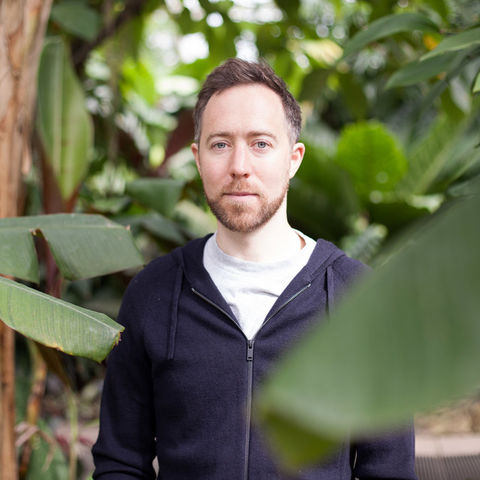
Ryan Nell.
In today's episode,
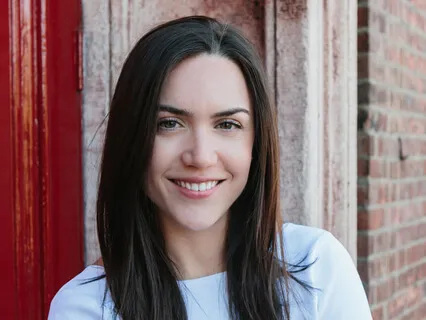
We talk about how to grow as a leader and beat chronic pain with Katie Trost.
Katie is an executive coach who works with leaders in the startup and scale up industry.
She traveled for four years,
Rather than go to university and set up her first business at the age of 21.
She has overcome some personal hardships,
Chronic pain and fibromyalgia.
We chat about her childhood and how that shaped her and influences who she is today,
And also the more recent loss of her mother.
Katie and I chat about community and social media and how she finds balance in a world that demands a lot of us.
She also shares some really powerful tips on time management,
Which I know I'm going to apply to the way I work.
And I hope you enjoy this conversation as much as I did.
Just gave me cortisone shots,
But didn't tell me that it would come back after for like a week.
I felt like a newborn person.
I was like,
Oh,
My God,
This is amazing.
And then I came back even worse.
And the side effects of fibromyalgia are chronic fatigue and like you just get so depressed.
I think I told my mom on the phone,
I'm like,
If this is going to go on for another year or two,
I'm going to I'm I'm not going to able to make it.
But she told me the whole time,
Just don't give up,
Just don't settle without having an answer.
I'm sitting here with Katie Trust.
Katie is an executive coach,
A regular Forbes contributor.
She advises CEOs in various places across the world.
She's got an incredible background,
Overcome some in her life,
Chronic pain and has flirted quite deeply with mindfulness and meditation.
And we're hopefully going to do a bit of work together.
But our paths have crossed and I kind of couldn't wait to get her on the podcast.
So welcome,
Katie.
Thank you.
Thanks for having me.
I'm really excited.
Looking forward to it.
Would you just tell the listeners and viewers just a little bit about yourself,
Kind of what your journey has been to get to this point?
Where it all started.
Yeah,
Sure.
Yeah.
You already said my work background,
So I'm an executive coach and I specialize in working with founders and CEOs and sometimes the entire leadership team.
And I help them navigate the challenges of accelerated business growth.
So when a company grows fast and dynamics change and there's a lot of new people on the team,
For example.
And yeah,
So they usually partner with me to help to optimize structure within the business,
To optimize their personal performance and to become more effective leaders.
And I'm originally from Germany,
So I left 2013 and I traveled for four years around the world to 30 countries by myself,
Which was an amazing experience.
And then I moved to New York City for two years and I lived there.
And that's when I really got into executive coaching and more into the startup scene and the tech and finance industries.
And yeah.
And then I started my first business at 21.
And while I was abroad,
What you mentioned earlier and kind of how we got together today,
While I was abroad,
I spent a few months in Buddhist monasteries and I studied the mindfulness teachings of Thich Nhat Hanh and then of Vipassana.
And I wanted to learn how I can implement those in order to improve balance and then also performance in life and in business.
And yeah.
So as you mentioned,
I also cured myself from chronic pain.
I had fibromyalgia for two years.
I believe that was 2016 through 2018.
And so very recently.
And that was an incredible journey and just experience for myself,
With myself,
Because you're pretty much by yourself doing that.
And yeah.
So and as you said,
I write for Forbes and I write for Success magazine and partner with WeWork and Soho House.
And I did some trainings with the Quinnipiac University in Connecticut.
And I do workshops and trainings on entrepreneurship and on high performance psychology,
On mindfulness,
On everything related to executive coaching leadership stuff as well.
Yeah.
And I signed with a few coaching firms across the world and helped them with their clients and have my personal practice as well.
It's incredible.
So you mean you sound like the world's most busy human with all of that stuff in the CV and these different things that you're kind of working on.
And what prompted that sort of you say you traveled for four years.
Yeah.
What kind of what was the inspiration behind that journey?
That's a great question,
Because I only remember myself riding my bike to high school and it was cold outside and rainy outside.
And I just was so convinced that I wanted to leave Germany and I wanted to I was very type A,
Very forcing myself into a very strict schedule.
And I would say I've really suffered under my own pressure.
And I had incredible.
I had incredible doubts about myself.
And I feel like every teenager and every person kind of goes through that at one point.
But I really wanted to get rid of it because I believe that there is something on the other side of that and that there can be an amazing quality of life and just confidence and more well-being on the other side.
So I wanted to take that time to explore and to get rid of my negative beliefs and to explore me and really develop a good relationship with myself.
So I just left and I went as far as I possibly could to New Zealand.
And were your family kind of fans of the idea or were they supportive or a bit worried probably?
I would say my mom was.
She was very supportive.
She didn't know what I was doing,
Especially when I got into coaching as well.
She was very much confused,
But she always supported me and,
You know,
Following what I believe was the right thing.
But she also said that if I want to do something that's maybe a little bit more unconventional.
I never went to college,
By the way,
That I would need to dedicate myself to it and that she expects excellence and that,
You know,
Whatever I choose to do.
But she didn't tell me what I had to do.
And my dad,
I think he wasn't that supportive of it,
But he was a big part of why I left.
So I didn't really care.
We don't have to get into that.
A bit of rebellion is good.
Yeah.
So you went to New Zealand and were you working out there or were you?
No,
Not at all.
I mean,
I finished school,
Finished high school.
And during the summer after I finished high school,
I just worked as a waitress and I saved all my money.
And I went with,
I believe,
Like $7,
000 and I thought I was going to travel for 10 years.
I'm like,
What's $7,
000?
You'll never run out.
Yeah.
Like,
Yeah,
Three months.
And I'm like,
Oh.
But yeah,
I went to New Zealand.
In the beginning,
I hitchhiked and went to hostels and couch surfed.
It was amazing.
My English was absolutely horrible.
I was basically using emoji English and hands and feet to communicate.
I went to Sydney,
Got a job there just for three months,
Just waiting tables.
And then left Sydney,
Went on a road trip.
And then I just traveled and just used my savings.
I traveled within Australia and traveled in Asia,
Southeast Asia for about three months.
And then in Western Europe to Spain and Portugal and France.
And that's where I went to the meditation retreat for the first time in Porteux-en-France.
Which is Thich Nhat Hanh's Plum Village.
Exactly.
Yeah.
Yeah.
So it's in the south of France or it's a Bordeaux,
So like mid south of France,
A little bit outside.
And yeah.
So when I went to the meditation retreat,
I was going to become an architect after because at that point I traveled for a year and I was going to become an architect and move to Vienna.
And I think I only did it because that was like the only thing that I liked in school to model the houses.
And I was really good at it and it was really cool to become an architect.
So I was like,
Of course I'm going to do it.
It's a very sexy profession.
Yeah.
Yeah.
So I just imagined myself at these,
You know,
Dinner parties.
I don't know.
It was so fancy.
Like to me,
The idea was like,
Yes.
So I had no clue.
My friend was like,
I just did an internship in architecture from Katie.
It's horrible.
It's only numbers.
There's nothing design.
Yeah.
Like nothing.
Like,
OK,
I'm not going to do that.
And I believe for me,
The idea of having a nine to five was just not very appealing.
Yeah.
Yeah.
Within that month of being at the monastery,
I talked to a lot of people.
And I am obviously a lot of people that were some kind of crossroad in their life.
If that was because they didn't have children and they wanted to start their own business and make that their life's work.
Or if the kids were out of the house and they were like,
You know,
Reevaluating what they wanted to do with the remaining 20,
30 years that they were fit.
And I just saw a pattern of people that went into the wrong direction for a long time and then came back to the same point and kind of started from scratch in a completely new career.
But now there's a mortgage and now there's responsibilities and kids.
And I asked myself,
Do I want to be at the same point again at 20 years?
And then do something I really like or am I just going to take a little bit more time and just explore who I am,
What I want,
What I'm good at,
And then go for that.
And even if it's a little harder,
At least I have like,
You know,
I'm 20 years ahead basically of everybody else because they do it after 20 years.
Right.
Right.
Right.
So to get the midlife crisis out of the way early.
Skip it entirely.
It was a little hard because at that point all of my friends started going to college and I didn't have any idea what I was going to do.
So I went home after the first year and I was like,
I want to do something.
Location independent freedom is a big value of mine.
And I wanted to be able to travel another year.
So I told my mom and she was like,
I don't know what you're doing,
But you just do your thing.
I believe in you.
It's all good.
And I left and I went to the States for the first time.
I went to New York for the first time,
Moved to the West Coast.
I was dating somebody there,
So it was kind of like in and out of San Francisco for about a year and went to Central America and just cruised through Central America by myself and the chicken bus.
It was amazing.
And a friend of mine told me about coaching.
This is a very long version of my story.
This is great.
So many avenues that I want to kind of pick up on.
So actually,
Because you asked how I was working.
So after the first year of traveling,
I went to Switzerland,
Went to a town called Davos where they have the World Economic Forum and I waitressed and I did the season there.
I think I saved like 20 grand and then did another year of traveling.
And yeah,
So moved to the West Coast,
Was in Central America for a while and I just kind of explored all of those exercises that I now sometimes do with my clients.
What's my values?
What's important to me?
What are my strengths?
And I did all of that without knowing that I was doing them.
So just explored myself,
Read a lot,
Did a lot of meditation because at that point I already had this experience with the monastery.
And a friend of mine told me about coaching and I think it was more corporate leadership coaching.
You can do,
You know,
Some kind of courses at universities.
And that was a new thing.
And I looked into it and I was so fascinated by it.
And I never had that thing.
You know,
Some people,
They are photographers from when they are seven years old.
And they're like,
This is what I'm going to do for the rest of my life.
And I never had that.
And when I saw this,
I was like,
Yeah,
This is amazing.
And yes,
So very quickly I signed up for a program which is an American school and it's,
I believe,
One of the top two institutes in the world next to the,
What's it called?
CTI.
And the one I went to is called IPEC.
And I did that program which is partly remote and then the rest is online.
And you have webinars and calls in between and it's about 15 hours of work a week,
I believe.
So I did that.
And while I was doing that,
I realized that I didn't want to go back again and waitress again for those two or three months and save up again.
And,
You know,
Travel.
So I started,
I kind of like connected the dots and I was like,
I'm just going to start a business that's basically assisting other coaches so I can get a look behind the scenes how it works.
So that's what I did.
And I reached out to probably a thousand coaches on the ICF,
The International Coach Federation website.
And I told them my story,
I'm Katie,
I'm traveling,
I want to be your assistant.
And I started with like 10 bucks an hour just,
You know,
Being an assistant,
Copy and pasting,
Putting some stuff on social media.
Yeah.
And then I just added more and more tools to my belt,
Marketing,
PR,
That kind of stuff,
Increased my prices.
And then I had a freelance business that basically allowed me to travel and work about 10 hours a week or whatever it was.
Yeah.
So I did have to go back to Switzerland though one more time because the money just wasn't enough.
And that's when I developed my chronic pain.
I was carrying this really heavy stones because the customers were able to grill the steak on a stone on the table.
Like a parrot or something.
Yeah.
It's like you get the whole stone or something and I carried it.
And I think it was more the mental stress than anything within the restaurant.
And I hated the hospitality industry.
Like from the beginning,
It was not my cup of tea at all.
So I think I just didn't like that.
Somebody told me what to do.
I think that was the whole problem.
Yeah.
Yeah.
I'm getting that theme.
So I got in the beginning,
I thought it was like carpal tunnel.
Yeah.
And then I went to get these wraps and then I went over my hands and I had these bumps here.
And then I went into my shoulders and then went all over my body.
And within three months I wasn't able to move.
It was just like,
What's going on?
It's crazy.
So I was able to finish that though.
And then went back to California because I was still dating the guy in California.
And yeah,
So I was basically laying in bed for multiple months.
And I had my business and did my coaching certification and started having my first clients.
And I couldn't drive or put my clothes on.
It was just absolutely horrible.
So you're speaking to the clients on the phone or?
Yeah.
Yeah.
Yeah.
Yeah.
So that was a very intense experience.
And I broke up with him there and left right after actually my mom got diagnosed with cancer.
So my fibromyalgia was just like,
Wow,
Like very intense.
Yeah.
Because it was a very intense period.
And yeah,
Did you want to talk about that more now or later?
But don't worry about it.
Now's as good a moment as any.
Yeah.
You know,
I'd be interested to know what you think was kind of going on.
You know,
Obviously,
We had a little chat before the podcast,
But quite often,
Sort of mental,
Spiritual angst in a way,
You know,
Kind of plays out physically if we ignore it for long enough.
But do you think that was what was going on for you?
I think so.
Yeah.
So,
I mean,
I was trying to cure it in so many ways.
And I'm not a person who just pops pills and takes drugs and,
You know,
Kind of cures the symptoms.
My mom was always she's like she was a huge fan of homeopathic remedies.
Yeah.
And at one point,
I just didn't have the option anymore to own the basically try to help myself with diet.
Like I think I only ate green vegetables for like three months.
I only.
.
.
Yeah,
That sounds terrible.
Yeah.
Unless you like vegetables,
But you and them,
Yeah,
Monotonous.
Exactly.
So I tried hypnotherapy.
And then when I went to the doctor,
I spent so much money on the doctors in the US because it's.
.
.
That's how they get you.
Yeah,
Exactly.
And they had no idea what was going on.
And I was like,
Well,
It's basically arthritis or something like that.
You know,
I never heard of fibromyalgia before.
It's basically arthritis.
And they were like,
No,
You can't have that.
You're too young.
I'm like,
Well,
But I have some like,
You know,
Something's going on clearly.
So they just gave me cortisone shots,
But didn't tell me that it would come back after.
For like a week,
I felt like a newborn person.
Yeah.
I was like,
Oh,
My God,
This is amazing.
And then I came back even worse.
And the side effects of fibromyalgia are chronic fatigue and like you just get so depressed.
I think I told my mom on the phone,
I'm like,
If this is going to go on for another year or two,
I'm going to.
.
.
I'm not going to be able to make this.
Like,
I don't want to live like this.
Yeah.
But she told me the whole time,
Just don't give up,
Just don't settle with without having an answer what this is and where this is coming from.
So I did leave.
I did leave San Francisco and I traveled with her in Colombia for a while because she had the diagnosis.
And I was like,
You know,
You have two options,
Basically lay in a hospital and die in like three or four years.
Or you just come travel with me in Colombia and we dance salsa and have tequila and you're going to die whenever you die.
She's like,
OK,
I'm booking my flight.
I'm like,
Cool.
She sounds like an amazing woman.
Yeah,
She was definitely.
So,
Yeah.
So she came to Colombia,
Had an amazing,
Just amazing time with her for like two months.
And then we went to Guatemala and she had to fly home because she didn't feel so well.
And I still had the fibromyalgia.
And at that point,
I think I traveled for about three,
Three and a half years.
That was beginning of 2017.
Yeah.
And I left end of 2013.
So she passed away,
I believe,
Three weeks after she left.
And I came home just after.
So I didn't really see her anymore.
But yeah,
I was still having my fibromyalgia and I was in the house with my sister.
My parents had divorced and my father was not in the picture.
And we were just,
You know,
We just had to like figure out a funeral to get rid of all the stuff for the house and how to,
You know,
How to get tenants and all that stuff.
And like,
Finance and just like craziness.
And I imagine none of which you want to think about.
Exactly.
And I was building my business,
My two businesses,
Basically.
Yeah.
So,
Yeah,
It was a very,
It was a very relaxing.
Let's put it that way.
Yeah.
But when I,
I believe when I went to Germany or just before I found somebody in a Facebook group randomly and she was just like,
You know,
If you have chronic pain,
Text me or like reach out to me.
And I was like,
OK,
I never saw anything like this before in a comment of a Facebook post.
And I reached out to her and I don't even remember what she told me on the phone.
I was just like,
Take my money.
I tried everything I can do.
This is the absolute last resort.
Like,
I have no idea.
So I paid her barely anything.
I think it was like 300 bucks or something.
And before I spent thousands on doctors.
Yeah,
Yeah,
Yeah.
It's totally nothing.
She explained a concept to me that made sense.
And I already believed in it,
Something similar before,
But I just couldn't put the pieces of the puzzle together and how it all like the bigger picture.
And what she said,
She recommended a book to me that I read multiple times.
It's called Mind Body Prescription by Dr.
Sarnos.
Yeah.
He was,
He was a he actually passed away two years ago and he was a doctor at NYU University at the hospital.
And he came up with this method that your brain always tries to release stress in some kind of way.
And it can come out in with physical symptoms.
So that could be chronic migraines,
Chronic back pain,
Chronic,
For example,
Fibromyalgia.
Or you have something chronic on your knee or on your foot.
And it usually starts with some kind of injury.
And then it just doesn't go away and it becomes actually stronger and stronger over time.
And what your brain does is it takes emotional pain and in order to distract you,
It just makes the emotional pain physical.
So you don't have to deal with the emotional pain.
And sometimes it comes out as anxiety and depression.
So it could be physical.
It could be emotional.
And what she taught me to do is to first off activate my parasympathetic nervous system.
With a lot of meditation,
With deep relaxations every day,
Journaling.
So releasing the energy.
Kind of like the rest and digest mode rather than fly some flight.
Which I was definitely in fight or flight for for a while.
Yeah.
Through those experiences.
And yeah,
So I did that.
Then I read the book and I think the trigger was to not buy into it anymore.
Whatever your brain does with you.
Like you cannot reduce stress in your life.
That's the first rule.
You cannot reduce stress because there is positive and negative stress in your life.
You have a child.
You have responsibility.
That's a stressor.
You get married.
That's exciting.
But it's really stressful.
And it's very,
You know,
It's a new thing.
You get a new job.
That's exciting.
But responsibility.
There is no way for you to reduce the amount of stress to zero.
It's just like impossible.
So it's more about how is it translated in your brain.
And for a long time nothing happened.
I believe for two or three months.
I did it every single day.
Nothing happened.
And then I went to New York for the summer because I just couldn't stay at home anymore.
So was it like a particular kind of practice?
It's just these daily things that I had to do to read some of the book.
It's like knowledge therapy.
Read the book 15 minutes.
Then I had to do meditation 15 minutes.
Do the deep relaxation 15 minutes.
Journal 15 minutes.
And oh yeah,
One important thing is also to stop all,
How do you say it,
Therapy or treatment.
So if you go to the physical therapist or the,
You know,
Anything to the massage,
Whatever it is,
You give your brain basically the information that something's wrong with you.
So you have to act as if nothing was wrong with you.
Yeah.
It's really like it was it was a little bit twisted and I couldn't get the hang of it.
It's very interesting.
It's counterintuitive.
Yeah.
And I couldn't I couldn't I understood the concept,
But nothing happened.
I don't know.
It was weird.
And then I went to New York and I broke down five days.
Literally,
I remember I didn't leave the bed.
Nothing.
And by the day,
I could see the bumps on my hands swelling down and I got up after five days.
Zero pain.
I was like,
What just happened?
I was like blown out of my mind.
What just happened?
It was crazy.
And so I was in New York over the summer and an amazing time there and then decided also to move there.
And yeah.
And the thing with chronic pain is,
I believe once you once you cure it,
It's like with emotional pain,
It might come back,
But not that much.
And you know how to handle it.
So you solve it again and it might come back in a longer period of time,
Even,
You know.
And you just know how to handle it and it just doesn't come anymore.
It's really interesting.
And when it comes,
Sometimes it comes and I feel it like 5% or something of what I used to feel.
Yeah.
And I just literally think of the cover of that book and it just disappears.
Because effectively you're like now a repository of all that knowledge.
Right.
So you know it works.
I know there's some sort of really interesting studies like longitudinal ones that Jon Kabat-Zinn did.
There's sort of,
Can't call him the father of mindfulness,
But one of the guys who brought it into Western medicine in particular in the 70s.
And his program,
Like mindfulness based stress reduction,
One of the major kind of groups of patients they work with,
People with chronic pain.
And it's,
They're very much doing the work of,
We're unlikely to be able to get rid of the pain.
What we want to do is help you change your relationship with it.
So you're no longer suffering it.
It's just something you're experiencing.
But there's some mental acrobatics you need to do to get there.
You have to.
But I don't even believe in that because I,
For a long time,
I thought maybe now I need to more learn how to manage it,
How to manage the pain.
But I believe if you weren't born with something and it's like,
You know,
The way your body is built or something,
I believe you can get rid of it.
And it's really hard to believe that even for me,
I can say it in a very convincing way.
I lived through it.
I experienced it.
I experienced a doubt in the beginning.
Is this going to work at the whole process?
And then the final result.
And when I talk to people who do have chronic pain,
I always hear,
I know,
But it's not going to work with me.
But it's back pain.
But I had it for so long.
But you can even see it on the x-ray.
And that's actually interesting because the guy,
Sarnas,
He says,
Once you're diagnosed with something or once you see it on an x-ray,
It becomes even worse.
And what you see on the x-ray is usually a normal abnormality.
So it's very,
Your body is much,
Much stronger than you think.
And even if you have that abnormality,
You should be able to live without pain.
It's kind of like the excuse of that,
You know,
The whole.
.
.
It's almost like a confirmation bias,
Isn't it?
Where we form,
I suppose we form a kind of picture of how the world is.
And then we'll encounter all sorts of things that don't fit with that picture,
But we tend to just push them to one side.
They don't get as much waiting.
Yeah,
Absolutely.
Yeah.
So yeah,
That was the.
.
.
Don't go and get an x-ray.
That's the advice from Casey.
I mean,
You know,
I don't know.
It's,
I don't know,
Especially through my mom's death where the doctors wouldn't want to give her,
Like she wanted to test on her liver and they just wouldn't want to do that.
And she had to like ask five times.
And then once she got it,
It's like,
Yeah,
Your liver is literally full of cancer.
It's like,
I just don't trust them anymore.
You told me I can't have arthritis,
So I don't have arthritis just because I'm too young.
And this is just,
I don't necessarily believe in traditional medicine or in traditional.
.
.
I don't know.
I have a weird relationship with it,
I guess.
Yeah.
I mean,
I totally imagine where that is.
And yeah,
I mean,
There's a big,
You know,
Big bit of obviously mindfulness is,
You know,
Trying to get people back to being able to hear their own intuitions,
You know,
Like be able to pay attention to what your body is saying,
What your mind is saying.
We're very,
Very inclined,
I think,
Now to obviously there's so much science out there.
So many people have kind of done the thinking for us.
It's quite easy just to kind of go along with it rather than developing your inner voice,
Which you clearly have.
It's also interesting.
I think what he said in the book was that in certain times there is in illnesses,
So for a while everybody had ochres,
Then everybody had back pain.
Yeah.
And it was kind of what is respected,
Like if you if you tell your co-workers,
I have such back pain,
You know,
And it's kind of respected,
Then unconsciously your body just develops that.
It's crazy.
So many different generations have different.
.
.
It's almost like the fashion,
You know.
Yeah.
There's a good kind of evidential base that,
You know,
If you tell someone they have ADHD,
Then the symptoms will intensify.
Yeah.
You can almost give it to someone by diagnosing them.
Absolutely.
And you can remove it by doing that.
Yeah.
My workshop tonight is exactly about that.
Okay.
Amazing.
What's the title of the workshop?
It's about identity and the psychology of the self image.
Okay.
So how you see yourself and how that influences your results,
The way you show up,
Your performance,
Your well-being.
And you can change your perception of yourself without changing your actual self.
And it's going to.
.
.
It changes your life completely.
It changes your reality.
Yeah.
You have to design your identity instead of being a product of your environment.
Yeah.
So you seem like a real.
.
.
You're like a fighter and an explorer.
Yeah.
Is there.
.
.
Is there like an early childhood memory that might give a bit of insight into like the Katie of today?
An early childhood.
.
.
I mean,
I think when I grew up,
My parents got divorced when I was not that young.
I think like 15 or something.
Or they separated and then I got divorced later.
But there wasn't like a good energy necessarily in my home.
Like when I started.
.
.
When I had my first memories,
When I started thinking around like 9 or 10.
And the problems that I observed my parents had.
If that was conflict emotionally or in terms of relationships.
Yeah.
Family,
Like the rest of the family,
How they related to my mom,
For example,
My dad's family to my mom.
And financially and all different.
.
.
All kinds of ways.
Where I just remember myself standing in the kitchen and I just looked at them fighting and I was like,
I never want to have those problems.
And I just made this decision for myself that I don't want my life to feel that way.
And I think that's also what I kind of ran away from.
And don't get me wrong,
I didn't have like a horrible traumatizing childhood.
But I was.
.
.
I knew that there is a better way of living,
I think.
And I made this decision for myself and I kind of wanted to go on this journey to explore how that looks like.
And I think on the way I discovered that I would say 95% of people are living a life that's not necessarily fulfilling and doesn't feel so great.
And waking up to a life that's not you or where you suffer from a lot of negative beliefs about yourself and about the world.
It really takes away the joy and the quality of your life and I just never wanted that.
And I made this decision and when I traveled I just felt so alive.
And I went bungee jumping and skydiving and hitchhiking and was only surrounded by strangers.
And my world image completely changed.
I saw everybody I didn't know as a friend.
I just don't know yet.
And I always believed in the best in people.
And even though many things happened and my mother passed away and I built a business.
I still want to believe in the good things in life and I still want to trust in life and want to feel like in the end everything is going to be good.
And I think when you have that belief it doesn't matter what challenges you have.
Because you have a positive outlook and you're going to use that challenge to become better instead of become broken.
Yeah.
Yeah.
Yeah.
So I think that's really really wonderful what you just said.
You're reminding me of this sort of idea that a lot of people are out there and not that happy.
Not that kind of content of potentially perhaps not living the life that they could be.
Yeah.
There's an interesting statistic I came across the other day about florists and solicitors.
I think in the UK.
And anyway they did they did a study and surveyed I don't know 2200 people or something.
And 40 percent of solicitors were kind of found some meaning in what they do.
You know there's this job satisfaction versus something like 67 percent of florists.
People you know flower sellers.
And what the florists had was this sort of sense that every day they can improve what they're doing and they've got direct contact with customers.
Yeah.
And right in front of them.
There's a sort of there's an art.
They're in contact with nature versus you know what most of the world is now a Western world is now doing which is service jobs where you're potentially very very far away from nature.
Yeah.
Your customers are you know on the end of video conferencing and you don't have a chance to kind of relate as humans with each other really.
I want to get a sense of obviously you coach and you don't just coach you're working with these sort of CEO and founder types.
I'm not sure I'd quite kind of qualify or count myself among their number yet or they give myself the title but you know I'd just be really really interested to know kind of what actually what what coaching involves.
I've had a couple of coaches in my time.
Everyone's had a very different methods.
There's obviously there's this the more I've looked into kind of coaches and kind of maybe bring them into levitate business and where I've kind of understood that almost anyone could call themselves a coach.
Very low entry bar.
Low bar of entry.
Probably similarly low as you know sort of meditation teachers actually.
Anyone can call themselves meditation teachers.
But then obviously there are a couple of you know far more accredited bodies and you've you've done a lot of training.
I'd just be really really interested to kind of understand how how it works.
What what you're doing with your clients.
What's the sort of methodology.
So when I got trained and especially when I moved to New York City after my mom died and I cured the fibro.
That was my main focus.
So in the beginning I was pretty general.
So I wanted to coach everybody.
I just wanted to you know get an understanding how this works.
And I believe the definition of the International Coach Federation is that coaching is partnering with clients and a thought provoking and creative process to help them maximize their potential or something similar.
And yes it's different from mentoring.
So it's not that somebody went through an experience and then tells the other person this is what you should be doing which obviously also has great value but that's it's just not the same thing.
It's not consulting.
So again it's not telling what to do.
And it's also not a therapy.
So coaching is a partnership where the coach facilitates a certain project,
Certain goals that want to be achieved,
Certain results and creates a personalized development plan for the client.
And agrees on how we can strategy or how they can strategically achieve that goal.
And for some people that's more of an internal process.
So removing certain beliefs or yeah I mean in business I would say it's more external stuff but it's also internal in terms of what I said earlier with the identity.
Okay who am I?
How do I carry myself?
How do I come across?
How do I lead people?
How can I let go of control?
All of those things.
But then also external objectives that some people want to address.
Which could be hiring,
Which could be again leadership,
Structuring a business differently,
Optimizing their performance.
So it very much depends on the client.
So it's very personalized.
So in the beginning I did very general coaching,
Life coaching,
Career coaching.
I was signed with a corporate firm in New York so I did some corporate stuff which I liked but I wasn't necessarily so inspired by.
And I did some career coaching and life coaching especially for people who wanted to find out what they wanted to do with their life because I just kind of went through that process.
So what's the values?
What's the strength?
Who am I?
What do I want?
What do I not want?
Who do I want to work with?
And for me I believe I always wanted to work with business owners because I believe they first off you have the biggest impact because they really can decide how they want to move things around.
They're not just a number and you know,
A big corporation.
And I believe they have usually certain kind of personalities that are very inspiring to me.
And many business owners use their business as a creative outlet to express themselves and want to make a change somehow.
So change the way we live as humans.
And I mean there's companies like Apple or like I don't know,
Whatever Elon Musk does.
Yeah,
Yeah,
Everything he does.
There is a huge impact on how we live and how we travel and how we interact with each other.
I mean all of this was created by some,
It was an idea in somebody's mind and now it's reality.
So I think that's really amazing.
So I always wanted to work with business owners and CEOs.
I didn't ask myself the question if I was qualified or not.
And looking back now I'm like,
Maybe I wasn't qualified.
Well now it's too late.
But yeah,
I pretty much just asked myself the question,
Who do I want to work with?
And then I thought of and asked people question what they struggle with.
And yeah,
So in the past,
I would say year and a half,
Two years,
I got into executive coaching and kind of dropped the rest.
I do it sometimes.
I'm signed with a firm here in London and I do career coaching for them.
But in my personal practice,
It's all working with small to mid-sized companies.
I don't do big corporations usually,
I would say up to maybe 300 people and they would bring me on while they grow.
So when a company gets funding or sometimes I'm hired through a VC firm and they use me for their founders,
Then they would bring me on to help the founder or the CEO to be the most effective within that growth period.
So from my experience,
There is three main components that I usually work with and everybody has a little bit of a different focus.
So some people come to me for one thing and then the other two we touch on a little bit,
But it's not that they really dive deep into those.
And it's usually personal performance,
So becoming most effective because a company,
Especially when you're not a big organization,
Very much depends on the founder and on the leadership team and if the person on top of the head of the company is not operating optimally and not functioning,
Then usually the rest of the company doesn't either.
Yeah,
The sort of dysfunctions just spread through the whole.
There's confusion,
There's no structure to it,
It's just a big mess and then scale up kind of grows that mess exponentially.
So we don't want that.
So it's personal performance,
Which I usually work on optimizing energy levels,
Physical energy,
Emotional energy,
Which is obviously meditation,
Mental energy,
Also meditation.
It's almost like a bit of a life audit.
Yes,
Exactly.
So I do a lot around focus and deep work,
So cutting out distractions and being really strategic and taking on more tasks that,
How do you say it,
That bring the business forward rather than working on day to day stuff.
So it's optimizing energy,
It's focus,
Emotional intelligence and yeah,
That's pretty much it in terms of performance.
Then there's structure.
So I work on time management,
Delegating on bringing structure into the team,
Into the company and automating processes.
And the third one is leadership.
And I do an exercise usually to have them determine what an ideal leader looks like for them,
Because there's not one set formula,
But everybody has a different idea of what an ideal leader is.
So I want them to define their role and design their role as a leader,
How they want to be who they want to be,
How they want to show up and how they want the team to see them.
And I work on creating a company culture and yeah,
On delegating.
That's pretty much the three areas,
The leadership,
The structure and the personal performance and then everybody has their focus and where they dive deeper.
So now I imagine,
Particularly if it's a founder and VC money is coming in,
So there's a sort of scale up thing going on,
There may be some occasionally you might encounter some sort of reluctance or challenge from the founder who's sort of been told that they need to have a coach.
Is there an element of that?
I mean,
Do you need a challenge in order to get somewhere interesting?
Yeah,
Yeah.
I mean,
You know.
No,
No,
I think coaching used to be to fix people with an organization that were not performing well.
And I think now it's more,
It's almost a compliment like,
Oh,
Somebody invested me too.
Yeah.
You know,
Because they believe that I have the potential to become even better.
And usually because if it's a founder and they hire me themselves,
Then they already have the,
You know.
They're already enthusiastic.
Yeah,
Exactly.
And I had a few clients,
They were,
I think they had the opportunity to,
The option to go out and find themselves a coach.
So then when he found me,
He's a CFO at VC,
He liked my profile and then he was enthusiastic about it as well.
Yeah.
And the other one who was hired,
Yeah,
He's an MD and he already wanted to have an executive coach anyways.
So he was like,
Yeah,
Sure.
This is perfect.
Oh,
Great.
Yeah,
No,
I never had that.
No,
No.
And then,
You know,
When you're kind of in there exploring,
You know,
What are your personal barriers and what does a leader mean to you?
I suppose it's almost,
It's a sort of,
You're facilitating them answering those questions for themselves.
Yes.
Yes.
I mean,
We determine in the beginning what the challenges and what the goals are.
And if that's something that stands in the way of them getting there,
Then we work through that.
Yeah.
If not,
Then it's an extra,
It's a nice to have,
But it's not,
You know,
In need,
Like we have to work on this.
Right.
Yeah.
But,
Yeah,
I believe if you're a leader or just in your personal life to understand,
To have a personal brand almost,
That you also know who you are.
Like,
This is my values.
This is what I do.
This is what I not do.
This is who I'm surrounded with.
This is what I eat.
You know,
Like,
You know what you're doing and why you're doing it.
Yeah.
And I think it's just self-confidence if you're a leader or a mother or a business owner or an employee,
It doesn't really matter.
So I think it's important,
You know,
Either way.
Yeah.
And it gives you kind of guidelines of how to act when you're challenged.
If you're a bit lost at sea.
Exactly.
Yeah.
Yeah.
So now I want to chat to you a little bit about community.
I try to do it on every episode of this podcast.
Like,
Community can mean a lot of things to a lot of people.
But,
You know,
Perhaps for me,
For me,
Right at the sort of bedrock of meditation,
We chatted a bit earlier on about sort of,
You know,
Something being very simple,
But we tend to kind of overcomplicate.
Maybe right at the very bedrock of meditation and mindfulness is the sense that we are happier and more joyful when we're connected.
And then,
You know,
Connected to what?
Well,
You can insert anything almost after that.
Connected to nature,
Connects the world around us,
Connected to people.
And conversely,
We're probably least happy when we feel isolated,
Disconnected,
Cut off.
You know,
Where do you get your sense of connection from?
And who do you think of when I say community?
So I think it's interesting what you said with how we feel most isolated when we feel disconnected.
And I believe it's when we feel disconnected from ourselves.
And a friend of mine actually asked me the other day,
Because I don't really have a family anymore.
I have my smallest sister.
I have my mother passed,
My dad I'm not really close with.
And she asked me how many days,
How many times a day I feel lonely because I don't have a family.
And I said,
Never.
I never feel lonely.
I feel full of life.
Like there are so many amazing people out there.
And it's your choice if you want to make them family or friends or not.
And I think having the self-awareness of what's important to you and who you want to be surrounded with and who inspires you.
It gives you clarity on who you want to connect with and then reaching out and creating the connection.
It's kind of your responsibility in a way.
And I'm not saying,
Oh,
You should only hang out with one kind of person.
I believe,
Especially in meditation,
You feel connected to everything.
You're very open minded.
You respect all kinds of different viewpoints.
Like I don't feel resentful towards somebody who has a different political view than me or who thinks differently of money than me or of relationships.
Everybody just has their own way of thinking about something.
And I very much respect everybody's way of thinking.
But I still know my point of view and I know that it's easier for me to swim with the current when I'm in the right river.
Then,
You know,
Then I try to change people around me and be surrounded by people I'm not necessarily on the same page with.
And I very much feel inspired by people who own companies,
Who have freedom around how they want to create their life.
It's a completely different life.
I mean,
The way you have to manage yourself,
There's nobody to tell you what to do.
It creates a different personality,
I believe.
And it's very inspiring to me.
And what's also interesting when I thought of,
Because when I left New York,
I didn't really know where I wanted to go and what I wanted to do.
No,
I knew what I wanted to do.
Sorry.
But where I wanted to live.
And I kind of discovered that there is this community that's kind of all over the world.
And they are so connected in a way.
And you meet them in all different kind of places.
And I don't mean necessarily long time travelers,
But really people who run companies.
But they,
You know,
You just have a home maybe in London and one in Barcelona.
And then every winter everybody goes in the south of Portugal or whatever,
You know,
Just making it up.
But there is no matter what you do and who you are,
There's people who do that.
And there is a community for it.
And I think you just have to know who you are and then plug into that community.
So,
Yeah,
I think that's that's my community.
Basically,
You become who you want to hang out with and who inspires you.
And then you find those people.
It's the same with love,
I believe.
You become the person you want to date and then you're going to,
You're on a frequency.
Or you look for the person you want to become.
Yeah.
Yeah.
One way or the other.
Yeah.
And you've got,
You know,
We'll do the plugs at the end.
You mentioned your Instagram and everything.
Were you to stumble across Gacy's Instagram?
I think something like 12,
000 followers there.
Does that,
You know,
Does that feel like connection?
Or is that a sort of,
You know,
Say necessary evil for actually,
You know,
Kind of getting your brand out there and making your business what you want it to be?
I would say that you can kind of choose who you want to have in your primary inbox and in your general inbox.
Right.
Right.
Right.
So in my primary inbox is just friends where I connect with.
And I kind of when I do Instagram story,
For example,
I kind of do it for them.
And because I know for them,
I get the responses.
Yeah.
I don't know where I am.
And maybe they tell me,
Oh,
I'm in the same town.
Like,
Let's have coffee or something.
And yeah.
And the rest.
I mean,
I use Instagram as much as I want to.
Like sometimes I post five times a day and then I don't post for a week.
I don't feel obligated to do anything.
Yeah.
But I know that it is a tool to get recognized by brands,
By media,
That's and so on and so forth.
And I use it as a tool.
Let's put it that way.
Yeah.
And I don't love it.
I don't hate it.
But I know it has value.
Yeah.
Yeah.
And I want to chat a bit about your you write for Forbes amongst other titles,
Thrive Global and many others.
What do you get out of the,
You know,
This sort of the writing?
What do you get out of kind of putting those thoughts out there?
Organization and structure of thoughts.
I remember I started writing the first day I left Germany and I started a blog.
And for some reason I got traction and for some reason I deleted the whole thing.
I don't know why.
I regretted it so much after.
It was on blogger.
Com or something.
Yeah.
Right.
Yeah.
Yeah.
And I was just documenting my journey within and from obviously where I was.
But I think people were drawn to it and they just saw,
OK,
This is what she's going through.
This is why she's developing into this kind of person.
And it's a form of self-expression.
And at one point it became a little bit more business related,
Obviously.
But to me,
It's all connected anyways.
And I think it's about really intensely researching a topic,
Thinking of your own experience with the topic,
Thinking of what experiences that your clients have and then putting it all together.
And for example,
I wrote an article on the chronic pain.
And when somebody tells me,
Hey,
I have chronic pain,
I sent them the book and I sent them the article,
Which kind of describes just,
OK,
This is what you have to do.
Do it for three months and you will get rid of it.
If you do that,
It's almost guaranteed you will get rid of it.
Yeah.
And yeah,
So I think it's just kind of like a summary of,
Yeah.
Also,
I haven't been writing for a long time,
So I have to do that again.
I want to do it again.
Yeah,
You feel the pressure,
Probably self-exertive pressure.
Yeah,
I mean,
I feel like now I kind of have the,
I got my foot in the door because I did write for some media outlets.
And you just get accepted then when you when you pitch an article.
But I,
The moment you know you can do something anytime,
It's kind of like,
Yeah,
Well,
Tomorrow,
Tomorrow.
And then one year later,
You're like,
What?
I could have done that.
Yeah,
I mean,
Gosh,
I know I personally,
I really,
Really struggle with,
I don't know if you call that time management,
Because I'm sure you are managing your time very well.
But,
You know,
Sort of knowing what to prioritize.
Yes,
You know,
If I'm,
I always feel like if I'm,
If I'm working on my Instagram,
Which I know I have to do,
Then I'm not building my business in another way.
The finances are being neglected.
I'm certainly not developing as a teacher.
Yes.
And yet if I'm doing any of those things that I'm not growing my social media following,
So certain like knowing how to,
What is important.
Yes,
I,
I think with that,
Good thing at the end that you're saying this,
Because I,
What I started doing is I started to split my day into,
Into certain time blocks of like an hour and a half or two hours.
And in the morning,
I work out and I go to,
I go to the gym and I shower and I meditate.
It's my body and mind block.
Then I have about two hours of content creation.
So that could be right now I'm writing an ebook.
After that,
I will kind of pick that ebook apart and make like 12 articles out of it because it has 12 sections.
And during those two hours is basically creating content.
It could be recording a podcast.
It could be recording a video.
It could be developing a workshop.
Could be anything that's content that's,
That's related to content creation.
And then after that,
I do about an hour and a half of social media and email.
So that could be,
You know,
Direct outreach to people posting something,
Being in groups,
Answering comments,
Answering commenting posts.
Yeah.
And then obviously the email that is always,
Oh,
And then I have lunch.
And in the afternoon I have my clients and after that I usually do another hour of emails or so.
And yeah,
So I kind of want to get a little bit of everything in every day,
If that makes sense.
Yeah.
So I have,
Yeah,
So I never have to worry about,
Okay,
Am I slacking on this or not?
Because I know I'm going to do it these hours.
So it's actually,
It's very highly structured.
Very highly structured.
Within these blocks,
Obviously you've got a little bit of leeway and you can be creative.
Exactly.
And I can move the blocks around if I have to.
So if I feel like,
You know,
Maybe one morning I don't want to do the content creation,
I'm going to move it to a Saturday or something.
But,
Okay.
Yeah,
Yeah,
Yeah.
So there's a little bit of flexibility.
Exactly.
If not,
I'm just,
You know,
I don't want to enforce.
I want to inspire me doing it.
Yeah.
And what do you do on your downtime,
You know,
When you're not working on these blocks?
Or does the downtime get broken into blocks as well?
Well,
I would say,
I mean,
I live in Barcelona currently,
So over the summer there was a lot of just being on the beach,
Exploring the city because I just moved there in May.
No,
Actually in July,
Sorry.
What else?
I do love food a lot.
Like,
I have,
I'm actually surprised I don't have a food block yet.
I have put like all my favorite restaurants and I do research and then I go to them and they're like,
I hate how good they were at the service.
And then,
Like,
It's at a point where I'm like,
Oh,
Yeah.
Yeah.
And then I read.
I don't watch TV ever.
I really don't enjoy it that much.
Or movies.
And yeah,
I would say I'm a very social person,
So I'm always surrounded by friends.
I think ever since I moved to Barcelona until this very day,
Actually until mid of November,
I had guests with maybe two or three days in between.
Oh,
Wow.
So I'm always busy.
Everyone wants a friend with a place in Barcelona.
Exactly.
Like,
Day I get back from London,
My friend from New York is coming,
So she's going to basically be waiting there.
Yeah.
So listen,
I know the block is probably coming to an end.
So I want to say like a huge thank you for giving your time today.
Thank you.
You know,
Managing to fit us in.
Is there anything that you want the,
I'm not sure when this is going to air,
But that you want to plug,
That you want the listeners or viewers to know about?
Should they follow you on Instagram or look out for the next ebook?
Is there a website?
Yes,
That should launch soon.
Definitely before the end of the year.
And it's going to be every,
All the information is on my website and also to all of my social media channels.
I would say LinkedIn I'm the most active on or email Katie at Katie trust that come very simple.
So if anybody has any questions,
Feel free to reach out.
So thank you again so so much.
I've really,
Really loved this conversation.
Thank you.
Listen as well to.
Right.
Thank you so much for joining for that episode at levitate.
We've been helping people to connect mind,
Body and soul since spring 2018.
We teach meditation and mindfulness for the real world to people with busy minds.
We do this in drop in group classes at studios and workplaces in London and across the world.
We're also really passionate about all aspects of well being movement,
Nutrition,
Sleep and more.
But we get all our inspiration from connecting with the community.
So we're really,
Really happy to have you here.
If you enjoyed the episode,
Please do share it with someone else who you think might enjoy it too.
I'd love it if you'd subscribe to our YouTube channel.
Just search for levitate and hit subscribe and do make sure to hit the bell icon to be notified of new videos.
We're going to put up episodes of the podcast if you prefer to watch them.
And we put guided meditations up there as well.
Please also subscribe to the podcast.
It's on iTunes,
Stitcher,
Breaker,
TuneIn,
Spotify,
Google Play.
It's a great way to get in touch with us wherever you get your podcast.
And we want to hear from you.
So please do send us an email at podcast at levitate dot London and let us know what you think,
What you'd like more of,
Who you'd like to hear next on the show.
And please do consider leaving us a five star review on the podcast platform of your choice.
They really do help keep the lights on.
Finally,
We're on the interwebs.
You can find out more about levitate at www dot levitate dot London.
We're on Instagram and our handle is at levitate London.
One word.
Same goes for Twitter and Facebook.
The theme music for this episode and the show was composed by Nick Nell.
You can find him on Instagram as at casually here.
And we can't wait to have you back.
So please tune in soon for another episode of Levitate with me,
Ryan Nell.
Thank you.
You.