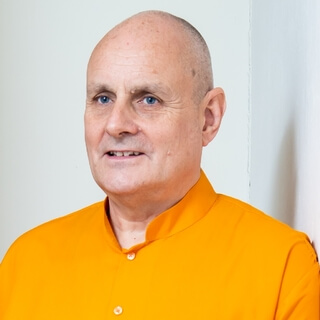
This episode is called The Causes of Suffering and it's part of the Buddha-Dharma series.
The first noble truth describes how life has suffering running through it,
And in the second truth Buddha gave some of the reasons for this suffering.
There's not just one cause of our suffering,
As there's not just one cause of anything.
Things come into being through a series of causes and conditions,
And that is the same for our suffering.
However,
There are three main things that cause us emotional and psychological suffering,
Namely the three poisons.
They are clinging desire,
Clinging desire,
Anger and aversion,
And unawareness.
In the Dharmapada it states,
The one who protects his mind from clinging desire,
Anger and aversion,
And unawareness,
Is the one who enjoys real and lasting peace.
Clinging desire.
Not all of our desires cause us suffering,
Only the ones we cling to.
We may have a desire to help people,
A desire to reduce our suffering,
Or to improve ourselves.
As long as we're not clinging to these desires,
There's no problem.
So desire on its own isn't the problem.
The problem is our clinging and grasping at these things we desire.
We wrongly believe that material things and people,
Such as family,
Friends and loved ones,
Can make us permanently and truly happy.
However,
If we take the time to investigate,
We'll find that these desires eventually lead us into a feeling of discontentment,
Sadness and loss.
Why is that?
It's because we have grown attached to the people we love,
Or the things we own.
Again,
There is no problem with loving people close to us.
The suffering starts once we get attached to them,
Believe they will be with us forever,
And their thoughts and feelings for us will never change.
But this simply isn't the case.
You can test this theory out.
Think of a time when someone not very close to you died.
How did you feel?
I expect you expressed your condolences,
But didn't have too much sadness.
Now think of a time when a member of your family,
A friend or a loved one died.
How did you feel?
I expect you were devastated and extremely upset for a long time.
So what is the difference between these two deaths?
Attachment.
You were not attached to the first person,
So you did not suffer a lot when they died.
But you're attached to the second person and your clinging attachment is what caused you so much suffering.
We get attached to our belongings and believe they make us happy.
We think we can buy happiness.
The problem with that is our desires are never-ending.
Once we have something new,
We start wanting something else.
We never quite manage to buy the happiness we are so desperately seeking,
Because there is no happiness inherent in material things.
We just project happiness onto an object and then cling and grasp at this imaginary happiness and we eventually suffer once the object is stolen or stops suffering.
There's no problem in wanting things and trying to make our lives more comfortable.
The problem is clinging and grasping at these desires.
So don't stop loving the people close to you or stop wanting to improve your life believing Buddha told us to do that.
He didn't.
Our clinging desires lead us to act in certain ways,
Such as by being in a place where we are not alone.
Our clinging desires lead us to act in certain ways,
Such as being proud,
Jealous,
And protective.
And this in turn leads to our discontentment.
This is because our clinging desires lead us into action,
Which in turn lead us into discontentment.
It's a vicious cycle.
From desire,
Action follows.
From action,
Discontentment follows.
Desire,
Action,
And discontentment are like a wheel rotating endlessly.
To break this cycle,
We have to see that clinging,
Grasping,
And getting attached to people and material objects brings us suffering,
Because things are compounded and are subject to change.
If we can truly embrace this point and apply it to our daily lives,
We'll be able to reduce the suffering caused by this poison.
Buddha stated,
Human desires are endless.
It is like the thirst of a man who drinks salt water.
He gets no satisfaction and his thirst is only increased.
This is surely something we should be reflecting on.
Anger and aversion.
Aversion is the opposite to attachment,
And anger leads to hatred,
Discrimination,
Aggression,
And a lack of compassion.
None of these are helpful.
With desire,
We want to cling to objects,
But with aversion,
We want to do the exact same thing.
We want to do the exact opposite.
We spend all our time and energy trying to push the thing away.
As with desire,
We just need to let go,
Not hold on to the aversion.
Don't engage with it,
Hold it,
Or repress it.
Simply acknowledge you have an aversion for something,
Understand that it is causing harm to yourself and others,
And find a way of letting it go.
Buddha said this about anger,
This fury does so cloud the mind of man that he cannot discern this fearful inner danger.
Some say that anger is natural and should be expressed at all costs.
This is because most people only see two ways of dealing with anger,
That is express or repress.
Both are unhealthy.
If you constantly express it,
You'll find that after some time it'll become a habit and you'll react angrily all the time.
If you repress it,
You're just storing up trouble for the future.
You may be able to keep it down for some time,
But eventually it will surface and may even come back more violent and hurtful.
Anger is such a destructive emotion because we engage with it and let it take control of us.
So the Buddha had a different idea.
He advised us to look at the anger and see where it comes from.
It's not to be dealt with,
But observed.
If we do this,
We'll see that it stems from our exaggerating the negative qualities of someone,
Or projecting negative qualities that are not actually there onto someone or something.
Two of the best ways of countering anger is patience and acceptance.
Patience.
This is something we should cultivate.
The best advice is to try and walk away from the situation that is making you angry.
But if you can't do that,
Then you should not react straight away.
But maybe take some deep breaths and spend a little time reflecting on the situation.
This will give you the space to calm down and see things more rationally.
Of course,
This is not a simple thing to do when one is wrapped up in the moment,
And this is where patience comes in.
The most hurtful things are said in the heat of the moment,
So diffuse that moment with patience.
You could try watching your breath for a moment.
Use your senses to engage what you can see,
Hear,
Smell,
Taste and touch.
Or you could try reciting the word patience over and over again.
All of these will give you a chance to calm down,
Bring you into the present moment and help you build patience.
There is no evil like anger and no courageousness like patience.
Acceptance.
This is accepting that people are the same as we are.
Everyone is struggling to find their way in life.
We strive for happiness and we are happy in us,
And so does everyone else.
If we think in this way,
A feeling of warmth,
Empathy and compassion will arise in us.
If we are empathic or compassionate towards others,
It is harder to get angry at them.
This again takes time to master,
But is something we are all capable of.
Unawareness.
Unawareness is a lack of understanding of the true nature of things,
Which leads us into wrong views.
Buddha stated,
Because of their unawareness,
People are always thinking wrong thoughts and always losing the right viewpoint and clinging to their egos.
They take wrong actions.
As a result,
They become attached to a delusive existence.
As we are unaware of the true nature of the world,
We start clinging to objects,
People and ourself,
Which leads to wrong actions and causes us to grow attachment to our perception of reality.
Impermanence is one of the things we are unaware of and is something we understand on an intellectual level,
But it is not how we live our lives.
That is because we are unaware of the true implications of impermanence.
Whatever is born is impermanent and is bound to die.
Whatever is stored up is impermanent and is bound to run out.
Whatever comes together is impermanent and is bound to come apart.
Whatever is built is impermanent and is bound to collapse.
Whatever rises up is impermanent and is bound to fall down.
So also,
Friendship and enmity,
Fortune and sorrow,
Good and evil,
All the thoughts that run through your mind,
Everything is always changing.
This is taken from Words of My Perfect Teacher by Patil Rinpoche.
All compounded things are impermanent and if we look closely,
Everything is compounded,
So everything is impermanent.
This may seem negative or depressing,
But actually it's a breath of fresh air.
Let me explain.
The definition of compounded is something that consists of two or more things combined together.
So as I've just stated,
All phenomena are compounded and that includes you and me.
Just think for a moment,
Is there anything in this universe that isn't compounded?
As of yet,
We haven't found anything.
The point Buddha was making here is that anything that is made up of a combination of other things will eventually fall apart.
It will come into being when the various causes and conditions are right.
It will exist for a certain amount of time and then it will disintegrate.
This is the nature of all things.
This is impermanence.
It is an undeniable and unescapable fact of life.
Impermanence isn't a word we readily warm to and it would be much easier for us to believe that everything is permanent,
But this simply isn't true and in order to stop our suffering,
We need to acknowledge this fact.
The reason we do not like to hear about impermanence is because it gives us visions of sickness,
Pain,
Disintegration and death.
We get a horrible sick feeling in our stomachs because we equate impermanence with loss.
Loss of a loved one,
Loss of our friends or even loss of something as trivial as our iPhone.
So it's vitally important for all of us to understand impermanence.
Why is it important?
What are the benefits of understanding impermanence?
It means we will achieve freedom from fear,
Freedom from suffering and freedom from panic,
Freedom from suffering and freedom from panic because when we know things are not going to last,
We are free from any fear,
Agony or pain of losing something or someone.
A mistaken belief is that things come into existence on their own and last forever.
This kind of mistaken belief causes us to cling to worldly possessions such as material objects,
The search for pleasure,
Recognition,
Honour and so on.
It causes pride,
Attachment,
Arrogance and aversion to grow within us because we truly believe things are here to stay.
We grow completely attached to the concerns of this life.
So it's a relief when we finally understand that everything is impermanent and so we can't do a thing to change that fact.
We can now let go and relax our grip on things.
That's a real breath of fresh air.
Impermanence is not only true for pleasurable things but for painful things as well.
Maybe someone you care for has died or left you and you are sad and lonely.
These emotions are also impermanent and so will after some time also change.
All the things we have aversion towards will only last a short time.
Like the morning dew,
It will all soon change and disappear.
Like the dew that remains for a moment or two on the tips of the grass and then melts with the dawn,
The pleasures we find in the course of our lives last only an instant.
They cannot endure.
This is taken from 37 practices of all Buddha's sons by Togmi Zangpo.
So the first noble truth stated that there is suffering flowing through our lives and the second truth explains some of the causes.
In the third truth Buddha explains that there is freedom from suffering.
This truth is called by various names such as nirvana,
Liberation,
Enlightenment and so on.
It is hotly debated these days.
Some think that if you reach nirvana you will never be born again.
Others think you'll be reborn but you can pick where.
For people who do not believe in rebirth they see it as something we can achieve in this lifetime.
I have no idea who's right and who's wrong.
Maybe they're all wrong.
People think that nirvana is like heaven,
Full of happiness and opposite to this world.
They imagine that there the sun shines brightly every day.
Only good people are around.
One doesn't have to work.
There are no money worries.
Everybody is friendly and every moment is filled with happiness.
However this is just a projection of our dualistic minds trying to fill heaven with all the things we like best.
But what about all the things other people like and we don't?
I would want a heaven where no one eats meat while others would want one where they could eat a big fat juicy steak every day.
Do we each get a heaven of our own?
I believe if people really gave some thought to this concept of heaven they would understand that they are just changing one conditioned world for another.
That way heaven,
Like this world,
Would be equally impermanent.
I'm just going to give you my thoughts here and you can decide for yourself what you believe.
I'll show you that there are two good bits of news in the third noble truth.
I feel that the best word to describe this third truth is awakening.
We awaken from the sleep of unawareness.
We do not see the process of awakening as some mystical or metaphysical thing.
Buddha said that awakening is the highest happiness but he wasn't talking about the mundane happiness we strive for in our everyday lives.
He was talking about absolute freedom from the unskillfulness,
Freedom from craving,
Attachment,
Desire,
Hatred and unawareness.
All of this we can achieve in this lifetime by truly understanding the four noble truths and following the eightfold path.
Once we start meditating on these teachings and turning them from knowledge into wisdom we will start to change our actions of body,
Speech and mind.
This state of being awake can be achieved by anyone whether they call themselves Buddhist or not in this very lifetime.
You just have to put in the effort and the hard work.
So that's the first bit of good news.
The second bit of good news is we do not have to die to become awakened.
It can be obtained during this lifetime.
Death is irrelevant to this process.
People feel like this life is full of discontentment and causes them nothing but suffering and the only way out is death.
But the only way out is death.
And the only way out is death.
They feel at death they'll be miraculously transported to a better place.
But the third truth is not talking about a place.
It's a cessation of the three poisons.
The Buddha defined it as perfect peace or a state of mind that is free from craving,
Anger and other afflicted states.
We can find this perfect peace in this body,
On this planet and in this lifetime.
I honestly believe the third truth isn't talking about a metaphysical thing.
It isn't a place to go to.
We do not have to die to realise it.
We just need to put in a huge amount of effort so we can extinguish our afflictive states of mind.
I'll leave you to reflect on this third truth so you can decide which version makes the most sense to you.