Think meditation is hard?
Do me a favor.
Take a slow,
Deep breath in.
And now breathe out.
Congratulations.
You just meditated.
Hi,
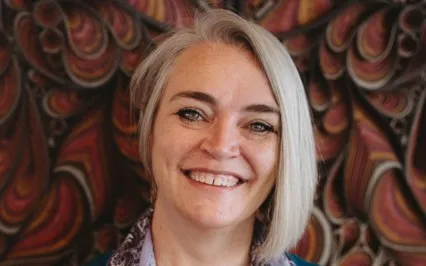
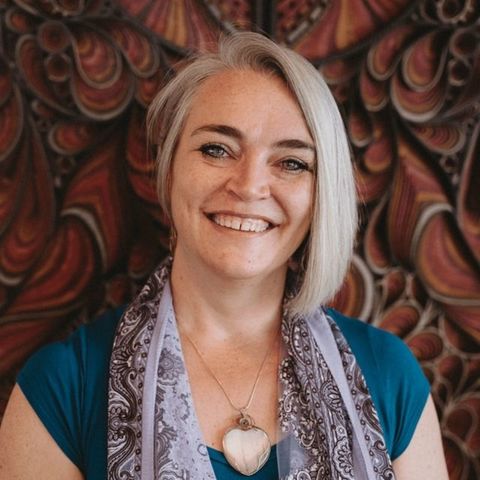
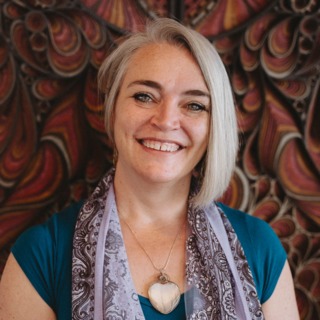
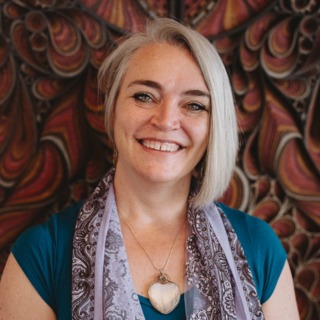
I'm Crystal Joukowsky,
And this is Breathe In,
Breathe Out,
A weekly mindfulness and meditation podcast for anyone ready to own their own shit and find a little peace while doing it.
Welcome back to Breathe In,
Breathe Out.
I'm Crystal Joukowsky,
And as always,
I am so grateful that you're here today.
I'm so grateful that you've chosen in,
That you're giving yourself a moment to just breathe and relax.
I'm really excited about today because we have Tom Cronin on from Australia,
And I want to tell you just a little bit about Tom before I bring him in.
So,
Tom spent 26 years in finance as one of Australia's leading bond and swap brokers.
He discovered meditation early on in his career.
It completely transformed his world personally and professionally.
As a founder of the Stillness Project,
Which is a global movement to inspire a billion people to meditate daily,
Sit in stillness daily,
Tom is passionate about reducing stress and chaos in people's lives.
And his ongoing transformational leadership coaching and corporate training has seen him working with some of the top companies in the world like Amazon,
Qantas,
UBS,
And Coca-Cola.
He's spoken on stage at conferences and events like Ad News Summit,
A-Fest,
Wanderlust,
And MindHeartConnect.
Tom has six books published.
He has a meditation app,
And he's the producer of the hit film The Portal,
Which I highly recommend that you watch.
So,
Without further ado,
Just welcome to our show,
Tom.
Thank you for being here today.
That's great to be here.
Thanks for inviting me along.
I'm really looking forward to our conversation today.
Yeah.
I'm going to enjoy just listening to your voice and going on a journey with you.
I really want to talk just a little bit more about the crisis point that your life hit in the finance world and what brought you to meditation.
Yeah,
Absolutely.
The thing about The Portal film is it's all about crisis and how crisis is actually not a mean horrible thing that happens to us.
It's happening to support us,
To guide us.
And for me,
I didn't realize this at the time,
Of course,
But with hindsight,
I can look back and see how it was such a critical moment in my life.
There was this sort of guiding force to me being where I am today.
And how it looked was that I was in finance on a trading room floor,
Very much like Wolf of Wall Street.
And I had really fell into the patterns and I guess the culture of the industry back then.
It was late 80s,
Early 90s.
So,
There's a lot of drinking,
A lot of drugs,
A lot of partying,
A lot of late nights,
A lot of hard work.
And it was a real hustle.
And everything that went with that was quite detrimental to your nervous system,
To your mind,
To your body.
But of course,
You kind of think you're invincible.
And so,
What started to show up for me was a lot of anxiety and panic attacks and depression and really chronic insomnia.
I didn't realize that this was anything unusual or wrong.
I just thought it was part of living.
It was part of the lifestyle.
And you don't really question that as far as the anomaly goes.
You just keep doing what you're doing and try and push through that.
It wasn't until one morning in February 1996 that I woke up that that accumulation of that stress build up in my body.
And all of those were symptoms that were really signals.
Symptoms are signals for change.
But I was ignoring the symptoms and the signals and just kept doing the same thing.
Your body doesn't give up when you're kind of just turns up the volume until we make some changes.
And for me,
I wasn't making any changes.
If anything,
Things were getting worse.
And then in February 1996,
That morning,
Things just fell into a heap.
I woke up getting ready for work.
And I remembered as I was in the bathroom,
Shaving,
Looking into the mirror that I recall that I had a really big lunch that morning.
And with some of the major senior bankers at a large investment bank.
And I had been getting these episodes.
I didn't know what they were.
I didn't know what anxiety or panic attack was.
I was getting these episodes.
And I had this fear in my head like,
What if I get one of those episodes at the table while I'm stuck with these six traders and I can't get out of that situation?
What if I can't breathe?
And what if this happens?
And what if,
What if,
And all of a sudden,
This tsunami of fear and dread swept over me.
It was kind of cosmic almost.
And what happened was I collapsed on the floor.
I couldn't stand up.
I lost my footing and I couldn't breathe.
I felt like there was a sharp knife in my heart,
Like a sharp pain in my chest.
I had these pins and needles all over my body.
And I had this cold,
Clammy sweat,
Like a fever sweat.
And I was like nauseous.
I wanted to vomit.
I needed to go to the toilet.
I needed to do all of these things.
My body was like exploding.
And I had this sort of blurry vision.
I couldn't really see.
I couldn't breathe.
And I actually thought I was having a heart attack.
I thought I was on the edge of death.
And there's this weird sort of,
I remember it still being on the tiles and really sort of not really caring.
I was really,
I'd really kind of been done by that.
I was like really didn't see any light at the end of the tunnel.
I'd become so dark and miserable at who I'd become and the lifestyle I was living and the person I was,
I guess,
Representing.
And if that was the moment,
Then I was fine with that.
I just kind of lost the hope.
But yeah,
Interestingly,
My wife picked me up and took me to the doctors and explained us having a nervous breakdown,
Which was something that really crushed me.
I thought I was hoping for a diagnosis of heart attack.
But mental breakdown,
It was something that I just lost the plot.
I just I couldn't stop crying.
I was just crying in his clinic.
And then he sent me to emergency,
Sort of sent me straight to one of the top psychiatrists in Sydney,
Literally an hour later.
And he explained to me that I have a nervous disposition that I need to take pharmaceutical drugs to get better and to stay better.
So those two sort of diagnoses were quite crushing for me.
I built up this sort of false facade about who I thought I was,
This invincible broker,
With all my money and all my accolades and everything.
But this was like the rug had been pulled out from underneath me and then I just sort of,
It was a very crushing time in my life at that point.
It's amazing when we get to that point,
Right?
When you're laying on the floor and it's like the cold tile just feels good and you're like,
I don't want to do anything else and we think that we're invincible until that moment that we really find out that we're not.
And it's almost like,
I'm ready to accept this,
But I'm not ready to accept that.
I'm ready to accept that there's this horrible,
Horrible thing wrong with me,
But I'm not ready to accept that there's something a little bit different that maybe my own behavior could make better if I shifted it,
Right?
So,
How did you get to meditation?
You're told that you're having this anxiety attack,
That you need to be on medication,
That you need to change things that way.
How did it go from,
You're going to be on medication to,
Let's try meditation instead?
Yeah,
It's a big shift,
Isn't it?
This is 1996,
So meditation,
There was no internet,
There was no Google,
There was no apps.
And meditation was,
I'd never come across it in my life and I grew up on a farm,
Went to an all boys Catholic school and then went to a trading room floor in finance that was filled with 150 testosterone fueled guys.
So this had never come across my path.
And what had happened was I was seeing the psychiatrist,
I'd seen the doctors,
I'd seen therapists put on pharmaceutical drugs.
I just felt inherently that there must be another path to this.
I didn't know what it was,
But I really felt very uncomfortable taking,
Not to dismiss pharmaceutical drugs for people who are on medication,
But for me,
I just felt that I didn't want to be having to succumb to this for the rest of my life.
I just felt that this was not a healing solution.
I'm a Mr.
Fix-It,
So I really want to fix the problem.
And this wasn't really fixing the problem,
It's kind of like putting a band-aid on it.
I just felt deeply that this wasn't really the solution and I didn't know what the solution was.
When I was at home,
I developed agoraphobia,
So I had to take time off work,
I couldn't really leave the house.
I was just the idea of walking out the front door was too overwhelming for my nervous system.
The stress response was too big.
So we tend to default back into our safe space,
Our bedroom,
Our cave,
Our living room,
Something that we know we don't have to face any demands that are going to overwhelm us.
So I'm at home with agoraphobia and the thing with agoraphobia in 1996,
It kind of sucks because there's no internet,
There's no Netflix.
He's just watching a lot of free-to-wear TV.
And there was a documentary about a property developer that was very successful here in Australia and the story wasn't really about his success.
But there was a tiny slither of that story where he was talking about how we used a particular style of meditation and it was actually transcendental meditation.
I'd never heard of it,
But they showed him while he was talking sitting in a suit.
I still remember it was like a blue pinstripe suit and he was sitting in that suit meditating and just in a chair,
Not lotus and not mudras or anything.
And it was like this light bulb moment of like,
Wow,
I want that.
I wear suits,
I sit in chairs,
I want to have that experience.
And when they mentioned transcendental meditation,
There was something,
I was really into drugs at that time.
I loved the rape scene,
The nightclub scene,
Taking lots of drugs and getting really out of it.
And there was this idea of this transcending meditation because really what we're doing with drugs and drinking or any addiction is trying to find some ecstatic experience,
Some fulfilling experience and to get beyond our current dimension.
And this transcending means to go beyond.
And I love this idea of it.
So I started to look that up and that's when I did a lot of research into all the different types of meditation for those that are a bit younger than myself.
Might not know what I'm talking about here,
But I picked up the yellow phone book which has the directory of all the companies.
It's a big fat book that had all the companies in it with their phone numbers.
So I went to M for meditation.
I still recall going down the list of all the M's for meditation ringing the different centers in Sydney.
And that's how I came across transcendental meditation.
It was really the starting point of a deep journey into Eastern philosophy,
The mind,
Consciousness,
And yeah,
Spirituality.
So I just want to remind all of our listeners that,
Like Tom said,
There is absolutely a space where a medication is there.
And if you are one of our listeners that needs that medication to help you be okay,
Then I encourage you to continue doing that and make sure that you listen to your doctor and work with them hand in hand.
There are also other people that want to try something different and be able to shift things in a different way.
And meditation can help them.
And often meditation can work in hand in hand with the medication that you're on to try to make things better.
So we are in no way,
Shape,
Or form saying anything against that.
In fact,
We highly encourage you to do what works for you and what's right for you.
So thank you for sharing that question for you.
Prior to this moment where you watch this documentary and you're intrigued by meditation,
What was your attitude towards meditation?
I actually had had a couple of people recommend because they knew I was in a bad way.
Your close friends are fairly wise to someone that's not well.
And one of them had particularly suggested I should try meditation a couple of times.
And she wasn't actually using it,
But she thought it might help me.
However,
I was very dismissive.
So I had had it come into my field just very subtly with someone saying,
Hey,
I think you really should try meditation.
But I just wasn't ready.
And I think this is the thing.
Some people are a lot more adaptable,
A lot more intuitive,
Particularly the less stressed we are,
The calmer we are,
The greater adaptability and the greater intuition we have.
But for me,
Being very,
Very stressed and having very limited intuitive capacity or adaptive capacity meant that I wasn't open to those suggestions.
And so therefore,
What happens is we and this is the plight that humanity is on unfortunately is the more stressed we are.
Unfortunately,
The more stressed we become because we have less adaptive capacity and less intuitive capacity.
And so I had to get to a breaking point for nature,
The universe,
Some form of intelligence of guiding mechanism to make things bad enough that I would eventually wake up and listen to what I was supposed to be listening to.
And unfortunately,
We don't want to get to that point collectively or individually,
But more often than not,
Surprisingly,
We do.
Yeah,
We push ourselves to that point where we have to change,
Where if we don't change,
Like it's that fork in the road where either you have to do something to make it better or like there's just nothing else.
There is nothing else.
So what was the first thing that you noticed shifted for you when you started meditating and found someone that could take you through transcendental meditation?
The first week was actually really uncomfortable and it's really,
I think it's healthy for people to hear this.
I thought I was going to become like a Zen monk,
But the first week was very uncomfortable.
I fell very on,
I guess to some degree a little bit unstable because there's a lot changing,
Particularly on these deeper,
More powerful meditation techniques like TM or Vedic meditation,
Which is what I kind of call it these days,
Same sort of meditation.
And yeah,
The first week is a little bit uncomfortable because you've got a lot going on,
Your body's really starting to clear a lot of the stresses out.
It's a very powerful purging process of a lot of stress.
So it can get a little bit uncomfortable and that's why it's really important having a teacher or guide to mentor you through that process.
Because a lot of people kind of give up when they're going through some stress clearing because the thing with meditation is that it doesn't just put peace and calm over the top of your existing state.
The existing state actually has to clear out because the peace and calm is already inside you at a deeper level.
And so what we're doing is we're clearing that the stress layers that the anomalies that have been accumulating in the system and there's a reorganization like a renovation.
If we're renovating a house,
There's a lot of stuff gets cleared out,
Right?
The kitchen sink and the curtains and the carpet and the Venetian blind.
So a lot of things get thrown out to make way for the transformation.
And so that was what was happening for me.
But the biggest thing that I really noticed,
Which was phenomenal,
Was I started sleeping and I had chronic insomnia.
And look,
This is very science-based.
It's not where we were or out there.
It's really just simply science-based.
If we get our body out of the sympathetic nervous system state,
Which is the stress response,
And we move our body into the parasympathetic nervous system,
Which is the peace response.
And we have these two mechanisms or nervous system states that we oscillate in and out of for very good reasons.
If we're in a stress response,
It's because it's a dangerous situation.
Our body needs to survive in that moment.
And if it's a saboteur tiger or marauding tribe,
You don't want to be falling asleep.
Your body's trying to protect you by keeping you awake.
So it pumps cortisol and adrenaline into your system.
And it reduces the production of melatonin,
Which is the biochemical to enable us to sleep.
So I had very little melatonin in my system because I was continuously in the sympathetic nervous system state.
Meditation gets us very quickly into the parasympathetic.
And what started to happen was I was producing a lot of melatonin because my body's trying to correct the imbalance of huge amounts of fatigue that had built up.
And so being able to fall asleep was phenomenal in the first week or two.
I was like,
Wow,
This is amazing.
I could fall asleep within minutes.
Me hitting the pillow was quite remarkable.
That's amazing.
Yeah.
There's,
There,
There are just these little things that you don't realize that are an issue until they're not an issue anymore.
You know,
It's,
It's like when you're starting to lose weight and magically you can walk up those stairs and you're not as winded and you're like,
Oh,
I didn't realize that 10 pounds did that to me.
Or I didn't realize that the stress caused me not to sleep or that I wasn't able to digest my food.
And so I was really,
You know,
Struggling that way.
So I love that sleep is the first thing that your body said,
Oh,
Yes,
Please.
We're ready to do that.
You mentioned the different types of meditation that you did research to find meditate different to understand meditation and that you came across different types of meditation.
Can you go into that a little bit?
Yeah,
I went to many different classes.
I did very much,
You know,
My style is to do a lot of research and make sure I'm choosing the best thing and the best one.
I'm going to buy a car.
I do a lot of research in the cars.
When we've got a dog,
I research for a year on which type of dogs are going to be the best dog to have in a house.
And so I'd like to do that.
And I did that with meditation.
I went to a lot of different centers and tried a lot of different practices.
And there was crystal balls and there was chakra clearing and there was all sorts of different styles that I dabbled with.
But I just found that I wasn't quite getting the immediate benefit that I was hoping for.
And I know meditation is meant to be a long investment.
But one thing that I've learned over time,
Particularly now that I've been teaching this for many,
Many years,
And particularly with the lifestyles that we've created here in this world is we've created very charming lifestyles.
We like to have a lot of pleasure in our life.
And we have a lot of pleasure in our life.
And if something's not charming and blissful and enjoyable,
It's very hard for us to prioritize that or make it a preference of all the other preferences that we've got in our day.
And so I found this technique to have greater tangible and quantifiable benefits and also pleasure in the experience.
It was very blissful.
It wasn't like a lot of work and it wasn't hard and I didn't have to focus and concentrate and try and get my mind or body to do something it didn't want to do.
And for me,
That was the power of the mantra,
That the mantra is a very charming proposition for the mind.
And therefore,
It's a very effortless process.
Whereas if I tried to tell my mind to not think,
Then that requires a lot of effort and it requires the mind to resist against doing its natural tendency,
Which is to think.
And there's conflict there and it's uncomfortable.
So we don't want conflict and we don't want discomfort.
MELINDA MURPHY You founded the Stillness Project.
You want to inspire people to meditate.
How did you go from,
I'm going to meditate and now I can sleep to everyone needs this and I'm going to bring it out to the world?
How did you,
How did that come about?
ANDREW DARBYSHIRE Yeah,
The change for me was incredibly significant,
Very quickly I noticed profound shifts,
You know,
Within weeks,
The anxiety,
The depression,
A lot of the addictions had dropped away.
And I went back into work just to cut a long story short,
I went back into my job as a broker,
I've been there for 10 years when I had the breakdown.
And I went back into the same seat with the same clients in the same company for 16 more years.
And the job itself wasn't the stressful thing.
It was my response to the job that was determining whether it was stressful.
And this is the thing we've got to understand about life itself,
Life presents circumstances and situations,
They're neither stressful or not.
It's just how we respond to them will determine whether we have a stress response or not.
And so when I learned this technique and had these significant changes and managed to function very well in that industry,
And in that career,
I just felt this,
Why is the world not doing this,
I felt this incredible passion to make a difference in people's lives,
Because I could see how much it simply changed my life,
You know.
I didn't,
You know,
This is again,
Like we said,
You know,
If you're on medication,
Continue on and consult your doctors.
One thing I found was that if we're taking tablets to try to make a very stressed system,
Maybe not having the stress responses that are naturally going to happen in that stress system,
Then it's putting a bandaid on cancer,
We're just not going to get to the root cause of the problem.
And I know some people have certainly some deeper ingrained challenges that they have to overcome.
But for a lot of cases,
What I've found was,
And I've been working with a lot of clients here,
We need to get the body out of that stress response.
And when we do that,
We see phenomenal changes happen,
Then we can address things,
Because the body is operating in a much more orderly way.
And so I really wanted to get this science and the technique into the households of the world.
Now,
There was a bit of a problem here,
Because traditionally,
The technique was only taught in a traditional way.
It was taught thousands and thousands of years ago,
Pre-internet,
And so it was only ever taught in person.
You couldn't teach it on Zoom,
You couldn't teach it on Skype,
You couldn't teach it in a pre-recorded online program,
Simply because it never was done.
And so I found that I had this dilemma,
Where there's the tradition that was taught in a particular way,
And it was always that way.
And then we had technology that allowed us to reach the masses.
And so I was in this conundrum of do I break this tradition to some respect and try and get it into a digital format?
And that's what I decided to do.
And we created an online version of that program,
And now we've got people all over the world who are able to access it,
Which has been a phenomenal thing that we weren't sure how that was going to play out.
And that's what the Stillness Project was all about.
So,
What are some of the myths or beliefs that you've encountered when people say,
Oh,
I can't meditate?
Yeah,
A lot of people think that meditation is an experience that's going to be all Zen-like,
And they're going to have no thoughts,
And it's going to be them sitting in some Buddhist-like pose for 15,
20,
30 minutes.
That's not what meditation is.
There are states we can get into over time when our system is very clear of stress that allows us and enables us to sit in what's called samadhi,
A state of deep stillness.
But for us who start with a lot of stress in our system,
We're going to get continuously bumped out.
And that bumping out is literally the stress clearing out of the system.
Our vessel plays very much a big part in meditation.
A lot of people don't realize this,
And this is one of the,
I guess,
The myths that I want to break and the stigma that's associated with meditation is that it should be completely still with no thoughts.
And it's like you said,
Thoughts will come,
And you'll have body sensations,
You'll have thoughts in the mind,
And we take it as it comes,
And we know that this is an ongoing process.
So,
Just helping people have more appreciation of the process and acceptance of the process rather than attachment to a particular experience.
MELINDA MCCLURE If someone says to you,
I don't have the time to meditate,
What's your response?
MATT WILKINS We have 24 hours in a day,
And each hour has three portions of 20 minutes.
And what we do with those 72,
20-minute pieces of pie,
We allocate our time and attention to finding fulfillment.
And that's whether we're cleaning the bathroom floor,
Whether we're sleeping,
Going to the gym,
Listening to a podcast,
Scrolling through Instagram,
Going to work.
Every single action is motivated by the same thing,
And that's to find fulfillment.
And I realized,
Myself included,
When the teacher said,
We highly recommend you meditate twice a day,
Once in the morning,
Once in the afternoon for 20 minutes.
I nearly fell off the chair,
And I thought there's no way I could do that.
But the science stood up and showed that if I did meditate twice a day for 20 minutes,
I would be literally much happier.
It was clear as day that this is what was supposed to happen.
And we'd all heard of enlightened monks,
Which are blissfully enchanted and full of almost like an ecstasy of love.
And here I was contemplating whether I wanted to keep living in life,
Suffering from anxiety,
Depression,
And seeing therapists.
So I obviously wasn't allocating my time,
My 24 hours,
My 72 portions of 20 minutes,
To successfully finding fulfillment,
Because I wasn't very fulfilled.
And so I needed to change that.
And so what I did was I assessed my 72 20-minute pieces of pie and realized that I could keep doing what I was doing with the other 70 if I just took two out and parked them on the side for meditation.
And I thought at least the one thing I could do is do the research.
The science said that I would be happier,
But I needed to find that out myself.
And so what I say to people is you do your research,
Learn to meditate,
Do two out of 72 20-minute pieces of pie,
Put them into meditation,
And I can assure you within six months you will actually be a lot happier,
Calmer,
And healthier.
And if that's not where you are now,
Then maybe look at an alternative.
And if you are there already now,
Then just keep doing what you're doing.
MJ LYNCH Right.
Yeah.
I have this poster on my bathroom wall that says,
Are you happy,
Yes or no?
If you're not,
What do you want to change?
And if you are,
Great,
Keep doing what you're doing.
Keep going exactly where you're at.
Yeah.
I was watching one of your other videos and you actually talked about some tips on how to get into meditation,
But then how to encourage yourself to continue doing that.
And I was just inspired by the whole concept of make it approachable.
Yeah.
Look,
I think meditation,
We have a lot of people,
Some sort of resistance to it because we think of enlightened monks and we think of something very esoteric and something very far-fetched.
So the first thing is to understand that this is just a very simple,
Scientifically based and validated technique that can make a huge difference in your life.
We go to Instagram and scroll through our feeds or watch Netflix or go to the movies and do all the things that we do to find pleasure because we want to add value to our life.
And we've got to firstly start to realize that one of the great ways to add value to our life is to stop being distracted and to put time aside to go within.
And we don't need large amounts of time,
But just to find a window of time where we can prioritize and have a higher preference to not stimulate ourselves and to pack some time aside to just sit in a chair quietly.
And it doesn't have to be complex.
It doesn't have to be in some beautiful hilltop in the Alps or something like that.
Just simply for me in a parched car,
I pull my car over sometimes in between meetings,
Pull into a side street and I'll close my eyes and I'll start meditating.
In my lounge room,
I've done it on trains,
I've done it in park benches,
Anywhere where we can close our eyes and feel safe and secure.
I do recommend trying to find a teacher that's qualified in the art of meditation if that's possible.
If you've got one in your area,
Really learning from someone that's qualified in this space.
I think learning the mechanics and deeper understanding about the techniques that you're learning,
Whichever one that is,
You know,
Shop around and find a technique that works best for you.
You know,
There's many different techniques out there.
I've chosen one and one that I teach and one that I use predominantly because I found that the most effective.
But what I say to my students is there's so many different ways you can learn to meditate and find one that resonates with you.
And when you find a technique that resonates with you,
Find a teacher that resonates with you because there's different teachers in different traditions,
Different modalities.
And some people get drawn to me in our modalities,
Some people get drawn to someone else.
They might want a,
You know,
A younger woman teaching them or they want an older woman teaching them or they might want a different type of dude teaching them.
So I'm finding a teacher that resonates with you.
And then,
You know,
We don't have to make it complex.
It's just sitting comfortably in a chair and letting go of your attachment and the story of the outside world and letting yourself start to explore it in a world of quietness.
I say that meditation is a little bit like a buffet.
You get to pick and choose the things that absolutely work for you and fill you up and make you just love life and being right there.
And you get to leave the rest.
Not everybody likes cherry cheesecake.
Not everybody loves ribs.
But you find what works for you and you find that peace and it just transforms so many different things and makes life so much better for you,
Starting inside for you.
Forget everybody else.
Forget the external world and look at where you're at and what you have the ability to do and change and shift because you're amazing.
We're all amazing.
Oh,
I love it.
Thank you so much for sharing with us.
We're big on self-care and we like people to just explore something new.
You obviously do meditation,
Which is a beautiful part of self-care.
Is there another unique hobby or thing that you like to do for personal self-care?
I do a lot of saunas.
I love to sweat in the sauna.
So I do three saunas a week.
I really find grounding with heavy weights for me personally,
Particularly.
Maybe it's my blokiness.
I'd like to ground myself with doing a gym workout with weights and building that muscle tissue and bone density.
I find as I get older,
It's a really important part of my self-care.
And then stretching,
I'm a big fan of yin yoga.
So those three components with my meditation,
Then the saunas,
The heavy weights at gym,
And then the yin yoga and the stretching in yoga is for me a beautiful combination of helping me stay young as I get older.
Nice.
Thank you so much for sharing that with us.
You guys check him out on Instagram.
It's at Tom Cronin and his website is www.
Tomcronin.
Com.
And I'm telling you,
The film that Tom produced is absolutely fantastic and it's inspiring and I highly encourage that you go watch it and just be inspired with yourself.
The website for that is www.
Entertheportal.
Com.
So thank you again for joining us this week and you guys come back next week because Tom is going to take us through a guided meditation and we're really excited to share that one with you.
So thank you,
Tom,
And again,
We'll see you here next on Breathe In,
Breathe Out.
I hope this moment of self-care and healing brought you some hope and peace.
I'm Crystal Dzachowski on Instagram,
Facebook,
And YouTube,
And I hope you check us out and follow along for more content coming soon.
I look forward to being with you again here on Breathe In,
Breathe Out.
Until next time,
Take care.