Welcome to Episode 77 of Bite-Sized Blessings.
In this episode,
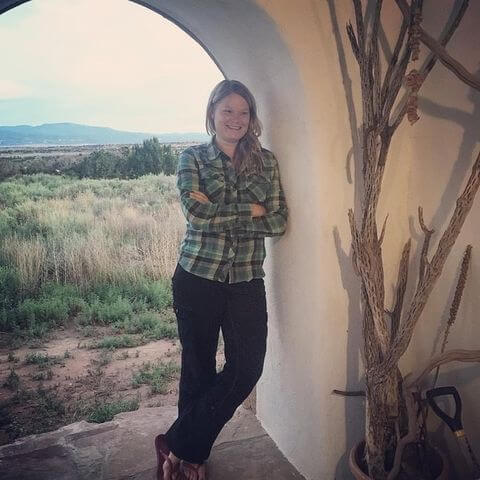
I get to interview Rachana Patani.
Her Twitter handle,
At Rachana Says,
Describes her as an emotional well-being expert,
Post-colonial explorer of human relations,
Creator of the pack of M.
E.
Cards.
She writes about identities and emotions.
She's also writing a book that's in process.
Much of what we talk about in this episode will probably be foreign to a lot of ears.
We talk about somatic work,
Somatic therapy,
And I didn't know much about it just a short time ago,
But it's the idea that thoughts,
Traumas,
Emotions can get caught in our bodies.
I didn't actually believe in this kind of thing until one day I had a memory that was painful and made me really sad,
And I realized suddenly that I felt it in my abdominal area,
That the memory felt connected to that area,
And so it changed my idea of the possibilities of somatic therapy.
Everyone in this world experiences trauma of some sort,
Even people who seem to have charmed lives,
And,
Of course,
Talk therapy helps,
But I would urge all my listeners to also investigate somatic therapy.
Look it up,
Or think of a memory.
Think of something that makes you happy.
Think of something that makes you sad,
And see if you can locate where it is in your body.
It's very deep work.
It's very painful work,
But,
Indeed,
As we discuss in the podcast,
After doing the work,
You'll feel lighter,
Like a burden's been lifted.
Use this information or not.
It's not going to hurt my feelings.
It's just one of the myriad ways we talk about in this podcast to shift perceptions,
Release negative emotions,
Change our lives so that we can make this world better for other people.
So do it or not.
My feelings will not be hurt,
And that's enough of that.
So now,
Episode 77 of Bite-Sized Blessings.
My whole journey into disconnection,
Which prioritized intellectual capacities above all else,
Started from having lost my father when I was quite young,
Like I was only seven.
So the deeper assumptions were,
God doesn't love me because why would God do this to me if he loved me?
I must not be worth it.
I must not be worthy to have had these experiences.
Who am I as a person?
I'm a person who is just about now beginning to connect more with the human in each one of us.
When you ask me this question right now,
I think of myself as a person who's realizing what I am beyond the human.
I'm not a person who's just about now beginning to connect more with the human in each one of us.
What I am beyond the divided self.
When I was living abroad,
It would be like South Asian or social psychologist or social worker or a woman from a particular community.
But now more and more,
I feel I'm a human being getting to know myself better.
In my work as well,
It's about meeting the human being beyond all of these identifications.
It's a very boring answer at a party,
But that's really where I'm at.
So you just kind of alluded to it,
But have you lived overseas many places?
I've lived in London for a significant length of time.
I've lived in the UAE,
But not like a regular resident,
But travel there quite a lot.
So I studied in lots of places in India before going to the London School of Economics.
I got a part-time job as well as a student.
So then I started developing my career in London.
So it was my second master's degree and I bought a job as a professor without a PhD,
Which was pretty difficult to get.
They agreed to fund my PhD alongside giving me a full-time job as a lecturer.
So I was a very bright student and studies came very easily to me.
And I think it was about grade 10 that I had a teacher who was going to study in the US and she was studying psychology.
And she told me that she thought I was really bright and I should aim to study abroad somewhere.
And at that point I was like,
You know,
India is amazing and I don't see why I have to go abroad for anything,
But maybe it planted a seed somewhere subconsciously because I come from a family where,
You know,
Like as a girl,
I was not expected to study or to excel in academics.
And in fact,
Like it was counterproductive,
You know,
For the aspirations that my family may have had for me.
So I think that moment with the teacher sitting at the steps of my school building may have been foundational.
My father and my uncle were both very keen from the beginning that I should study.
And my father put it in my head and heart that I'm a very smart woman.
And he would do things like watch detective serials with me and enable me to make the right guess and then be astounded when I'd got it right.
He would want me to go to the same school as the princess of Manipur who was,
You know,
This playwright and a really creative persona.
So I think he always had for me this vision that I would explore my creative side.
And I lost him quite early in life,
But his brother,
My uncle,
He brought to me the possibility that I could study in a boarding school and do what my dad probably would have wanted out of my life.
In the family that I grew up in,
The patriarchs were the women.
We come from a Jain family,
So there was a lot that was imbibed while growing up.
You know,
This whole culture of nonviolence,
Especially when it came to figuring out what to eat and also like how to walk,
Like not to step on an insect by mistake or even if you're turning on something to get rid of the mosquitoes to actually notice that is something you're doing.
If there was a way out,
Then I wouldn't do it.
Also Jainism is a very contemplative religion.
There are not many kind of celebrations which are jubilant.
It invites you to consider the life of your soul and what is eternal and things like that.
And it has a very particular metaphysical worldview as well.
You know,
I was not introduced to it in any formal way,
But a lot of the things that the household would do,
My mother still prefers to eat before sunset,
You know,
And then there are lots of these pasts which my family members undertake.
Some of them are pretty strict.
So I was born into a family which practiced Jainism,
But I've married a man who comes from a Catholic family.
Our household is multi-religious in a way.
He has chosen to turn vegetarian.
I mean,
It was a shock to me as well.
You referenced your son earlier.
Is he also growing up in kind of a multi-religious ethos there?
We have two names for him,
One that his Catholic family can own and one that the Jain family can own.
He chooses where he wishes to use which name.
We've taken him to all kinds of places of worship,
Churches,
Buddhist meditation halls,
Jain temples.
He's climbed hills and all to go to like ancient pilgrimage sites,
But also to Hindu temples which are quite different from Jain temples,
Which I was not really introduced to as a child that much.
He has not been initiated into any particular religious tradition and we are leaving it to him to see what it is he'd like to identify as.
He believes in all the gods,
I guess,
But he recognizes that there is something beyond the individual gods.
What is the most important thing you have done in your life?
The more I have worked on the dense emotions within myself,
And that's really the work I've been doing for maybe 12 years,
I could say I've been holding the flag for that.
So the more I've worked through the densities,
I've been able to reach the higher frequencies or feelings of purity and goodness quite consciously.
I'm not there all the time.
The kind of experience of these things has opened my whole life to a symbolic realm,
Which I did not have access to before.
It was almost as if I had to break down the intellectual person that I had spent my whole life becoming.
And it's in the unmaking of that that I started receiving many synchronicities,
Making decisions not based on fact but on intuition,
And then recognizing how well suited those decisions were.
So the magic and the miracle happens in these mundane aspects.
Maybe taking a different turn and finding something I had never expected,
And then realizing that I've been led there.
To tell you in a very crude metaphor,
Maybe five,
Seven years ago I'd have been like,
Why should the Lord be my shepherd?
Do I not have my own brain and capacity?
And now I'm like,
I'm so glad the Lord is my shepherd.
I can just chill out as a sheep,
You know?
And the trust that is needed to be a sheep,
It's such an act of bravery and courage to have that full surrender.
I'm on this path,
I feel,
Which is about being able to recognize the limitations of the intellectual mind and open up to the symbolic and the eternal,
Which is where all this magic and miracle and mystery is.
When you're talking about the densities in the body,
My mind went to what I've been engaging in for the last couple of years,
Which is somatic release.
For me,
You're saying these densities in the body,
And I'd heard about somatic therapy for quite a while,
And I thought,
Oh,
I don't know if that's true.
And then I had a breakthrough moment in a talk therapy session.
I thought,
I'm going to check this out.
And basically what I've come to discover is that I have a lot of emotions,
Memories,
Traumas hidden in different parts of my body,
Whether it's my stomach or the back of my shoulder or other places,
My throat.
And it's through working with the practitioners that I've been working with to release those that I become what I call lighter.
You know,
Those densities are being released.
Was that what you're referring to when you talk about working with those densities?
I am referring to working with what is stored in the body,
The soma,
Which is like a counterpart of the psyche.
Essentially,
You're working on letting go of even the pre-verbal cues that we have stored within ourselves which prime us to respond to life's challenges in particular ways.
So my work also involved working a lot with other people on enabling them to let go of their dense reactions so that they can actually be responsive rather than reactive,
Especially for leadership,
That becomes a really important thing.
You know,
The meanings we make alongside whatever our body is holding,
And the weaving of those things together and being able to hold that is really important.
I can't remember where I read this,
But I read somewhere someone said,
A single cell is the smallest unit of human consciousness.
And what I thought when I read that,
I thought,
Oh my gosh,
That makes sense,
As far as somatic work is concerned,
Because that means that our experiences,
How we see the world and absorb it and integrate it,
It all gets tucked away inside our bodies.
We don't even know it's there.
Before you know it,
I firmly believe that our bodies can become unwell because we're storing so much trauma,
We're storing so many stories and trials and sadnesses that don't serve us.
And,
You know,
Doing that somatic work is no fun.
It's really hard work.
It sucks,
Frankly,
A lot.
But it's also a beautiful process because you're unmaking,
And I see it as taking a load,
A weight off my poor cells,
My poor body that's been struggling to hold on to this for so long.
Another point,
I really love your use of the word unmaking.
It's really beautiful,
Unmaking of that,
Using that intellectual,
You know,
Kind of way of being in the world.
And I just think of children,
And they're so intuitive and instinctive.
And we get these amazing little creatures who are so hopefully enthralled with the world and in love with it.
And then we start imposing this kind of really rigid and intellectual and logical way of being in the world.
And after a time,
Children kind of lose the ability,
Not everyone,
But they lose the ability to interact and have access to that instinctual and kind of magical place of being in the imagination.
And connecting to the spiritual realm or connecting to a realm that you don't just experience every day as an adult.
So I really appreciate your use of the word unmaking.
It's really beautiful,
And it's very gentle,
Too.
It's way more gentle than other words I've heard used.
So thank you.
I worked with Tegh.
I was allowing for my mind to not be the conductor of my work.
So I was just allowing for something to emerge.
And I ended up making a pine cone,
And I placed it on,
So I made this mask and I placed a pine cone where,
You know,
I would usually wear a bindi.
So the pine cone had never really been something I had reflected upon before,
Apart from like,
I love a pine cone and in the fireplace and the smell of it and picking it up when I'm on a walk,
Things of that sort.
But then the pineal gland and the pine cone and the fact that I was being drawn to it,
I just noticed that and I let it be there.
But then maybe it was six weeks later,
I saw this pine cone that was the boundary wall of a building had a pine cone.
Like it was adorned with it on top of it.
And something made me kind of take a left turn there.
And I ended up finding this place that I had been searching for for 20 years.
It's mind blowing.
So I'm really into precious stones and semi-precious stones.
And I started researching about diamonds and I led to this whole idea of a thunderbolt and how a thunderbolt is a religious symbol of meditation and things like that in Buddhism.
And I was reading about that.
But we were driving,
We were on a long drive,
Seven hours and my husband took a different road and we ended up at a temple.
And I looked at it,
It was a different language.
And I said,
I just want to step in.
And it was a Jain temple,
Like we have 24 Tirthankar and I didn't know this one.
So I figured out what was the name and something made me look up the symbol.
Like each Tirthankar has a symbol associated with it.
And his symbol was a thunderbolt.
So you know what I'm talking about,
Like being led from one place to another with the help of a symbolic realm.
And the world is full of symbolic messages if we start kind of opening up to them.
Once you start seeing them,
It's crazy.
It's like how have you not been seeing them?
Well,
And I think it's a really beautiful and powerful way to be awakened because that's what I call it.
I call it being awakened or being called because you're being called to notice.
Sometimes that being called to notice is harsh and not super fun,
Can be really disruptive to your life.
Or it can be a really beautiful kind of awakening,
Slow and steady.
Which one have you experienced do you feel like?
I've had,
I guess,
A mix of both.
You know,
My whole journey into disconnection,
Which prioritised intellectual capacities above all else,
Started from having lost my father when I was quite young,
Like I was only seven.
So the deeper assumptions were God doesn't love me because why would God do this to me if he loved me?
I must not be worth it.
I must not be worthy to have had these experiences.
Then when I started doing the work on this,
It was literally like taking a tractor into my fields and taking out all the garbage and the weeds and replanting.
And that was extremely painful.
And I feel like if I hadn't done those kinds of processes in hard to reach places,
Like I used to physically go on these retreats and it was not easy to run away from them in the middle of the night.
So I feel if I had not had those difficult places where I was doing this difficult work,
I may not have persisted with it because it was really hard.
Maybe one of the ways I would interpret what you've told me is you have this kind of awakening,
That there are other ways that the universe or that spirit or that energy communicates.
And the more you connect with it and follow those symbols,
Follow those signs or that those messages,
The more connected you are to that.
And the more you connect with it and follow those symbols,
Follow those signs or that those messages,
The more connected you are.
And so the richer your relationship gets with that source or whatever we're choosing to call it.
But being called can be oppressive and annoying.
I mean,
I certainly have felt some resentment and I'm curious if you've ever felt that way.
I have predominantly felt grateful because it was entirely possible for me to go through life without ever allowing myself to see any of this.
I think I take it for granted that life,
You know,
Like the Buddhist and the Jain ideas,
That misery,
Dissatisfaction,
Disappointments,
Those are the raw material that we get given.
Of course,
We pray that we've worked through most of those raw materials because we don't wish to write anymore.
Realizing that after having lived my life,
Like in that disconnection that I was talking about,
It's like my father is no more,
I'm disconnected from him.
I'm disconnected from my grief that my father is no more.
So I'm disconnected from every other true feeling.
I'm only feeling what I'm supposed to feel because that way I can manage life.
In the decisions that I'm now able to make,
I feel his presence.
That is one important support I have in allowing the spiritual and the symbolic into my life because I trust him wherever he is.
I feel his love in my life and that is something I was disconnected from for a long time.
So it's almost like through feeling his love,
I also know God's love.
Just lately I've been having these experiences of realizing that,
You know,
Every single life,
Every single life from the ants to the stingray to the spider that's in my corner is sacred because it is a creation of the eminence or that energy and it's been called into existence.
And so who am I to impose my will or my fly swatter or frying pan on whatever it is?
And it's been a really painful realization because in the past I certainly wasn't disrespectful or understanding of that.
At least I finally had the realization.
But that asks larger questions because it then makes you look out at our society and what humans do to each other and how we're interacting with each other.
And not only that,
But with the planet.
I considered the planet to be alive and to be a sentient being.
And it just opens up a whole can of worms that then you have to sit with and I think,
Ah!
So I try to take it in little bites,
Little tiny bites because that's the only way my heart can stay hopeful,
I guess.
Well,
I would love it.
Please tell me about this book that you're writing.
I'm so interested in it.
And how did you,
What was the genesis?
How did this come about?
And what was the process?
I'd love to hear just how this came about.
Oh,
It's been such a tiring journey because my book was supposed to be about my PhD thesis.
Like,
Of course I have the content for that and the name for it,
Which was going to be Emotional Fools and Dangerous Robots.
You need to have a t-shirt that says that.
You need a t-shirt.
A t-shirt.
So maybe I will write that at some point.
But then I got called into doing something else.
You know,
My desire is to situate the modern human being as part of the cosmos.
And that's what I want to write about.
You reference kind of delving and diving into ancient,
Mystical,
Mysterious kind of,
I don't know if it's texts or thoughts or beliefs or religious ways of being.
But what's one of the most intriguing for you that you've discovered that really resonated with you?
So I found,
You know,
Some of the hermetic ideas very universal.
It just is easier for me to use those words than to go into Jainism and pick something up from there.
But I feel they would really resonate.
So this whole idea of as above,
So below is something that it really means a lot to me.
There are so many lessons to draw from it in daily living.
Like that there are certain other things like,
You know,
The universal kind of feminine or the goddess energies and what do they mean?
Some of the things about transmuting our energies rather than denying ourselves what we feel or so the alchemical tradition.
Well,
And I've always found alchemy and I love that word.
It's so beautiful.
But just the idea of changing lead into gold.
And I always,
You know,
Growing up,
Read about alchemy all the time and I thought,
Oh,
You know,
Turning lead into gold,
Amazing.
It's out there.
But really,
It's a metaphor for purifying the spirit,
Purifying our own cells,
Which takes talk therapy,
Takes somatic therapy,
Might take a little acupuncture,
Might take a little EMDR,
Might take,
You know,
It's different for every single human being.
But we really are all called to change that those leaden feelings,
Those leaden weights,
Those densities that you were talking about,
We're all called to transmute those so that we can be more effective actors in the society,
Lift other people up,
Lift ourselves up first,
Of course,
But then be force of good in the world.
And I just love that you bring up the idea of transmutation because we're all called to do that.
You know,
A lot of people go to church every week and they call it done.
I went to church.
I listen to the sermon.
I'm done.
Like I did my connection with spirit and source.
But no,
You're supposed to take all that energy on that Sunday and then kind of try to integrate it so that it changes you from within.
So you can release old traumas,
Release old hurts,
Release old resentments.
And it's it's again,
You know,
Not a fun process.
It takes a lot of work.
There's probably going to be a lot of crying.
Nobody likes to cry.
But I am so grateful to you for bringing that into the conversation because I really,
You know,
Think that your book for those who read it,
Which hopefully will be the whole world,
Is going to be a call to those people to wake up to see the potential and the possibility into becoming something greater than they could ever imagine.
I mean,
It sounds like that's what your book's going to do for people.
I really I feel you've,
You know,
Got the pulse of it.
This can be such a lonely journey.
And I want that book to be like a companion,
You know,
For people who who found the darkness and found themselves in it.
I remember like this really amazing quote from Harry Potter,
Which is,
You know,
Something about like when you really reach the dark places,
Like you must remember,
You can always turn on the light.
And that light is in us.
I want that book to be like the companion that helps light the candles that we are,
You know,
The flames that we are.
Thanks so much for listening to Episode 77 of Bite Sized Blessings.
I need to thank my guest,
Regina,
For being so open and so willing to tell her story and really the story of her healing as well and how she's changing her interior,
Connecting her mind and her body.
And in doing so,
Helping to lighten the load of what she's been carrying her entire life.
If you want additional information about somatic therapy on the website,
I have a link to an article from Psychology Today that will give you a little more information about what's involved with this therapy.
Meanwhile,
I do have to thank the creators of the music used Alex Productions,
Frank Schroeder,
Chilled Music,
Dave DeVille,
Alexander Nakarada,
Mikhail Hellman,
Tim Kulig and Music L.
Files.
That's a lot of artists this week.
But without them,
Each episode would be very,
Very boring.
So I'm so grateful to these creators for putting their music out there for other creators to use.
Thank you for listening.
And here's my one request.
Be like Regina.
Take the time to sit with your emotions,
With those traumas,
With those sadnesses,
With those memories of joy,
Of connection,
Of community.
Sit with them.
See if there's a corresponding place in your body that they reside and then use the alchemy of transmutation to change that connection,
To make it healthier,
To release it.
I've always wanted to say that.
Use alchemy.
And now I get to.
So very grateful to my guest for allowing me to put that in there.
So be like Regina.
Use alchemy to change your interior,
To connect your mind and body,
And then in your healthier and healed state,
Go out and change the world.
You.