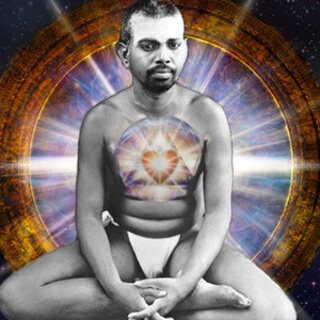
So Pranava is an ancient yogic practice that was recommended by Sri Bhagavan Rama,
Ramana Maharishi because it contains self-inquiry.
It's a natural,
Potent self-inquiry infused with the power of sound,
The power of the mantra,
Om,
The primordial sound of the entire universe.
This is the nature of Om and every mantra begins with Om and within that sound,
The Om sound,
Are three primary seed letters that correlate to the primary states of consciousness as well as the gross,
Subtle and causal bodies within your body,
Right?
So the whole purpose of the Pranava practice is to align your conscious awareness with your true nature,
Right?
Your eternal nature which is alive in your heart.
Now if you've been on this path for a while,
If you've known Ramana's teaching,
You might be aware that the gateway to eternal freedom,
The gateway to the Toria state is in your heart.
But you don't choose to give your attention to the heart because of all the unconscious tendencies that are running from the very second you wake up in the morning.
So it's the unconscious tendencies known as Vasanas,
The Gunas that you've heard me speak of,
The tendency to pursue pleasure,
The rajasic nature of the body,
The tamasic and the sattvic nature which is the pursuit of liberation from an ego point of view,
Right?
We are chasing after freedom until we really stop and dive into the heart.
So from Ramana's point of view there's three paths that is basically one path.
If you're on the mountain path you must want to be free.
I mean this must be your primary goal.
I want to be free of suffering.
I want to be free of patterns of suffering.
I'm tired of being in bliss one moment and frustrated and afraid,
Sad or stressed out another.
I'm tired of all that,
Right?
So your real deep desire is for liberation.
Ramana's teaching is about that.
It's not about anything else.
It's not really even about creating a newer better you.
It has nothing to do with self-empowerment and absolutely nothing to do with this world,
Right?
It's transcendent of the world and it's transcendent of both time and space.
It's an energy.
It is the energy of pure conscious awareness,
Sat-Chit-Ananda.
And it's your own direct discovery of that.
So this is the quest of a lifetime,
Right?
It's to dive into your heart to discover directly what is there,
Right?
To discover directly intimately what is in your heart,
Right here and right now.
With Ramana there's no postponement.
There's no putting it off.
There's instant awakening to the awareness that you are with this deep and simple teaching.
But simple does not equate to easy and the reason for that is because of all the unconscious aspects of your human experience,
Right?
So 95% of what you experience in any given moment is being run by unconscious tendencies that you know nothing about.
So 95% of your awake experience as you move through your day is really unconscious to you.
It lives in your subconscious.
So these are the aspects of your mind and ego that you're completely unaware of that actually are the foundation of patterns of suffering.
So patterns of suffering are deeply rooted in unconscious tendencies and for the ultimate release from all suffering which is the nature of moksha,
Liberation from the great and terrifying wheel of karma,
Samsara,
The great wandering through lifetimes upon lifetimes lives in breaking free of all unconscious tendencies.
So immediately you can begin to recognize that if they're unconscious to you how can you inquire your way out,
Right?
How do you break free of something you know nothing about,
Something you're totally unaware of?
And this is the question that can stop you in your tracks because ultimately moksha is not something that you can do and it's not something a teacher can give you.
I think this is one of the great misconceptions of spiritual guides,
Spiritual masters,
Spiritual teachers is that somehow that teacher is going to set you free or that you are going to listen to what they say and you yourself are going to set you free.
And it actually does not work that way,
Right?
A true teacher is directing your attention deep inside yourself.
It is not a codependent relationship.
It is not meant to be a codependent relationship,
Right?
A true teacher is turning your attention inward to the source again and again and again and pulling the rug out from under the tricks and traps of your own mind,
Right?
But the teacher does not grant moksha.
Ramana Maharshi does not give you moksha.
He directs your attention to the source within the heart,
Right?
So the three paths of Ramana is the quest of the source.
This is the inquiry.
This is the confrontation of egoic identity.
It's seeing through the illusion of you to discover directly intimately the vast indescribable truth of you beyond comprehension.
So Pranava combines the quest,
The deep dive into the heart and the breath.
So breath and the I-thought,
Which is the originating thought of the me that you deeply feel you are,
It coincides with breath.
So when you wake up in the morning,
The I-thought emerges from breath.
And the whole time you are sleeping,
You know that you are asleep.
You are aware that you are asleep.
Well,
Who is aware?
If you're completely unconscious,
If the mind is offline,
How do you know that you were asleep?
What was aware while you were sleeping?
And it's this discovery of your eternal nature that the Pranava practice supports.
It's the direct experience of the Toria state because Toria is the silence that follows the sounds,
Ah,
Ooh,
Mm.
These are the seed letters of Om.
It's the silence of Om.
It's the sound of Om.
So you could say all three seed letters combined lead to the silence of Toria,
Which is a vast,
Still,
Present awareness,
Sat-Chit-Ananda,
Consciousness being bliss,
Or consciousness,
Truth,
Bliss,
Right?
Something the mind cannot grasp.
This is beyond human comprehension.
So you must be willing to dive into your heart.
You must be willing to question the me that you think you are,
That you feel you are,
That you think you are and feel you are.
Your whole life experience is based on the central character of me.
This is my past.
This is my realization.
This is my future.
This is my desire.
This is what I want.
This is what I want to get,
Right?
So Ramana's teaching pulls the rug out from your desires,
Pulls the rug out from all attachment,
Because if there is no me,
There's nothing to be attached to.
But we are very attached to our bodies,
Right?
We identify with our bodies and our experience of life,
Which is experienced through the thought processes and feelings,
Emotions of our body.
And Ramana's teaching annihilates the me,
Which is the core cause,
The root cause of all your suffering.
So all the unconscious tendencies that you're unaware of are rooted in the ego,
But clearly if you're not aware of it,
You can't address it and this is why the yogic practices are essential.
Because moksha is not possible until all the vasanas,
All the gunas,
All the unconscious tendencies,
The genetic tendencies are fully addressed,
Fully burned through,
Right?
Fully burned through.
So in other words,
There can be no vasanas for moksha,
For the final release.
And the final release is granted by the vast unseen presence,
The presence of God,
The presence of light,
Light energy,
A vast intelligence.
It is extremely intelligent,
Far more intelligent than any human being.
So the genius of God is invisible.
And from a scientific perspective,
We are aware of this intelligence.
Quantum mechanics is the study of the unseen,
The unseen power of the entire universe.
And it's vastly intelligent.
This is why it takes complex equations to even begin to scratch the surface of the intelligence of the vast unseen presence of God,
Right?
Ishwara.
So pranava is a practice that Ramana recommended because it contains the quest,
It confronts the ego,
It is self-inquiry,
It requires your breath and it uses the power of sound to direct your attention into the heart center,
Right?
Into the vast indescribable realm of your heart.
And it creates a powerful energy.
It is a powerful energy and it generates a powerful Shakti energy in your body.
It is a sacred fire that burns through all of the unconscious tendencies and the genetic tendencies of gunas,
Right?
The rajasic,
The tamasic and the sattvic tendencies which pull your mind outward into the world.
So moksha is not a goal and it's not an attainment,
The way the mind thinks of a goal and an attainment.
It's really important to understand that the yogic practices are solely designed to purify your mind and remove through the power of energy which is experienced as a fire.
You feel like you're on fire in your body and it's that Shakti fire that is burning through what you're completely unaware of,
Right?
You're not conscious of.
So Ramana's teaching is Sanatana Dharma,
Right?
It's an ancient Dharma,
Right?
So really the presence of Ramana Maharshi brought new life to this ancient Dharma which is known as the eternal natural way,
Transcendent of time and space.
Sanatana Dharma is transcendent of time and space and some of you have heard me talk about this before because it's really important to understand that the mountain path is the eternal natural way which is the law,
The essence and the nature of moksha.
The law,
Essence and nature of moksha.
So the law of Ramana is your own direct experience transcendent of intellectual understanding.
As long as this stuff remains in the mind as a concept,
No matter how profound your spiritual concepts might be and maybe it's infused with your own direct experience,
It has to be released.
Nothing in mind touches the Toria state.
So even if you have a profound realization of your true nature and experience a very high state of consciousness such as a high state of bliss,
This state will change,
Right?
Because it's not the permanent realization of the self,
It is a bliss state and then the tendency of mind is to try and encapsulate that experience as a kind of sign or wisdom or experience that shows or proves that you've made progress in your spiritual evolution,
Right?
But you need to let that go.
So even the most profound divine mystical experience must be released to keep your inquiry fresh,
To keep the Shakti fire burning,
Right?
Because we are burning through unconscious tendencies through the yogic power of sound,
The yogic power of inquiry and the yogic power of prana or breath.
So pranayama is a yogic practice of breath and breath control is an essential aspect of pranava,
Right?
So pranava is a practice,
A meditation yogic practice that Ramana recommended and breath,
Pranayama,
Is an aspect of that because you must breathe to sing the mantra,
Ah,
Ooh,
You have to be able to breathe deeply to sing any mantra,
Right?
And all mantras are ultimately prayers,
The prayer,
The ultimate prayer,
Which is release from all suffering,
From eons upon eons of suffering.
So pranayama is the yogic practice of bringing oxygen into your body,
Into your brain,
And it has the power to stop the mind,
Especially when you use pranayama to breathe into the third eye,
Right?
This is a very potent yogic practice to start your meditation with pranayama,
Which is breathing into the third eye.
And there's many different forms of pranayama,
But breathing into the third eye is a pranayama practice that pretty much anyone can use.
In advanced Tibetan practice you can become a lung pa runner,
Which means that you are so light you can run 200 meters in just a few minutes or a few seconds because you've developed yogic powers through the breath,
Through silent meditation.
A lung pa runner can literally bounce.
They are so light.
The reason they can travel great distances in a very short period of time is because the physical body has been transformed through breath,
Through very advanced,
Very intense yogic pranayama practices,
Right?
So you can develop cities through pranayama,
But Ramana warned against cities or developing spiritual powers.
So a spiritual power is you could levitate or you can manifest a whole meal instantly just by thinking,
I want food,
And whatever food you think of manifests itself.
This is a city,
This is a spiritual power.
You can walk on water.
You can develop the skill to walk on water and so what?
So you can levitate,
So you can walk on water,
So you can instantly manifest things like Sai Baba could manifest gold lingams because he had spiritual power,
Yogic power that developed over many lifetimes.
He was a potent guru and he drew people to him by using cities,
Spiritual power and as he said,
I give them what they want which is the miracle,
The awe of the miracle,
The awe of the city,
So that hopefully they'll want what I came to give,
Which was the practices that release you from eons and eons of suffering,
Right?
Moksha,
Enlightenment,
Liberation,
Eternal salvation.
So breath is an important part of the Pranava practice.
Without breath,
There's no life,
Right?
If you stop breathing,
That's the end of you.
So you need breath to live and the breath coincides with the I thought.
So breath going out is the I,
Right?
And if you do the Soham practice,
You're breathing in I and you're exhaling M,
Right?
But the I-M focused outward to the world is what generates all forms of suffering.
The way out of suffering is to go into your heart and this is really challenging because even if we know that the heart center is the gateway of freedom,
We don't choose it.
We choose the drama that's constantly unfolding in the world in our life.
We are constantly distracted and so this is why the yogic practices are essential over a long period of time,
Right?
So you have to integrate this into your life for it to become a power within you that burns through these unconscious tendencies.
So because your direct experience is an essential aspect of the teaching of Ramana,
It doesn't do any good to just know these things or understand what I'm saying.
The actual application of the practice is essential and Pranava just happens to be one of the most powerful and this is why Ramana recommended it because the sound of the seed letters of Om naturally direct your attention into the heart center and the Ardha Matra is considered a half mantra because it has no sound.
It is the sound of silence.
It is the Turiya state in the heart.
So during the Pranava practice there is natural,
A natural falling into the silence of your heart because the frequency of energy that the sounds represent pull you into the heart center naturally.
It directs your attention inward to the source.
That is what the Pranava practice does.
It pulls you into the heart center deeper and deeper and deeper and it builds this Shakti fire in your physical body that is the only way to address what you know nothing about which makes perfect sense.
So Pranava is the deep dive into the heart but it's also a surrender to that vast indescribable presence of your heart which is the intelligence of the entire universe.
You must surrender to that because ultimately that is what frees you from the suffering of unconscious tendencies or vasanas.
The teacher cannot free you.
The guru does not free you.
The outer guru directs your attention to the inner guru which is the vast intelligence of the entire universe.
So instead of just talking about this what I want you to have is an experience of Pranava right now,
Right,
While you're listening to this.
So Pranava,
The seed letters of Om,
Ah,
U and M,
Correlate to the waking state,
The dream state,
Which happens almost the second you wake up you start thinking about your day.
That is a dream state.
You're imagining what you're going to do that day or you're thinking about what happened yesterday.
So you immediately start to time travel the very instant you wake up in the morning.
This is the dream state and then the deep state is when you fall asleep at night.
A deeper state is the deep sleep state.
So the Ah sound of Om correlates to the waking state.
The Ooh sound correlates to the dream state or your daydreaming state and the Mmm sound is deep sleep.
It also correlates to the gross subtle and causal bodies and aligns you with the Atman which is in the core of your being which is the Toria state in your heart.
So really this energy of the Pranava practice vibrates your entire body and it actually has the power to rewire the synapses of your brain.
It is a very very powerful yogic practice,
Right,
That directs your attention naturally into the heart.
There's really no effort in this practice.
It's just actually sitting down and doing the practice.
So when you sing these seed letters out loud,
Especially as a group,
It is divine.
It is ethereal,
Right.
So first I'm going to play a group of people,
A recording of a group of people singing these seed letters in an ancient cathedral in Switzerland because I want you to hear the sound of a group of people singing this and there's such an energy when you're with a group that it pulls the whole group into the silence of the heart.
It just naturally pulls you into the Toria state,
Right,
And when you are consciously aware of what's actually going on in this practice,
When you have the context,
Then it's much easier to surrender to the energy which you can actually feel in the heart center just to the right of your physical heart pulling you inside.
So when you first start doing this practice you want to sing the seed letters out loud because the vibration of the sounds pull you in and it forces you to take a deep breath.
So if you're gonna sing the ah sound you must breathe in.
If you don't take any breath then it's impossible to make that sound.
You need the breath in order to sing any mantra but you especially need it for this particular practice.
So you're aligning the breath with the heart as well,
Right.
So I want you to take a moment to listen to the sound of Pranava sung as a group,
Right.
So let's listen.
Okay,
Here we go.
Now this was sung in a cathedral.
Hear the breath?
Ahh Ooh Feel the energy pulling you into the heart right now.
Ooh Ahh Ooh Ahh Ooh Ooh Ahh Ooh Ooh So the sound naturally ends in silence,
Right,
Which is the fourth sound.
So the first sound is the ah,
The second sound is the ooh,
The third is mmm,
And the silence that follows is the Ardha Matra which is the sound of silence.
So this really Pranava is a sound inquiry.
It's using sound to pull your attention inward because these sounds are more than just sounds.
They're electromagnetic light that aligns with the electromagnetic light of your life force,
The energy that you are.
So you're aligning your conscious awareness with that energy and the source of that energy lives in your heart.
It's a very,
Very powerful practice,
Especially when you have the grace of doing it with a group of people,
Right,
Which we were fortunate enough to do in a powerful venue of this ancient,
Ancient Cathedral,
Right.
Now when you listen to these sounds at 396 Hertz,
Which is a frequency of sound,
So sounds are frequencies of light,
Energy,
And sound waves,
Right,
And the sound waves naturally shift your attention from the left analytical side of your brain to the right side of your brain,
Which is transcendent of time and space,
Right.
So it naturally shifts your attention in that direction.
So when you actually do this practice,
When you apply the teaching of Ramana consistently over a period of time,
You will start to notice actual tangible results because what's happening is you've built the Shakti energy in your body to burn through all of the unconscious tendencies and there's just a natural surrendering of mind to the vast presence that's alive in your heart,
Right.
Okay,
So let's listen to this ah-ooh-mm at 396 Hertz and if you want to actually do the practice right now,
Put your hands in Chin Mudra,
Which is your your thumb and your forefinger connected and the other three fingers,
It's almost like you're making an okay sign,
And then you want to put the back of your hands,
You just want to rest that on your lap.
And the reason that's important,
The Chin Mudra is important,
Is because that is a meridian in your fingertips that closes a circuit of energy.
So it keeps the energy of the ah-ooh-mm sound,
This vibration of light,
This electromagnetic energy and sound waves within your body building the Shakti fire,
Which is actually essential for burning through all the unconscious tendencies,
All right.
So keep your back straight,
Have your hands in Chin Mudra and focus your attention on the heart center,
Which is just to the right of your physical heart where you feel the sensation of me,
I am me,
In your body.
And take a deep breath in right now and exhale out.
Take a deep breath in and exhale out.
And take a deep breath in and exhale out.
And now listen to this sound at 396 Hertz.
And become aware of the energy of space inside this heart center right now.
And notice the vast presence that holds this heart center in space.
And notice the energy of space inside this heart center right now.
And notice the vast presence that holds this heart center in space.
And become aware of the energy of space inside this heart center right now.
And just rest your attention in the heart center in this silence right now.
And this is just a short taste of Pranava,
The pranava practice,
Which is breath when you actually sing it.
Now listening to it,
If you put headphones on and listen at 396 Hertz,
I don't recommend doing this when you're driving a car because the whole purpose of it is to pull your attention into the heart center and generate this very,
Very strong yogic power of Shakti in the body,
Right.
So Pranava pulls you into the presence,
The vast intelligence of the Toria state,
Which is Sat-Chit-Ananda,
Right,
Consciousness being bliss,
Right,
Beyond the ability of the human mind to even comprehend.
And it's ultimately that vast intelligence that burns all the way through the unconscious tendencies for true and final release from eons of suffering.
The direct permanent realization of the Toria-Tita state,
Which is beyond the experiencer,
Beyond the meditator,
You know,
You feel like you are meditating,
You are doing the Pranava practice,
You are realizing a state of bliss,
Or you are realizing the Toria state,
Until that feeling of me is transcended entirely and the vasanas are completely and totally gone,
Then moksha has not yet occurred.
So moksha is earned through the power,
The yogic power and energy of practice,
And then ultimately it's the presence that sets you free as pure present awareness.
Om Shanti Shanti Shanti Om Shanti Shanti Shanti Shanti Shanti