Hi,
I'm Kevin Saker,
And today we're reading from Just So Stories by Rudyard Kipling,
And today we're doing the fourth story,
How the Leopard Got His Spots.
So,
If you'd like to get comfortable in either a chair or maybe you're already in bed,
And once you're relaxed and you've shut your eyes,
I shall begin.
How the Leopard Got His Spots In the days when everybody started fair,
Best beloved,
The leopard lived in a place called the High Veldt.
Remember,
It wasn't the Low Veldt,
Or the Bush Veldt,
Or the Sour Veldt,
But the sclusively bare,
Hot,
Shiny High Veldt,
Where there was sand and sandy-coloured rock,
And sclusively tufts of sandy yellowish grass.
The giraffe and the zebra and the eland and the kudu and the heartbeast lived there,
And they were sclusively sandy yellow-brownish all over.
But the leopard,
He was the sculviest,
Sandiest,
Yellowish-brownish of them all.
A greyish,
Yellowish-catty shaped kind of beast,
And he matched the sclusively yellowish-greyish-brownish colour of the High Veldt to one hair.
This was very bad for the giraffe and the zebra and the rest of them,
For he would lie down by a sclusively yellowish-greyish-brownish stone or clump of grass,
And when the giraffe,
Or the zebra,
Or the eland,
Or the kudu,
Or the bushbuck,
Or the bontbuck came by,
He would surprise them out of their jumpsome lives.
He would indeed.
And also,
There was an Ethiopian with bows and arrows,
A sclusively greyish-brownish-yellowish man he was then,
Who lived on the High Veldt with the leopard,
And the two used to hunt together,
The Ethiopian with his bows and arrows and the leopard sclusively with his teeth and claws.
Till the giraffe and the eland and the kudu and the quagga and all the rest of them didn't know which way to jump,
Best beloved.
They didn't indeed.
After a long time,
Things lived for ever so long in those days,
They learned to avoid anything that looked like a leopard or an Ethiopian.
And bit by bit,
The giraffe began it because his legs were the longest,
They went away from the High Veldt.
They scuttled for days and days and days till they came to a great forest,
Sclusively full of trees and bushes and stripy,
Speckly,
Patchy,
Blatchy shadows,
And there they hid.
And after another long time,
What with standing half in the shade and half out of it,
And what with slippery,
Slidy shadows of the trees falling on them,
The giraffe grew blotchy,
And the zebra grew stripy,
And the eland and the kudu grew darker,
With little wavy grey lines on their backs like bark on a tree trunk.
And so,
Though you could hear them and smell them,
You could very seldom see them,
And then only when you knew precisely where to look.
They had a beautiful time in the sclusively,
Speckly,
Spickly shadows of the forest,
While the leopard and the Ethiopian ran about over the sclusively greyish-yellowish-reddish High Veldt outside,
Wondering where all their breakfasts and their dinners and their teas had gone.
At last,
They were so hungry that they ate rats and beetles and rock rabbits,
The leopard and the Ethiopian,
And then they had the big tummy ache,
Both together.
And then they met Bavian,
The dog-headed barking baboon,
Who is quite the wisest animal in all South Africa,
Said Leopard to Bavian,
And it was a very hot day.
Where has all the game gone?
And Bavian winked.
He knew.
Said the Ethiopian to Bavian,
Can you tell me the present habitat of your aboriginal fauna?
That meant just the same thing,
But the Ethiopian always used long words.
He was a grown-up.
And Bavian winked.
He knew.
Then said Bavian,
The game has gone into other spots.
And my advice to you,
Leopard,
Is to go into other spots as soon as you can.
And the Ethiopian said,
That is all very fine,
But I wish to know whether the aboriginal fauna has migrated.
Then said Bavian,
The aboriginal fauna has joined the aboriginal flora,
Because it was high time for a change.
And my advice to you,
Ethiopian,
Is to change as soon as you can.
That puzzled the Leopard and the Ethiopian,
But they set off to look for the aboriginal flora,
And presently,
After ever so many days,
They saw a great,
High,
Tall forest full of tree trunks,
All exclusively speckled and sprottled and spottled and dotted and splashed and slashed and hatched and cross-hatched with shadows.
Say that quickly aloud,
And you will see how very shadowy the forest must have been.
What is this?
Said the Leopard,
That is so exclusively dark,
And yet so full of little pieces of light.
I don't know,
Said the Ethiopian,
But it ought to be the aboriginal flora.
I can smell giraffe,
And I can hear giraffe,
But I can't see giraffe.
That's curious,
Said the Leopard.
I suppose it is because we have just come in out of the sunshine.
I can smell zebra,
And I can hear zebra,
But I can't see zebra.
Wait a bit,
Said the Ethiopian.
It's been a long time since we've hunted them.
Perhaps we've forgotten what they were like.
Fiddle,
Said the Leopard.
I remember them perfectly on the High Veldt,
Especially their marrow bones.
Giraffe is about 17 feet high,
Full of exclusively fluvious golden yellow from head to heel,
And zebra is about four and a half feet high,
Of exclusively grey fawn colour from head to heel.
Hmm,
Said the Ethiopian,
Looking into the speckly,
Spickly shadows of the aboriginal flora forest.
Then they ought to show up in this dark place like ripe bananas in a smokehouse.
But they didn't.
The Leopard and the Ethiopian hunted all day,
And though they could smell them and hear them,
They never saw one of them.
For goodness sake,
Said the Leopard at tea time,
Let us wait till it gets dark.
This daylight hunting is a perfect scandal.
So they waited till dark,
And then the Leopard heard something breathing sniffily in the starlight that fell all stripy through the branches,
And he jumped at the noise,
And it smelled like zebra,
And it felt like zebra,
And when he knocked it down it kicked like zebra,
But he couldn't see it.
So he said,
Be quiet,
Oh you person without any form,
I am going to sit on your head till morning,
Because there is something about you that I don't understand.
Presently he heard a grunt and a crash and a scramble,
And the Ethiopian called out,
I've caught a thing that I can't see.
It smells like giraffe,
And it kicks like giraffe,
But it hasn't any form.
Don't you trust it,
Said the Leopard.
Sit on its head till the morning,
Same as me.
They haven't any form,
Any of them.
So they sat down on them hard till the bright morning time,
And then the Leopard said,
What have you at your end of the table,
Brother?
The Ethiopian scratched his head and said,
It ought to be exclusively a rich fluvious orange tawny from head to heel,
And it ought to be giraffe,
But it's covered all over with chestnut blotches.
What have you at your end of the table,
Brother?
And the Leopard scratched his head and said,
It ought to be exclusively a delicate grayish fawn,
And it ought to be zebra,
But it is covered all over with black and purple stripes.
What in the world have you been doing to yourself,
Zebra?
Don't you know that if you were on the high velt,
I could see you 10 miles off.
You haven't any form.
Yes,
Said the Zebra,
But this isn't the high velt,
Can't you see?
I can now,
Said the Leopard,
But I couldn't all yesterday.
How is it done?
Let us up,
Said the Zebra,
And we will show you.
They let the Zebra and the Giraffe get up,
And the Zebra moved away to some little thorn bushes where the sunlight fell all stripy,
And the Giraffe moved off to some tallest trees where the shadows fell all blotchy.
Now watch,
Said the Zebra and the Giraffe.
This is the way it's done.
One,
Two,
Three,
And where's your breakfast?
Leopard stared,
And Ethiopian stared,
But all they could see were stripy shadows and blotched shadows in the forest,
But never a sign of Zebra and Giraffe.
They had just walked off and hidden themselves in the shadowy forest.
Hi-hi,
Said the Ethiopian.
That's a trick worth learning.
Take a lesson by it,
Leopard.
You show up in this dark place like a bar of soap in a coal scuttle.
Ho-ho,
Said the Leopard.
Would it surprise you very much to know that you show up in this dark place like a mustard plaster in a sack of coals?
Well,
Calling names won't catch dinner,
Said the Ethiopian.
The long and the little of it is that we don't match our backgrounds.
I'm going to take Bavian's advice.
He told me I ought to change,
And as I've nothing to change except my skin,
I'm going to change that.
What to,
Said the Leopard,
Tremendously excited.
To a nice working blackish-brownish colour,
With a little purple in it and touches of slatey blue.
It will be the very thing for hiding in hollows and behind trees.
So he changed his skin then and there,
And the Leopard was more excited than ever.
He had never seen a man change his skin before.
But what about me,
He said when the Ethiopian had worked his last little finger into his fine new black skin.
You take Bavian's advice too.
He told you to go into spots.
So I did,
Said the Leopard.
I went into other spots as fast as I could.
I went into this spot with you,
And a lot of good it has done me.
Oh,
Said the Ethiopian.
Bavian didn't mean spots in South Africa.
He meant spots on your skin.
What's the use of that,
Said the Leopard.
Think of giraffe,
Said the Ethiopian.
Or if you prefer stripes,
Think of zebra.
They find their spots,
And stripes give them perfect satisfaction.
Hmm,
Said the Leopard.
I wouldn't look like zebra,
Not for ever so.
Well,
Make your mind up,
Said the Ethiopian.
Because I'd hate to go hunting without you,
But I must if you insist on looking like a sunflower against a tarred fence.
I'll take spots then,
Said the Leopard.
But don't make them too vulgar big.
I wouldn't look like giraffe,
Not for ever so.
I'll make them with the tips of my fingers,
Said the Ethiopian.
There's plenty of black left on my skin still.
Stand over.
Then the Ethiopian put his five fingers close together.
There was plenty of black left on his new skin still.
And pressed them all over the Leopard.
And wherever the five fingers touched,
They left five little black marks,
All close together.
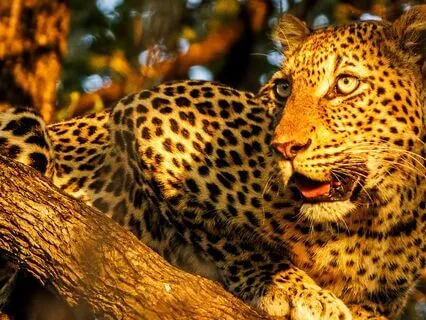
You can see them on any Leopard skin you like,
Best beloved.
Sometimes the fingers slipped and the marks got a little blurred.
But if you look closely at any Leopard now,
You will see that there are always five spots of five fat black fingertips.
Now you are a beauty,
Said the Ethiopian.
You can lie out on the bare ground and look like a heap of pebbles.
You can lie out on the naked rocks and look like a piece of pudding stone.
You can lie out on a leafy branch and look like sunshine sifting through the leaves.
And you can lie right across the center of a path and look like nothing in particular.
Think of that and purr.
But if I'm all this,
Said the Leopard,
Why didn't you go spotty too?
Oh,
Plain black's best for a man,
Said the Ethiopian.
Now come along and we'll see if we can't get even with Mr.
One,
Two,
Three,
Where's your breakfast?
So they went away and lived happily ever afterward,
Best beloved.
That is all.
Oh,
Now and then you will hear grownups say,
Can the Ethiopian change his skin or the Leopard his spots?
I don't think even grownups would keep on saying such a silly thing if the Leopard and the Ethiopian hadn't done it once.
Do you?
But they will never do it again,
Best beloved.
They are quite contented as they are.
I am the most wise Bavian,
Saying in the most wise tones,
Let us melt into the landscape just us two by our loans.
People have come in a carriage calling,
But mummy is there.
Yes,
I can go if you take me,
Nurse says,
She don't care.
Let's go up to the pigsties and sit on the farmyard rails.
Let's say things to the bunnies and watch them skitter their tails.
Let's sow anything,
Daddy,
So long as it's you and me and going truly exploring and not being in till tea.
Here's your boots.
I've bought them.
And here's your cap and stick.
And here's your pipe and tobacco.
Oh,
Come along out of it quick.
Well,
I hope you enjoyed that story today.
Thank you for joining me.
And I hope you come back again soon.