So today we are continuing our series called our Tantric Path.
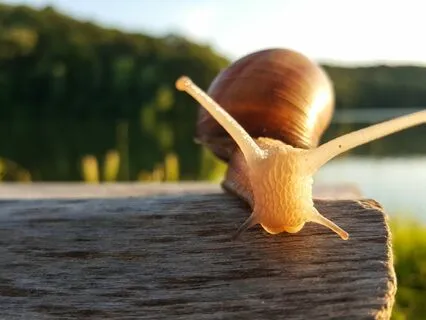
And today is all about slowing down to the speed of life.
This is really important because Tantra is something that we want to study.
We want to study it in our householder life.
And what that means is it's one thing to go off to a monastery and live a monastic life and study and gaze at yantras and have practice that way.
Like that's one way to do it.
It's almost the slowness of life is built in to the container that you're living in.
But to live a householder life that I assume everyone here is,
Where we're paying rent and we have family and maybe we have relationships and we are looking to manifest our dreams and all these kind of things.
But having the ability to slow down,
To even have that gear inside of us.
Like I often think of being a continuum.
That how broad is your continuum of possibilities?
It's one thing to say,
Okay,
I can go really,
Really,
Really fast.
And I can do really,
I could do a million things and I can multitask and I'm super efficient and all that.
But if that's the breadth of your ability,
It's only this big.
But what if instead we had the capacity to be super efficient,
Super fast,
Super multitasking and all that good stuff.
But we also had the ability to fully unplug and enjoy complete rest.
Imagine what life would be like then.
It's like I always think of the Zen master.
He's standing in the movie and then this wild and crazy guy from the United States goes over and he's like,
I am going to beat you and I am going to whatever,
Show you who is the greatest Taekwondo master ever.
And the master stands there absolutely still,
Absolutely quiet.
And he's like,
Fight me old man,
Fight me.
And the old man's just sitting.
And then eventually the youngster goes flying at him.
And of course he's,
You know,
And he defeats him.
No problem.
The old man defeats him.
What if that was our breadth of experience?
So being able to slow down to the speed of life doesn't mean not doing anything.
It doesn't mean spending the rest of our life reading a book or sitting by the beach.
It's like our psyche slows down.
You know,
There's a reason that every spiritual tradition asks us to meditate.
Every single one.
And it's the one part we don't want to do.
Even in yoga practice,
We want to do the yoga.
We want to be fit.
We're too sedentary.
We want to be stretchy.
We want to see the results.
But why do they ask us to meditate?
Why do we have to sit still and breathe?
Because inside of us,
Our psyche,
Our brains are going at a million miles an hour.
It's like the difference between being on a fast train and you're flying through the countryside.
How much are you possibly seeing of the countryside?
Nothing.
But to actually get off the fast train and walk through the countryside,
You actually experience the countryside.
But inside of us,
Our psyches are like the fast train.
Sometimes our psyche is like seven fast trains going in a thousand directions all the time.
And then we feel this draw that we want to study tantra.
We want to study yoga.
We want to study Zen Buddhism.
We want to study whatever spiritual tradition.
It could even be an indigenous custom or whatever it is you wanted to study.
But we cannot do it as long as our brain is like a fast train.
And the thing about the fast train is,
Where is it really?
It's not here in this moment.
We could be sitting on the fast train,
Closing our eyes and feeling the hum of the motor.
Experiencing the hum of humanity that is inside the train.
And we could be fully present,
Fully in that moment.
But that's not really how it is.
Our inner fast train,
Our psyche is in the future.
In the same way as our psyche is often in the future on a fast train.
All we're thinking about is how quickly we can get to that place.
And that's our brains as well.
And it can be anything like tantra,
Like today we're going to talk about in relationships and conversations and even say in intimacy.
I remember one time I was on a date with someone and he wasn't really much into spirituality or anything like that.
But we were sitting chatting and it was really sweet.
And he's like,
So you're into like tantra and stuff.
And I said,
Yeah.
And he says,
Yeah,
I get it.
Yeah,
I totally get tantra.
I said,
Really?
And he said,
Yeah,
He says,
Well,
I like to smoke cigars.
And tantra is like smoking cigars.
He said most people just kind of pick up a cigarette,
And they smoke the cigarette.
And the point is to kind of get to the end of the cigarette.
He said,
But when you smoke a cigar,
You inhale and you bring this smoke of the cigar,
I'm missing the words right now,
Into your mouth,
And you roll it around your mouth and you savor it and you allow it to touch your taste buds.
He says the whole point of smoking a cigar is the experience itself.
And you've got to slow that way down.
And I just looked at him and said,
Yes,
That's exactly right.
That's tantric intimacy in a nutshell.
We can't be on the fast train.
And even if we have a fast train gear,
Lots of us have a lot of energy.
And we love doing a lot of things.
But what really creates breadth and depth in our life is also being able to be very still and very quiet.
One of the big reasons we need to talk about this,
Especially in the world of tantra,
Is that tantra isn't a philosophical idea that we read and we go,
Ah,
That's interesting.
Tantra is meant to actually transform us.
It's meant to take us from where we are and actually transform us into our true self,
Our highest,
Most divine,
Expansive self,
Not leaving the body,
Not transcending our lives and leaving everything,
Not that,
But actually our biggest self.
If you imagine I was incarnated as this person in this body,
In this being,
What is my most radiant version of this incarnation?
That's what tantra does for us.
But what that means is we actually have to make changes in our life.
We actually have to do something.
We actually have to have a meditation practice,
Not because it's important to meditate,
But because we need to use the meditation to change our brain pattern.
It's a tool to change us.
When you imagine slowing down that much,
Like actually really slowing down,
Think of the attachments that are going to rise that are not going to like it.
If I was to say,
If we just slow our minds down,
What if you're like,
Yeah,
But I'm not going to get my to-do list done.
I'm not going to get my stuff done if I just slow down and relax,
Do all these things.
And so then we have to actually look at all the things.
So what are all the things on your to-do list?
What are all these things that are so important to get done?
Because this is the challenge is our brain,
Our brains have been trained to think that there's all these things that have to get done and that there's a hurry attached to it.
There's a timeline.
But is that real?
Is there really a timeline?
Is there ever really a hurry?
Don't get me wrong.
If I have an appointment with someone,
I will make my appointment.
This isn't like,
Oh,
I'm on hippie time.
I'll get there whenever like,
Oh,
I don't want to ever inconvenience someone else.
But in life,
As soon as we slow down,
As soon as we say,
You know,
It's that saying that if you're really,
Really busy,
You should meditate 10 minutes a day.
And if you don't have 10 minutes to meditate,
Then you should meditate an hour.
That is not a funny statement.
Because what it's saying is if we don't have 10 minutes to sit down and meditate,
Our life is out of balance.
Our life is out of whack.
We are working for the man.
We are being driven by expectations.
We are being driven in an insane way.
And so then it's really important to take that hour.
And so then imagine,
Let's just imagine we're mad busy.
And maybe it's because we've got five kids.
Maybe it's because we've got three jobs.
Maybe it's because who knows why,
But for some reason we are insanely busy.
And then it's like,
You know what?
I'm going to take an hour.
Like let's go crazy.
An hour to meditate.
So we're going to sit and I'm going to meditate for an hour.
What won't get done that day?
Really?
Everything will get done.
And maybe there are things that won't,
But do they matter?
Can they be done tomorrow?
Do they even matter at all?
And even taking that hour,
Like when I think back,
When I think of if I was to do anything different when I was raising my kids,
I would have taken that time to meditate no matter what.
The kids will learn that,
Oh,
Mom's meditating now.
I could even have a timer that they could be watching that as soon as that timer goes,
They know they can talk to me again.
But the peace of mind inside,
The quiet inside,
That that would have rippled out into every day.
But I never made it a priority.
It isn't that I didn't know it.
I was doing Kundalini Yoga back then.
I was doing all this,
But I wasn't teaching yet,
But I was definitely attempting to practice through whatever I could find on Amazon.
So it's through the actual act of doing the meditation or doing the yoga every day,
Even though it seems like this is going to disrupt your whole life,
That's what causes transformation.
If we're not willing to upset the apple cart,
How can change happen?
I remember when I was writing,
What If You Could Skip the Cancer?
I found this great quote,
And it was something like,
We want things to be different,
But we don't want to change.
And so this is why it's really important when we think about something like slowing down.
This act itself can be a daily sadhana,
A daily spiritual practice,
That actually,
If it's difficult for us,
A sadhana is generally something that's difficult,
That causes us to expand beyond our comfort zone.
If you actually said my daily sadhana is I've got to slow down,
I'm going to meditate for 20 minutes every day,
Every day,
No matter what,
And no matter what,
Because that means on even the hardest day,
You still do it.
And that's when the transformation happens.
That's when big things start to shift and we have aha moments.
So one of the things when we talk about slowing down,
I don't mean being idle.
Like I don't mean passing out or watching Netflix or scrolling the internet,
Or I don't mean passive entertainment.
Imagine slowing down,
But being fully conscious.
Imagine allowing yourself to sit on the couch.
Just allow your mind to flow.
That's my favorite meditation,
Especially if I'm really flying at a clip.
I can get very excited about things.
I can get very excited about 12 things and have 12 things going.
So my favorite thing,
If I find myself like that,
I will sit on the couch and I'll just breathe.
There's no special mantra,
No special eyes,
No special breath.
I just sit there and I literally let my mind fly.
It's almost like journaling without pen and paper.
And I just let it go completely freewheel.
And eventually,
Like an exhausted child,
It tires itself out.
And eventually I'm left in this very quiet place.
But to value that quiet place more than the busy place,
To really be conscious in that time,
Huge deal.
So now let's imagine if we apply this to a conversation,
Because again,
Tantra is about living.
So you're sitting with someone and you're having a conversation.
How often do we assume we know what they're going to say next?
Or we kind of know where the conversation is going to go.
I do this a lot.
Just the way I'm wired.
I have a bad habit of always wanting to be the one talking.
And I actually am not a good listener.
It's actually a very,
It's quite a discipline for me to really listen.
And then often I'll listen,
But my mind is going in a million directions because they've said something and it's triggered this thought,
It's triggered this thought,
It's triggered this thought.
And oh,
Now I want to say this.
And now I want to say that.
I just want to say a million things.
But when I actually slow down and I listen to the other person and I don't allow my mind to fly off in a thousand directions,
I realized that I have questions to ask them.
So what do you mean by that exactly?
And how would you do that?
And like,
What was that like?
I'm not always like that.
Sometimes I am a good friend and I really listen and I engage,
But my default is my brain just gets flying.
I don't know,
It just gets stimulated by the conversation,
I guess.
And I really noticed it.
Some of you guys have watched the videos that I've done with Nelda,
Food Magic with Nelda.
I watched myself recording.
So if you've never seen it,
It's a little series we've been doing because I want her to teach me and us how to really eat healthy food that really nourishes our body.
And so she'll be talking about something and I watch my brain fly off in a bunch of directions.
But I'm recording it and it's all about Nelda.
And I've actually watched myself like pull those horses back,
Look at Nelda,
Replay what she said in my head and ask a question because I actually don't know what she's going to say next.
So now all of a sudden you end up going into deep places,
Like really interesting places.
And the people we're most prone to this with are the people we've known the longest.
It's the family members,
It's our parents,
It's our children,
It's our partners,
Our lovers.
Friends we seem to have,
I think,
Better conversations with,
But family members.
How easy is it just to assume that this is where the conversation is going to go?
I remember one time my daughter and I were at my dad's.
My dad's like 89.
I was teaching yoga,
So I was off in this room teaching yoga and my daughter was out chatting with my dad.
And I walked out after yoga,
So they've been like chit-chatting for like an hour and a half.
And I walked out and Taylor looks at me and she says,
Did you know that grandpa did this and this and this back in like the 50s?
And did you know this?
And did you know that grandpa used to ride on the wagon as they delivered milk down Queen Street in Toronto?
And I was like,
No.
I didn't know any of that.
Why?
I've known him for over 50 years.
But we get into such habits of,
Oh well,
I know what dad's going to say,
Or I know that so and so.
And we just don't get creative enough because we're not in the moment.
So it actually is quite a discipline.
And when I say discipline,
I mean discipleship is when you love something so much you pour your whole heart into it.
If you love piano and you develop a discipline of playing the piano,
It's because you want to explore the piano just every day,
All day.
That's discipleship.
It's not a punishment.
It's not required.
It's actually a heartfelt desire.
So imagine your heartfelt desire was to truly have tantric discussions with people,
Everyone,
Even the ones that there's no way you think you could,
The ones that have told the same story 40 times verbatim.
What if the goal was to sit with them and just think about their life and think about times in their life that might be interesting to you and really ask questions?
Imagine how different that is.
Because the wild thing about a tantric perspective is that every moment counts.
Every single moment in our life counts.
And it doesn't matter whether we're stuck talking to aunt whoever who just always is talking about whatever,
Or we're doing something that we've truly chosen and we love.
Each moment is equal.
The question is,
What do we bring to that experience?
Is there a depth that we could actually plumb here?
Or is there intrigue?
Or is there something fun to talk about?
And then if we take this into intimacy,
Imagine everything we just said about a conversation,
And we apply that to sexual intimacy.
We slow way down.
And we actually look at the person in front of us.
And we don't have any ideas in our head that we want to accomplish.
There's a human being in front of us,
Like an actual living sentient incarnation right in front of us.
And imagine if we slowed our mind way down.
And this requires no fancy tricks,
Nothing.
It's just the ability to slow down and see this human in front of us.
And to see this human in this moment,
To imagine that they are different no matter whether you've been married for 40 years.
They are a different person than they were yesterday.
So imagine you actually feel into that,
Like we talk about being empathic,
And actually using our empathy to really feel this other person in this moment.
Where are they really?
What would feel right?
What would they love?
And we just go there.
No tricks,
No goals.
We just slow down,
Allow our bodies to feel each other and fully engage.
Like fully engage.
No assumptions.
In Star Trek,
They'll talk about warp speed.
And if you imagine warp speed,
Basically,
If we take the time-space continuum,
And imagine my hands are flat here and we have,
This is the space in time continuum.
So if you were to walk along this little road,
I'm walking through time chronologically,
One moment after another.
Now let's bend this into a W.
If I was to make my hands,
Which I can't,
Like a piece of paper,
And I'm going to bend it into a W,
Like a sine wave.
Now all of a sudden,
Time is still there,
But there are these peaks.
There are these peaks.
Warp speed is when you actually go from peak to peak to peak to peak to peak.
You don't have to go through the whole thing.
And so sometimes we live in warp speed.
There was a great movie by Adam Sandler called Click,
Where he had this universal remote and he discovered that he could speed up anything if he didn't like it.
Christopher Walken gave it to him.
He's working at Bed Bath & Beyond.
He was in the Beyond section and all Adam Sandler wanted was a remote for his TV.
And of course,
Christopher Walken being awesome Christopher Walken,
He's like,
Here's the one you want.
He gives him this universal remote and he's like,
But you can't bring it back and be really careful about how you use it.
And so Adam Sandler brings it home.
They're all sitting at the table.
And of course the conversations got boring.
He starts laughing or somehow he jokes and he grabs the remote control and he hits fast forward.
And all of a sudden he's lying in bed with his wife and the night is over.
And he's like,
Well,
That was weird.
And so then he kind of kept playing with it.
And he has to take the dog out to go to the bathroom and the dog's taking forever.
And so he used the remote and he said fast forward.
And of course the dog was in and he was inside.
And then he started doing it during sex with his wife and he hit the forward and he got to the end.
But then all of a sudden one day he woke up and he was 90.
And this is what's so interesting.
Imagine we take this warp speed mentality that we've been given.
Imagine how often we've been told you need a five year plan.
You need a 10 year plan.
You need a six month plan and you need to accomplish these goals.
It's literally like we've taken it,
Put it into warp speed.
Here are the crescendo points.
Here are the points that matter.
And that's it.
We're just going to live from highlight to highlight to highlight.
So what we're talking about,
I mean this is the literal opposite of living Tantrically.
So imagine instead we take this warp speed mentality of our brain and we actually flatten out the paper.
And all of a sudden we have the deeper conversations.
We have the deeper intimacy.
And then we consider within ourselves to actually live Tantrically,
To be Tantric ourselves.
How often we create all of these goals,
These life goals.
Well as soon as this happens then I'm okay.
As soon as we do that we have now created a warp drive or something within us that says everything in between is irrelevant until that point is reached.
So again if we flatten that piece of paper out and there is no point in the future that doesn't exist,
Every single step along the way,
Every breath,
Every moment matters.
This isn't just some bizarre esoteric idea.
This is us right now.
This is the Zen of dishwashing.
This is just enjoying every moment because there's no other moment that's more interesting or more valuable.
Can you imagine that?
Can you imagine if you think of a moment in your life that this is a peak experience?
But to think that that moment is equal to sitting on the couch petting the dog or something.
Those are equal moments.
So then you imagine like going out into the world.
Imagine going for a walk today and walking as slowly as you possibly can.
Every time we go out and we go out into the world and we do something physical like go for a bike ride or go for a walk,
It's like we're always sort of booking it.
We're always like okay yeah I'm gonna get so and so and I gotta get here and okay I've only got 50 so I'm just gonna keep.
Imagine just slowing down as slowly as you can.
Imagine getting on your bicycle and bicycling as slowly as you can,
Still keeping it upright.
Can you imagine?
I highly recommend it.
It is so interesting.
It is so fascinating how we experience the world differently.
Imagine getting in your car and just driving the speed limit.
And yeah people behind you might be like hey I'm in a hurry you can go 16 kilometers over the speed limit.
But what if you just actually enjoyed the scenery and you weren't always like okay I gotta pass and oh I'm gonna oh and we actually just relaxed.
Like I remember I don't know when it was maybe 20 years ago we had a premier in Ontario who installed cameras on the big highways.
Basically they were just speed cameras.
If you went over the speed limit like I don't know five kilometers or something like that an hour you would automatically just get a ticket.
It would just read your license plate and send you a ticket.
Some people loved it some people hated it and then the next government kicked it out.
But one of the things I loved about those years because I think they were around for a couple years that when you would drive on the big highways there was this sense of calm because speeding wasn't an option at all.
You just had to drive the speed limit so that desire to get ahead that desire to be in the fast lane that desire to whatever wasn't there and you had to just go the speed limit.
And there was this calm driving our big highways.
I loved it so much.
When I'm a fast driver I have a very heavy foot especially if it's sunny and I have good music playing in the car.
I won't even know what speed I'm going so it's not like I'm naturally a slow driver but I love that feeling of calm.
To go out and to leave your phone at home to absolutely have no idea what's going on no one can reach you like back in the old days when we would just go for a walk and the phone was hanging on the wall at home.
We did this for decades.
We didn't take a camera we didn't take anything we just went on a walk.
Like these are very simple practices.
Imagine if your daily yogic practice your daily tantric practice was to go for a walk for an hour as slowly as you could every day.
Breathing deeply.
Imagine how rich that would be.
No headphones no nothing.
Imagine what you would see.
This is tantra.
The last thing I want to mention is I genuinely believe that all the greatest things in the world are hiding in plain sight.
And one of those things is stillness.
That when we can slow down when you can really sit still and be quiet I believe it is a portal to who we really are.
And I mean that really seriously that if we can slow down I just feel like the world opens up in a way it's almost like we start to experience other dimensions.
I always see it as this opening in a wall that you're sitting there meditating and then this opening happens and there's this garden beyond the opening.
That's what I think is being hidden from us when we're going so quickly all the time.
Sometimes we've talked about timelessness and bending time and playing with time.
What if one of the reasons that we struggle with it is that we want to bend time for the wrong reasons.
What if the very fact that we want to be able to bend time is to get more done and that intention alone blocks us from being able to do it.
But if we wanted to bend time to enjoy life more and be more in the moment and suck the juices out of every experience I wonder if it would work better.
Because for me I know that if I do have a lot that I want to get done if I relax and my mantra is there's always enough time for everything to get done.
Everything gets done.
And I've been completely relaxed the whole time and time seemed to bend but there was a relaxation about it.
There was a whatever no worry.
That's what I mean like I think this whole slowing down there's something magical hiding in plain sight about it.
Thank you so much for being here and I hope you have a wonderful day.