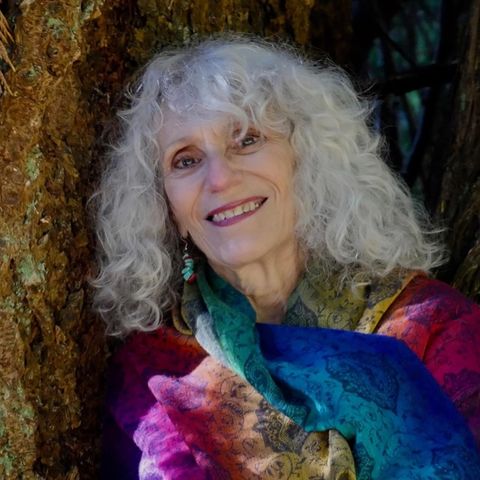
Hello and welcome to Your Life Matters Soul Connection Podcast with moi,
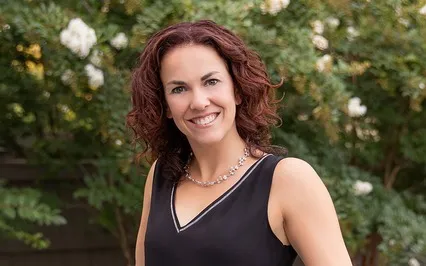
Junie Swadron and today's special guest is Heather Kent.
Hello,
Heather.
Hi,
Junie.
Thank you so much for having me.
It's so nice to see you.
It's been a while since Washington,
DC.
Heather and I,
We wrote books.
You were my cohort at the same time.
That's great.
Yeah.
Now you've written two and we're here today to talk about them.
Let me introduce you first,
Okay?
Perfect.
Thank you.
Okay.
Heather Kent is a registered psychotherapist with a training background in trauma assessment and treatment.
She is a number one Amazon bestseller of the books Heal From Your Narcissist X and I Left My Toxic Relationship.
What Now?
Much of her professional practice is focused on helping clients through the process of recovering from the trauma and PTSD of abusive relationships.
Having survived her own experience in an abusive relationship,
Heather soon came to realize that many other women and men find themselves in the same situation and it leaves them feeling broken,
Ashamed and paralyzed by fear.
Heather combines her experience from her previous teaching career with her integrative therapeutic approach to counseling.
Through her virtual programs,
Speaking engagements,
Workshops and retreats,
Heather is able to serve a large population of clients who want interactive guided support from a licensed professional while they navigate their way through trauma recovery from an abusive relationship and begin the next phase of their lives with safety and confidence.
Heather currently resides in Ontario.
So wow,
That's quite the resume and so needed,
So necessary what you do.
Narcissism has been a kind of a buzzword and a hot topic for a while now.
So can you tell us what is narcissism?
And so I will briefly refer to the DSM-5 which is the American Psychological Association's Episcopal Manual for Diagnosis which talks about the necessary criteria that have to be present and there's nine of them in total and you only have to have five of them in order to be deemed to have narcissistic personality disorder.
And so those criteria highlight things like grandiosity,
Inflated sense of self-importance,
Thinking that they are above the law,
That the rules do not apply to them.
But a hallmark one of course is a lack of empathy for others,
The inability to consider how others may feel in any given situation.
They also lack the ability to take responsibility for their actions,
To admit that there's any kind of accountability or possible wrongdoing and a deep insecurity that underlies this inflated grandiose image that they project out to the world.
And while that is absolutely accurate,
I do also find it to be quite limiting because there are other sort of subtypes of narcissistic personalities that exist that the DSM-5 fails to highlight.
And so I actually prefer the Mayo Clinic's definition which includes the more vulnerable and insecure side of what narcissistic personality looks like.
And so with that,
I'll just quickly highlight sort of the four main categories of narcissistic personalities because I think this is what helps us to be less confused about it because we do see what's most often projected certainly in politics and in the movies and on TV is that more kind of grandiose,
Over-the-top,
Look at me,
I want to be in the spotlight,
I'm amazing,
I'm wonderful kind of personality.
So I think that's what makes it confusing for people because when you're in these abusive relationships,
It may not look like this grandiose picture.
Right,
And when it does,
It seems like those qualities are so obvious.
You wonder if that's the case,
Why people would stay and how long they would stay.
So I'm curious to know what the other qualities are or distinctions are that perhaps it's the Mayo Clinic that gives us more of another side of narcissism.
In my most recent book,
Which talks about narcissists to give you specifically,
I'd highlight the four different kinds.
Of course,
There's the grandiose narcissist,
The overt one,
And this person reports high levels of happiness actually because they think that everything's fantastic.
They think they're fantastic,
They think everything around them is great,
They think everyone loves them,
Despite their partners possibly being very unhappy,
They just don't notice nor do they care,
They think everything's wonderful.
So they actually feel like everything's grand.
When you look at the next really common subtype,
They are kind of the opposite.
So we call these covert narcissists and they are highly,
Highly insecure and they actually still have that high level of grandiosity,
But it's really internalized.
They believe that they are better than others and that they do certain things,
But they are so desperately terrified of criticism from others that they do not want to draw attention to themselves,
Which is really opposite of that grandiose idea,
Wanting to be the center of attention and wanting to get that admiration from others all the time.
The covert narcissist is really insecure,
Very hypersensitive,
And is constantly kind of on the lookout for perceived flights or possible criticisms.
So they are desperate to not be in the spotlight because they do not want to draw negative attention to themselves.
So they actually report high levels of depression,
Of anxiety.
They may suffer from comorbid issues like other kinds of obsessive compulsive and eating disorders.
They actually don't really have friendships.
They don't engage in really report having any positive relationships and they harbor this internal resentment.
They're very focused on comparing themselves in relation to others and what they think other people have.
So then again,
They are so desperately unhappy and depressed and anxious all the time.
Their partners who are very empathetic and very compassionate and very giving kind of get sucked into this sort of codependent cycle,
Desperately trying to fix things and they feel responsible for their partner's happiness.
And you may,
Sorry,
You may also find that the person in your life may not only fit into one category.
Sometimes they'll kind of swing between things.
So that's the covert narcissist.
What I went through was an experience with what we call a communal narcissist.
And these are really tricky because on the surface,
They appear to be really great,
High quality human beings because they are very easy to talk to.
They're highly social.
They have appropriate social braces.
They appreciate agreeableness and they are easy to,
You know,
You can work on a team with them and they are highly involved in their community.
Maybe they are volunteering with organizations.
Maybe they sit on a board of directors.
Maybe they donate large amounts of money to charity.
Maybe they coach the local hockey team for kids,
Whatever it is that they're doing.
They'd all look on paper to be like,
Wow,
This is a really great person.
But the motivation behind the actions is where the problem lies.
And the motivation behind these actions is not to be a good person and to give back and to help people.
The motivation behind these actions is to be recognized for their actions and for their contributions.
And so that narcissist doesn't ever do anything unless there's going to be some gain.
And so everything is done in the light of winning.
How do I win the conversation?
How do I win the argument?
How do I have control over the situation?
How do I get that recognition?
Because what they are constantly in need of,
Regardless of the kind of narcissist that they are,
Is external validation from others.
We call that narcissistic supply.
And there's never enough supply.
They are constantly needing more.
And then finally,
We have the most dangerous kind of narcissist and we call these malignant narcissists.
And these kind of swing to the most extreme end of the continuum,
Where they are kind of in that dark triad of psychopathy,
Machiavellianism,
Sociopathic behavior,
Where these narcissists have all the same traits as a typical narcissist would,
But they also have this level of cruelty and this almost like a sadistic pleasure that they get in purposefully inflicting pain on others.
They go out of their way and make it their mission to destroy other people at whatever cost.
Again,
The ends always justify the means.
And so these people are,
I'd say,
The most psychologically damaging because they are dictated on making it their purpose to harm others.
So Heather,
Can a narcissist actually ever be healed?
Is that possible?
So the short answer is yes.
However,
There are many caveats that go along with that.
First of all,
You would have to get the narcissist to admit that they have a problem,
Kind of in congruence with their false self that they've created,
Right?
Because of their insecurity and that inner fragility that they are desperately trying to hide from the world.
So they've created this sort of false self,
This projection of who they really wish that they were,
Which is the perfect person that everyone loves and wants to admire.
When we are pointing out that there's a flaw or a problem that doesn't line up with what they've created.
So to get them to admit that there's a problem would be issue number one.
Issue number two would be getting them to agree to go see a psychiatrist for a diagnosis.
So I saw a really interesting statistic the other day,
That there is an estimation of 560 million narcissists in the world right now.
Those are only the ones that are diagnosed.
For some of those things,
It seems so obvious.
How do you tell and how long does it usually take for someone who is involved with a narcissist to realize that they are and that they could be in trouble?
Is my partner a narcissist?
Sort of checklist,
Test,
Questions you can ask yourself.
And it's not necessarily just romantic partners,
Of course.
There are many different types of narcissistic relationships.
You can have a parent,
You can be involved with a coworker or a boss,
This could be somebody else in your family.
So there are definitely some key factors that you can take a look at,
Which I'll get to in a minute.
But I just wanted to return to your question about can narcissists be helped?
The answer is yes,
But it requires a lot of concessions on the part of the narcissistic personality,
Which again are really difficult for them to do because it doesn't line up with their inflated sense itself.
So you have a huge amount of roadblocks to get through before even getting the help required.
And so,
Like I said,
You have to get them to go see someone,
They have to then be diagnosed.
Most narcissists that we deal with are not diagnosed because again,
They can't admit that they have a problem.
Everybody else has the problem,
Everything else has the problem and they are never to blame.
And so,
If you can get them to do that,
Then you have to get them to commit to therapy.
And sitting with a person who's going to hold the mirror up that they are so desperately trying to avoid and to really take a hard look,
They don't go to therapy with the goal of attaining self-awareness.
They typically go to therapy with the goal of blaming somebody else for their problems.
Proving the other person is wrong.
Right.
Right.
So how on earth did they get those stats?
With the people who have received diagnoses,
So this is the reported cases.
So I would argue that the number is actually much,
Much higher than 560 million people.
And there was actually an article in Psychology Today,
I think it was in January,
And the article was asked,
Was titled,
Can Narcissists Be Helped?
And so it was highlighted that,
Yeah,
They can be,
But it requires a huge commitment,
A very long road.
And there are several steps that they have to go through.
I think there's 12 or 13 steps to their recovery from this personality disorder.
They don't even learn about empathy for others until step eight.
So there's just an enormous amount of work.
And of course,
It's always,
If you speak to a therapist who works with narcissists,
It's often one step forward,
Five steps back,
Because you're constantly battling that ego,
That insecure,
That fragile self.
And so it's a very frustrating and time-consuming endeavor.
The numbers are just off the charts.
So how does one become one?
Are people born with narcissistic personality disorder?
No.
However,
As you know,
There's lots of genetic predispositions to developing certain mental health challenges,
Right?
So anxiety and depression,
Of course,
There's all kinds of comorbid issues,
Like coexisting diagnoses that could exist that are all narcissists adjacent.
So yes,
They might have obsessive compulsive tendencies.
Yes,
They could be depressed.
Yes,
They could have mood disorder or anxiety or an eating disorder or whatever.
But all of that is sort of underlying all of that is the real heart of the issue,
Which is the narcissism.
And so if you are raised by a narcissistic parent,
For example,
That would very much increase the likelihood that you could become one as well.
But that depends on the type of role that you play in the family,
Because within the family dynamic,
Children of narcissists take on these specific roles.
So if you're the golden child,
It's highly likely that you'll become the narcissist,
Because you are basically told by that parent that you can do no wrong,
That you're wonderful,
Everything you do is fantastic.
The sun shines out your rear end basically,
And then they are kind of groomed in that way.
Whereas other children who aren't the golden children,
Otherwise known as scapegoats or invisible quite often,
No matter what they do,
Can never get the affection or the attention or the,
You know,
Love from that parent.
So they quite often develop other mental health issues in adulthood.
And so it's not guaranteed that you're going to become one,
But you have these sort of environmental and genetic factors at play.
Certainly if you were exposed to childhood trauma,
There's an increased risk that you could develop NPD as an adult as well.
So what advice would you give to somebody who thinks that they are in a relationship with a narcissist,
Or they know that they are,
And life's hell for them?
Yeah,
So I'll kind of share my little,
Is my partner in narcissists test with me.
Please,
Yes,
From your beautiful book.
I'm just going to take a look at,
Where is that located here?
Okay,
Here we go.
So we have a series of questions and one of them is,
You know,
Does my partner have an expectation to be sort of adhered to at all times?
Does my partner have an insulated sense of self?
Does my partner expect other people to bow down to them?
Do they expect full compliance?
Do they struggle to recognize the emotions and the needs of other people?
This is the big one because this is the empathy part.
And the lack of empathy is what sets a narcissist aside from other types of personality disorders.
So do they struggle to recognize the emotions and needs of other people?
Do they require constant admiration and validation and constant reinforcement?
That's how great they are.
Do they ever experience heightened jealousy about the success of others?
Do they think that they should get special treatment or favors from others?
Do they think that the rules don't apply to them?
So for example,
Like double standards,
Is that something that you struggle with?
Do they assume that other people are jealous of them and their talents and their successes?
Do they insist on having the best of everything?
So these are kind of the key factors to take a look at.
And so if you're answering yes to any of these questions,
It's quite possible that,
I mean,
You might not be with someone who's full-blown NPD,
But certainly has narcissistic traits,
Which is problematic.
And so the advice that I would have that any therapist or all the professionals across the spectrum to know from legally,
Medically,
Psychologically,
The recommendation is to remove yourself from the relationship whenever possible,
Because obviously it is highly toxic,
It's highly dangerous,
And it has lasting impact.
And so we can't properly heal from the impact of the abuse if we are still constantly in that situation where we are not safe and where we are being abused on a regular basis.
Does it take some time for somebody who's living with a narcissist to in fact leave the relationship?
Why is that?
And what steps should someone take after hearing,
You know,
Many,
You know,
What,
What these signs are?
Yeah.
I know for me,
Like,
I was in this relationship for eight years.
And I ended up ending it because I couldn't tolerate what was happening.
I got out of it and then I got sucked back in.
Wow.
And then I married the guy.
Wow.
So it is really hard to leave.
The reason why it's hard to leave is because you're stuck in this cycle of abuse,
Which I'm sure you're aware of as a therapist too,
But the narcissistic cycle of abuse is very specific to that kind of sort of psychological damage.
So they engage in this sort of cyclical behavior.
At the beginning,
Everything is so wonderful and they engage in what we call love bombing,
What we would know as the honeymoon stage in a regular cycle of abuse,
Right?
But the love bombing or idealizing phase is like,
This is the part where you fall in love with them because they make you feel like you are the most incredible human being on the planet and that they understand you,
They connect with you,
They are so brilliant listening,
They want to know how about you,
They're over the top grandiose gestures of affection towards you.
Everything feels very intense and super amazing.
And this connection that you feel is unlike any other that you've had in other relationships.
So very intoxicating and very much like it's very fast and furious,
Very intense.
And that is the part that you believe is real because that's who you,
That's what you think you're getting involved with.
This is the mass part that we don't realize this.
And so when the love bombing,
And this is all feeding into that supply for them,
Right?
We're giving them all of this attention,
Adoration,
Aberration,
And we become connected with each other and feel obligated to them very quickly.
And then it moves into the next phase of devaluing.
So this is where they might start to criticize you or make helpful suggestions under the guise of caring for you and wanting to help you.
And then that very quickly turns into degradation and critical thinking about you,
Gaslighting,
Blaming you,
Putting you down in front of other people.
And then they move into this,
What we would call diff part,
Where they just kind of completely push you aside and don't give you any attention or love or care whatsoever.
Because they moved on to someone else or something else that gives them additional supply.
Because remember,
It's never enough.
And so when you feel like,
Okay,
Maybe this isn't going to work out,
And they feel like maybe you're distancing from them,
This is when they,
What we call,
Hoover you back in with the full on love bombing again.
And this is what you remember.
This is what we've been so desperately clinging onto.
We're hoping and trying everything we can to try and get back.
You know,
If we just try to make sure that he's not unhappy,
Just try to mitigate what might set him up,
Just try to make sure that everything is the way that he likes it.
If I just,
If I just,
If I just.
And so we give everything we have until there's nothing left.
And it's never enough.
And it's not about us not being enough.
It's about nothing being enough for them.
Right?
And so,
So how does a person turn that around?
At which point does a person realize that they have been betrayed?
Yeah,
And it is.
It's an ultimate betrayal.
It's a huge betrayal.
And I'm thinking that a lot of people feel guilty that it might be their fault.
And so what steps would you suggest that a person take after they've been,
It's kind of like a battered wife or whatever it is,
No matter what the relationship is feeling battered and bruised and worn out and exhausted and,
And I imagine quite afraid.
Right?
And so how does one actually leave when they make it almost impossible?
Well it is,
It's highly terrifying.
It certainly was for me because you never know,
You know,
What's the retaliation going to be?
How you're going to get.
Exactly.
Yeah.
And so there is,
You just have to anticipate that there is going to be retaliation,
But then you also need to evaluate,
Do I want this to be the rest of my life?
Is this how I want to live my life?
And for me,
The answer was a resounding no,
This is not what I want.
And this is not what I thought I was going to become.
Because you are very much a shallow,
Not a shallow hollow,
Version of who you used to be.
And so knowing that this is not what you thought was going to be,
And if you picture living this way until the end of your days,
Well,
For me,
That was the part that was like,
Okay,
No,
I can't do it.
Like there's absolutely no way that I could continue.
And so it's a really difficult choice and it's very scary and it's very hard to make.
And sometimes it requires planning because quite often they will be financially controlling as well.
And so you have to sometimes create a plan.
And I have some clients,
You know,
We came up with these great names,
You know,
Operation Get Out or Operation Break Free.
And like just these step by step kind of plans of getting things in place so that they could leave and then going through the process.
So I imagine then the best solution is to have help,
Someone like yourself,
To guide them to have Operation Get Out now and know how so they can do it somehow safely,
So they can do it so they're not at risk,
Or at least the minimize the risk and that they would need all the support they could possibly get.
Thank goodness there are people like you.
I hold up your books.
Oh,
Yeah.
So this is the first book that I wrote with you.
I left my toxic relationship.
Now what?
Yes,
Now what?
That's so important.
Like I left my toxic relationship.
Where do I go from here?
I spent years thinking that I was in,
You know,
In love or the person I was with is the person that I'm going to be with forever.
It turned out to be hell on wheels.
Finally got out what now?
That is such an important question.
Absolutely.
And so the first book really focuses on kind of rebuilding your life.
But then I found that so many women and men do,
Were coming with this very specific problem of being involved with someone with a narcissistic personality.
This type of abuse is so insidious,
And I believe it to be the most damaging kind of psychological abuse that exists.
And this is really what I experienced.
And so I decided to kind of hone in on what narcissistic abuse is,
What it looks like,
What the impact of that is on the brain,
How trauma impacts our brain,
What are those signs and symptoms of trauma and PTSD that we don't even realize maybe we're dealing with that are there,
And then how do we heal those wounds?
How do we recover?
So this is really a book about recovery from the trauma of being in an abusive relationship with a narcissist and to reestablishing that feeling of safety,
Because I remember that nobody felt safe,
Nothing felt safe.
How long did it take you to finally feel safe after you left?
My journey was a bit unorthodox.
When I left,
I was homeless for a while.
I had no place as my own.
I stayed with friends.
I did some couch surfing for a little while.
Ended up staying with a friend for a couple of months.
And it ended up that her husband was a narcissist too,
And she left him and she later became one of my clients.
It was kind of interesting that we've been there for each other.
And then I ended up house-sitting for a couple of friends of mine who were traveling North America,
You know,
Back in the days when people used to travel.
Right before COVID.
So I actually,
I just stayed and did some house-sitting,
Which worked out beautifully for me for several months.
And then I picked up and moved to a third world country.
And that was where I did most of my healing.
Wow.
Wow.
You completely left the country,
You left the culture,
And you started brand new.
Yeah.
And it took interacting with complete strangers in a place that was not like mine,
In a culture that was very different,
In a language that wasn't mine.
It took those relationships to show me that people could be safe again.
Because they were kind,
Compassionate,
Caring,
And honest.
Lovely human beings.
They reminded me,
They restored my faith in humanity.
And those relationships remained very dear to my heart today.
I'm so sorry you went through that.
And so yeah,
That was your experience for so many years.
And how fantastic that you come to the other side.
And I've healed that so that you can go on and help others.
And yeah,
And so I'm actually not sorry that it happened.
I'm actually quite grateful for having gone through what I went through,
Because it allowed me the opportunity to experience something that many people go through and don't talk about.
And it allowed me the opportunity to have enhanced compassion for people who are suffering like I was.
And it allowed me the opportunity to totally change my career path.
And it gave me this experience in living in another country,
In another culture,
Which really changed the trajectory of my life completely.
Wow.
No,
I get it.
Isn't it interesting how some of the worst situations in our life can be our best teachers,
Our best healers,
And have extraordinary gifts when we can look back and say,
Wow,
Had that not happened,
It wouldn't have led to this,
To this,
To this,
And to this.
Exactly.
And so it was my clients who ended up in my office,
One after the other,
In these relationships that really inspired me to write these books and specifically my second book,
Because now what I'm doing is I'm offering therapy groups to people,
To women,
Who are all struggling through the same thing.
And so this is providing them this beautiful community of other compassionate people who are completely understanding of their experience because they have gone through it too.
And so you don't find yourself having to explain or worry about judgment or people thinking that you're crazy or anything like that.
You don't have to bring any guilt or shame to this because every other person in the group completely gets it because they've been through the same thing.
And so we go on this sort of healing journey from the trauma of it all and recovering and being able to move forward,
Feeling safe,
Feeling confident,
Feeling happy,
Learning how to engage in new relationships that are healthy.
And so this work is just like such a passion project for me because it's so wonderful to be,
It's a privilege really to be able to watch the transformation happen and to see these women start to thrive after a terrible experience.
Absolutely to watch them become empowered and start to have a life again.
Yeah,
And to rediscover who they were and who they are and new parts of themselves that they didn't really know that were bad-ass in there.
So it's really exciting.
Yeah,
And it's beautiful.
Anytime that we're in a group with like-minded others who can support us and we already have the lingo,
We know from the inside out what it all feels like and have tremendous compassion and see at different levels the strengths that people can build upon from one another.
Yeah,
And it's so incredibly validating after you've been invalidated for so long,
Been so busy decades,
So incredibly validating to be present with others who truly understand your experience.
How can people reach you?
Where will they find you?
How can we get,
How can they become part of a group of other women?
Well,
The first thing I would love to share is that people who are interested can download my book for free.
I mean,
If you wanted a paper copy,
It's on Amazon,
But you can download it for free on my website.
My website is HeatherJKent.
Com.
Easy.
Easy enough.
It's just my name.
Yes.
So you can download my book for free.
Both of them actually are there available for people.
And there's also a link on my website to book a therapy consultation with me.
So you can book a free session with me directly in my calendar.
And there's a link to my calendar on my website as well.
So if you feel like any of this is speaking to you or that you were in a situation,
You are in a situation,
You've left the situation,
But you're still struggling,
I would love to hear from you and chat with you and see how I can support you or provide you with anything that might be helpful.
It's wonderful that you do the work you do.
Thank you so much for being there for countless people who are struggling,
Who need what you offer.
And so I encourage everybody to go to HeatherKent.
Com.
HeatherJKent.
Com.
HeatherJKent.
Com.
Yep.
And download those fabulous books and give Heather a call if you want further support so that you're not feeling isolated,
Alone,
Scared,
And everything else that goes along with being involved with somebody who has a narcissistic personality disorder.
And I wish you all the blessings and love in the world.
I too have had that experience in my life.
I think many people have.
And it's a hard one.
And everything is possible.
A new life awaits you.
So thank you so much.
Are there any last words of wisdom that you would like to offer?
Well,
I mean,
Really,
It's that you are not alone.
And I think that is an overwhelming feeling that I remember,
I know I had.
And that feeling of just being utterly alone,
Even if you have supportive family and friends,
They just can't understand your experience unless they've been through it.
And you feel very much misunderstood alone on an island.
And I really want people to know that they are absolutely not alone and that hope is there and help is available and you are absolutely able to have a different life.
That's beautiful.
I was sharing with my partner,
David,
That I was speaking with you today.
And he shared this sweet story.
David's an oil painter and a woman contracted him to do an oil painting and came to a studio and his three-year-old daughter at the time was with him and the lady came in.
And according to David,
She was difficult,
Rude,
And she was mean-spirited.
And then when she left,
His little girl cat said,
Daddy,
Was that woman born without smiles?
Isn't that sweet?
Yeah.
Yeah.
How many kids can get it more than that?
Right?
Out of the mouths of babes?
Absolutely.
Yeah.
That was so precious.
I had to say it because,
Yeah,
Who knows if that woman was or was not,
But certainly had some issues.
Something else was happening for her.
Absolutely.
Oh,
Yeah.
And as a therapist,
I'm always looking for what's under me.
What is that?
What is that?
Yeah.
What is that?
So we can hopefully help to.
.
.
Resolve it.
Yeah.
Resolve it.
And yeah,
So people can be happy from the inside out,
So they can smile with their eyes and from their hearts.
So you made me smile with my heart today,
Heather.
Likewise.
It's so lovely.
Thank you so much.
Yeah.
It's wonderful to see you again and to see you thriving and helping out so many in the world.
So we'll talk again soon,
I hope.
Thank you so much for the opportunity.
I loved speaking with you today and yes,
I hope to see each other again soon.
Okay.
Lots of love.
Bye for now.
Thanks for having us.